
Photo: Wikipedia
Strategic Assessment of Pike County
Strong survivability profile. Good buffer from population centers, with manageable environmental and tactical risks.
What does the Strategic Assessment tell us?
Our Strategic Assessment grades tactical survivability of an area. Major population centers, military targets, fallout zones, natural disasters, and border exposure all drive risk — lower exposure means a more defensible position in a crisis.
This is heavily inspired by Joel Skousen's Strategic Relocation book. Highly recommended you checkout the book ($)What does this tell us?
Our Strategic Assessment grades tactical survivability of an area. Major population centers, military targets, fallout zones, natural disasters, and border exposure all drive risk — lower exposure means a more defensible position in a crisis.
This is heavily inspired by Joel Skousen's Strategic Relocation book. Highly recommended you checkout the book ($)Strategic Pillars

Key Distances
Strategic Assessment Analysis
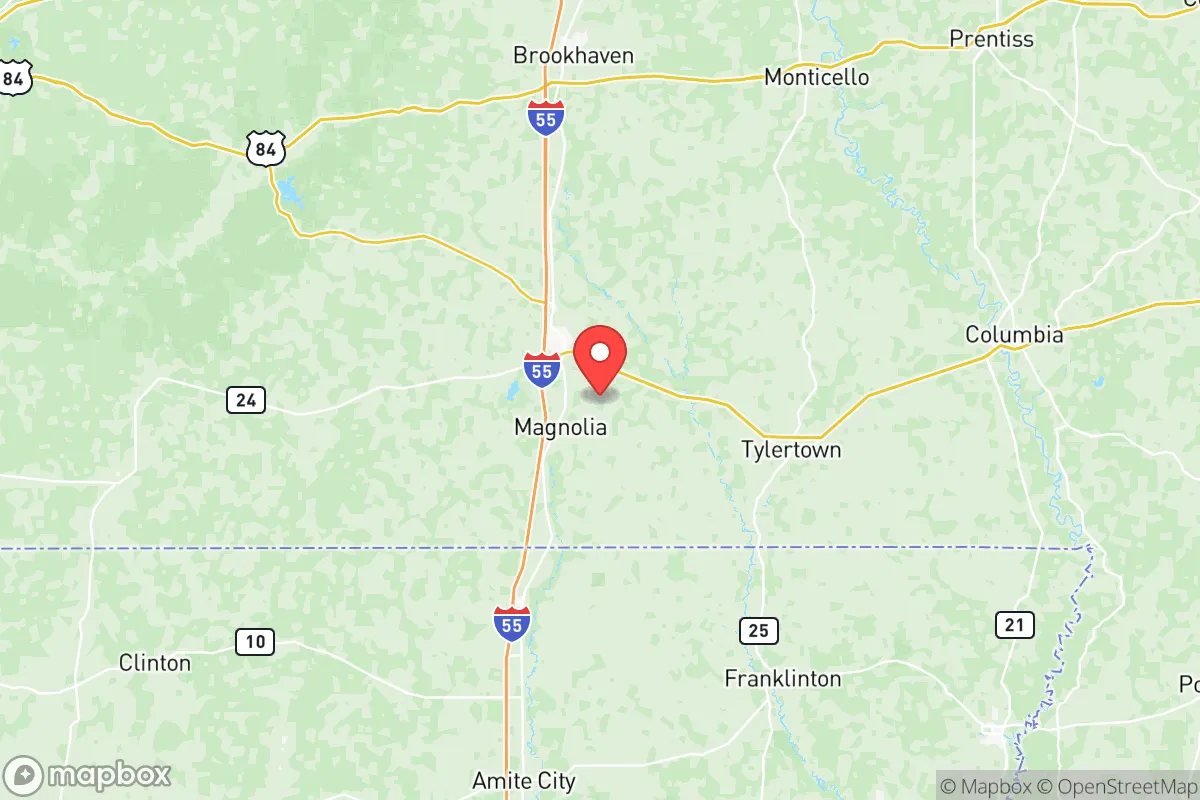
Pike County, Mississippi, offers a compelling mix of strategic depth and practical resilience for those prioritizing disaster readiness and self-sufficiency, particularly when viewed through a conservative lens of local control and preparedness. Its location, roughly 70 miles south of Jackson and 80 miles north of Baton Rouge, places it in a sweet spot—close enough to major supply chains and medical hubs, yet far enough to avoid the immediate fallout zones of larger metropolitan targets. The county seat, Magnolia, and the largest city, McComb, serve as the area's anchors, providing essential services without the density that makes evacuation or defense problematic.
Geographic position and natural advantages for long-term stability
Pike County sits in the rolling pine hills of southwest Mississippi, a landscape that offers distinct advantages over the flat, flood-prone Delta region to the west. The terrain provides natural drainage and numerous defensible positions, with elevations ranging from 200 to 500 feet above sea level. This topography reduces the risk of catastrophic flooding from hurricanes or storm surges, a significant concern for coastal areas. The county is bisected by the Bogue Chitto River and fed by several creeks, including the Tangipahoa River's headwaters, which offer reliable freshwater sources for those who know how to access them. The area's abundant timber resources—primarily loblolly and longleaf pine—provide both construction material and a sustainable fuel source for heating and cooking. For a relocator, this means the land itself supports a retreat-oriented lifestyle without the extreme weather risks found further south or the agricultural monoculture vulnerabilities of the Delta.
Risks, exposures, and proximity to fallout-relevant landmarks
While Pike County avoids the highest-risk zones, it is not without exposure. The most significant man-made risk comes from its proximity to the Louisiana petrochemical corridor. The ExxonMobil Baton Rouge Refinery and the Shell Norco Refinery, both roughly 80 miles south, are high-value targets in any conflict scenario. Fallout patterns from a strike on those facilities would likely drift northeast, placing Pike County in a secondary risk zone depending on wind direction. Closer to home, the Entergy natural gas pipeline that runs through the county presents a localized hazard, though it is less likely to be a primary target. The county is also within 100 miles of Camp Shelby, a major Army National Guard training base near Hattiesburg, which could become a staging area or secondary target in a prolonged conflict. Natural risks include occasional tornadoes—Pike County sits in the Dixie Alley corridor—and the potential for ice storms that can knock out power for days. The area's reliance on above-ground power lines is a vulnerability that any serious prepper should address with backup generation or off-grid solar. Flooding along the Bogue Chitto and Tangipahoa Rivers is a periodic concern, particularly in low-lying areas near the towns of Osyka and Summit, so property selection should prioritize elevation above the 100-year floodplain.
Practical resilience for a relocator: food, water, energy, and defensibility
For the individual or family serious about self-sufficiency, Pike County offers a strong foundation. The region's growing season stretches from March to October, allowing for two full crop cycles of staples like corn, beans, and squash. The soil, primarily sandy loam, drains well and is suitable for raised-bed gardening and orchard establishment. Pecan and fruit trees thrive here, providing perennial food sources. Water access is generally good; shallow wells (30-60 feet) are common and yield potable water in most areas, though testing for agricultural runoff is advisable. The county's rural character means that many properties already have septic systems and well water, reducing dependency on municipal infrastructure. Energy resilience is improving, with a growing number of rural properties adopting solar arrays and battery storage, though the local utility, Entergy Mississippi, has a mixed record on grid reliability during storms. Defensibility is a strong point: the county's low population density—roughly 40 people per square mile—and network of county roads and state highways (including US 51 and I-55) provide multiple egress routes. The small towns of Magnolia and McComb have local law enforcement, but response times in the more remote eastern and southern parts of the county can exceed 20 minutes, making personal security and community mutual aid networks essential. The local economy is anchored by manufacturing (including a Cooper Tire plant in McComb) and healthcare (Southwest Mississippi Regional Medical Center), which provide stable employment for those not yet fully self-sufficient.
The overall strategic picture for Pike County is one of balanced opportunity. It avoids the extreme risks of coastal zones or major metropolitan targets while retaining access to the resources of the Gulf South. For the conservative-minded relocator, the area offers a genuine chance to build a resilient lifestyle without the isolation of more remote locations. The key trade-off is between the convenience of proximity to I-55 and the exposure that comes with being within 100 miles of major industrial and military infrastructure. A well-prepared household with backup power, water storage, and a defensible property can mitigate most of these risks. The county's culture, rooted in small-town Southern values and a strong hunting and fishing tradition, aligns well with a preparedness mindset. For those willing to put in the work on land and infrastructure, Pike County represents a solid, if not perfect, strategic choice for long-term relocation in an uncertain future.

* Values derived from national, state, county, city and local statistics and may differ in a specific area. Last updated: 2026-07-03T14:35:58.000Z
Narrative content on this page is AI-generated and may contain mistakes. Verify any details that matter before acting on them.
ReloMaps may earn a commission from affiliate links at no extra cost to you.

