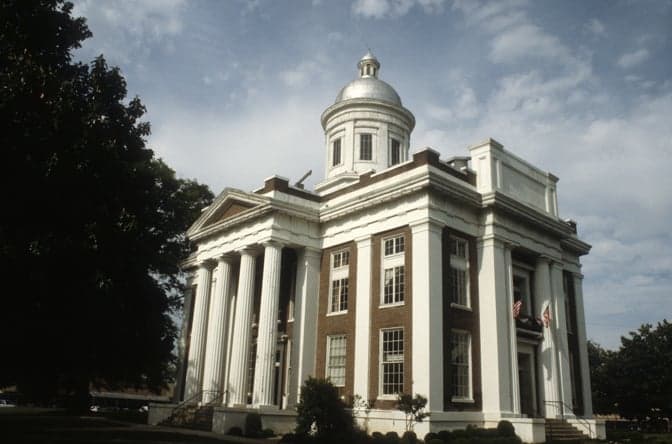
Photo: Wikipedia
Political ClimatePolitical Climate in Madison County
Showing district-level results — no local-only data available.
Local Political AnalysisPolitical Analysis of Madison County
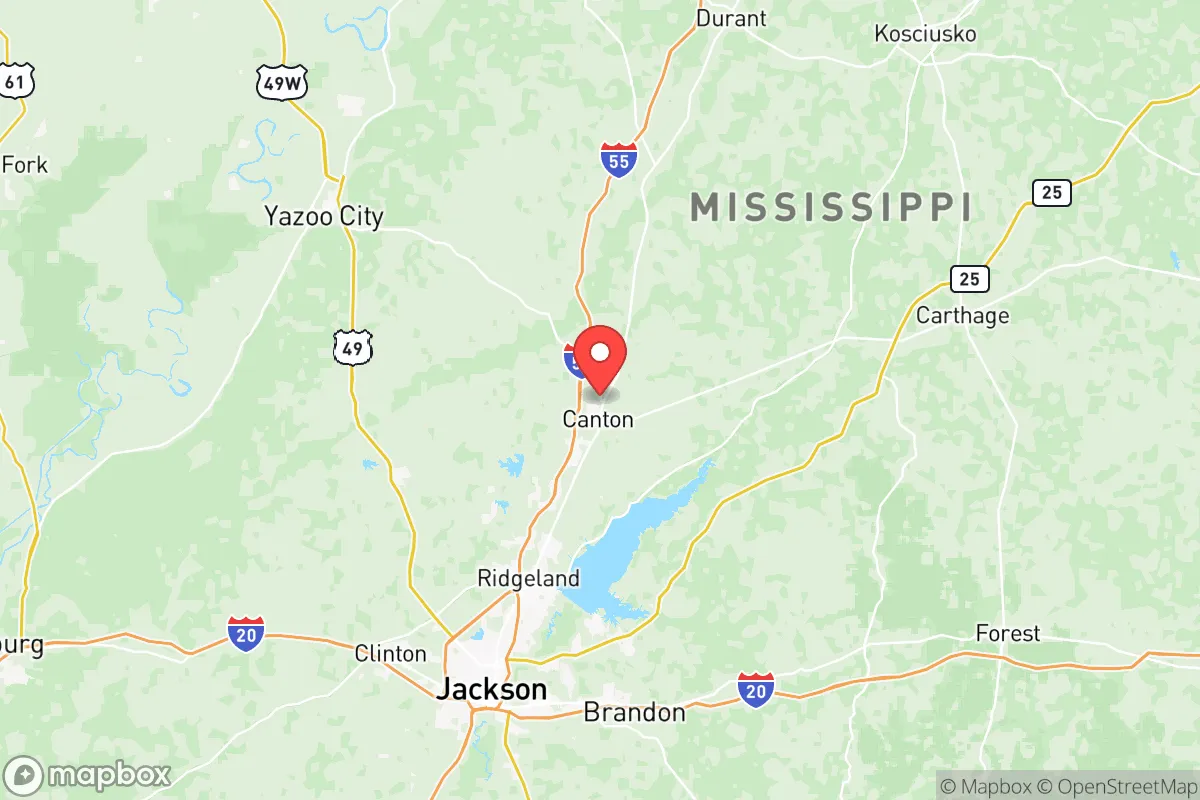
Madison County, Mississippi, has a Cook PVI of D+11, which on the surface makes it look like a deep blue stronghold, but that number hides a much more complicated and shifting reality. The truth is, the county is a tale of two worlds: the fast-growing, increasingly progressive suburbs of Madison and Ridgeland, and the more traditional, conservative rural areas like Canton and Flora. Over the last decade, I’ve watched the political center of gravity move north and west, as folks from Jackson have spilled over the line, bringing a more progressive, government-heavy mindset with them. It’s a real concern for those of us who remember when this county was a quiet, reliably conservative place where personal freedoms and local control were the norm.
How it compares
When you stack Madison County up against the rest of Mississippi, the contrast is stark. The state as a whole has a Cook PVI of R+11, a solidly red, conservative environment where limited government and individual rights are still the default. Madison County’s D+11 rating is a 22-point swing to the left, and that’s almost entirely driven by the population boom in the southern part of the county. Towns like Madison and Ridgeland have seen an influx of professionals and transplants from other states, and their voting patterns have shifted noticeably. In the 2020 election, precincts in central Madison and around the Township at Colony Park went for Biden by double digits, while just 15 miles north, precincts in Canton and Flora voted for Trump by similar margins. The swing precincts are the rural areas around Gluckstadt and Kearney Park, where you see a mix of old-guard conservatives and new arrivals, making those races the ones to watch. The rest of Mississippi hasn’t seen this kind of demographic shift, so Madison County is becoming an outlier, and not in a way that bodes well for those who value local autonomy.
What this means for residents
For those of us living here, the political shift has real consequences. The push for more government involvement in daily life is getting harder to ignore. You see it in the local school board meetings, where there’s increasing pressure to adopt curriculum that aligns with progressive social agendas, and in the county planning commission, where new regulations on property use and development are being proposed. The idea that your neighbor’s business or your own land use should be subject to more layers of bureaucracy is a red flag. The county’s tax base is growing, but so is the appetite for spending on programs that many of us see as overreach. The concern is that the very freedoms that made this area attractive—low taxes, minimal interference, and a strong sense of community—are being chipped away by a vocal minority who want to remake Madison County in the image of a coastal suburb.
Cultural and policy distinctions
Despite the political drift, there are still clear cultural and policy distinctions that set Madison County apart from the rest of Mississippi. For one, the county has a higher median income and a more transient population, which means less of that deep-rooted, small-town conservatism you find in places like Rankin or DeSoto County. The local government has been more willing to embrace things like public-private partnerships for infrastructure, which can be a double-edged sword—efficient, but also a way to bypass voter input. On the other hand, the rural parts of the county still hold onto traditional values: gun rights are fiercely defended, and there’s a strong resistance to any talk of zoning or land-use restrictions that would tell a farmer what he can do with his own property. The real test will come in the next few election cycles, as the balance between the old and new ways of thinking gets decided at the ballot box. If you’re looking for a place where your voice still matters and government stays out of your business, the northern half of the county is where you want to be.

State Political ClimatePolitical Climate in Mississippi
State Political AnalysisPolitical Environment in the State
Mississippi is one of the most reliably Republican states in the nation, with a Cook Partisan Voting Index of R+11, meaning it votes about 11 points more Republican than the national average. The state hasn’t voted for a Democratic presidential candidate since 1976, and Republicans hold every statewide office, both U.S. Senate seats, and supermajorities in the state legislature. Over the last 10-20 years, the shift has been subtle but real: the rural and suburban areas that were already red have gotten redder, while the few remaining Democratic strongholds—mostly in the Delta and parts of Jackson—have shrunk in population and influence. The dominant coalition is a mix of traditional conservatives, evangelical Christians, and a growing number of transplants from other red states, all united around low taxes, gun rights, and cultural conservatism.
Urban vs. rural divide
The political map of Mississippi is starkly divided between a handful of urban centers and the vast rural countryside. The Jackson metro area, including Hinds County, is the only reliably blue region of any size, but its population has been declining for decades—Hinds County lost about 10% of its residents between 2010 and 2020. The Gulf Coast, anchored by Biloxi and Gulfport, leans Republican but is more moderate on economic issues due to the tourism and casino industries. The real engine of the state’s conservative majority is the suburban and exurban growth around Madison and Ridgeland—north of Jackson—where families have flocked for better schools and lower crime. DeSoto County, just south of Memphis, is the state’s fastest-growing county and votes heavily Republican, driven by Memphis-area transplants seeking lower taxes and more conservative governance. The Delta, including Greenville and Clarksdale, remains Democratic but is losing population fast, while the Pine Belt around Hattiesburg and the Golden Triangle around Starkville and Columbus are reliably red, with university towns providing a slight moderating influence.
Policy environment
Mississippi’s policy environment is among the most conservative in the country, and it’s been getting more so. The state has no income tax on Social Security benefits and a flat 4% income tax that is being phased down to zero by 2026 under the Taxpayer Pay Raise Act of 2022. Property taxes are low, with no state-level property tax and local rates averaging about 0.8% of home value. The regulatory posture is light-touch: there’s no state-level occupational licensing for dozens of trades, and the state has a right-to-work law. On education, Mississippi has a school choice program—the Mississippi Education Scholarship Account (ESA) program—that allows parents of special-needs students to use public funds for private school or homeschooling, and a new expansion in 2024 opened it to all low-income families. Healthcare is a mixed bag: the state did not expand Medicaid under Obamacare, leaving about 200,000 working poor in the coverage gap, but it has some of the lowest insurance premiums in the country for those who buy their own plans. Election laws are strict: voter ID is required, early voting was only introduced in 2024 (limited to 10 days), and absentee voting requires an excuse. The state also passed a law in 2023 banning ranked-choice voting, a move that signals a firm commitment to traditional election methods.
Trajectory & freedom
On the whole, Mississippi is becoming more free in the areas that matter most to conservatives. The 2022 permitless carry law (HB 1027) allows any adult who can legally own a firearm to carry it concealed without a permit, and the state has preempted local gun ordinances, so you don’t have to worry about patchwork city-level bans. Parental rights were strengthened in 2023 with the Parents’ Bill of Rights (SB 2681), which requires schools to get parental consent before teaching about sexuality or gender identity and gives parents access to all instructional materials. Medical autonomy is limited: the state has a near-total abortion ban (the Gestational Age Act of 2019, triggered by Dobbs) with no exceptions for rape or incest, and the 2023 law banning gender-affirming care for minors (HB 1125) is one of the strictest in the nation. Property rights are strong—the state has no statewide zoning, and most counties have minimal land-use regulations. The trajectory is clearly toward more personal liberty in the traditional sense: less taxation, fewer gun restrictions, and more parental control over education. The only area where freedom is arguably shrinking is in the realm of medical choices for adults, where the state has shown a willingness to restrict certain procedures.
Civil unrest & political movements
Mississippi has a relatively low level of visible civil unrest compared to other states, but there are flashpoints. The most notable recent protests were in 2020 in Jackson following the George Floyd killing, which saw some property damage and a heavy police presence, but they were small compared to cities like Portland or Atlanta. The state has a strong and organized conservative grassroots movement, particularly around gun rights and school choice—the Mississippi Gun Owners Caucus is a powerful lobbying force, and the Mississippi Center for Public Policy is a well-funded think tank pushing for further tax cuts and deregulation. On the left, the Mississippi Poor People’s Campaign and the NAACP have a presence, but they struggle to gain traction outside of Jackson and the Delta. Immigration politics are relatively quiet because Mississippi has a very small foreign-born population (about 2.5%), but the state passed a law in 2023 (HB 1480) requiring all businesses to use E-Verify, a move that effectively discourages undocumented workers. There is no serious secession or nullification movement, though some local GOP officials have floated the idea of a “convention of states” to amend the U.S. Constitution. Election integrity controversies have been minimal—the 2020 and 2022 elections ran smoothly, and the state’s strict voter ID law has broad bipartisan support. A new resident would notice that political signs and bumper stickers are common, but actual street-level conflict is rare.
Projection
Over the next 5-10 years, Mississippi is likely to become even more conservative. The main driver is demographic: the state’s population is aging and slowly declining, but the areas that are growing—DeSoto County, Madison County, and the Gulf Coast—are all heavily Republican. The Delta and Jackson will continue to lose population and political clout. In-migration is modest but noticeable, with people moving from California, Illinois, and New York for the low taxes and conservative culture. The state’s Republican supermajority is unlikely to be challenged, and the trend toward eliminating the income tax entirely will likely continue. The biggest wild card is education: if the ESA program is expanded to universal eligibility (as some legislators are pushing), it could accelerate the decline of rural public schools and further concentrate conservative families in suburban and private schools. On social issues, expect more laws protecting religious freedom and parental rights, and possibly a push to ban no-excuse absentee voting. A new resident moving in now should expect to find a state that is stable, predictable, and increasingly aligned with traditional conservative values, with little risk of a political shift to the left.
Bottom line for a new resident: If you’re looking for a state where your taxes are low, your gun rights are secure, your kids’ schools will respect your values, and your neighbors will share your political outlook, Mississippi delivers. The trade-offs are a weak economy in many rural areas, limited healthcare options outside of major towns, and a summer heat that will test your air conditioning. But for a conservative family or individual who wants to be left alone, this is one of the best bets in the country.
* Values derived from national, state, county, city and local statistics and may differ in a specific area. Last updated: 2026-05-12T12:07:51.000Z
Narrative content on this page is AI-generated and may contain mistakes. Verify any details that matter before acting on them.
ReloMaps may earn a commission from affiliate links at no extra cost to you.

