
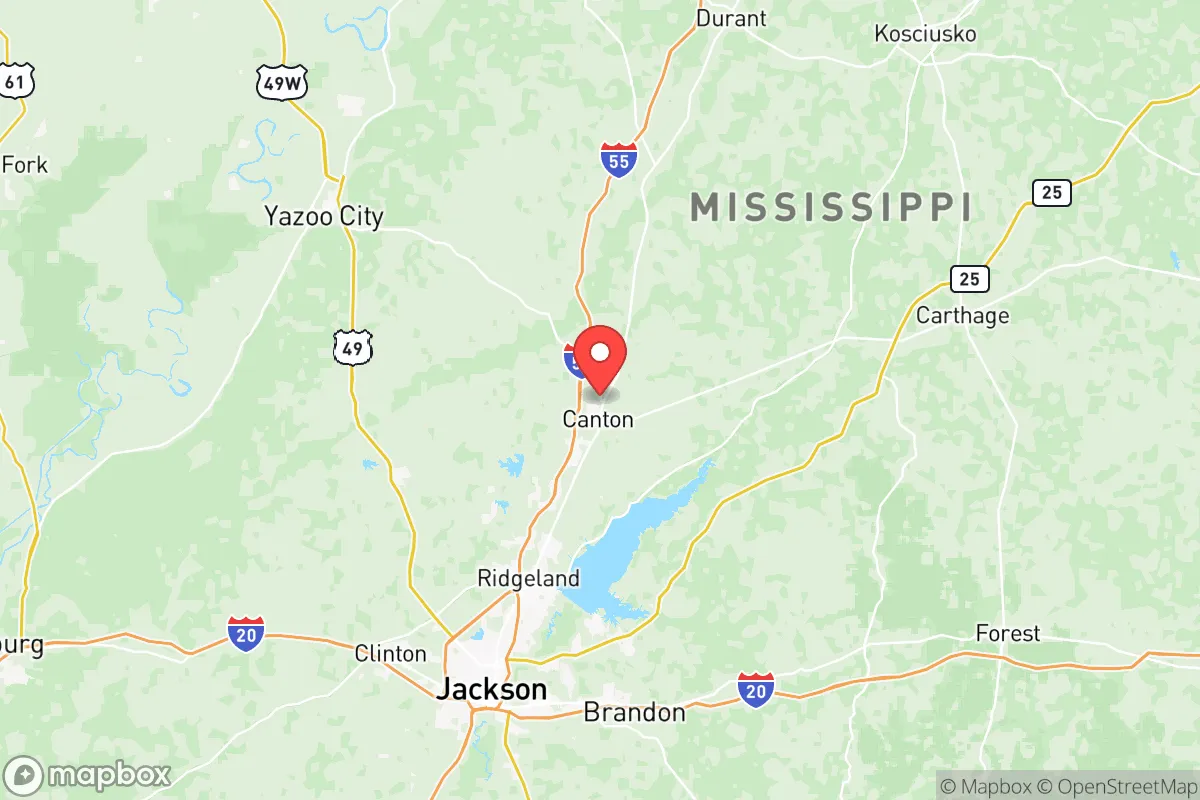
Photo: Wikipedia
Personal Sovereignty in Madison County
Viable for self-reliance. Generally workable, though some barriers may limit total independence.
What does Personal Sovereignty tell us?
Personal Sovereignty measures your capacity for self-reliance and independence with minimal government friction. Higher scores mean fewer barriers between you and the way you want to live... but it assumes you have the space you need and good neighbors.
What does this tell us?
Personal Sovereignty measures your capacity for self-reliance and independence with minimal government friction. Higher scores mean fewer barriers between you and the way you want to live... but it assumes you have the space you need and good neighbors.
State Policy
Energy independence: Importer (50% of energy produced in-state)
Personal Liberty
Homesteading

Personal Liberty Analysis
Madison County, Mississippi offers a notably high degree of personal sovereignty compared to many parts of the Southeast, particularly for those who prioritize minimal government interference in daily life. The county’s political culture, rooted in deep-red Mississippi conservatism, creates an environment where individual autonomy in self-defense, property use, and family matters is broadly respected by local officials. While no area is a libertarian utopia, Madison County’s combination of low taxes, permissive gun laws, and limited zoning in unincorporated areas makes it a strong contender for relocation-minded individuals and families who view personal freedom as a non-negotiable priority.
Tax burden and regulatory posture: How much government touches your wallet and land
Mississippi’s state-level tax structure is among the most favorable in the nation for those seeking to keep more of their own earnings. There is no state income tax on Social Security benefits, and the state’s flat income tax rate is being phased down to 4% by 2026, with further reductions likely. Property taxes in Madison County are low by national standards, with the average effective rate hovering around 0.8% of assessed value—roughly half the national average. The county’s regulatory posture is similarly light-handed. Unlike the city of Madison itself, which has a more structured municipal code, unincorporated areas like Gluckstadt and Ridgeland’s rural fringes operate with minimal building permit requirements and no county-wide zoning overlay. This means a family can buy a few acres near Kearney Park or Farmhaven and build a workshop, store equipment, or keep livestock without navigating a thicket of bureaucratic approvals. The county’s approach to business licensing is also straightforward—no occupational taxes or onerous local regulations that plague cities like Jackson just across the Pearl River. For the prepper-minded, this regulatory restraint translates directly into more control over one’s property and time.
Self-defense and gun law specifics: Carrying, storing, and using firearms without state interference
Mississippi is a constitutional carry state, meaning no permit is required to carry a concealed firearm for anyone legally allowed to possess one. Madison County’s sheriff’s office and local law enforcement are culturally aligned with this stance; there is no local push for “red flag” laws or additional restrictions beyond state statute. Stand-your-ground laws are fully in effect, with no duty to retreat in any place where a person has a legal right to be. For those building a defensive capability, the county’s gun culture is robust—ranges like the Madison County Shooting Range near Canton are well-used, and private land ownership is common enough that many residents practice on their own property without neighbor complaints. The state also preempts local firearm ordinances, so cities like Madison and Ridgeland cannot impose their own bans or storage requirements. This uniformity is critical for those who view firearm ownership as a fundamental right, not a privilege subject to municipal whim. For suppressors and short-barreled rifles, Mississippi is a NFA-friendly state, with no additional state-level restrictions beyond federal law.
Self-reliance and homesteading viability: Lot sizes, zoning, and off-grid feasibility across the county
Madison County’s geography creates a clear divide in homesteading potential. The southern half, including Ridgeland and Madison, is increasingly suburban, with typical residential lots under half an acre and homeowners’ associations that often restrict chickens, gardens, and outbuildings. However, the northern and eastern parts of the county—areas like Gluckstadt, Farmhaven, and Kearney Park—remain rural, with many parcels available in 5- to 20-acre tracts. County zoning in these unincorporated areas is minimal: there are no county-wide setback requirements for accessory structures, no bans on rainwater collection, and no prohibition on composting toilets or alternative waste systems, provided they meet basic health department standards. Solar panels are unrestricted, and several off-grid homes already exist near the Natchez Trace Parkway corridor. For those serious about self-sufficiency, the Canton area offers the best balance of affordable land (often under $5,000 per acre) and lax enforcement. The main constraint is water—well drilling is common but requires a permit, and some northern areas have harder limestone that increases drilling costs. Still, compared to the Austin city limits or even suburban Atlanta, Madison County’s rural zones are a haven for those who want to disconnect from municipal utilities without fighting the county.
Personal liberties: Parental rights, medical autonomy, speech, and property in practice
Mississippi law strongly protects parental rights in education and healthcare. The state’s 2023 “Parents’ Bill of Rights” gives parents explicit authority over their children’s medical decisions and educational records, and Madison County’s school districts—particularly the highly-rated Madison County School District—have not been a battleground for curriculum disputes. Medical autonomy is more complex: while the state has no vaccine mandate for adults, employers and some healthcare facilities can still require them. However, the county’s political climate means most small businesses and private practices respect individual choice. Religious exemptions are broadly honored. Free speech is robustly protected, with no local hate speech ordinances or permit requirements for public gatherings outside of incorporated city limits. Property rights are perhaps the strongest pillar: Mississippi’s “right to farm” law shields agricultural operations from nuisance lawsuits, and Madison County has not adopted any tree ordinances or view corridor protections that limit what owners can do on their land. For the survivalist, this means building a root cellar, installing a backup generator, or even constructing a hardened shelter does not trigger the kind of neighbor-driven litigation common in more regulated counties.
Overall, Madison County ranks among the top 10% of Mississippi counties for personal sovereignty, trailing only the most rural Delta counties in regulatory freedom while offering far better infrastructure and schools. For a family or individual weighing the trade-offs between autonomy and access, the county’s northern and eastern rural zones provide a rare combination: low taxes, strong gun rights, minimal zoning, and a legal culture that defaults to the individual. The cities of Madison and Ridgeland are more conventional, but even there, the state’s preemptive laws and conservative judiciary mean personal liberties are far more secure than in any blue-state metro area. If the goal is to live free, prepare for uncertainty, and raise a family without government overreach, Madison County is a serious contender—not a compromise.

* Values derived from national, state, county, city and local statistics and may differ in a specific area. Last updated: 2026-05-12T12:07:51.000Z
Narrative content on this page is AI-generated and may contain mistakes. Verify any details that matter before acting on them.
ReloMaps may earn a commission from affiliate links at no extra cost to you.

