Photo: Wikipedia
Demographics of Greene County
Affluence Level in Greene County
A below-average socioeconomic profile. Incomes, home values, and educational attainment trail the U.S., with higher poverty and unemployment.
People of Greene County
Greene County, Mississippi, is a deeply rural, sparsely populated corner of the Pine Belt, home to just over 13,500 residents who are overwhelmingly native-born and rooted in the land. The county’s character is defined by its timber and poultry industries, a strong sense of local independence, and a population that is roughly 71% white and 25% Black, with virtually no foreign-born presence. This is a place where family names trace back generations, where the pace of life is slow, and where the cultural identity remains firmly tied to the working-class traditions of the Deep South.
Settlement & growth (pre-1960)
Long before European settlers arrived, the area that is now Greene County was part of the ancestral homeland of the Choctaw people. The Choctaw lived in dispersed villages along the Leaf River and its tributaries, relying on the rich pine forests and bottomlands for hunting and agriculture. After the Treaty of Dancing Rabbit Creek in 1830, the Choctaw were forcibly removed to Oklahoma, opening the territory to white settlement.
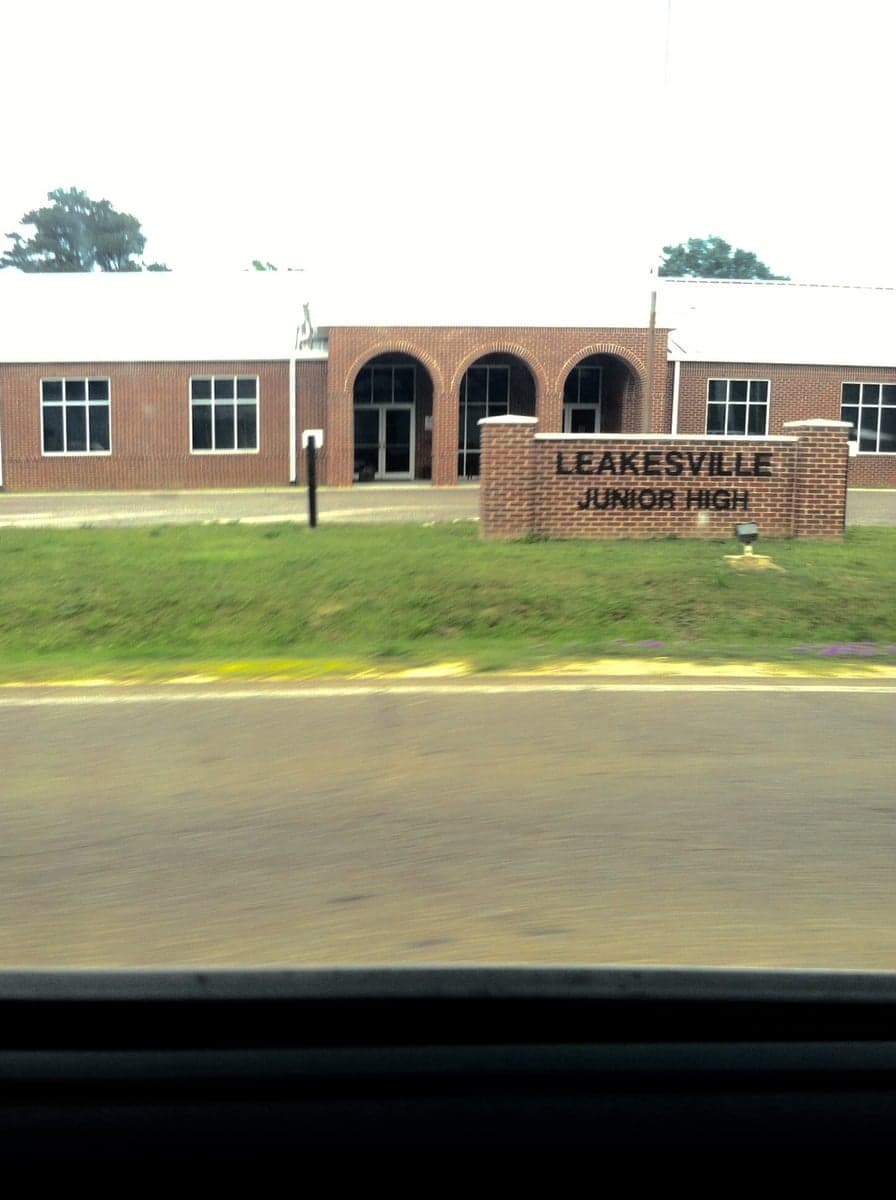
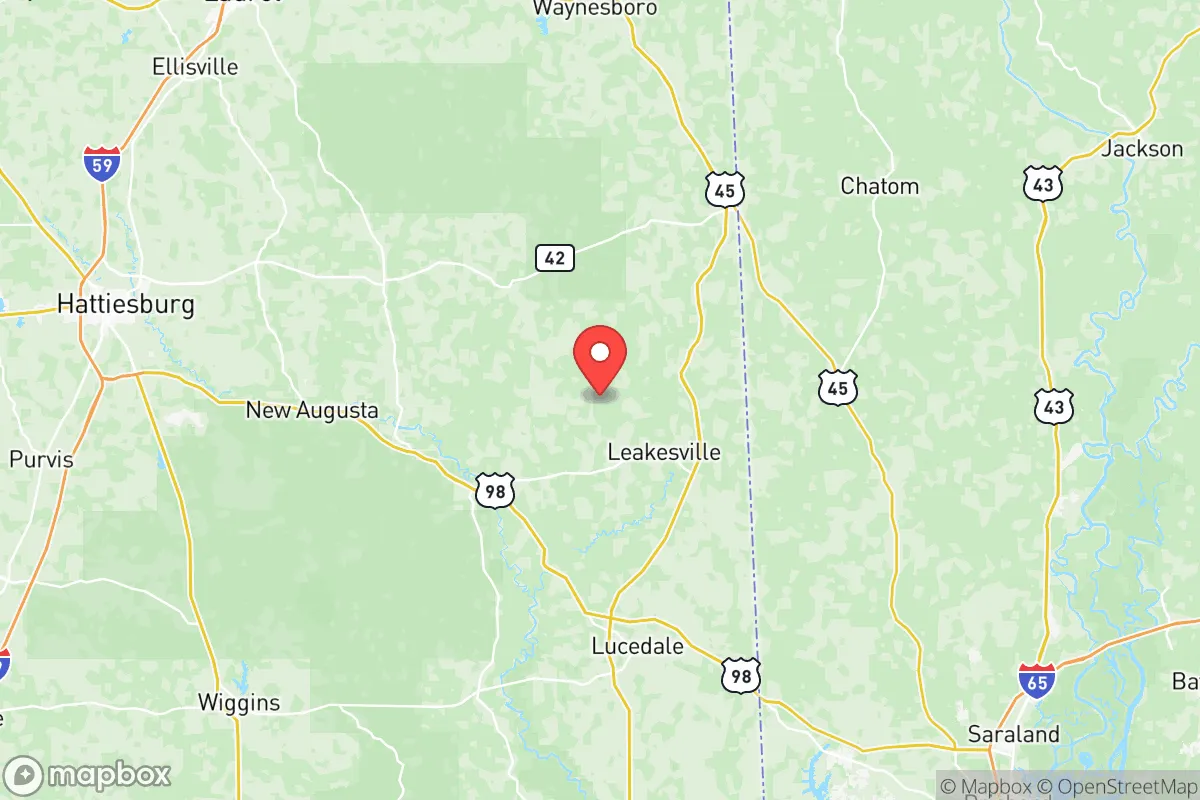
Greene County was officially established in 1811, carved out of the Mississippi Territory, and named after Revolutionary War General Nathanael Greene. The earliest Anglo-American settlers were primarily Scots-Irish and English migrants moving west from the Carolinas and Georgia, drawn by the promise of cheap, fertile land. These pioneers arrived in the 1810s and 1820s, establishing small farms and timber camps. The county seat, Leakesville, was founded in 1832 and quickly became the commercial and social hub, centered on the Leaf River, which provided a vital transportation route for timber and cotton.
The 19th-century economy was built on subsistence farming and the extraction of longleaf pine timber. The arrival of the Mobile, Jackson & Kansas City Railroad in the late 1890s transformed the county, allowing timber to be shipped to national markets. This railroad spurred the growth of small towns like McLain and State Line, which became sawmill communities. The population grew steadily, reaching a peak of around 15,000 by 1910, as sawmills and turpentine camps attracted both white laborers and Black families from the surrounding region. The Great Depression and the collapse of the virgin timber supply led to a gradual population decline, as many families left for industrial jobs in the North and in cities like Mobile and New Orleans.
After World War II, the county’s economy shifted toward poultry processing and sustained forestry. The construction of the Greene County Industrial Park near Leakesville in the 1950s brought a few manufacturing jobs, but the county remained overwhelmingly rural and agricultural. The population stabilized at roughly 10,000 to 11,000 through the 1950s and 1960s, with little in-migration from outside the region.
Modern era (post-1965)
The 1965 Hart-Cellar Act, which reshaped American immigration, had virtually no effect on Greene County. The county’s foreign-born population remains at just 0.7% — one of the lowest rates in Mississippi. Unlike much of the Sun Belt, Greene County did not experience significant domestic in-migration from the Rust Belt or coastal states. Instead, the county has seen a slow, steady out-migration of younger residents seeking education and employment in larger cities like Hattiesburg, Gulfport, and Mobile.
The most notable demographic shift since 1965 has been the gradual decline in the white population share and a slight increase in the Black population share, reflecting broader regional trends of white flight from rural areas to suburban and exurban communities. The county’s Black population, concentrated in the southern part of the county around State Line and the unincorporated community of Bexar, has remained stable, while the white population has aged and declined slightly. The Hispanic population, at just 1.3%, is negligible, consisting mostly of a small number of workers in the poultry plants near Leakesville and McLain.
Suburbanization has largely passed Greene County by. There are no major suburbs or exurbs; the county remains a collection of small, unincorporated communities and two incorporated towns — Leakesville (population roughly 900) and McLain (population roughly 400). The county’s population has hovered between 13,000 and 14,000 since 2000, with a slight uptick in the 2020 census to 13,595, driven primarily by natural increase rather than migration.
The future
Greene County’s population is projected to remain flat or decline slightly over the next 10 to 20 years. The county’s low college attainment rate — just 11.9% — and limited job opportunities outside of timber, poultry, and a few manufacturing plants mean that many young adults will continue to leave. The county is not becoming more diverse; the foreign-born and Hispanic shares are likely to remain minimal, and the racial composition will stay roughly 70% white and 25% Black.
The cultural identity of Greene County is unlikely to change dramatically. It will remain a deeply conservative, religious, and family-oriented community, where social life revolves around churches, high school sports, and hunting and fishing. The county’s few new residents are likely to be retirees or remote workers seeking low-cost, rural living, drawn by the area’s low crime rates and quiet lifestyle. The unincorporated community of Sand Hill and the area around Leaf River may see modest growth as affordable land attracts a small number of newcomers.
For someone moving in now, Greene County offers a stable, predictable, and deeply rooted community — but one with limited economic opportunity and little demographic change on the horizon. It is a place for those who value isolation, tradition, and a slower pace of life, not for those seeking diversity or rapid growth.

* Values derived from national, state, county, city and local statistics and may differ in a specific area. Last updated: 2026-11-04T16:00:06.000Z
Narrative content on this page is AI-generated and may contain mistakes. Verify any details that matter before acting on them.
ReloMaps may earn a commission from affiliate links at no extra cost to you.

