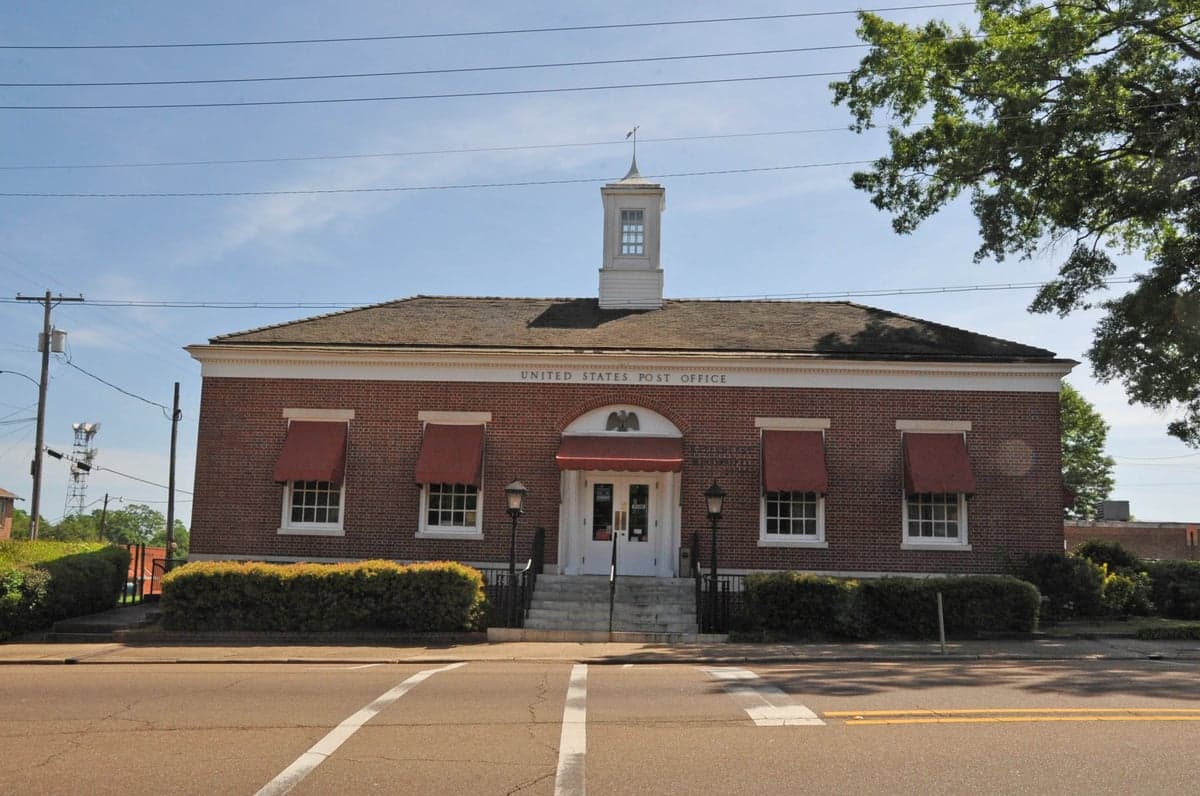
Photo: Wikipedia
Demographics of Copiah County
Affluence Level in Copiah County
A below-average socioeconomic profile. Incomes, home values, and educational attainment trail the U.S., with higher poverty and unemployment.
People of Copiah County
Copiah County, Mississippi, is home to roughly 27,994 residents, making it one of the state’s smaller but historically significant counties. The population is nearly evenly split between Black (50.7%) and White (43.2%) residents, with a small but growing Hispanic community (4.1%) and a foreign-born share of just 0.6%. This is a deeply rooted, majority-minority rural county where family lineage often traces back to the antebellum era, and where the principal towns—Hazlehurst, Crystal Springs, Wesson, and Georgetown—anchor a dispersed, small-town way of life.
Settlement & growth (pre-1960)
Long before European settlers arrived, the area that would become Copiah County was home to the Choctaw people, who used the region’s abundant springs and the Pearl River watershed for hunting and agriculture. The name "Copiah" itself derives from the Choctaw word cowpi aha, meaning "calling panther," a nod to the area’s wild character. The land was ceded to the United States in the 1832 Treaty of Dancing Rabbit Creek, opening the territory to American settlement.
The first major wave of American settlers arrived in the 1810s and 1820s, primarily Scots-Irish and English yeoman farmers moving south from the Carolinas, Virginia, and Tennessee via the Natchez Trace. They were drawn by cheap, fertile land and the promise of cotton cultivation. Copiah County was formally established in 1823, and the town of Gallatin served as its first county seat. By the 1830s, the county’s population had swelled to over 7,000, with cotton plantations concentrated along the river bottoms and small subsistence farms in the uplands.
The antebellum period saw the forced migration of enslaved Black people into the county, who by 1860 made up roughly 50% of the population. They worked the cotton fields that fueled the local economy, and their descendants remain the largest single demographic group in Copiah County today. After the Civil War and Emancipation, many freedmen remained in the area as sharecroppers and tenant farmers, establishing independent Black communities in places like Beauregard and Martinsville.
The arrival of the railroad in the 1850s and 1860s reshaped the county’s settlement pattern. The town of Hazlehurst was founded in 1857 as a railroad depot and quickly eclipsed Gallatin as the commercial hub; it became the county seat in 1872. Crystal Springs, known as the "Tomato Capital of the World," grew around the same rail line and became a center for vegetable and fruit shipping. Wesson developed in the 1860s around a cotton mill and later a sawmill, attracting a mix of white mill workers and Black laborers. Georgetown, on the Pearl River, became a trading post and ferry crossing.
The early 20th century brought modest industrial growth but also significant out-migration. The boll weevil infestation of the 1910s devastated cotton, and the Great Migration (roughly 1915–1970) saw tens of thousands of Black Mississippians leave for Chicago, Detroit, and Memphis in search of industrial jobs and escape from Jim Crow segregation. Copiah County’s population peaked at around 34,000 in 1940 and then began a slow decline. White residents also left in smaller numbers during the mid-century, drawn to urban centers or the oil fields of Texas and Louisiana.
Modern era (post-1965)
The post-1965 era in Copiah County is less a story of new immigration and more a story of stabilization and slow diversification. The Hart-Cellar Act of 1965, which transformed U.S. immigration policy, had almost no direct effect here—the county’s foreign-born population remains a minuscule 0.6%, and there are no immigrant enclaves comparable to those in larger Mississippi cities like Jackson or Gulfport. Instead, the county’s demographic trajectory has been shaped by domestic migration and natural change.
The most significant post-1965 shift has been the growth of the Hispanic population, which now stands at 4.1%. This is a relatively recent development, driven primarily by Latino workers—many of Mexican and Central American origin—moving into the county for agricultural work in the poultry processing plants and vegetable farms around Crystal Springs and Hazlehurst. These workers, often employed by regional poultry integrators, have established small but visible communities, with Spanish-language services appearing in local churches and businesses.
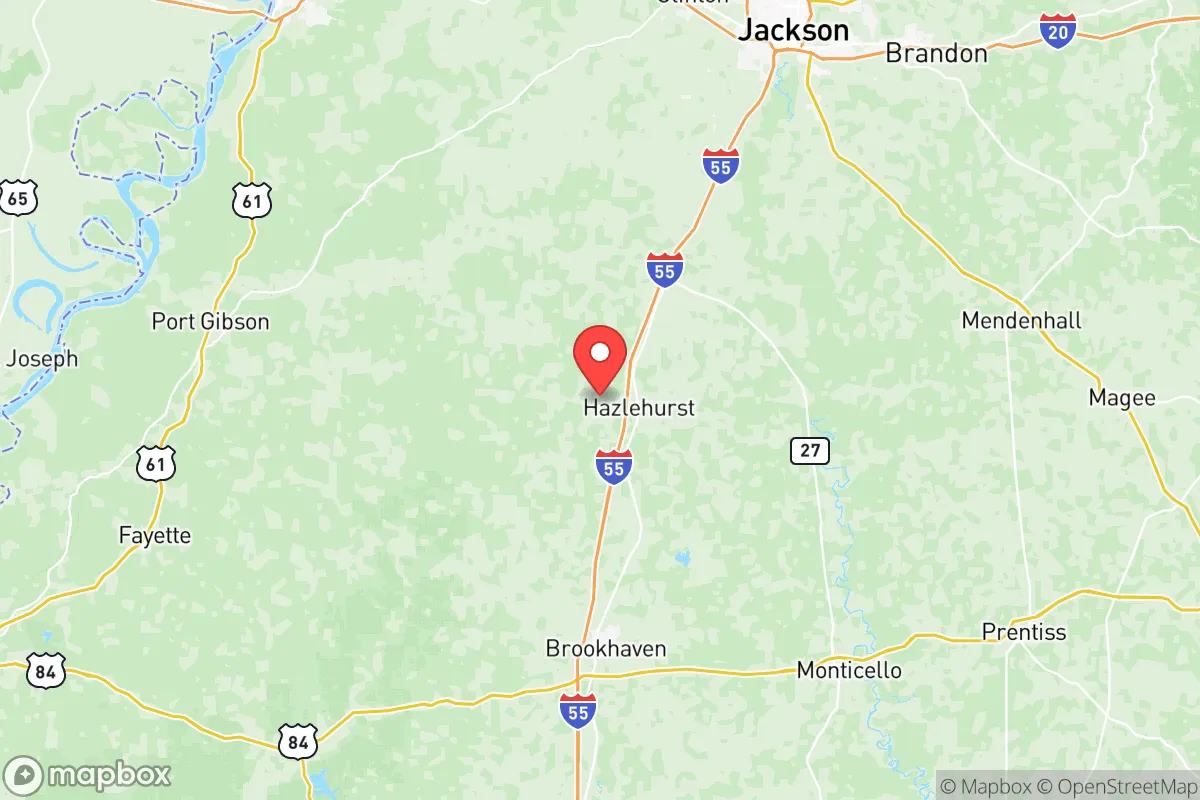
Suburbanization has played a role as well, though on a smaller scale than in Mississippi’s metro areas. Hazlehurst and Crystal Springs have absorbed some spillover from the Jackson metro area, located roughly 30 miles north, as commuters seek cheaper housing and a slower pace of life. This has brought a modest influx of white and Black professionals, though the county remains overwhelmingly rural and working-class. The Black population share has remained remarkably stable at around 50%, reflecting both the legacy of the Great Migration’s end and the return of some Black retirees and remote workers to their family homelands.
East and Southeast Asian residents make up just 0.2% of the population, and there is no measurable Indian-subcontinent community. The county’s diversity is therefore almost entirely a Black-White-Hispanic dynamic, with the Hispanic share growing slowly from near-zero in 1990 to its current 4.1%.
The future
Copiah County is slowly becoming more diverse, but the pace is glacial. The Hispanic population is the only group projected to grow meaningfully over the next decade, potentially reaching 6–8% of the population by 2035, driven by continued demand for agricultural and poultry labor. The Black and White populations are both aging and slowly declining in absolute numbers, as younger residents continue to leave for educational and employment opportunities in Jackson, Hattiesburg, or out of state. The county’s college-educated share stands at just 20.3%, below the national average, which limits the attraction of knowledge-economy jobs.
New residential development is concentrating almost entirely in the northern tier of the county—around Crystal Springs and Hazlehurst—where commuter access to Jackson is easiest. The southern towns of Wesson and Georgetown are likely to see continued population stagnation or decline. The cultural identity of the county remains firmly rooted in its rural, church-centered, and family-oriented traditions, with both Black and White communities sharing a deep attachment to the land and local history.
For someone moving to Copiah County today, the bottom line is this: you are entering a stable, majority-minority rural community where change comes slowly and tradition runs deep. The schools are improving but underfunded, the economy is anchored in agriculture, poultry processing, and small manufacturing, and the cost of living is among the lowest in the nation. If you are seeking a quiet, affordable, and genuinely Southern way of life—and you are comfortable in a community where Black and White residents have shared a complex history for two centuries—Copiah County offers a distinctive and authentic place to call home.

* Values derived from national, state, county, city and local statistics and may differ in a specific area. Last updated: 2026-10-30T16:42:09.000Z
Narrative content on this page is AI-generated and may contain mistakes. Verify any details that matter before acting on them.
ReloMaps may earn a commission from affiliate links at no extra cost to you.

