Photo: Wikipedia
Political ClimatePolitical Climate in Coahoma County
Showing district-level results — no local-only data available.
Local Political AnalysisPolitical Analysis of Coahoma County
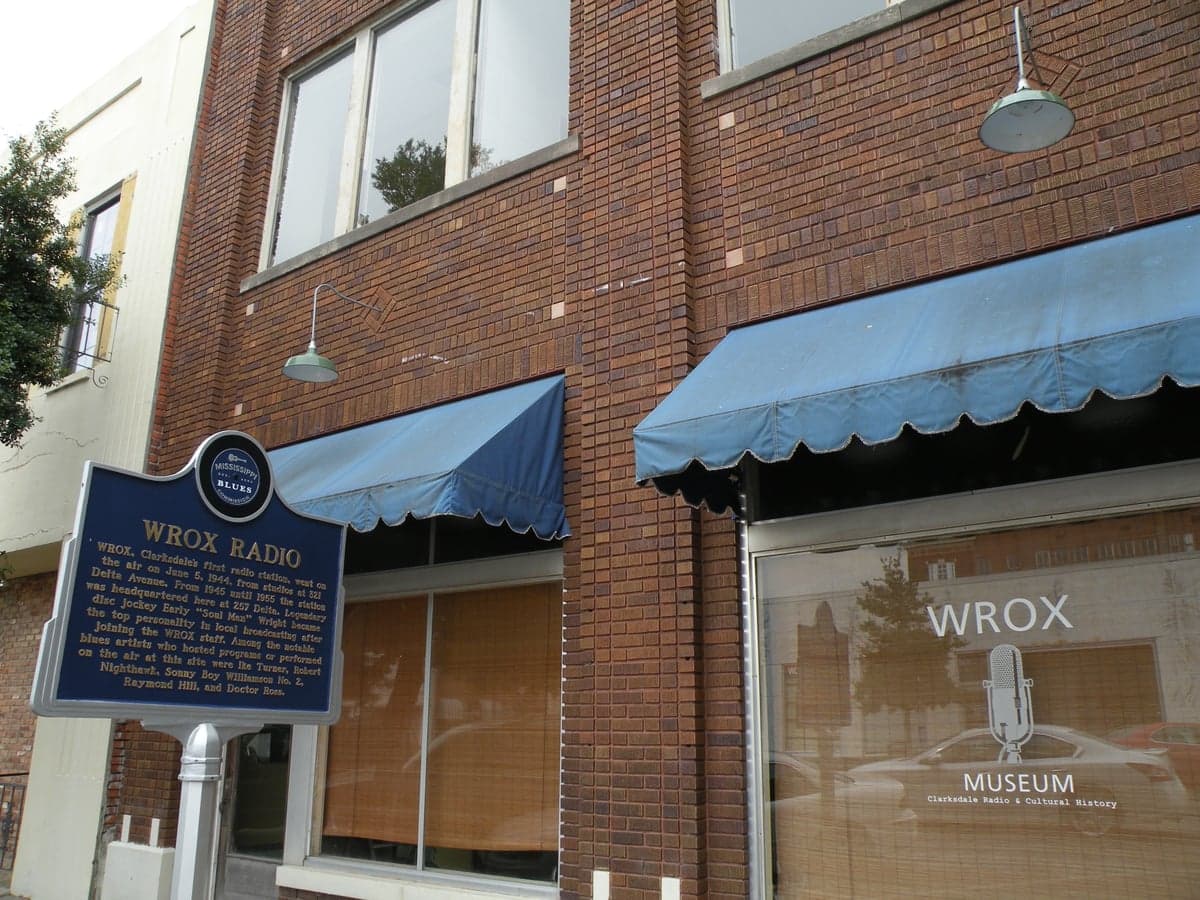
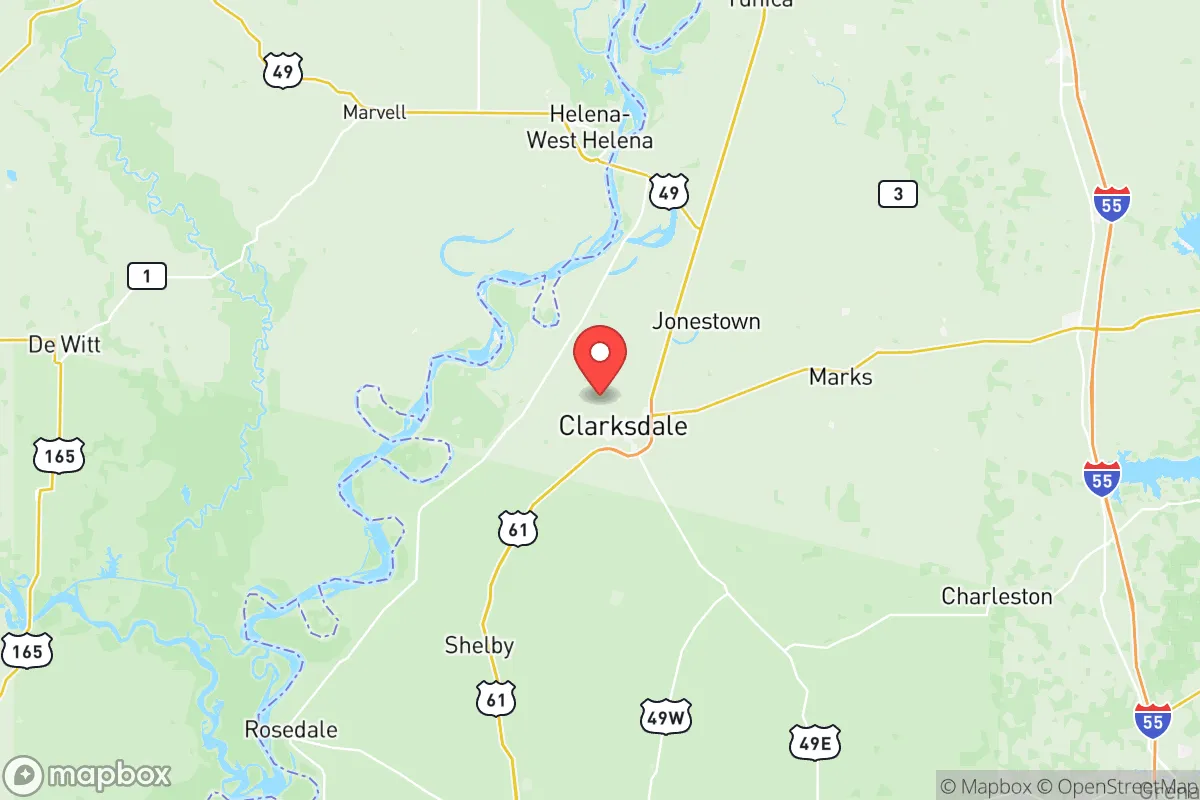
Coahoma County, anchored by the city of Clarksdale, is a Democratic stronghold in a deeply Republican state, carrying a Cook PVI of D+11 while the state of Mississippi sits at R+11. This 22-point gap makes the county one of the most politically distinct areas in the Delta, a reality that has held steady for decades but is showing subtle signs of strain as national polarization seeps into local races. The county's Democratic lean is driven overwhelmingly by its majority-Black population and the legacy of civil rights organizing, but don't mistake it for a monolith — there are real pockets of Republican support, especially in the more rural, white-majority precincts outside of Clarksdale.
How it compares
Compared to Mississippi as a whole, Coahoma County is a political outlier. While the state has trended red since the 1980s — with every statewide office and both U.S. Senate seats held by Republicans — Coahoma has remained reliably blue in presidential and gubernatorial races. In 2020, Joe Biden won the county by roughly 40 points, even as Donald Trump carried Mississippi by 16. The contrast is starkest in the county seat of Clarksdale, where precincts near the historic downtown and the Delta Blues Museum routinely deliver 80-90% Democratic margins. Head east to Lula or Jonestown, and you'll find similar numbers. But drive north to Friars Point or the unincorporated areas around Sherard, and you'll hit precincts that vote 60-70% Republican — a reminder that the county's rural white voters align closely with the rest of Mississippi's conservative base. The swing precincts are few, but they exist in the mixed-race neighborhoods just outside Clarksdale city limits, where local school board races can flip on a dime.
What this means for residents
For liberal residents, especially in Clarksdale, the local political climate is comfortable. The county board of supervisors and school board are reliably Democratic, and progressive initiatives — like the push for a new multi-modal transportation center or expanded rural broadband — get a fair hearing. But the comfort stops at the county line. State-level policies, from abortion restrictions to education funding formulas, are set in Jackson by a Republican supermajority, meaning Coahoma's local priorities often clash with state mandates. For conservative residents, the experience is more nuanced. They may feel out of step with local leadership, but they're not silenced — Republican candidates regularly win 30-40% of the countywide vote, and in rural precincts like those around Marks (just south in Quitman County, but similar in character), conservative voices dominate local civic clubs and church boards. The practical effect is that both sides learn to coexist, especially in economic development discussions where party labels matter less than job creation.
Culturally, Coahoma County's political identity is inseparable from its blues heritage and agricultural roots. The annual Juke Joint Festival in Clarksdale draws a progressive, artsy crowd, while the county's catfish and cotton farmers tend to lean conservative. One notable policy distinction: Coahoma is one of the few Mississippi counties where local officials have publicly resisted state-level efforts to restrict voting access, with the county election commission maintaining early voting hours that exceed state minimums. This isn't a place of loud partisan warfare — it's a place where the Delta's history of racial and economic division still shapes every vote, but where neighbors on opposite sides of the aisle still share a pew on Sunday. Looking ahead, the county's Democratic lean is likely to hold as long as Clarksdale's population base remains strong, but outmigration and rural depopulation could slowly shift the balance if younger, more conservative families move into the area's affordable farmland.

State Political ClimatePolitical Climate in Mississippi
State Political AnalysisPolitical Environment in the State
Mississippi is one of the most reliably Republican states in the country, with a Cook Partisan Voting Index of R+11, meaning it votes about 11 points more Republican than the national average. The state hasn't voted for a Democratic presidential candidate since Jimmy Carter in 1976, and the GOP holds every statewide office and supermajorities in both legislative chambers. Over the last 20 years, the shift has been dramatic — as recently as the 1990s, Democrats controlled the legislature and held the governorship, but the realignment of white conservative voters, particularly in the Delta and Pine Belt, has made Mississippi a deep-red stronghold with no signs of loosening.
Urban vs. rural divide
The political map of Mississippi is a classic story of a few blue islands in a red sea. The state's largest metro, the Jackson metropolitan area, is the only reliably Democratic stronghold — Hinds County (Jackson) voted for Joe Biden by a 30-point margin in 2020, driven by a large Black population and a concentration of state government workers and university faculty. The Gulf Coast, anchored by Biloxi and Gulfport, leans Republican but is more competitive, with a mix of military retirees, casino workers, and a growing Hispanic population that keeps races closer than in the interior. The northeastern corner around Tupelo and the Golden Triangle (Columbus, Starkville, West Point) is solidly red, fueled by manufacturing and agriculture. The Mississippi Delta, once a Democratic bastion, has flipped hard — counties like DeSoto (suburban Memphis) and Rankin (suburban Jackson) are among the most Republican in the nation, with DeSoto County giving Trump over 70% of the vote in 2020. The only other blue pockets are college towns like Oxford (Lafayette County) and Starkville (Oktibbeha County), where student populations and faculty tilt left, but these are small and surrounded by deep-red rural territory.
Policy environment
Mississippi's policy environment is among the most conservative in the country, reflecting its Republican supermajority. The state has no state income tax on Social Security benefits and a flat 4% income tax on other income, with a phase-out plan that aims to eliminate the income tax entirely by 2030. Sales tax is 7% on most goods, one of the highest in the nation, but property taxes are very low — the median effective rate is about 0.8% of home value. The state is a right-to-work state with no union-shop agreements, and its regulatory posture is business-friendly, with few environmental or land-use restrictions outside of federal mandates. Education policy is dominated by school choice: Mississippi has a robust charter school law, a voucher program for special-needs students, and a growing Education Scholarship Account (ESA) program that lets parents use state funds for private school tuition. Healthcare is a mixed bag — the state did not expand Medicaid under the Affordable Care Act, leaving about 100,000 working poor in the coverage gap, but it has some of the lowest healthcare costs in the nation. Election laws are restrictive by national standards: voter ID is required, absentee voting is limited to specific excuses, and early voting is only available in person for 10 days before an election. The state also has a "stand your ground" self-defense law, no red-flag law, and permitless carry for concealed firearms since 2016.
Recent policy direction
Over the last five years, Mississippi has moved decisively to the right on nearly every front. In 2023, the legislature passed a near-total abortion ban with no exceptions for rape or incest, triggered by the Dobbs decision, and the only abortion clinic in the state closed. On gun rights, the 2024 session expanded permitless carry to include the right to carry in churches and on public transportation, and a "Second Amendment Preservation Act" was introduced (though not yet passed) to nullify federal gun laws. Parental rights have been a major focus: the 2022 "Parents' Bill of Rights" requires schools to notify parents of any changes to a student's mental, emotional, or physical health, effectively banning transgender accommodations without parental consent. On education, the 2023 "School Safety Act" allows teachers to carry firearms on campus after training, and the state has banned critical race theory and "divisive concepts" in public schools. Property rights are strong — Mississippi is a "right to farm" state that protects agricultural operations from nuisance lawsuits, and eminent domain for private economic development is restricted. On privacy and surveillance, the state has no comprehensive data privacy law, but it does ban warrantless drone surveillance over private property. Medical and bodily autonomy is limited: medical marijuana was legalized in 2022 after a ballot initiative, but the program is tightly regulated with a low THC cap and a limited number of dispensaries. Voting access has tightened: the 2023 "Election Integrity Act" shortened the absentee ballot request window, banned ballot harvesting, and required signature verification for mail-in ballots.
Civil unrest & political movements
Mississippi has a history of civil rights activism that continues to shape its politics, but large-scale protests are rare today. The most visible flashpoint in recent years was the 2020 Black Lives Matter protests in Jackson, which drew thousands and led to the removal of the Mississippi state flag (the last in the nation to feature the Confederate battle emblem). That flag change passed the legislature with bipartisan support, but it remains a divisive issue in rural areas, where some counties have refused to fly the new state flag. Immigration politics are relatively quiet — Mississippi has a small foreign-born population (about 2.5%), and there are no sanctuary cities. The state's attorney general, Lynn Fitch, has been active in national conservative legal battles, including the Dobbs case that overturned Roe v. Wade. Election integrity controversies flared after 2020, with the state GOP passing the 2023 law tightening absentee voting, but there have been no major fraud allegations or recounts. The most organized activist movements are on the right: the Mississippi Republican Party has a strong grassroots network through county-level "precinct captains," and groups like the Mississippi Federation of Republican Women and the Mississippi Tea Party are active. On the left, the Mississippi Poor People's Campaign and the Mississippi NAACP organize around poverty and voting rights, but they have limited electoral impact outside of Jackson and the Delta.
Projection
Over the next 5-10 years, Mississippi is likely to become even more Republican, driven by two trends: the continued out-migration of Black residents from the Delta to other states (Mississippi lost population overall in the 2020 census) and the in-migration of white retirees and remote workers to the Gulf Coast and the Pine Belt. The state's population is aging and shrinking, which tends to favor the GOP. The income tax phase-out, if completed, will make Mississippi even more attractive to conservative relocators from high-tax states like California and New York, but it will also strain state services — already, Mississippi ranks near the bottom in education funding, healthcare access, and infrastructure. The political center of gravity will continue to shift from Jackson to the suburbs of Memphis (DeSoto County) and the Gulf Coast, where growth is fastest. The Democratic Party will remain competitive only in Jackson, Oxford, and Starkville, and even there, gerrymandered legislative districts will keep the GOP in supermajority control. A new resident moving in now should expect a state that is deeply conservative, with low taxes, limited government services, and a culture that values individual liberty over collective provision. The biggest wildcard is the state's high poverty rate (about 19%) and poor health outcomes — if the income tax cut leads to further cuts in Medicaid or education, it could accelerate out-migration and deepen the state's economic challenges.
For a new resident, the bottom line is this: Mississippi offers a low-cost, low-regulation environment with a strong sense of community and a deeply conservative political culture. If you value low taxes, gun rights, school choice, and a government that stays out of your business, you'll feel at home. If you rely on public services, want access to abortion, or prefer a more diverse and urban environment, you'll find the state frustrating. The political trajectory is clear — Mississippi will remain one of the most Republican states in the nation for the foreseeable future, with all the practical implications that entails for taxes, services, and daily life.
* Values derived from national, state, county, city and local statistics and may differ in a specific area. Last updated: 2026-08-19T22:21:12.000Z
Narrative content on this page is AI-generated and may contain mistakes. Verify any details that matter before acting on them.
ReloMaps may earn a commission from affiliate links at no extra cost to you.

