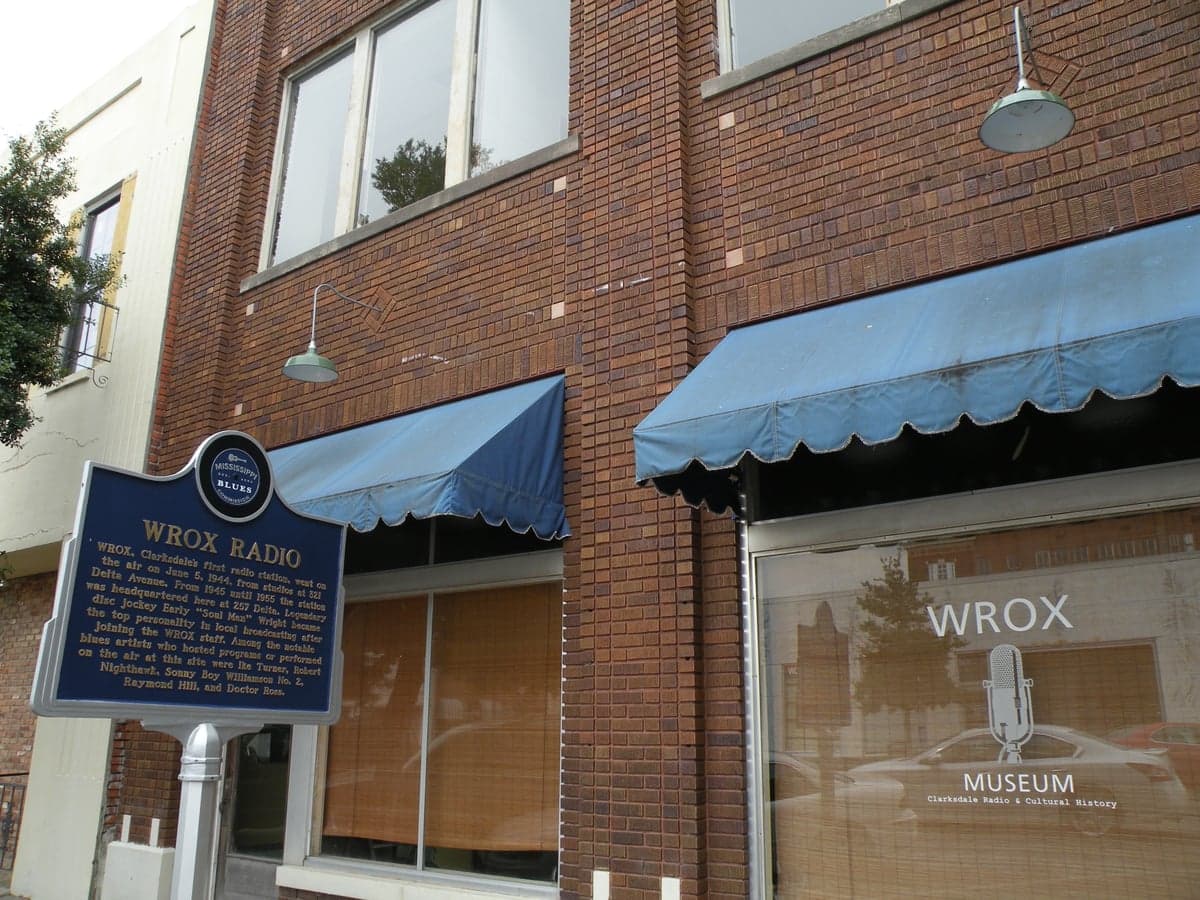
Photo: Wikipedia
Personal Sovereignty in Coahoma County
Viable for self-reliance. Generally workable, though some barriers may limit total independence.
What does Personal Sovereignty tell us?
Personal Sovereignty measures your capacity for self-reliance and independence with minimal government friction. Higher scores mean fewer barriers between you and the way you want to live... but it assumes you have the space you need and good neighbors.
What does this tell us?
Personal Sovereignty measures your capacity for self-reliance and independence with minimal government friction. Higher scores mean fewer barriers between you and the way you want to live... but it assumes you have the space you need and good neighbors.
State Policy
Energy independence: Importer (50% of energy produced in-state)
Personal Liberty
Homesteading

Personal Liberty Analysis
Coahoma County, Mississippi, offers a notably high degree of personal sovereignty, particularly for those seeking a low-tax, lightly regulated environment with strong protections for self-defense and parental rights. The county seat, Clarksdale, anchors the area, but the regulatory and cultural landscape shifts noticeably between the more urbanized Clarksdale and the unincorporated communities like Lyon, Friars Point, and Jonestown. For a relocation-minded individual or family prioritizing autonomy, the county presents a compelling mix of state-level constitutional protections and local realities that reward self-reliance.
Tax burden and regulatory posture in Coahoma County
Mississippi’s state-level tax structure is among the most favorable in the nation for those valuing financial autonomy. There is no state tax on Social Security benefits, and the state income tax is being phased out entirely, with a flat 4.0% rate in 2026 dropping to 0% by 2028. Property taxes in Coahoma County are low by national standards, with a typical millage rate around 100-110 mills, translating to roughly $1,000-$1,100 annually on a $100,000 home. The county’s regulatory posture is light-touch: there is no county-wide zoning ordinance in unincorporated areas, meaning a landowner in Lyon or along the Mississippi River levee can build a workshop, keep livestock, or park an RV without navigating a permitting maze. Clarksdale does have a zoning code and building permits, but enforcement is generally pragmatic. Business licensing is minimal—a simple privilege license for most enterprises—and there are no county-level occupational taxes. The absence of a state-level estate or inheritance tax further strengthens the sovereignty picture for those looking to pass property to the next generation.
Self-defense and gun law specifics in the Delta
Mississippi is a constitutional carry state, and Coahoma County fully reflects that. Since 2016, any adult who can legally possess a firearm may carry it openly or concealed without a permit, and this applies throughout the county, including in Clarksdale’s city limits. There is no duty to retreat in any place where a person has a legal right to be—the “stand your ground” statute is unambiguous. Local sheriffs and police in Coahoma County are generally supportive of gun rights; the Coahoma County Sheriff’s Department does not maintain a public registry of firearm owners, and there are no county-level restrictions on magazine capacity or firearm types. For those interested in training, the Clarksdale Rifle and Pistol Club offers a range facility, and private land in areas like Sherard or Farrell provides ample space for safe shooting. The practical reality: a resident in unincorporated Coahoma County can defend their home, vehicle, or occupied space with deadly force if they reasonably perceive a threat, with strong legal protection. The only notable local nuance is that discharging a firearm within Clarksdale city limits is restricted, so rural property is preferable for regular target practice.
Self-reliance and homesteading viability across the county
Coahoma County is one of the most viable places in Mississippi for off-grid and homesteading lifestyles, largely due to its agricultural heritage and sparse regulation. In unincorporated areas like Lyon, Friars Point, and Jonestown, there are no county-wide minimum lot size requirements for residential use—a half-acre parcel can legally support a home, garden, and small livestock operation. The county does not enforce building codes outside municipal limits, so owner-built structures, earth-sheltered homes, or tiny houses are permissible as long as they meet basic state health department septic requirements. Rainwater collection is unrestricted, and many rural properties have existing wells. Solar panels face no county-level permitting hurdles, and net metering is available through Entergy Mississippi, though the utility’s interconnection process is straightforward. For those wanting to raise animals, the county has no restrictions on chickens, goats, or even cattle on residential parcels outside towns. The Mississippi Department of Agriculture does require livestock identification for cattle, but small-scale operations face minimal oversight. Clarksdale’s city limits are more restrictive—chickens are allowed only with a permit and no roosters—so homesteaders should target the rural townships or unincorporated areas for maximum freedom.
Personal liberties: parental rights, medical autonomy, and property
Mississippi law provides strong protections for parental rights, and Coahoma County’s school system—the Clarksdale Municipal School District and the Coahoma County School District—generally defer to parents on educational decisions. Homeschooling is straightforward: parents file a simple certificate of enrollment with the state, and there are no curriculum mandates, standardized testing requirements, or home visits. The state’s “Parents’ Bill of Rights” (SB 2681, 2023) explicitly affirms that parents have the fundamental right to direct their child’s upbringing, education, and healthcare. On medical autonomy, Mississippi does not have a state-level vaccine mandate for adults, and the county health department does not enforce any local mandates. Religious and philosophical exemptions are available for school vaccine requirements. Property rights are robust: there is no county-wide rent control, no short-term rental restrictions outside Clarksdale, and no county-level tree ordinances or aesthetic regulations. The Coahoma County Board of Supervisors has not adopted any form of inclusionary zoning or affordable housing mandates. For those seeking to build a private shooting range, workshop, or even a small guest cabin on their land, the only likely hurdle is the state-mandated septic system permit from the county health department—a straightforward process that typically costs under $200.
Overall, Coahoma County ranks among the most sovereignty-friendly areas in the Mississippi Delta, especially when compared to more regulated urban centers like Jackson or Memphis. The combination of no county zoning in rural areas, constitutional carry, low property taxes, and strong parental rights creates an environment where self-reliant individuals and families can operate with minimal government interference. The trade-off is that this autonomy comes with limited public services—rural fire protection is volunteer-based, and road maintenance in areas like Bobo or Mattson can be slow. For the reader who values personal freedom over convenience, Coahoma County offers a genuine low-regulation lifestyle that is increasingly rare in the modern South.

* Values derived from national, state, county, city and local statistics and may differ in a specific area. Last updated: 2026-08-19T22:21:12.000Z
Narrative content on this page is AI-generated and may contain mistakes. Verify any details that matter before acting on them.
ReloMaps may earn a commission from affiliate links at no extra cost to you.

