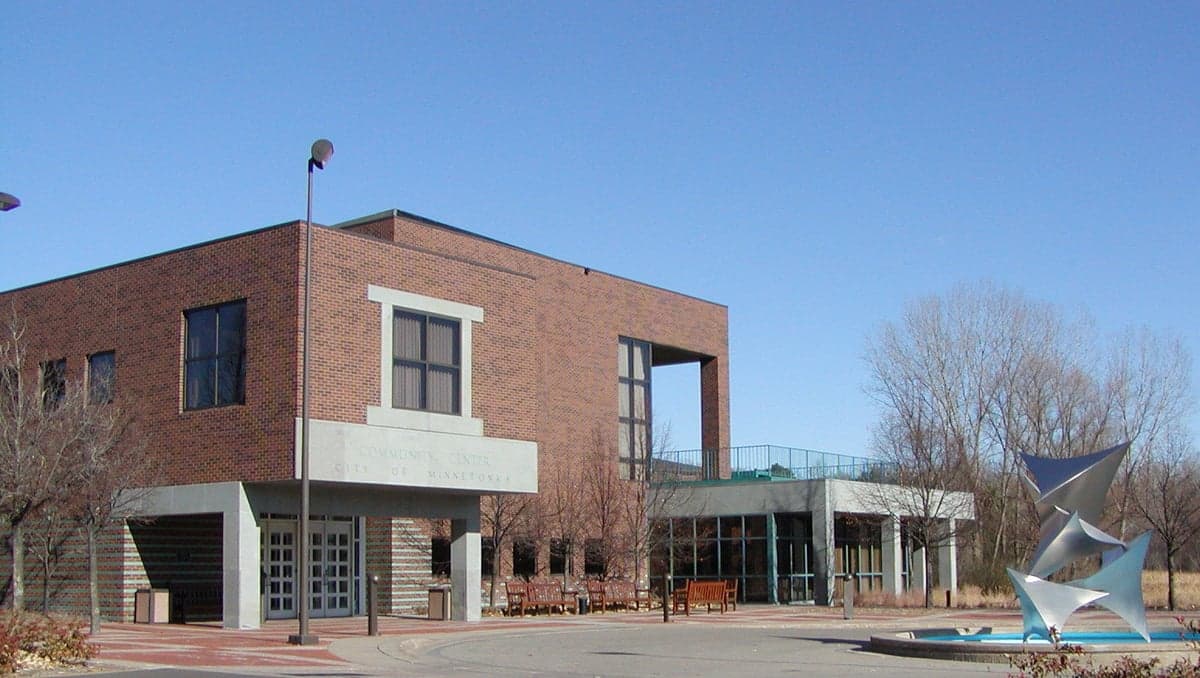
Photo: Wikipedia
Political ClimatePolitical Climate in Minnetonka, MN
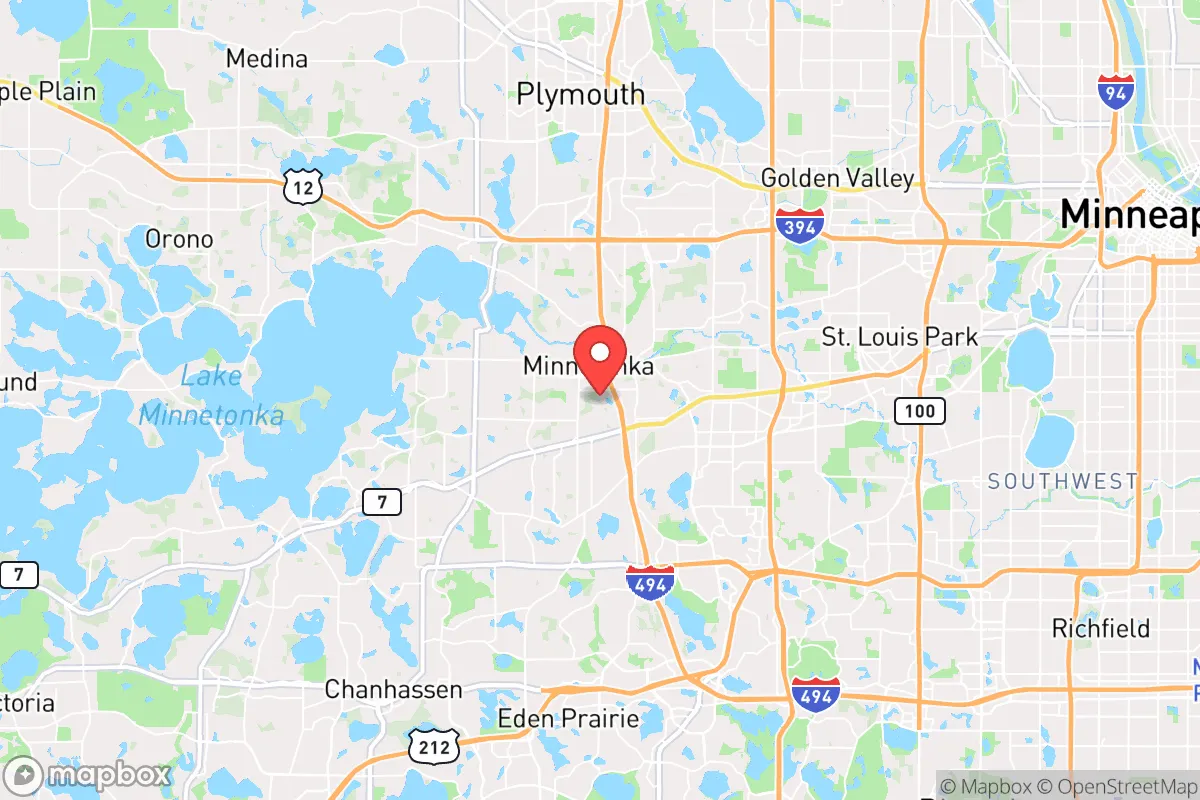
District shown is the primary district for this city’s centroid. Cities may span multiple districts.
Local Political AnalysisPolitical Analysis of Minnetonka, MN
Minnetonka leans solidly Democratic, with a Cook PVI of D+11, meaning the area votes about 11 points more Democratic than the national average. That’s a significant shift from even a decade ago, when the city was more of a purple-leaning suburb. Today, you’ll find a lot of folks here who vote straight-ticket blue, and the local elections reflect that—city council and school board seats are almost always held by Democrats or left-leaning independents. It’s not a radical hotbed like Minneapolis proper, but the trajectory is clear: the political center has moved left, and it’s not showing signs of swinging back.
How it compares
If you drive just a few miles west to places like Excelsior or Shorewood, you’ll hit more conservative pockets—those areas still lean Republican, though they’re getting bluer too. Head north to Plymouth or Maple Grove, and you’ll find a similar D+ lean, but with a bit more fiscal conservatism mixed in. The real contrast is south and west: Chanhassen and Chaska are still reliably red, with Cook PVIs around R+5 to R+8. So Minnetonka sits in this bubble where progressive policies—like higher taxes for social programs, strict zoning rules, and climate initiatives—are the norm. It’s a stark reminder that your vote here is almost an afterthought in local races; the primary is where the real decision happens.
What this means for residents
For a long-time resident like me, the biggest concern is how this political uniformity affects daily life. Property taxes have climbed steadily—up about 15% over the last five years—to fund things like expanded public transit and affordable housing mandates that many of us didn’t ask for. The city council has pushed through new regulations on short-term rentals and home-based businesses, citing “community character,” but it feels like government overreach into personal property rights. School board decisions have also gotten more ideological, with a focus on equity initiatives that sometimes sideline academic rigor. If you value personal freedom—like choosing your own healthcare, deciding how to use your land, or opting out of mask mandates—you’ll find yourself increasingly at odds with the local leadership.
Culturally, Minnetonka is still a great place to raise a family—good schools, low crime, beautiful lakes. But the political drift is real. In the next 5-10 years, I expect more progressive policies on housing density and environmental restrictions, which could drive up costs and limit choices for homeowners. The long-term trend is toward a more regulated, higher-tax environment that mirrors Minneapolis, minus the urban chaos. If that doesn’t sit well with you, it might be worth looking at the exurbs or even western Wisconsin, where the political climate is more aligned with traditional values. For now, Minnetonka is a comfortable but increasingly one-sided place to live—just don’t expect your voice to carry much weight if you lean right.

State Political ClimatePolitical Climate in Minnesota
State Political AnalysisPolitical Environment in the State
Minnesota has historically been a purple state with a slight blue tilt, but over the past decade it has shifted decisively leftward, driven by the explosive growth of the Twin Cities metro area and a collapse of rural Democratic support. The state hasn’t voted for a Republican presidential candidate since 1972, but that streak masks a deep internal realignment: the DFL (Democratic-Farmer-Labor Party) now relies almost entirely on the urban core of Minneapolis and St. Paul, while the rest of the state has become reliably red. In 2024, Donald Trump lost Minnesota by just 1.5 points, a narrower margin than 2020, signaling that the state is still competitive at the presidential level even as state government has lurched hard left under Governor Tim Walz and a DFL trifecta from 2023-2025.
Urban vs. rural divide
The political map of Minnesota is a textbook case of the urban-rural chasm. The Twin Cities metro area, home to roughly 55% of the state’s population, is the engine of Democratic power. Hennepin County (Minneapolis) and Ramsey County (St. Paul) routinely deliver margins of 60-70% for Democrats, while suburban counties like Washington and Dakota have shifted blue in recent cycles. Meanwhile, greater Minnesota is overwhelmingly Republican. The Iron Range, once a DFL stronghold due to union mining jobs, has flipped hard red over the past two cycles — St. Louis County (Duluth) is now a battleground, while Itasca and Lake Counties vote Republican. Outstate agricultural counties like Nobles, Jackson, and Martin routinely go 70%+ Republican. The key swing areas are the outer-ring suburbs and exurbs — places like Wright County (e.g., Buffalo), Sherburne County (Elk River), and Chisago County (North Branch) — which voted for Trump but also sent moderate DFLers to the legislature in 2022. If you’re looking for a politically comfortable spot as a conservative, the southwestern corner (Pipestone, Luverne) or the St. Cloud area (Stearns County) are your best bets.
Policy environment
Under the DFL trifecta of 2023-2025, Minnesota enacted a sweeping progressive agenda that should give any freedom-minded person pause. The state now has a progressive income tax with a top rate of 9.85% on income over $200,000 (single filers), one of the highest in the nation. Property taxes are locally set but generally high, especially in the metro. The corporate tax rate is 9.8%, and the state sales tax is 6.875% (with local add-ons). In 2023, the legislature passed a paid family and medical leave program funded by a new payroll tax, a carbon-free electricity mandate by 2040, and a massive expansion of state government spending — the budget grew by over 30% in one biennium. On education, Minnesota has open enrollment and charter schools, but the DFL has moved to restrict charter growth and increase funding for traditional public schools. The state also passed a law requiring all public schools to provide free menstrual products in bathrooms, a small but symbolic example of the regulatory creep. Election laws: Minnesota has same-day voter registration, no-excuse absentee voting, and automatic voter registration — all of which make it easy to vote but also raise concerns about ballot security among conservatives. The state does not have voter ID laws, a persistent point of contention.
Trajectory & freedom
On the freedom index, Minnesota is trending downward. The most alarming recent development for conservatives was the passage of a red flag law (Extreme Risk Protection Order) in 2023, allowing courts to temporarily seize firearms from individuals deemed a threat to themselves or others — a law many see as a due process violation. The state also banned the sale of “assault weapons” to anyone under 21 and expanded background checks to private sales. On parental rights, the DFL passed a law in 2023 that prohibits school districts from notifying parents if a student changes their gender identity or pronouns without the student’s consent — a direct blow to parental authority. Medical autonomy took a hit with the codification of abortion rights into state law (the Protect Reproductive Options Act) in 2023, removing nearly all restrictions. On the plus side, Minnesota has no state income tax on Social Security benefits, and property taxes are somewhat offset by a homestead credit. But the overall trajectory is one of expanding government control over daily life — more taxes, more mandates, less local control.
Civil unrest & political movements
Minnesota became a national flashpoint after the murder of George Floyd in 2020, which sparked massive protests, riots, and the destruction of a police precinct in Minneapolis. The aftermath saw a surge in progressive activism, including the “defund the police” movement, though that has since moderated. The state also has a significant Somali immigrant population, concentrated in the Cedar-Riverside neighborhood of Minneapolis, which has become a political force — the state elected the first Somali-American legislator in the U.S., Ilhan Omar, who now represents the 5th Congressional District. On the right, the “Boyd” movement (named after the town of Boyd, Minnesota) has organized around Second Amendment sanctuary resolutions, with over 60 counties passing resolutions declaring themselves “Second Amendment sanctuaries” — though these are symbolic. Election integrity remains a hot-button issue: in 2020, Minnesota had a relatively smooth election, but the 2022 law allowing felons to vote upon release from prison (not just after parole) has raised concerns. Immigration politics are quieter than in border states, but the state is a sanctuary state in practice — the 2023 “Driver’s Licenses for All” law allows undocumented immigrants to obtain driver’s licenses.
Projection
Over the next 5-10 years, Minnesota is likely to become more Democratic at the state level, but the margin will remain close. The Twin Cities metro is growing faster than the rest of the state, and in-migration from blue states (Illinois, California) is accelerating that trend. However, the rural areas are not depopulating as fast as some states — small towns like New Ulm and Hutchinson are stable. The wild card is the Iron Range: if mining jobs continue to decline, that region could become even more Republican, offsetting some metro gains. The DFL’s 2023-2025 trifecta was a one-off — the state Senate flipped back to Republican control in 2024, meaning gridlock is likely for the next few years. But the long-term demographic trend favors Democrats. If you’re moving here as a conservative, expect to live in a state where your vote for president is likely to be wasted, but where local and state races remain competitive. The best strategy is to settle in a red county (e.g., Wright, Sherburne, Stearns, or any county west of I-35) where your local school board and city council will reflect your values.
Bottom line: Minnesota is a beautiful state with great outdoor recreation, a strong economy, and good schools — but it comes with a heavy tax burden and a government that is increasingly comfortable intruding into personal decisions. If you value low taxes, gun rights, and parental control, you’ll need to live in the right county and stay politically engaged. The state is not lost, but it’s a battleground — and you’ll be fighting for every inch of freedom.
* Values derived from national, state, county, city and local statistics and may differ in a specific area. Last updated: 2026-04-24T15:28:06.000Z
Narrative content on this page is AI-generated and may contain mistakes. Verify any details that matter before acting on them.
ReloMaps may earn a commission from affiliate links at no extra cost to you.

