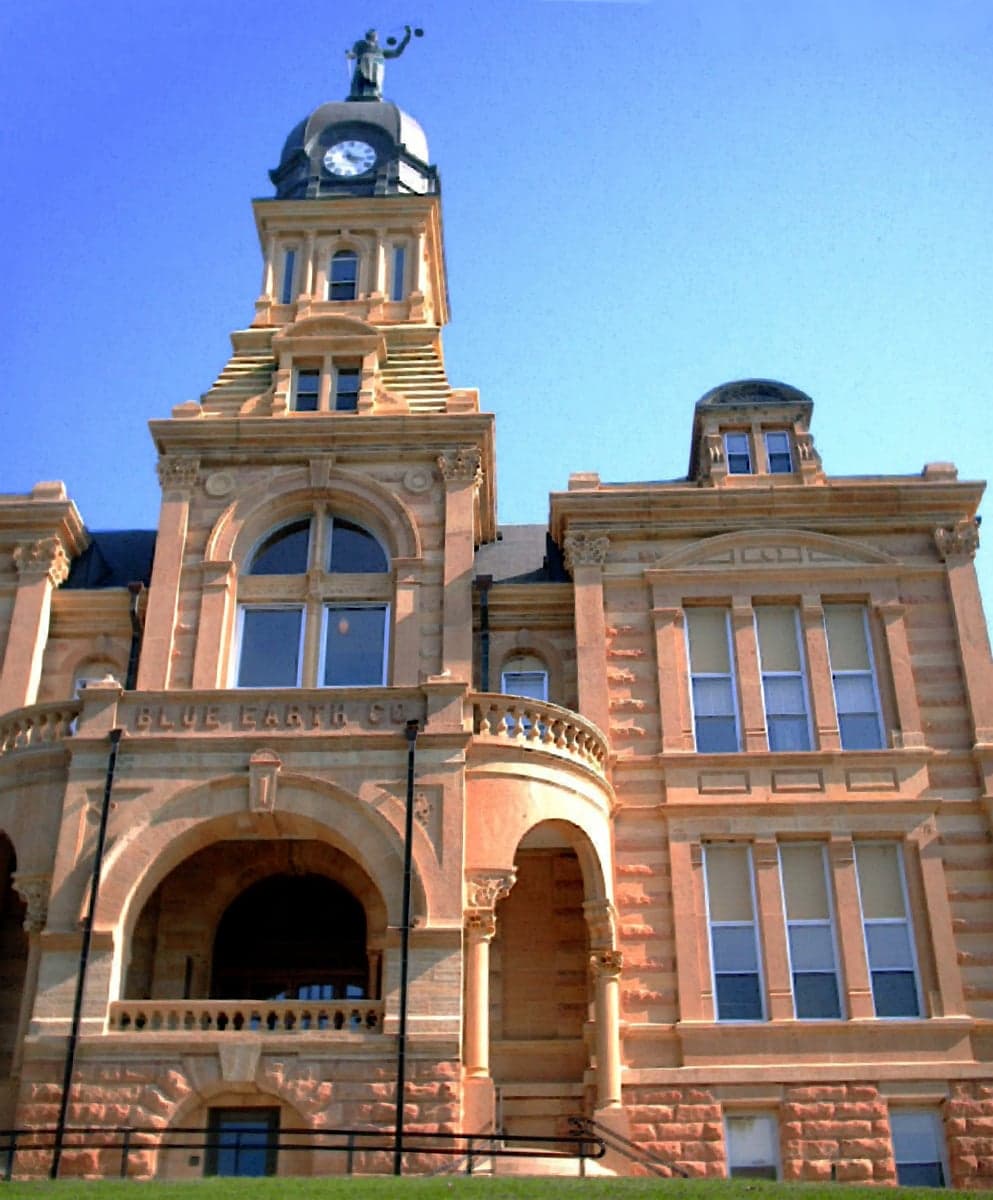
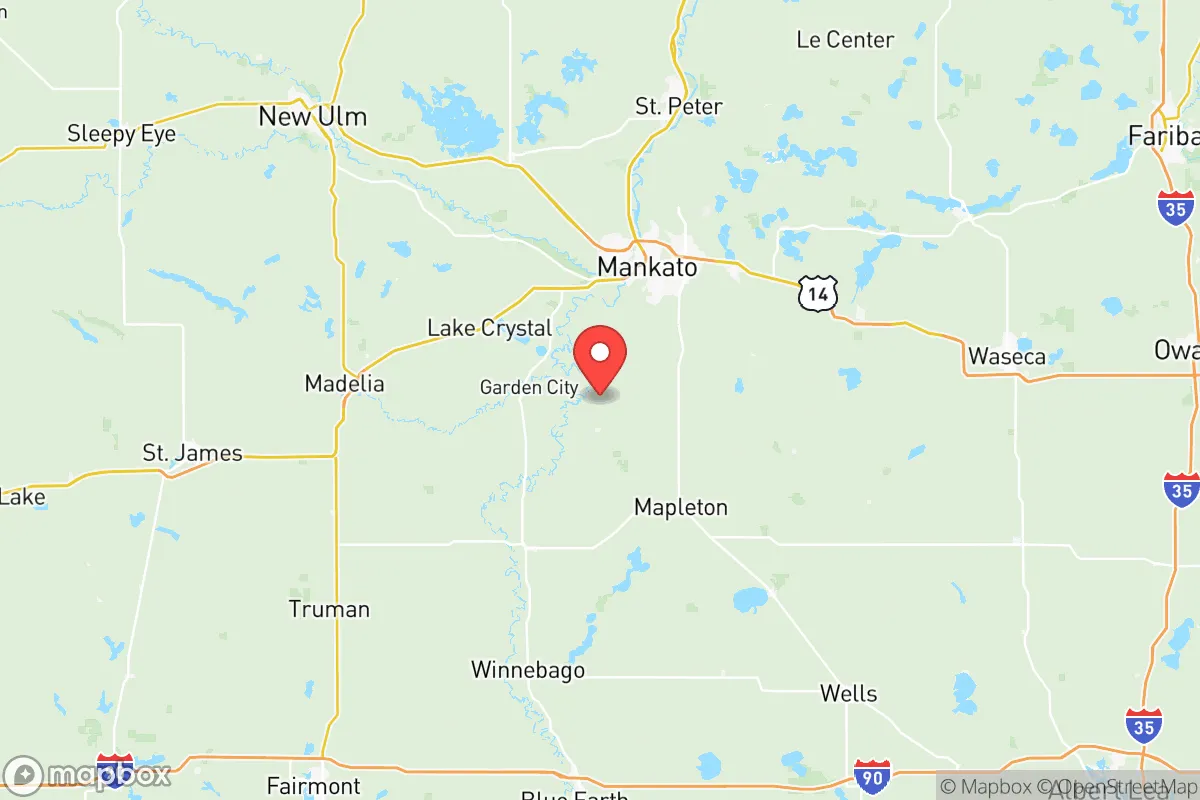
Photo: Wikipedia
Demographics of Blue Earth County
Affluence Level in Blue Earth County
A middle-class area roughly in line with national averages across income, home values, education, and employment.
People of Blue Earth County
Blue Earth County, Minnesota, is home to 69,386 residents, a population that remains predominantly white (85.2%) but is gradually diversifying through modest growth in Hispanic (4.7%), Black (4.5%), and East/Southeast Asian (1.7%) communities. The county’s character is shaped by its anchor city, Mankato, which serves as a regional hub for education, healthcare, and manufacturing, giving the area a stable, family-oriented feel with a strong sense of local identity. With a foreign-born population of just 3.3% and a college-educated rate of 34.5%, Blue Earth County reflects a Midwestern profile of rootedness and modest cosmopolitan influence, where newcomers are often absorbed into existing social and economic networks rather than forming distinct enclaves.
Settlement & growth (pre-1960)
The land that became Blue Earth County was originally inhabited by the Dakota Sioux, particularly the Mdewakanton band, who lived along the Minnesota and Blue Earth Rivers. The Dakota name for the area, "Mahkato" (meaning "blue earth"), referred to the blue-green clay found in the riverbanks, a resource they used for pigment and trade. French fur traders and explorers, such as Pierre-Charles Le Sueur, passed through in the late 1600s and early 1700s, establishing seasonal trading posts but no permanent settlements. The United States acquired the region through the 1805 Treaty of St. Peters and subsequent land cessions, with the Dakota formally ceding most of southern Minnesota in the 1851 Treaty of Traverse des Sioux, a pivotal event that opened the area to American settlers.
The first major wave of American settlement began in the 1850s, driven by the promise of fertile farmland and the construction of the Minnesota Valley Railroad. The county was officially organized in 1853, and the town of Mankato was platted in 1852, quickly becoming the county seat and commercial center. The earliest settlers were primarily Yankees—English-descended Americans from New England and New York—who brought with them a tradition of small-town governance, education, and Protestant church life. They were soon joined by German immigrants, who began arriving in the 1850s and 1860s, drawn by affordable land and the region’s agricultural potential. Many of these Germans settled in the northern and western parts of the county, establishing farming communities like Mapleton and Good Thunder, where German Lutheran churches and social societies persisted for generations.
Irish immigrants also arrived in significant numbers during the 1850s and 1860s, often working as laborers on the railroad or in Mankato’s early mills and factories. They concentrated in Mankato itself, forming the core of the city’s Catholic community at Saints Peter and Paul Parish. A smaller but notable group of Swedish immigrants settled in the southern part of the county, particularly around Amboy and Vernon Center, where they established farms and Lutheran congregations. By 1900, the county’s population had reached roughly 30,000, with a mix of Yankee, German, Irish, and Scandinavian roots that would define its cultural character for the next century. The Dakota population, meanwhile, was forcibly removed after the U.S.-Dakota War of 1862, with most survivors exiled to reservations in South Dakota and Nebraska, leaving a lasting trauma and a near-total absence of Native people in the county today.
The early 20th century brought continued agricultural prosperity, with dairy farming and corn becoming dominant. The city of North Mankato, just across the Minnesota River in Nicollet County, grew as a working-class suburb tied to Mankato’s industrial base. The Great Depression and Dust Bowl had less impact here than in the Plains states, but the post-World War II era saw a new wave of growth driven by the expansion of Mankato State College (now Minnesota State University, Mankato), which opened in 1868 but grew rapidly after the GI Bill. This brought in faculty and students from across the Midwest, adding a layer of educated professionals to the county’s predominantly rural and blue-collar population.
Modern era (post-1965)
The 1965 Hart-Cellar Act had a limited immediate effect on Blue Earth County, as the region lacked the industrial or service-sector magnets that drew immigrants to coastal cities. However, the act’s long-term impact is visible in the county’s slow diversification since the 1990s. The Hispanic population, now 4.7%, began growing in the 1990s and 2000s, driven by labor demand in Mankato’s food processing plants—particularly at the Jones-Hamilton and Taylor Corporation facilities—and in agricultural work. Most Hispanic residents are of Mexican descent, and they have settled primarily in Mankato and Eagle Lake, where a small but growing community has established Spanish-language churches and businesses. The Black population, at 4.5%, includes both African American families who moved from the Twin Cities and the Upper Midwest for jobs in healthcare and manufacturing, as well as a smaller number of African immigrants, particularly from Somalia and Ethiopia, who arrived in the 2000s and 2010s. These groups are concentrated in Mankato’s central and eastern neighborhoods, near the Mayo Clinic Health System campus and the university.
The East/Southeast Asian community, at 1.7%, is primarily composed of Vietnamese and Hmong families who began arriving in the late 1970s and 1980s as refugees from the Vietnam War. They were drawn to Mankato by resettlement agencies and the availability of entry-level jobs in manufacturing and agriculture. A small but stable Hmong community exists in Mankato, with a cultural center and annual New Year celebrations. The Indian subcontinent population, at 0.6%, is a more recent arrival, largely consisting of professionals working at Minnesota State University, Mankato, and the Mayo Clinic Health System. They are dispersed throughout Mankato rather than forming a distinct enclave.
Domestic migration has been modest but steady. The county has seen a net inflow of retirees and remote workers from the Twin Cities metro area, drawn by lower housing costs and a slower pace of life. This has boosted the population of smaller towns like Lake Crystal and Madison Lake, which have become bedroom communities for Mankato commuters. Suburbanization has been contained, with most new development occurring in Mankato’s outer ring and in the unincorporated areas around Skyline and South Bend Township. The county’s population grew by about 8% between 2010 and 2020, a rate that outpaces many rural Minnesota counties but remains well below the national average.
The future
Blue Earth County’s demographic future points toward slow, steady diversification rather than rapid transformation. The Hispanic and Black populations are likely to continue growing, driven by natural increase and continued labor demand in food processing and healthcare, but they will remain small relative to the white majority. The East/Southeast Asian and Indian communities are expected to grow modestly, primarily through professional migration tied to the university and medical sectors. The county is not tribalizing into distinct ethnic enclaves; instead, new residents are integrating into existing neighborhoods and social structures, a pattern that reflects the region’s strong civic institutions and relatively low housing costs.
The white population, while still dominant, is aging and declining slightly in absolute numbers, as younger residents move to the Twin Cities or other metro areas for career opportunities. This trend is most pronounced in rural townships and small towns like Pemberton and Garden City, where school consolidations and church closures signal demographic thinning. In-migration from the Twin Cities and other parts of the Midwest is likely to continue, bringing a mix of retirees, remote workers, and families seeking affordable housing. This influx may slowly shift the county’s cultural identity toward a more suburban, amenity-oriented character, but it will be absorbed into the existing Midwestern framework rather than creating a new one.
For a conservative-leaning individual or family considering a move to Blue Earth County, the bottom line is this: you are moving to a place that is stable, safe, and culturally cohesive, with a population that is slowly diversifying but remains overwhelmingly white and rooted in traditional values of work, faith, and community. The county’s growth is measured, its politics are moderate to conservative, and its schools and institutions are well-regarded. The changes underway are gradual enough that they will not disrupt the character of the area in the next decade, but noticeable enough that a newcomer will find a community that is open to new faces while still holding onto its history.

* Values derived from national, state, county, city and local statistics and may differ in a specific area. Last updated: 2026-06-06T23:11:41.000Z
Narrative content on this page is AI-generated and may contain mistakes. Verify any details that matter before acting on them.
ReloMaps may earn a commission from affiliate links at no extra cost to you.

