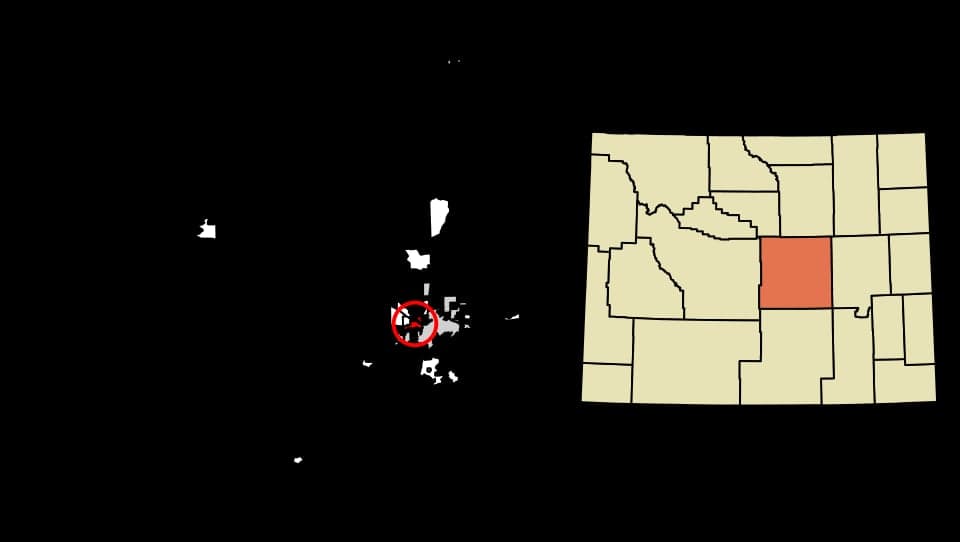
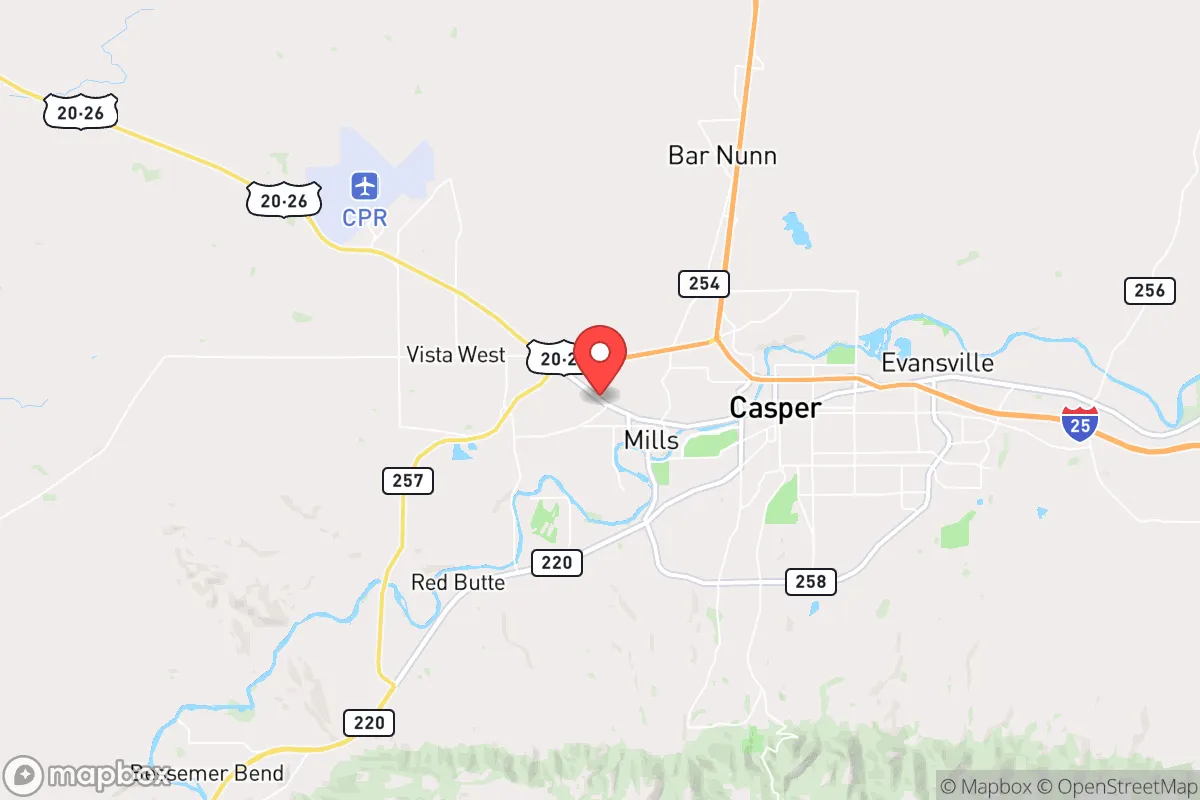
Photo: Wikipedia
Political ClimatePolitical Climate in Mills, WY
District shown is the primary district for this city’s centroid. Cities may span multiple districts.
Inherited from parent state — no local data available.
Local Political AnalysisPolitical Analysis of Mills, WY
Mills, Wyoming, sits in a deeply conservative pocket of the state, with a Cook PVI of R+23 that reflects a community where traditional values and limited government are still the baseline. This isn’t a purple area that’s slowly shifting—it’s a place where the Republican lean is baked into the local culture, and most folks here have been voting that way for generations. That said, you can feel a subtle tension creeping in as more people move from places like Cheyenne or even out-of-state transplants bring different ideas, but for now, Mills remains a solid red stronghold where personal freedoms and local control are taken seriously.
How it compares
Drive ten miles east to Cheyenne, and you’ll notice a different political flavor—it’s still conservative overall, but with a more moderate, sometimes even progressive edge, especially in the city council and school board races. Mills, by contrast, feels like a throwback to an older Wyoming where neighbors know each other and government stays out of your business. Compared to Laramie, home to the university and a reliably blue dot in the state, Mills is practically a different world. The R+23 rating isn’t just a number; it means that in a typical election, Republicans here win by margins that would make a candidate in a swing district blush. If you’re looking for a place where the political climate hasn’t been watered down by coastal transplants or big-city bureaucracy, Mills is still holding the line.
What this means for residents
For the people living here, the political climate translates into a daily life that’s largely free from the kind of government overreach you see in more progressive areas. There’s no heavy-handed zoning telling you what you can do with your property, no constant push for new taxes to fund programs you didn’t ask for, and the local law enforcement tends to focus on real issues rather than enforcing ideological mandates. The schools still teach the basics without a lot of the social engineering you hear about elsewhere, and the town council is more concerned with fixing potholes than pushing a social agenda. That said, there’s a growing concern among long-time residents that the state-level push for things like carbon-neutral goals or diversity initiatives could trickle down, even in a place like Mills. The worry is that if you don’t keep an eye on it, the same overreach that’s crept into Cheyenne and Laramie could start showing up here, chipping away at the personal freedoms that make this area worth living in.
Culturally, Mills is still a place where the Second Amendment isn’t debated—it’s assumed, and the local gun shop is busier during hunting season than any election cycle. There’s a strong sense of self-reliance here, with folks who’d rather fix their own truck than call a government program for help. The policy distinctions are subtle but real: property taxes are low, business regulations are minimal, and there’s a general distrust of any proposal that sounds like it came from a think tank in Washington or Denver. Looking ahead, the long-term trajectory depends on whether the town can keep its identity as more people discover Wyoming’s lower cost of living and open spaces. If the influx of new residents brings the same progressive politics that have reshaped other mountain towns, Mills could lose what makes it special. But for now, it’s still a place where a handshake means something, and the government stays where it belongs—out of your way.

State Political ClimatePolitical Climate in Wyoming
State Political AnalysisPolitical Environment in the State
Wyoming is, and has long been, one of the most reliably conservative states in the Union, with a Republican Party registration advantage that routinely exceeds 2-to-1 and a statewide electorate that hasn’t voted for a Democratic presidential candidate since 1964. The dominant coalition is a blend of libertarian-leaning ranchers, energy-sector workers, and evangelical Christians, all united by a deep skepticism of federal authority. Over the past 10-20 years, the state has actually hardened its conservative posture, with the legislature passing some of the most aggressive pro-gun, pro-life, and anti-tax measures in the country, even as the state’s population has grown modestly and become slightly more urbanized.
Urban vs. rural divide
The political map of Wyoming is starkly simple: the vast, empty rural counties vote overwhelmingly Republican, while the state’s few population centers provide the only real Democratic resistance. Laramie County, home to the capital Cheyenne, is the largest county by population and leans Republican but is the most competitive — Cheyenne itself has a noticeable Democratic presence, driven by state government workers and the local community college. Teton County, anchored by Jackson Hole, is the state’s liberal outlier, voting Democratic by double digits in every recent election thanks to an influx of wealthy out-of-state transplants and a tourism-driven economy. Meanwhile, Natrona County (Casper) and Campbell County (Gillette) are deeply red, powered by the energy industry and a strong ranching culture. The real story is that the rural-urban gap is widening: as Jackson becomes more progressive, the rest of the state has moved further right in response, with counties like Sublette and Lincoln now routinely voting 80%+ Republican.
Policy environment
Wyoming’s policy environment is a libertarian’s dream in many respects, but with a strong social conservative overlay. The state has no personal or corporate income tax, and property taxes are among the lowest in the nation, capped by a constitutional amendment. Sales tax is a modest 4% statewide, with local options pushing it to around 6% in most towns. The regulatory posture is aggressively pro-business, especially in energy extraction, agriculture, and mining — permitting for oil and gas drilling is streamlined, and the state has fought the EPA over coal and methane rules for decades. On education, Wyoming funds its schools generously through a mineral trust fund, but the legislature has recently pushed for school choice expansion, including a 2024 bill that created education savings accounts for families. Healthcare policy is mixed: the state rejected Medicaid expansion until 2021, and even then only under a waiver with work requirements. Election laws are among the most secure in the nation — voter ID is required, same-day registration is not allowed, and mail-in voting is restricted to those with a valid excuse. The state has also passed a law banning the use of private money to fund election administration, a direct response to the 2020 controversies in other states.
Trajectory & freedom
Wyoming is moving in a direction of greater personal liberty in most respects, but the trajectory is not without tensions. In 2021, the legislature passed a near-total abortion ban, with exceptions only for rape, incest, and life of the mother, making it one of the most restrictive in the nation. Gun rights have been expanded: in 2022, Wyoming became a constitutional carry state, allowing concealed carry without a permit, and in 2023 it passed a law prohibiting state and local law enforcement from enforcing federal gun regulations that don’t exist under state law — a direct nullification play. Parental rights have been strengthened with a 2023 law requiring schools to notify parents of any curriculum involving sexuality or gender identity, and a 2024 law banning transgender athletes from girls’ sports. On the economic freedom front, the state has resisted COVID-era mandates more than most, with no statewide mask or vaccine mandates ever imposed. However, there are warning signs: the state’s reliance on federal mineral royalties and grants means that Washington D.C. still holds significant leverage, and a growing number of out-of-state retirees and remote workers are moving into Teton County and the I-25 corridor, bringing more progressive voting patterns with them.
Civil unrest & political movements
Wyoming is not a hotbed of civil unrest, but there have been notable flashpoints. The most visible is the ongoing debate over federal land management, which flares up regularly in counties like Fremont and Carbon, where ranchers and miners clash with environmental groups and the BLM over grazing rights, oil leases, and road access. In 2022, a protest in Kemmerer over a proposed wind farm drew hundreds of locals who argued the project would harm wildlife and disrupt the rural character of the area. On the left, Jackson Hole has seen small but vocal protests for climate action and racial justice, but these are dwarfed by the state’s dominant conservative activism. The Wyoming Freedom Caucus, a hardline conservative group in the legislature, has pushed for nullification of federal gun laws, a state-level gold and silver legal tender act, and a resolution calling for a convention of states to propose constitutional amendments. Election integrity is a live issue: in 2022, the legislature created a special committee to investigate the 2020 election, though it found no evidence of widespread fraud. Immigration politics are less heated than in border states, but the legislature passed a 2023 law requiring all state agencies to verify the immigration status of applicants for public benefits.
Projection
Over the next 5-10 years, Wyoming is likely to remain deeply conservative, but the demographic pressure is real. The state is growing slowly — about 0.5% per year — and that growth is concentrated in Teton County and the Cheyenne-Front Range corridor, where new arrivals from Colorado and California bring more moderate-to-liberal views. The energy sector, which has historically anchored the state’s economy and politics, is in long-term decline as coal plants close and oil prices fluctuate, which could weaken the traditional Republican coalition. However, the state’s political infrastructure is adapting: the legislature is actively courting remote workers and retirees with tax incentives and a new “Wyoming is Open for Business” campaign, and the Freedom Caucus is pushing for even more aggressive deregulation to attract conservative migrants. The wildcard is the federal land issue — if a future Democratic administration tightens restrictions on public lands, it could ignite a secessionist or nullification movement in the state, which would be a major flashpoint. For now, the most likely scenario is that Wyoming becomes a bit more purple in its urban pockets but remains a solidly red state overall, with the legislature continuing to pass laws that prioritize individual liberty, gun rights, and limited government.
Bottom line for a new resident: If you’re moving to Wyoming for the freedom, you’ll find it in spades — low taxes, minimal regulation, strong gun rights, and a culture that values self-reliance. But be aware that the state’s politics are not monolithic: Jackson Hole is a progressive enclave, Cheyenne is a swing town, and the rural counties are deeply conservative. The state is actively working to preserve its libertarian character, but the influx of new people from blue states is a real concern for those who want to keep Wyoming the way it is. If you’re a conservative looking for a place where your values are the norm and the government stays out of your life, Wyoming is one of the best bets in the country — just be prepared for long winters and a fierce independence that can sometimes feel like isolation.
* Values derived from national, state, county, city and local statistics and may differ in a specific area. Last updated: 2026-05-04T02:46:35.000Z
Narrative content on this page is AI-generated and may contain mistakes. Verify any details that matter before acting on them.
ReloMaps may earn a commission from affiliate links at no extra cost to you.

