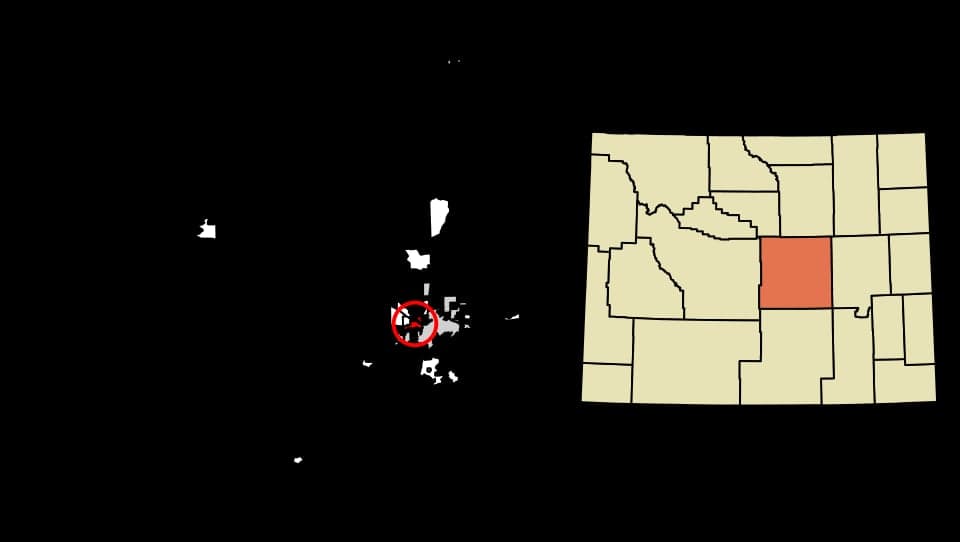
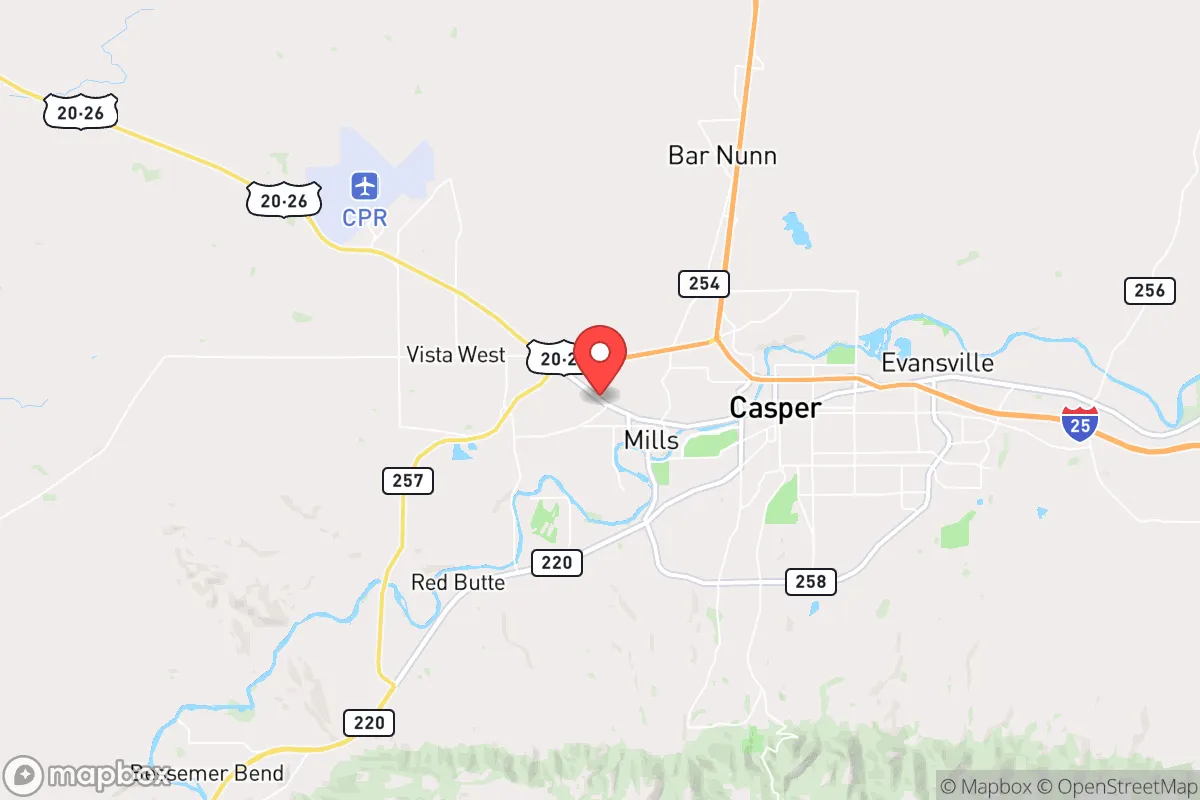
Photo: Wikipedia
Personal Sovereignty in Mills, WY
Viable for self-reliance. Generally workable, though some barriers may limit total independence.
What does Personal Sovereignty tell us?
Personal Sovereignty measures your capacity for self-reliance and independence with minimal government friction. Higher scores mean fewer barriers between you and the way you want to live... but it assumes you have the space you need and good neighbors.
What does this tell us?
Personal Sovereignty measures your capacity for self-reliance and independence with minimal government friction. Higher scores mean fewer barriers between you and the way you want to live... but it assumes you have the space you need and good neighbors.
State Policy
Energy independence: Net exporter (800% of energy produced in-state)
Personal Liberty
Homesteading

Personal Liberty Analysis
Mills, Wyoming, sits in a state that consistently ranks among the most liberty-oriented in the nation, offering a personal sovereignty environment that is a deliberate departure from the regulatory density found in many Western states. For those prioritizing minimal government intrusion into daily life, Natrona County provides a legal and cultural framework where self-reliance is not just tolerated but expected. The state’s constitution and legislative record reflect a deep skepticism of federal overreach, and this ethos permeates local governance in Mills, making it a viable option for individuals and families seeking to maximize personal autonomy in an era of expanding government control.
Tax burden and regulatory posture: How Wyoming keeps government off your back
Wyoming’s tax structure is a primary pillar of its sovereignty appeal. There is no state income tax, no corporate income tax, and no inventory tax, which means the state does not take a direct cut of your earnings or business operations. The sales tax in Natrona County is a modest 5%, and property taxes are among the lowest in the nation, with residential rates averaging around 0.6% of assessed value. This low-friction fiscal environment directly reduces the government’s ability to fund expansive programs that encroach on personal freedoms. The regulatory posture in Mills is similarly lean; the town does not impose the kind of zoning overlays or business licensing hurdles common in more progressive jurisdictions. For a survivalist or prepper mindset, this means fewer layers of bureaucracy between you and your ability to stockpile supplies, operate a home-based business, or modify your property without seeking permission from a planning board that answers to state-level mandates. The state’s reliance on mineral extraction revenue also means it has less incentive to squeeze individuals through property or consumption taxes, keeping the government’s footprint small and the individual’s financial sovereignty intact.
Self-defense and gun law specifics: Constitutional carry and castle doctrine in practice
Wyoming is a constitutional carry state, meaning no permit is required to carry a concealed firearm for anyone legally allowed to possess one. This is not a recent concession but a long-standing reflection of the state’s view that the right to self-defense is inherent and not subject to government licensing schemes. Mills, like the rest of Natrona County, operates under state preemption laws that prevent local municipalities from enacting their own gun control ordinances, so there is no patchwork of restrictions to navigate. The state’s castle doctrine is unambiguous: there is no duty to retreat from any place where a person is lawfully present, and the use of deadly force is presumed justified if an intruder has unlawfully entered a dwelling or occupied vehicle. Stand-your-ground protections extend to public spaces as well. For those concerned about federal overreach, Wyoming has also passed legislation asserting its sovereignty under the Second Amendment, including a Firearm Protection Act that declares federal laws infringing on the right to keep and bear arms to be null and void within state borders. While the practical enforcement of such nullification is untested in court, it signals a political and legal culture that will not cooperate with federal agents attempting to enforce gun bans or registration schemes. This makes Mills a stronghold for those who view firearm ownership as a non-negotiable component of personal sovereignty.
Self-reliance and homesteading viability: Lot sizes, zoning, and off-grid feasibility
The practical ability to live off the grid or maintain a self-sufficient homestead in Mills is shaped by local zoning and lot size requirements. Within the town limits, residential lots are typically smaller—often a quarter-acre or less—which limits large-scale gardening, livestock, or rainwater catchment systems. However, the unincorporated areas of Natrona County, just minutes from Mills, offer a different reality. There, zoning is minimal, and parcels of 5 to 40 acres are common and affordable, with raw land prices often under $5,000 per acre. County regulations do not prohibit off-grid power systems like solar or wind, and there are no state-level mandates requiring connection to municipal water or sewer. Wells and septic systems are standard, and the county health department’s permitting process is straightforward. For those looking to raise livestock, keep bees, or establish a substantial garden, the rural parcels outside Mills provide the space and legal latitude to do so without interference. The arid climate (around 12 inches of precipitation annually) does require careful water management, but the legal framework does not stand in the way of drilling a well or installing cisterns. For a prepper, the key takeaway is that while Mills itself is a small town with typical municipal codes, the surrounding county offers a genuine homesteading environment where the government’s role is limited to basic health and safety oversight, not lifestyle management.
Personal liberties: Parental rights, medical autonomy, speech, and property
Wyoming’s legal landscape strongly favors parental rights. The state has no laws that override parental authority in medical decisions for minors, and there are no mandates requiring schools to withhold information from parents about a child’s health or well-being. The state’s education code explicitly affirms that parents have the primary responsibility for the education of their children, and homeschooling is lightly regulated—no prior approval is needed, and parents simply file a basic curriculum outline annually. Medical autonomy for adults is similarly robust: Wyoming has not enacted broad vaccine mandates for employment or public accommodation, and the state legislature has passed measures prohibiting discrimination against those who decline vaccination. On the property front, Wyoming’s eminent domain laws are among the most protective of private owners in the nation, with a 2006 constitutional amendment barring the use of eminent domain for economic development or tax revenue generation. This means your land cannot be seized to make way for a private development project, a common fear in states with looser takings laws. Free speech protections are strong, with no hate speech laws or social media censorship mandates that would give the government leverage over expression. For those concerned about the erosion of these rights elsewhere, Mills offers a legal environment where the default assumption is that the individual, not the state, holds final authority over family, body, and property.
In the broader context of personal sovereignty, Mills, Wyoming, ranks favorably against nearly any location in the coastal states or the urban corridors of the Midwest. The combination of no income tax, constitutional carry, minimal zoning in rural areas, strong parental rights, and a political culture that actively resists federal overreach creates a sovereignty profile that is rare in the modern United States. It is not a perfect libertarian utopia—property taxes still exist, and the town itself has some municipal codes—but for those measuring freedom by the degree of government non-interference in daily life, Mills and its surrounding county offer a level of personal autonomy that is increasingly difficult to find elsewhere. For a survivalist or prepper evaluating relocation options, this area provides the legal and practical foundation to live on your own terms, with the state acting as a minimal partner rather than an overbearing manager.

* Values derived from national, state, county, city and local statistics and may differ in a specific area. Last updated: 2026-05-04T02:46:35.000Z
Narrative content on this page is AI-generated and may contain mistakes. Verify any details that matter before acting on them.
ReloMaps may earn a commission from affiliate links at no extra cost to you.

