Photo: Wikipedia
Demographics of Milford, CT
Affluence Level in Milford, CT
An upper-middle-class area. Household wealth, education levels, and homeownership run ahead of national benchmarks.
People of Milford, CT
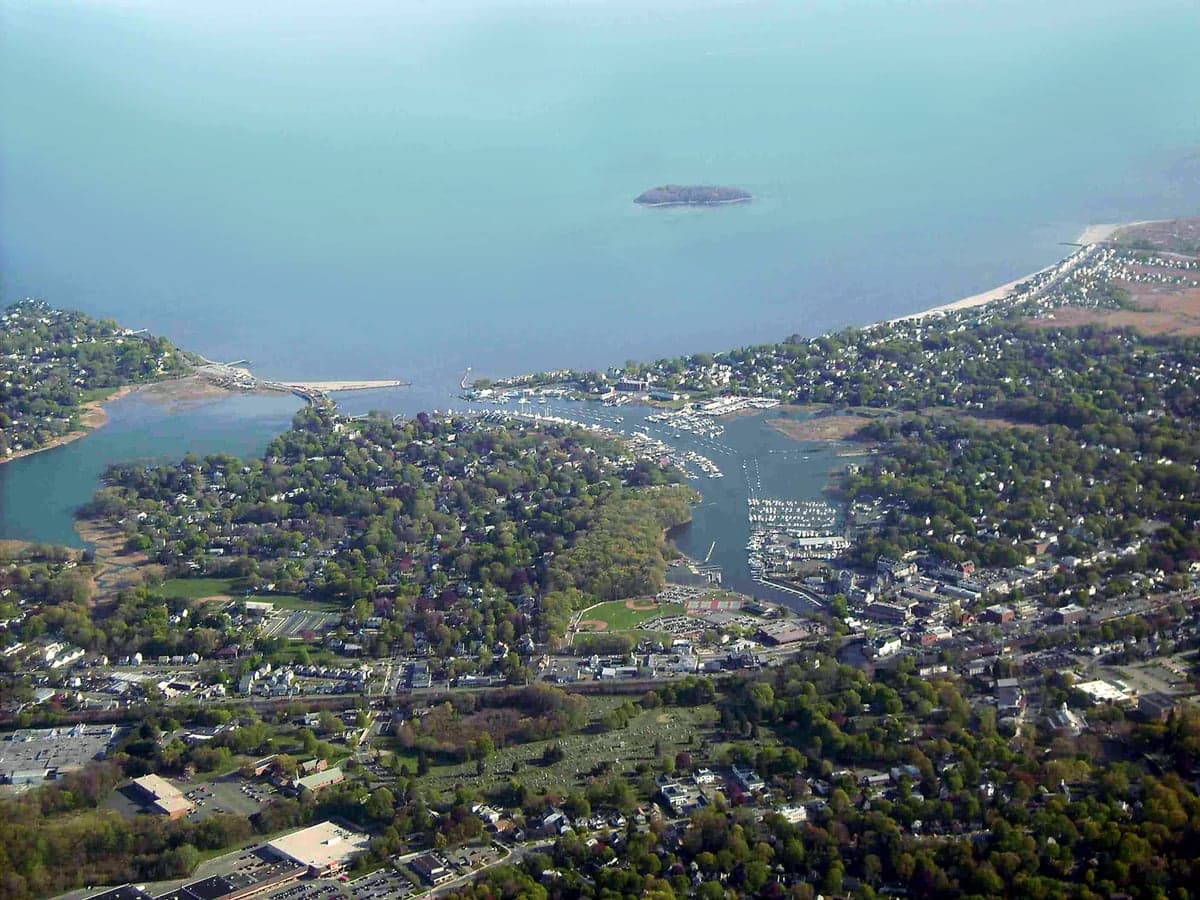
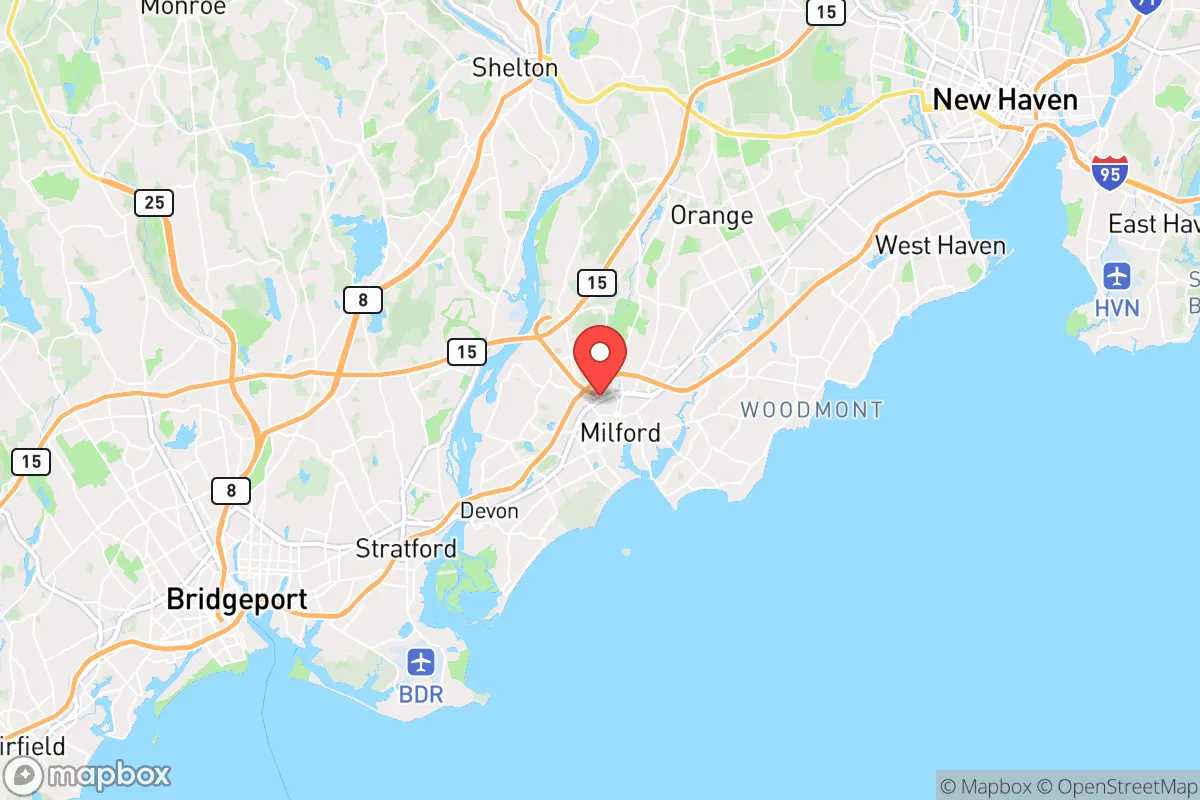
Milford, Connecticut, is a coastal city of 50,749 residents that blends historic New England character with suburban stability. Its population is notably older and more established than the state average, with a median age of 44.4 years and a high college attainment rate of 48.4%. The city remains predominantly white (80.0%), but its modest diversity is concentrated in specific neighborhoods, creating a patchwork of distinct ethnic enclaves rather than a fully integrated melting pot.
How the city was settled and grew
Milford’s human history begins in 1639, when English Puritan settlers from the New Haven Colony purchased land from the Paugussett tribe and established a farming and trading community. The original settlement clustered around the Milford Green, a historic town common that remains the civic and commercial heart of the city. Throughout the 18th and 19th centuries, Milford remained a small agricultural and maritime village, with shipbuilding and oystering along the Gulf Beach and Walnut Beach waterfronts drawing a modest Irish and German workforce. The arrival of the railroad in the mid-1800s transformed Milford into a summer resort destination for wealthy New Yorkers, who built Victorian cottages in the Devon and Woodmont districts. These neighborhoods retain their historic architecture and a seasonal, leisure-oriented character. The early 20th century saw Italian and Polish immigrants arrive to work in the city’s growing manufacturing sector, particularly in the Downtown area and along the industrial corridor near the Housatonic River. By 1950, Milford was a solidly middle-class, largely Catholic, white ethnic city of about 26,000 residents.
Modern era (post-1965)
The post-1965 immigration reforms had a limited direct impact on Milford compared to larger Connecticut cities. The foreign-born population today is just 3.2%, far below the state average of 15%. Instead, the city’s modern demographic story is one of domestic in-migration and suburbanization. The construction of Interstate 95 in the 1960s made Milford a commuter suburb for New Haven and Bridgeport, drawing white-collar professionals from New York and Boston. These newcomers settled in newer subdivisions like Pond Point and the Myrtle Beach area, which feature mid-century ranch homes and larger lots. The city’s Hispanic population (9.0%) is the fastest-growing minority group, concentrated in the Devon and Downtown neighborhoods, where older housing stock and rental units provide affordable entry points. East and Southeast Asian residents (2.7%) are clustered in the Woodmont and Gulf Beach areas, often drawn by the coastal lifestyle and strong school system. The Indian-subcontinent population (2.2%) is smaller but growing, with families settling near the Orange Avenue corridor for its proximity to tech and healthcare jobs in New Haven. The Black population (2.6%) is dispersed but has a historic anchor in the Devon neighborhood, where a small African American community has existed since the mid-20th century.
The future
Milford’s population is projected to remain stable or grow slowly, with the city’s housing stock and land constraints limiting large-scale development. The white population is slowly declining as older residents age out and younger families are priced out by rising home values. The Hispanic and Asian populations are growing, but from a small base, and are likely to remain concentrated in specific neighborhoods rather than dispersing citywide. The Indian-subcontinent community is expected to continue its gradual increase, driven by professionals in healthcare and technology. The city is not homogenizing into a single demographic bloc, nor is it tribalizing into sharply divided enclaves. Instead, Milford is becoming a slightly more diverse, still predominantly white, middle-to-upper-middle-class suburb where ethnic clusters coexist within a stable, low-crime environment.
For a conservative-leaning individual or family considering a move, Milford offers a predictable, safe, and well-educated community with a strong sense of local identity. The city’s demographic trajectory is one of slow, organic change rather than rapid transformation, making it a reliable choice for those seeking a traditional New England suburb with access to coastal amenities and urban job markets.

* Values derived from national, state, county, city and local statistics and may differ in a specific area. Last updated: 2026-09-21T19:36:33.000Z
Narrative content on this page is AI-generated and may contain mistakes. Verify any details that matter before acting on them.
ReloMaps may earn a commission from affiliate links at no extra cost to you.

