Photo: Wikipedia
Political ClimatePolitical Climate in Midlothian, TX
District shown is the primary district for this city’s centroid. Cities may span multiple districts.
Local Political AnalysisPolitical Analysis of Midlothian, TX
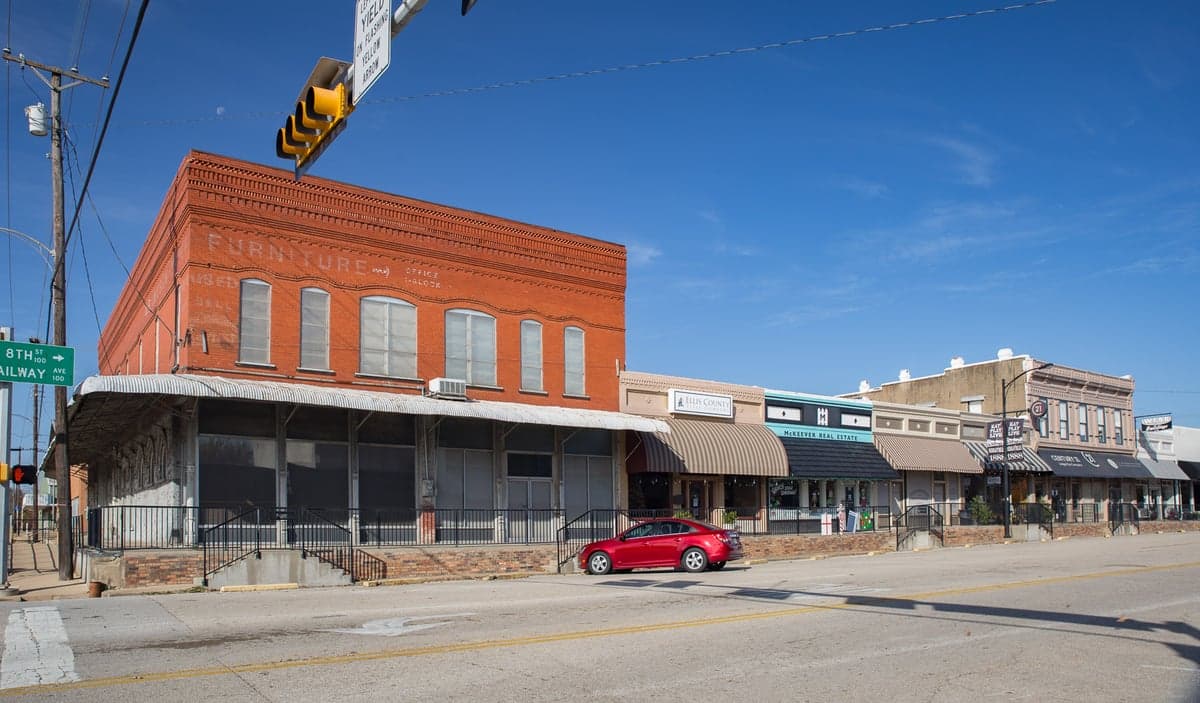
Midlothian, Texas, has long been a rock-solid conservative stronghold, and that hasn't changed much even as the Dallas-Fort Worth metroplex creeps southward. The area sits comfortably at a Cook PVI of R+14, meaning it votes about 14 points more Republican than the national average in federal elections. That's not just a number—it reflects a deep, lived-in culture where folks still believe in minding their own business, keeping government small, and letting people live their lives without a bunch of red tape. If you've been around here for a while, you've watched the town grow from a quiet farming and railroad hub into a bedroom community for commuters, but the political DNA hasn't diluted much. The local school board, city council, and county offices are still dominated by folks who prioritize low taxes, property rights, and a "stay out of my way" approach to governance. That said, you can feel the pressure building as more people move in from blue areas, bringing different ideas about how things ought to run.
How it compares
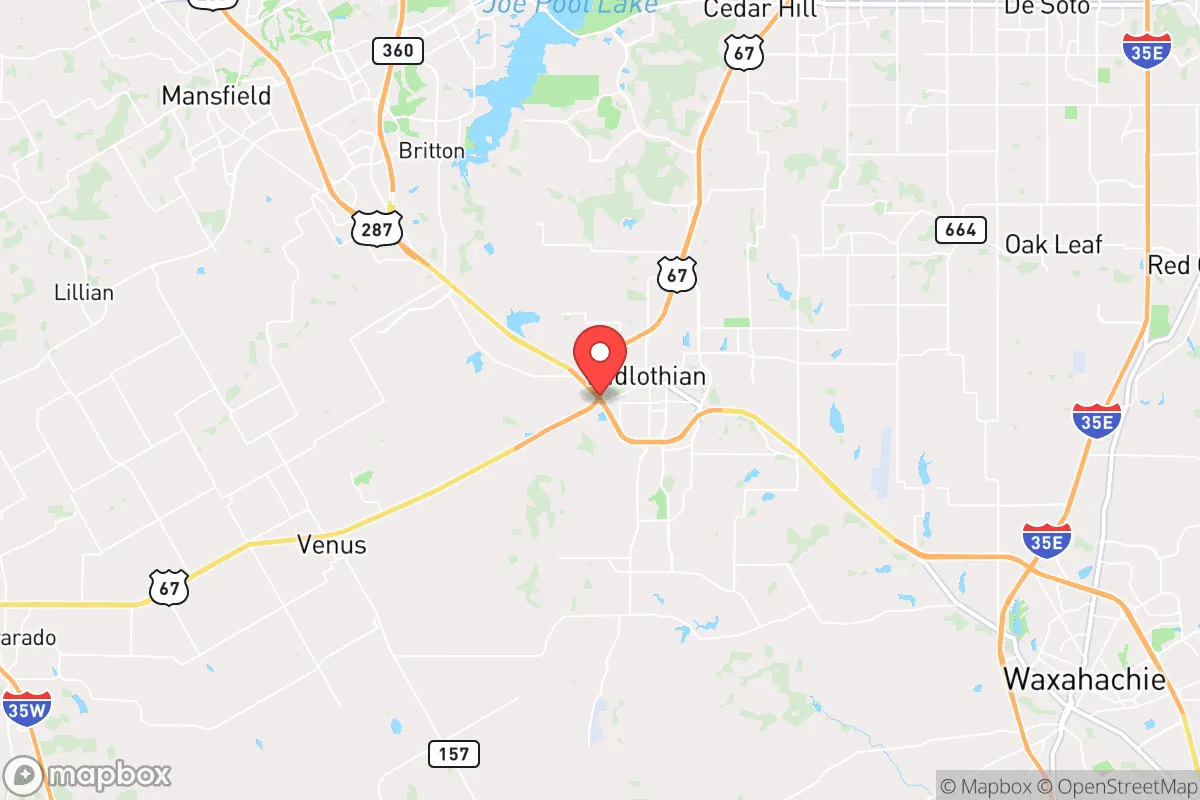
Drive 15 minutes north to Waxahachie, and you'll find a similar conservative vibe, though it's a bit more mixed thanks to the county seat's larger government footprint and a growing number of transplants. Head east to Ennis, and it's still solidly red but with a stronger blue-collar, union-friendly streak that can make local primaries interesting. The real contrast is west to the Mid-Cities like Arlington or north to Dallas proper, where you see the full spectrum of progressive policies—higher taxes, more regulations on businesses, and a general acceptance of government meddling in things like housing and energy choices. Midlothian, by comparison, feels like a refuge. The county commissioners and state reps here have fought hard to keep property taxes in check and resist state-level mandates that would override local control. You don't see the same push for bike lanes, density zoning, or "equity" initiatives that are popping up in nearby suburbs like Mansfield or Grand Prairie. It's a place where the Second Amendment isn't debated, where school choice is popular, and where the phrase "government overreach" gets people's attention at town hall meetings.
What this means for residents
For someone moving here, the political climate translates directly into daily life. You won't find a city council that's eager to impose new fees or restrict how you use your property. Want to park your boat in the driveway, run a small welding shop out of your garage, or keep a few chickens in the backyard? That's generally fine, as long as you're not bothering the neighbors. The school district, Midlothian ISD, has stayed focused on core academics and hasn't jumped on the bandwagon of controversial curriculum changes or critical race theory training that's caused headaches in other districts. The police department is well-funded and community-oriented, not defunded or demoralized. Property taxes are a constant gripe—they're high like everywhere in Texas—but the local officials are at least responsive to complaints and tend to vote against new bond packages that would jack them up further. The biggest concern among long-time residents is the slow creep of suburbanization: as more people arrive, there's pressure to adopt the kind of zoning and permitting rules that make it harder to do simple things like build a shed or start a home-based business without a stack of permits.
One cultural distinction worth noting is Midlothian's strong sense of local identity, which is increasingly rare in the DFW sprawl. The town still holds onto its annual events like the "Boo at the Zoo" and the "Christmas on the Square" that feel genuinely community-run, not corporate-sponsored. There's a noticeable distrust of regional planning bodies like the North Central Texas Council of Governments, which some residents see as an unelected body trying to impose transit-oriented development and environmental mandates on the area. The local newspaper's letters to the editor still regularly rail against federal overreach on everything from EPA water rules to gun control. In the long term, the trajectory depends on who moves in next. If the growth continues to attract families from blue states who are fleeing high taxes and crime but bring their voting habits with them, Midlothian could shift from deep red to purple over the next decade. But for now, it remains one of those rare spots where you can still have a conversation about personal freedom and limited government without getting a blank stare.

State Political ClimatePolitical Climate in Texas
State Political AnalysisPolitical Environment in the State
Texas has been a reliably Republican state for decades, with the GOP holding every statewide office and both chambers of the legislature since the mid-1990s. The state’s overall partisan lean is roughly R+10 in federal elections, though that margin has narrowed from R+16 in 2012 to R+9 in 2024, driven by explosive growth in the urban cores and suburbs. The dominant coalition remains a mix of rural conservatives, suburban families, and business interests, but the recent multi-cycle trajectory shows a slow but steady shift toward competitive two-party politics, with Democrats making gains in the fast-growing metroplexes while Republicans hold firm in the exurbs and small towns.
Urban vs. rural divide
The political map of Texas is a tale of three distinct regions. The big metros—Houston, Dallas-Fort Worth, San Antonio, and Austin—are the engines of Democratic growth. Harris County (Houston) flipped from red to blue in 2018 and has stayed there, while Dallas County and Bexar County (San Antonio) are now solidly Democratic. Austin’s Travis County is the bluest urban core in the state, voting for Democrats by margins exceeding 50 points. Meanwhile, the rural and exurban counties—places like Lubbock, Midland, and the Panhandle—vote Republican by 70-80% margins. The real battleground is the suburban ring: Collin County (north of Dallas), Denton County, and Fort Bend County (southwest of Houston) have shifted from reliably red to purple or even blue in local races. The 2022 midterms saw Democrats flip a state House seat in Collin County for the first time in decades, a clear sign that the suburbs are no longer safe for the GOP.
Policy environment
Texas remains a low-tax, low-regulation state by design. There is no state income tax, and property taxes are high but capped at 10% annual growth for homesteads. The regulatory posture is business-friendly, with no state-level occupational licensing for many trades and a right-to-work law that bans union security agreements. Education policy is a flashpoint: the state funds public schools through a Robin Hood system that redistributes property tax revenue from wealthy districts to poor ones, but per-pupil spending remains below the national average. School choice has been a perennial fight—Governor Greg Abbott made private school vouchers a priority in 2023, but rural Republicans blocked it, fearing it would drain funding from small-town schools. Healthcare is largely unregulated, with no state-run exchange and the highest uninsured rate in the nation (around 18%). Election laws tightened after 2020: Senate Bill 1 (2021) banned 24-hour and drive-thru voting, added ID requirements for mail ballots, and gave partisan poll watchers more access. The state also passed a near-total abortion ban (trigger law in 2021) and a law allowing permitless carry of handguns (2021).
Trajectory & freedom
On the freedom front, Texas has moved in two directions simultaneously. On personal liberty, the state has expanded gun rights (permitless carry, 2021), protected parental rights in education (HB 3979, which limits how race and gender can be taught in schools), and banned gender transition procedures for minors (SB 14, 2023). Property rights were strengthened with the passage of a constitutional amendment in 2023 that prohibits the state from taking land for private economic development. However, government overreach has grown in other areas: the state’s power grid (ERCOT) remains unregulated, leading to the deadly 2021 winter storm blackouts, and the legislature has since mandated weatherization but not a full regulatory overhaul. Medical freedom took a hit with the abortion ban, which has no exceptions for rape or incest, and the state has aggressively prosecuted women and doctors under the law. On speech, Texas passed a law (HB 20, 2021) that bars social media platforms from moderating content based on viewpoint, but it’s been tied up in court. The net effect: Texas is freer on guns, education, and property, but less free on healthcare and energy reliability.
Civil unrest & political movements
Texas has seen its share of political flashpoints. The 2020 Black Lives Matter protests in Austin and Houston were large and occasionally violent, leading to property damage and a police budget cut in Austin that was later partially restored. On the right, the “Texas Nationalist Movement” has pushed for secession, but it remains a fringe group with no real political power. Immigration politics are front and center: Governor Abbott’s Operation Lone Star (2021) deployed state troopers and National Guard to the border, bused migrants to New York City and Chicago, and installed razor wire along the Rio Grande. The state has also passed a law (SB 4, 2023) that allows state police to arrest anyone suspected of entering the U.S. illegally, though it’s been blocked by federal courts. Election integrity remains a hot-button issue: the 2020 election in Texas was widely seen as secure, but the 2021 voting law was passed in response to unsubstantiated claims of fraud. A new resident will notice the constant political tension at the border, the heavy police presence in El Paso and the Rio Grande Valley, and the polarized media environment in every major city.
Projection
Over the next 5-10 years, Texas will continue to trend purple, but not flip blue. The in-migration of roughly 1,000 people per day—mostly from California and the Northeast—is split between conservative-leaning families moving to the exurbs and progressive-leaning tech workers settling in Austin and Dallas. The state’s Hispanic population, which is growing fast, is not monolithic: South Texas counties like Hidalgo and Cameron have shifted right by 10-15 points since 2016, while urban Hispanics in Houston and San Antonio lean Democratic. The Republican Party will likely hold the legislature and statewide offices through 2030, but the margin in presidential races will narrow to single digits. The biggest wildcard is the state’s power grid: if another major blackout occurs, it could trigger a political realignment. For a new resident, expect continued fights over school vouchers, property taxes, and border security, but the overall policy environment will remain conservative—just with more competitive elections and a louder progressive minority.
Bottom line for a new resident: Texas is still a place where your personal freedoms—to own a gun, choose a school, run a business, and keep more of your paycheck—are broadly protected. But the state is not static. The urban centers are becoming more progressive, the suburbs are up for grabs, and the rural areas are digging in. If you’re moving here for the conservative culture, you’ll find it strongest in the small towns and exurbs, but you’ll also find yourself in a state that is increasingly contested. The practical takeaway: pick your county carefully, because the political climate in Collin County is very different from Travis County, and that difference will shape your taxes, your schools, and your daily life.
* Values derived from national, state, county, city and local statistics and may differ in a specific area. Last updated: 2026-04-19T07:11:01.000Z
Narrative content on this page is AI-generated and may contain mistakes. Verify any details that matter before acting on them.
ReloMaps may earn a commission from affiliate links at no extra cost to you.

