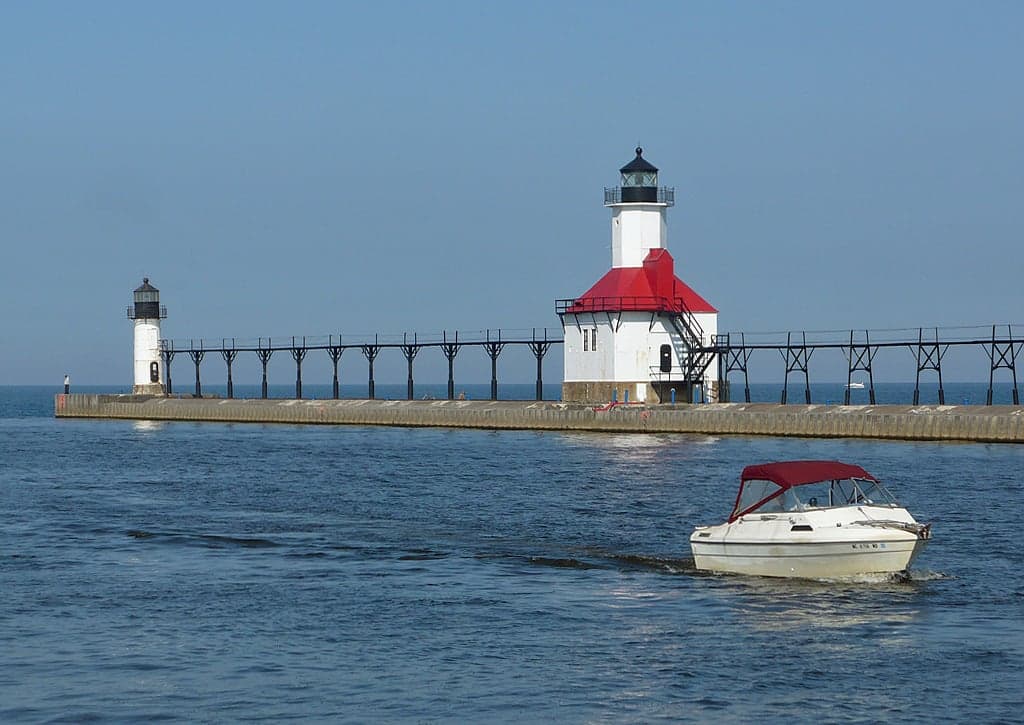
Photo: Wikipedia
Demographics of Berrien County
Affluence Level in Berrien County
A middle-class area roughly in line with national averages across income, home values, education, and employment.
People of Berrien County
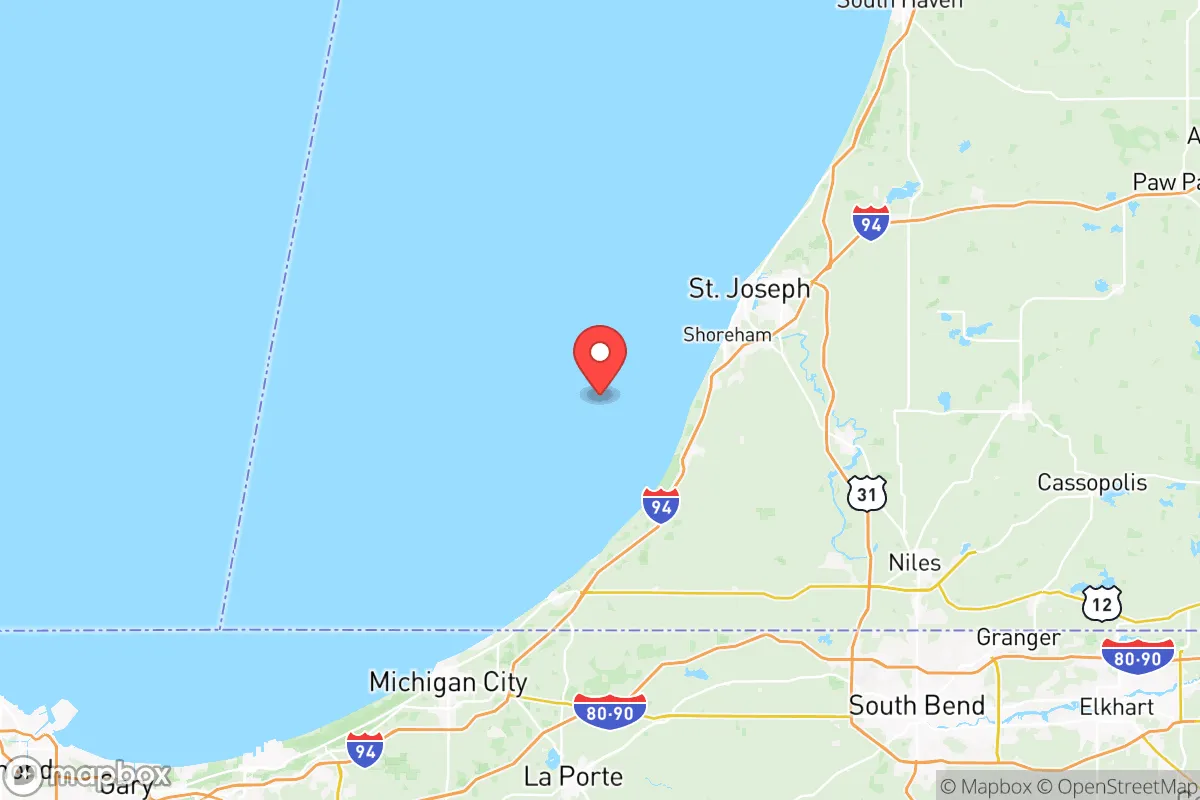
Today, Berrien County’s 153,411 residents form a predominantly white (73.2%) and Black (13.4%) population with a small but growing Hispanic (6.1%) and East/Southeast Asian (1.2%) presence, concentrated along the Lake Michigan shoreline and in the inland cities of Benton Harbor, St. Joseph, Niles, and Buchanan. The county’s character is shaped by its dual identity as both a historic industrial hub and a seasonal resort destination, with a foreign-born share of just 2.8% — well below the national average — reflecting a population rooted in multi-generational American families. Distinctive markers include a strong manufacturing and agricultural heritage, a notable African American community centered in Benton Harbor, and a scattering of small towns that retain their 19th-century ethnic enclave origins.
Settlement & growth (pre-1960)
Long before European arrival, the area was home to the Potawatomi people, who maintained villages along the St. Joseph River and Lake Michigan shoreline. French explorers and fur traders arrived in the late 1600s, establishing a mission and trading post near present-day St. Joseph, but significant American settlement did not begin until after the 1821 Treaty of Chicago forced Potawatomi removal. The first wave of Euro-American settlers — primarily Yankees from New York and New England — arrived in the 1830s and 1840s, drawn by the fertile soil and the promise of lake-based commerce. They founded the county’s earliest towns: Niles (1829), St. Joseph (1834), and Benton Harbor (1836), the latter growing rapidly as a Lake Michigan port for shipping fruit and lumber.
The second major wave came from Germany and Ireland in the 1840s–1860s, pulled by cheap land and jobs in the region’s expanding sawmills and fruit farms. German immigrants concentrated in Buchanan and the rural townships around Berrien Springs, where they established Lutheran churches and tight-knit farming communities. Irish immigrants settled in Niles and St. Joseph, working on the railroad and in the iron foundries. A smaller but notable group of Dutch immigrants arrived in the 1850s, founding the Holland-influenced agricultural settlement of Lakeside (now part of Stevensville). By 1870, Berrien County’s population had reached roughly 35,000, overwhelmingly native-born white of northern European descent.
The industrial boom of the late 19th and early 20th centuries transformed the county. The 1900s saw the rise of fruit canning, paper mills, and the auto parts industry, particularly in Benton Harbor and Niles. This drew a new wave of domestic migrants: African Americans from the South during the Great Migration (roughly 1915–1960), who came for factory jobs at companies like the Benton Harbor Malleable Industries and Niles’ Simplicity Pattern Company. By 1960, Benton Harbor’s Black population had grown to about 25% of the city’s total, forming a distinct community centered on the city’s south side. Meanwhile, Polish and Italian immigrants arrived in smaller numbers in the 1910s–1920s, settling in St. Joseph and Niles to work in the foundries and rail yards. The county’s population peaked at roughly 165,000 in 1960, just before the onset of deindustrialization.
Modern era (post-1965)
The 1965 Hart-Cellar Act had a muted effect on Berrien County compared to major metropolitan areas, as the region’s industrial base was already contracting. The most significant demographic shift since 1965 has been domestic: the decline of Benton Harbor and the suburbanization of its population. As manufacturing jobs vanished in the 1970s and 1980s, Benton Harbor’s population fell from 19,000 in 1970 to roughly 9,000 today, while the Black share of the city rose to over 85% as white residents moved to surrounding townships and to St. Joseph. Many African American families relocated to St. Joseph Township and Stevensville, creating a more dispersed Black population across the county’s northern lakefront.
Hispanic growth has been the most notable post-1965 change. The Hispanic share rose from under 2% in 1990 to 6.1% today, driven primarily by Mexican-origin families moving into agricultural work — fruit picking, nurseries, and food processing — and settling in Benton Harbor, Niles, and Berrien Springs. A smaller but visible community of East/Southeast Asian residents (1.2%) — largely Vietnamese and Filipino — arrived in the 1980s and 1990s, many sponsored by local churches and working in healthcare and manufacturing, with concentrations in St. Joseph and Niles. The Indian subcontinent population (0.5%) is a recent, small addition, mostly professionals in healthcare and engineering at Spectrum Health Lakeland in St. Joseph.
Suburbanization has reshaped the county’s geography. The lakefront towns of St. Joseph, Stevensville, and Bridgman have grown as bedroom communities for commuters to South Bend, Indiana, and Kalamazoo, while inland towns like Buchanan and Niles have seen slower growth and aging populations. The college-educated share now stands at 30.2%, concentrated in St. Joseph and the lakefront corridor, where retirees and remote workers have been drawn by the area’s natural amenities.
The future
Berrien County’s population is projected to remain stable or decline slightly over the next 10–20 years, as the region struggles to attract young families and immigrants. The white population is aging and shrinking, while the Hispanic share is expected to continue rising, potentially reaching 10–12% by 2040, driven by natural increase and continued agricultural migration. The Black population is likely to remain steady or grow modestly, as Benton Harbor’s decline stabilizes and suburban dispersal continues. East/Southeast Asian and Indian populations will likely remain small, growing only if local healthcare and manufacturing sectors expand.
The county’s cultural identity is evolving from a binary white-Black industrial past toward a more tri-ethnic (white, Black, Hispanic) character, though the pace is slow. New residents are most likely to settle in the lakefront corridor — St. Joseph, Stevensville, Bridgman — drawn by quality of life rather than jobs, while inland cities like Niles and Benton Harbor face continued population loss. For someone moving in now, Berrien County offers a quiet, low-cost, and increasingly diverse environment, but one where economic opportunity remains limited outside of healthcare, education, and seasonal tourism.

* Values derived from national, state, county, city and local statistics and may differ in a specific area. Last updated: 2026-10-25T21:42:46.000Z
Narrative content on this page is AI-generated and may contain mistakes. Verify any details that matter before acting on them.
ReloMaps may earn a commission from affiliate links at no extra cost to you.

