Photo: Wikipedia
Political ClimatePolitical Climate in Metuchen, NJ
District shown is the primary district for this city’s centroid. Cities may span multiple districts.
Political rankings in New Jersey
- Most Conservative Cities in New Jersey
- Most Liberal Cities in New Jersey
- Best Conservative-Leaning Towns in the Northeast
- Best Conservative-Leaning Towns in the Mid-Atlantic
- Safest Liberal-Leaning Towns on the East Coast
- Safest Conservative-Leaning Towns on the East Coast
- Most Affordable Liberal-Leaning Small Towns in the U.S.
- Safest Liberal-Leaning Cities in the U.S.
- Most Conservative Counties in New Jersey
- Most Liberal Counties in New Jersey
Local Political AnalysisPolitical Analysis of Metuchen, NJ
Metuchen is a solidly Democratic town, and it’s been that way for a while. The Cook PVI of D+5 puts it right in line with the state of New Jersey as a whole, which also sits at D+5. But if you’ve lived here for any length of time, you know the local politics feel a bit more consistently blue than that statewide number suggests, especially in presidential years. The town has been trending left for over a decade, and there’s no real sign of that slowing down.
How it compares
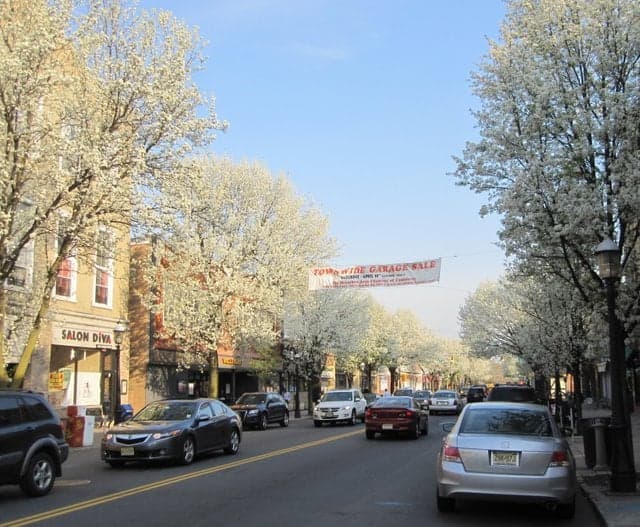
On paper, Metuchen and New Jersey share the same PVI, but the lived experience is different. New Jersey’s D+5 is a statewide average that masks huge internal divides — you’ve got deep-red Sussex County and the reliably blue urban cores of Newark and Jersey City. Metuchen, by contrast, is more uniformly liberal. Walk into any coffee shop on Main Street during an election season, and you’re far more likely to hear talk about local school board races and zoning reform than you are about national conservative issues. The town’s Democratic lean is also more pronounced than in neighboring Edison (D+4) or Woodbridge (D+3), and it’s a world away from the reliably Republican towns in western Middlesex County like Monroe Township or the more conservative pockets of Old Bridge. If you’re a conservative living in Metuchen, you’re definitely in the minority, but it’s a polite minority — people tend to keep their yard signs small and their opinions to themselves at block parties.
What this means for residents
For liberal residents, Metuchen is a comfortable place to live. The town council and school board have been Democratic-controlled for years, and policies tend to reflect that — think robust public school funding, support for environmental initiatives, and a generally pro-immigrant and pro-diversity stance. For conservative residents, the reality is more about navigating a social environment where your political views might not be the norm. You won’t find a lot of overt hostility, but you also won’t find a lot of like-minded neighbors. The practical impact is that local elections are often decided in the Democratic primary, and Republican candidates rarely run competitive races. That said, property taxes are a universal concern here, and even the most liberal residents will grumble about them — it’s one issue that can briefly unite the whole town, regardless of party.
One thing that sets Metuchen apart from the broader state is its cultural identity. The town has a strong “small city with a big heart” vibe, and that translates into a local politics that’s more focused on quality-of-life issues — like preserving the historic downtown, managing development, and keeping the schools top-notch — than on the kind of culture-war battles you see playing out in state-level politics. You’re not going to see a lot of heated debates about critical race theory or mask mandates at a Metuchen council meeting; it’s much more likely to be about parking, tree removal, or the budget for the summer concert series. That’s the real distinction: Metuchen’s political climate is blue, but it’s a practical, neighborly blue, not a performative one. And as the town continues to attract young families and professionals from New York and other parts of the state, that trajectory is only going to get more pronounced.

State Political ClimatePolitical Climate in New Jersey
State Political AnalysisPolitical Environment in the State
New Jersey is a solidly Democratic state with a Cook PVI of D+5, but don't let that single number fool you into thinking it's a monolith. The state has been trending blue for the better part of two decades, driven largely by the densely populated northeastern suburbs of New York City and the Philadelphia-facing counties in the southwest. However, the political reality on the ground is far more nuanced than the statewide totals suggest, with a surprisingly resilient Republican presence in the rural northwest, the Shore counties, and a handful of suburban holdouts. For a conservative-leaning relocator, the state offers a mix of deep-blue policy environments in the cities and surprisingly red-friendly enclaves where your vote and your values can still carry real weight.
Urban vs. rural divide
The political map of New Jersey is a textbook study in geographic polarization. The Democratic stronghold is anchored by the state's largest cities — Newark, Jersey City, Paterson, and Trenton — along with their inner-ring suburbs in Essex, Hudson, and Bergen counties. These areas deliver massive vote margins for Democrats, often exceeding 70-80% of the vote. The Philadelphia suburbs in Camden County and the Princeton corridor in Mercer County also lean heavily blue. On the other side, the rural and exurban counties of the northwest — Sussex, Warren, and Hunterdon — are reliably Republican, often voting +15 to +25 points to the right. The Shore counties of Ocean and Monmouth are the real battlegrounds; Ocean County is one of the few large counties in the Northeast that consistently votes Republican, while Monmouth has been trending purple but still elects GOP county executives and sheriffs. The 2024 presidential race saw Trump improve his margins in Ocean and Sussex, even as the state overall shifted slightly left, highlighting the deepening urban-rural chasm.
Policy environment
New Jersey's policy environment is defined by its aggressive tax-and-spend posture, which is the single biggest concern for conservative newcomers. The state has the highest property taxes in the nation, with an average effective rate around 2.23%, and a progressive income tax that tops out at 10.75% for income over $1 million. The regulatory climate is dense, with strict environmental rules, a strong public-sector union presence, and one of the most comprehensive gun control regimes in the country, including a may-issue concealed carry system that was recently tightened further after the Bruen decision. On education, the state spends more per pupil than almost any other, but the results are mixed, with wealthy suburbs outperforming urban districts by wide margins. Healthcare is heavily regulated, with a state-based exchange and Medicaid expansion. Election laws are among the most accessible in the nation, with no-excuse mail-in voting, early voting, and automatic voter registration, which Democrats argue increases participation and Republicans argue reduces ballot security.
Recent policy direction
The last five years have seen New Jersey accelerate its leftward policy trajectory under Governor Phil Murphy. In 2022, the state passed a comprehensive gun safety package that banned carrying in sensitive places like parks, libraries, and private businesses without explicit permission, effectively nullifying much of the Bruen ruling's impact. The state also enacted a parental rights law that, while less restrictive than some red-state versions, requires school districts to notify parents of curriculum changes and health services — a rare win for conservative families. On property rights, the state has continued to expand its affordable housing mandates through the Mount Laurel doctrine, forcing towns to zone for multi-family housing, which has sparked fierce local resistance in suburbs like Middletown and Toms River. Medical and bodily autonomy are fully protected, with a 2022 law codifying abortion rights and expanding access to contraception. On privacy and surveillance, the state passed a comprehensive data privacy law in 2023, but also expanded police use of automated license plate readers. Voting access was broadened with automatic voter registration and no-excuse mail-in ballots, though the 2024 election saw some controversy over mail-in ballot drop box security in Ocean County.
Civil unrest & political movements
New Jersey has seen its share of political flashpoints, though they tend to be more localized than the national headlines suggest. The Black Lives Matter protests in 2020 were large and sustained in Newark and Jersey City, but the state avoided the widespread property destruction seen in other metros. The parents' rights movement gained significant traction in 2021-2023, particularly in Monmouth and Ocean counties, where school board meetings became heated over mask mandates, critical race theory, and LGBTQ curriculum. The state's sanctuary policies are a major point of contention; New Jersey is one of the most immigrant-friendly states in the country, with a 2018 law limiting local police cooperation with ICE, and several cities like Newark and Trenton have declared themselves sanctuary cities. Election integrity has been a persistent issue for conservatives, with the 2020 and 2024 elections seeing lawsuits over mail-in ballot procedures and signature verification, though no widespread fraud has been proven. The New Jersey Second Amendment Society remains active, organizing protests and lawsuits against the state's gun laws, and has seen a surge in membership since the 2022 restrictions.
Projection
Over the next 5-10 years, New Jersey is likely to continue its slow drift leftward, but with important caveats. The state's population is aging and the birth rate is below replacement, meaning the Democratic advantage is increasingly reliant on in-migration from New York City and international immigration, both of which have slowed since 2020. The exodus of high-income earners to Florida, Texas, and the Carolinas — driven by taxes and regulation — is a real concern that could reshape the electorate. However, the state's deep-blue urban cores are unlikely to flip, and the growing diversity of the suburbs in Bergen and Middlesex counties suggests continued Democratic gains there. The wild card is the Shore and exurban counties: if the GOP can hold Ocean and make inroads in Monmouth, they could at least prevent the state from becoming as blue as New York or California. For a conservative moving in now, expect the policy environment to remain hostile to gun rights and tax relief, but with pockets of local resistance where your vote still matters.
For a conservative relocator, New Jersey is a state of trade-offs. You'll pay high taxes and live under Democratic governance at the state level, but you can find communities — particularly in Ocean County, Sussex County, and parts of Hunterdon and Warren — where your neighbors share your values and your local government reflects them. The key is to choose your town carefully, understand that state-level politics will rarely go your way, and focus on the local school boards, county commissions, and sheriff's races where your vote can actually swing an election. It's not an easy state for conservatives, but it's far from impossible, and the quality of life in the right town can make the trade-off worthwhile.
* Values derived from national, state, county, city and local statistics and may differ in a specific area. Last updated: 2026-11-13T05:34:26.000Z
Narrative content on this page is AI-generated and may contain mistakes. Verify any details that matter before acting on them.
ReloMaps may earn a commission from affiliate links at no extra cost to you.

