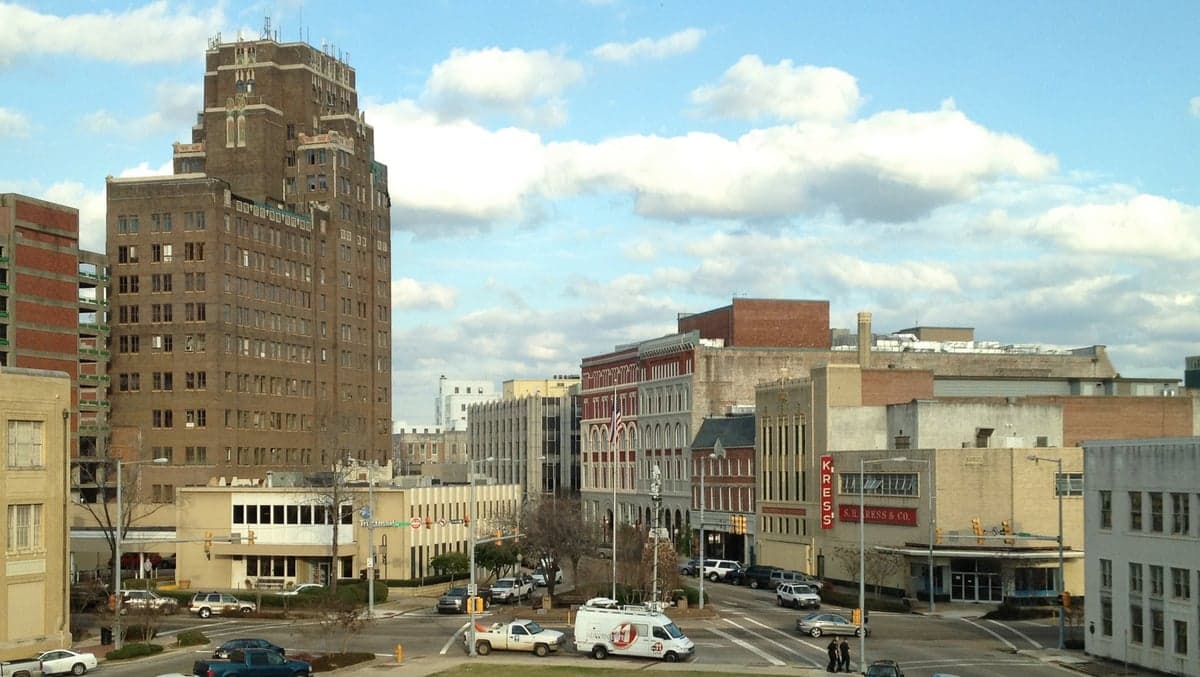
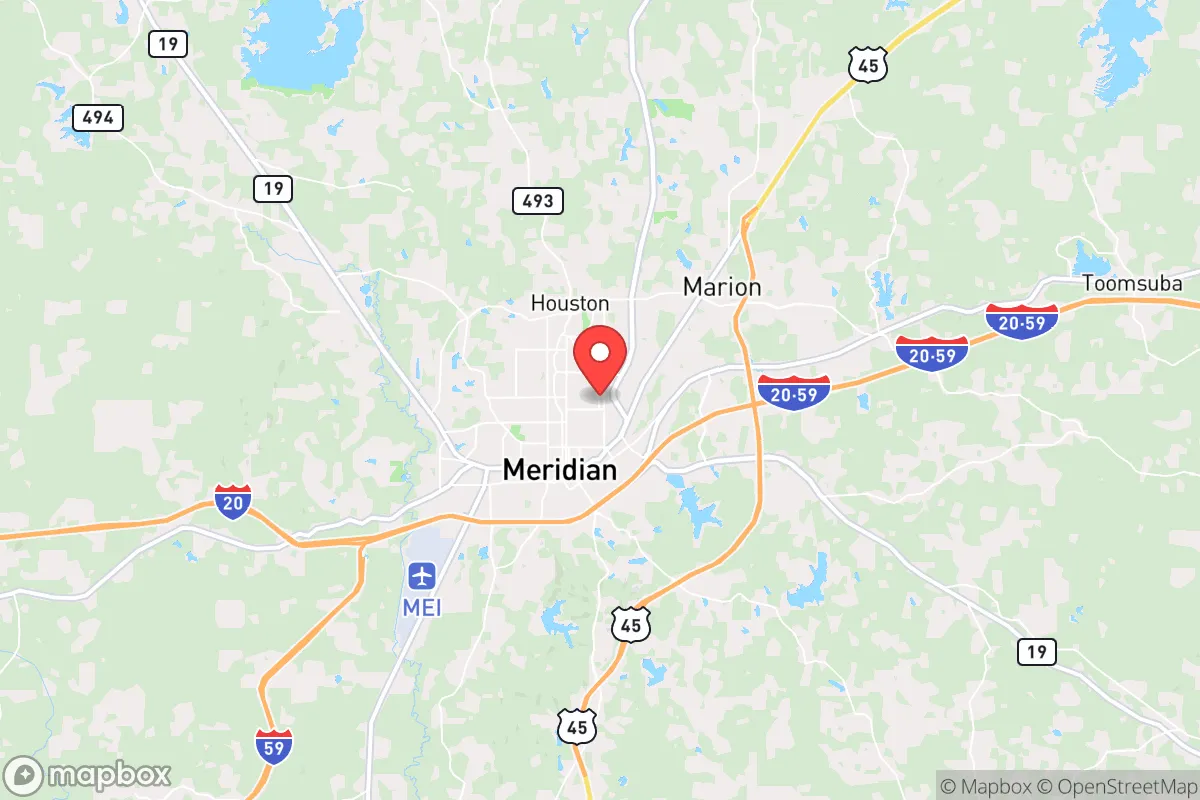
Photo: Wikipedia
Strategic Assessment of Meridian, MS
Workable tactical position. Some exposure to population density or targets, but generally defensible in a crisis.
What does the Strategic Assessment tell us?
Our Strategic Assessment grades tactical survivability of an area. Major population centers, military targets, fallout zones, natural disasters, and border exposure all drive risk — lower exposure means a more defensible position in a crisis.
This is heavily inspired by Joel Skousen's Strategic Relocation book. Highly recommended you checkout the book ($)What does this tell us?
Our Strategic Assessment grades tactical survivability of an area. Major population centers, military targets, fallout zones, natural disasters, and border exposure all drive risk — lower exposure means a more defensible position in a crisis.
This is heavily inspired by Joel Skousen's Strategic Relocation book. Highly recommended you checkout the book ($)Strategic Pillars

Key Distances
Regional Safe Places
Below is our recommended "safe zones" in Mississippi and the surrounding area based on our strategic heuristics. For most people, it's unrealistic to live in a “safe zone” full-time due to work, family or other personal reasons. They tend to be more rural. However, many of these areas are perfect for second homes and retreat properties that double as a vacation home or even a short-term rental.
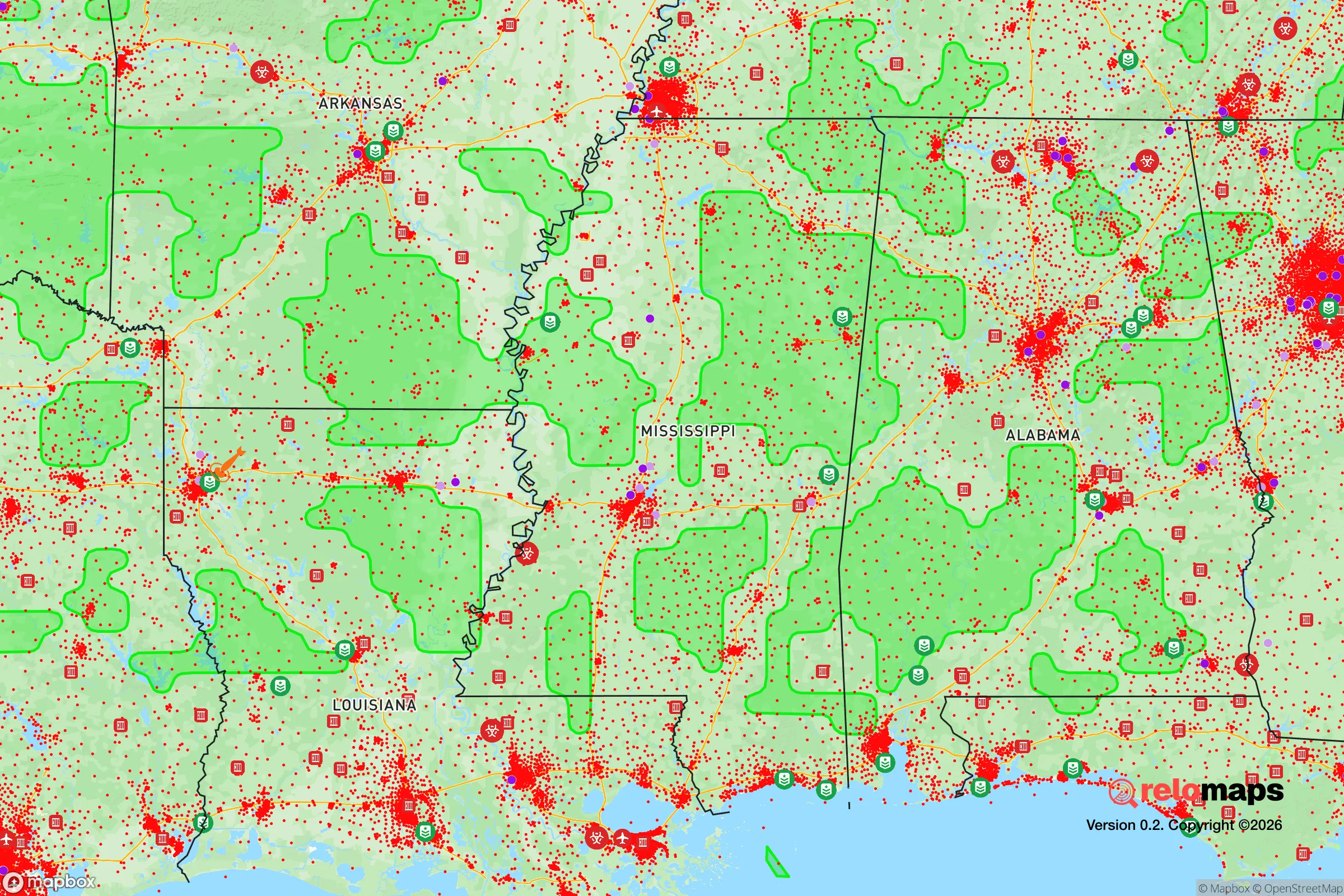
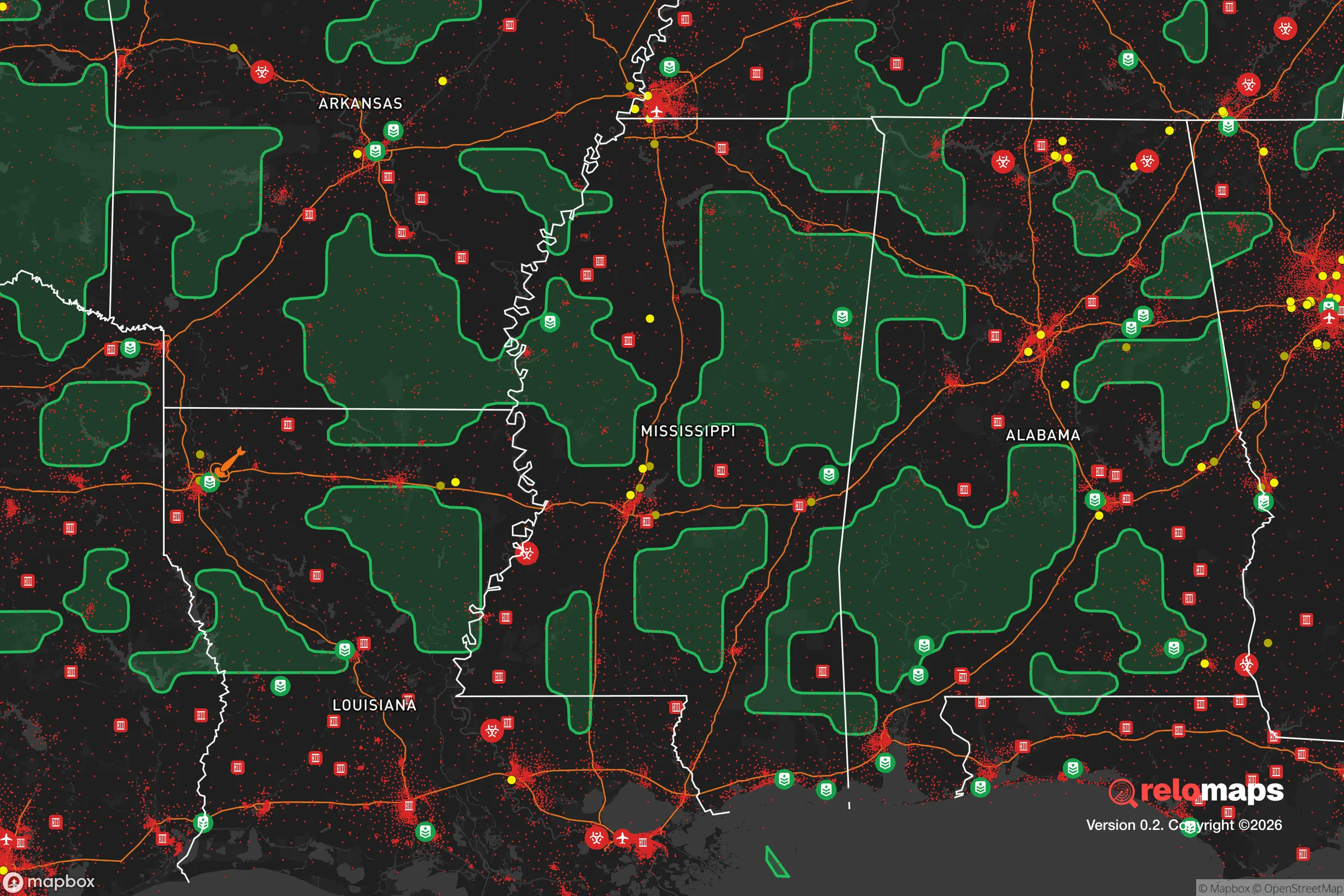


Important Note: For informational purposes only. This does not mean nothing bad ever happens in the green zones. Please use common sense. This is based on public data and modeled with AI. We tried to take a conservative approach but mistakes happen. We update this regularly as new information becomes available.
Solar Generator Recommendations
Backup power matters more here than in safer locations. We've picked three solar generators across budgets and capacity tiers — start with the budget unit if you only need a few essentials, or step up if you want to run a fridge and HVAC for days at a time.

Jackery Portable Power Station Explorer 300
Budget OptionPower on the Go: Weighing only 11 lbs, it's convenient to set up and store with book-sized foldable solar panels

BLUETTI Portable Power Station AC180
Designed for both indoor and outdoor scenarios, AC180 is highly capable as it has a robost capacity and continuous output power.

EF ECOFLOW DELTA Pro Ultra Power Station
Upgraded PickEcoFlow DELTA Pro Ultra is a whole-home energy system designed to grow with your family. Integrated with the Smart Home Panel 2, it scales to meet your evolving energy needs — keeping your home powered, intelligent, and secure through every stage of life.
We earn a commission, at no additional cost to you.
Strategic Assessment Analysis
Meridian, Mississippi, offers a surprisingly strong strategic position for a relocator focused on resilience and self-sufficiency, balancing deep-rooted community stability with a location that is far enough from major metropolitan targets to avoid the worst of a collapse scenario, yet close enough to access critical resources. The city’s historical role as a railroad and manufacturing hub has instilled a practical, can-do culture, and its position in the East Central Mississippi region provides a blend of natural advantages and manageable risks that make it a serious contender for those prioritizing preparedness over convenience. This assessment examines the area’s geographic strengths, its exposure to natural and man-made threats, and the practical day-to-day resilience a relocator can expect to find.
Geographic position and natural advantages for long-term stability
Meridian sits at the intersection of Interstates 20 and 59, roughly 90 miles east of Jackson and 150 miles west of Birmingham, Alabama. This location is a double-edged sword: it provides excellent logistical access for supply runs or evacuation, but it also places the city within a moderate-risk zone for certain threats. The area’s natural advantages are rooted in its geology and hydrology. The city lies within the East Gulf Coastal Plain, characterized by gently rolling hills and well-drained sandy loam soils that are excellent for small-scale agriculture and gardening. Unlike the Delta region to the west, Meridian is not prone to catastrophic flooding from the Mississippi River; the primary flood risk comes from local creeks and the Chunky River, which are manageable with proper siting. The region’s average annual rainfall of about 55 inches ensures a reliable water supply, and the underlying aquifer—the Citronelle Formation—provides decent groundwater access for private wells, though depth varies. The climate is humid subtropical, with hot summers and mild winters, allowing for year-round food production and reducing the need for heavy heating fuel. The area’s low population density relative to the Gulf Coast or Jackson metro means less competition for resources in a crisis, and the surrounding pine forests offer ample timber for construction, fuel, and foraging.
Risks, exposures, and proximity to fallout-relevant landmarks
No strategic assessment is complete without a clear-eyed look at the threats. Meridian’s primary natural risks are severe thunderstorms, tornadoes, and occasional ice storms. The city sits in the heart of Dixie Alley, the region of the southeastern U.S. with the highest frequency of strong tornadoes. While the city has a robust warning system and a culture of storm preparedness, a direct hit from an EF-4 or EF-5 tornado would be devastating, as seen in the 2014 Winston County tornado that struck near Louisville, about 50 miles north. Flooding is a secondary concern, with the low-lying areas near the Chunky River and Sowashee Creek being most vulnerable. The man-made risk profile is more nuanced. Meridian is not a primary target for nuclear strike—it lacks major military bases, strategic command centers, or large-scale industrial complexes that would draw a first strike. However, it is within 150 miles of several potential targets: the Naval Air Station Meridian (a training base with a small footprint), the Tennessee Valley Authority’s Browns Ferry Nuclear Plant in Alabama (about 120 miles east), and the larger population centers of Jackson and Birmingham. In a full-scale nuclear exchange, Meridian would likely experience fallout from these secondary targets, but the prevailing winds (generally from the west and southwest) would push contamination away from the city in many scenarios. The real risk is proximity to the Gulf Coast (about 150 miles south), which could see a surge of refugees from New Orleans, Mobile, and the Mississippi coast in a major hurricane or economic collapse. The city’s position as a rail and highway hub also makes it a potential chokepoint for military or FEMA logistics, which could attract unwanted attention.
Practical resilience for a relocator: food, water, energy, and defensibility
For a family or individual serious about self-sufficiency, Meridian offers a workable baseline. Food production is viable: the growing season runs from mid-March to early November, and the sandy loam soil is ideal for raised beds, fruit trees (peaches, figs, muscadines), and staple crops like corn, beans, and squash. Local farmers’ markets and the Meridian Farmers Market provide a network for sourcing seeds, livestock, and knowledge. The area has a strong hunting culture—deer, turkey, and small game are abundant in the surrounding national forests (Bienville, De Soto, and Talladega are within a two-hour drive)—and fishing in the local rivers and lakes (Okatibbee Lake is 15 miles north) is reliable. Water access is a key advantage: the city’s municipal water comes from the Meridian Water Supply System, which draws from the Chunky River and a series of wells. For off-grid living, the water table is generally high enough for a shallow well (30-80 feet) in most areas, though a professional survey is recommended. Rainwater harvesting is straightforward given the annual rainfall. Energy resilience is moderate: the region is served by Mississippi Power (a Southern Company subsidiary) and East Mississippi Electric Power Association, both of which have a decent reliability record. Solar potential is good, with an average of 5.2 peak sun hours per day, and the state offers net metering for grid-tied systems. Wood heating is a practical backup, with abundant firewood available from the pine forests. Defensibility is a mixed bag: Meridian’s layout is a typical Southern city with a grid street pattern and a mix of suburban and rural subdivisions. The most defensible properties are on the outskirts, particularly in the rural areas to the north and east (e.g., near the town of Collinsville or along Highway 45), where acreage is affordable and neighbors are spaced out. The city itself has a moderate crime rate—property crime is higher than the national average, but violent crime is concentrated in specific neighborhoods. The local law enforcement (Meridian Police Department and Lauderdale County Sheriff’s Office) is professional but understaffed, so a relocator should plan for self-defense and neighborhood watch. The medical infrastructure is a strength: Rush Foundation Hospital and Anderson Regional Medical Center provide solid emergency and surgical care, and the University of Mississippi Medical Center in Jackson is a two-hour drive for specialized treatment. The presence of the Naval Air Station also means a population of veterans and active-duty personnel, which can be a stabilizing factor in a crisis.
The overall strategic picture for Meridian is one of moderate resilience with manageable trade-offs. It is not a remote bunker location, nor is it a high-risk target zone. The city’s greatest assets are its reliable water supply, productive growing conditions, and a community that still values self-reliance and neighborly cooperation. The primary liabilities are the tornado risk and the potential for refugee influx from the Gulf Coast. For a relocator who is willing to invest in a well, a solar array, and a storm shelter, and who chooses a property on the rural fringe, Meridian offers a solid foundation for long-term preparedness without the extreme isolation of a mountain retreat. It is a place where a family can build a life that is both connected to a functioning small city and insulated enough to weather a serious disruption. The key is to buy land with good drainage, secure a water source, and get to know the local community—because in Meridian, as in most of the South, your neighbors are your first line of defense.

* Values derived from national, state, county, city and local statistics and may differ in a specific area. Last updated: 2026-07-07T00:39:28.000Z
Narrative content on this page is AI-generated and may contain mistakes. Verify any details that matter before acting on them.
ReloMaps may earn a commission from affiliate links at no extra cost to you.

