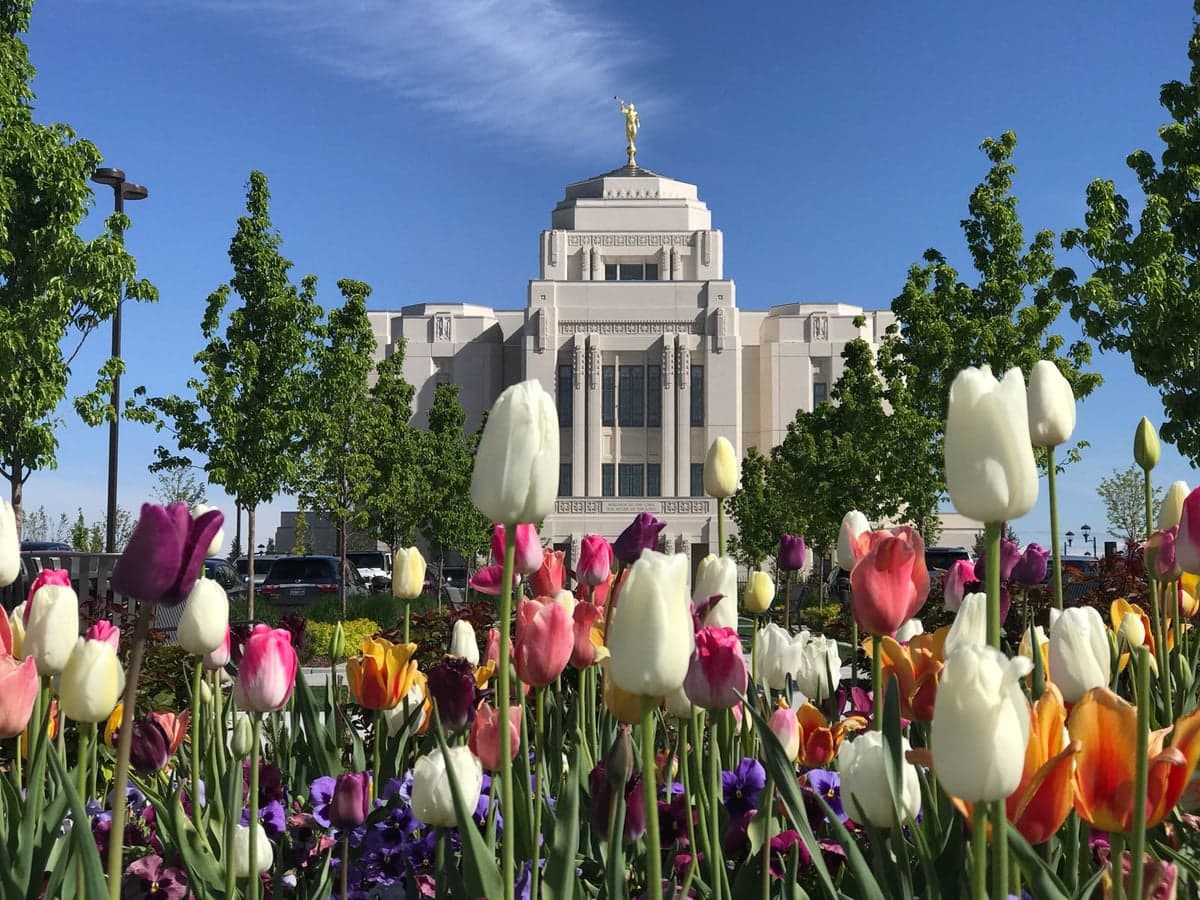
Photo: Wikipedia
Strategic Assessment of Meridian, ID
Workable tactical position. Some exposure to population density or targets, but generally defensible in a crisis.
What does the Strategic Assessment tell us?
Our Strategic Assessment grades tactical survivability of an area. Major population centers, military targets, fallout zones, natural disasters, and border exposure all drive risk — lower exposure means a more defensible position in a crisis.
This is heavily inspired by Joel Skousen's Strategic Relocation book. Highly recommended you checkout the book ($)What does this tell us?
Our Strategic Assessment grades tactical survivability of an area. Major population centers, military targets, fallout zones, natural disasters, and border exposure all drive risk — lower exposure means a more defensible position in a crisis.
This is heavily inspired by Joel Skousen's Strategic Relocation book. Highly recommended you checkout the book ($)Strategic Pillars

Key Distances
Regional Safe Places
Below is our recommended "safe zones" in Idaho and the surrounding area based on our strategic heuristics. For most people, it's unrealistic to live in a “safe zone” full-time due to work, family or other personal reasons. They tend to be more rural. However, many of these areas are perfect for second homes and retreat properties that double as a vacation home or even a short-term rental.
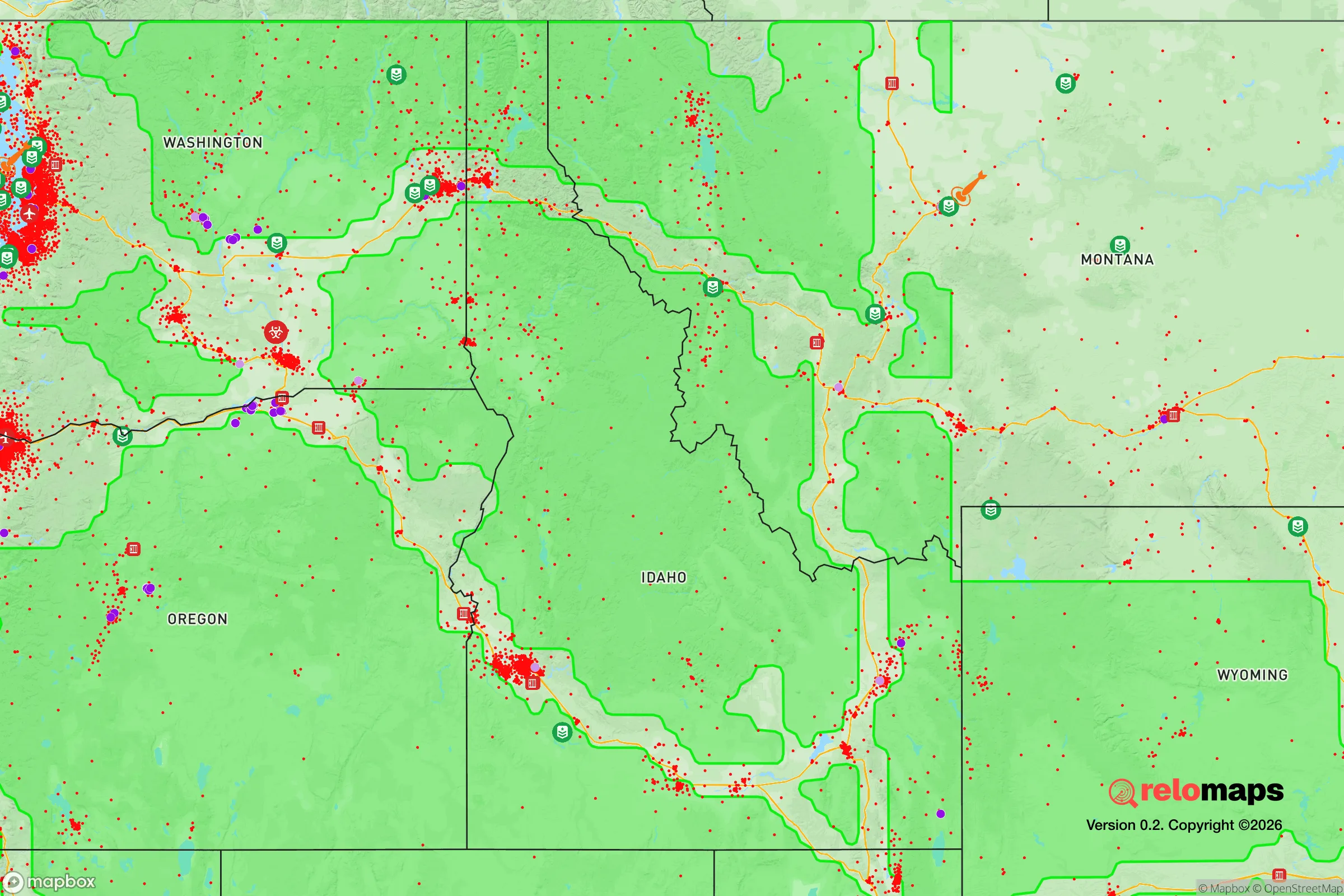
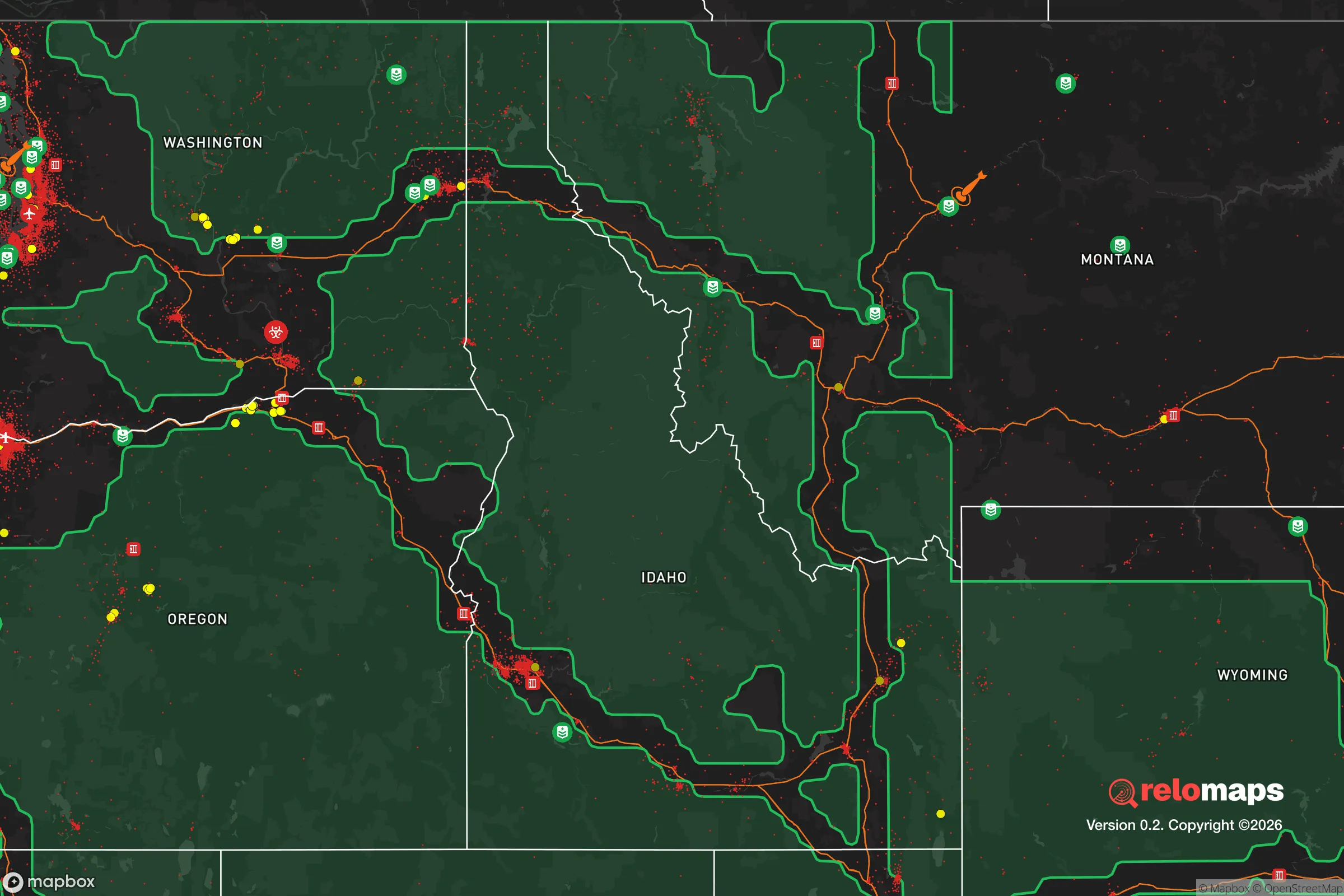


Important Note: For informational purposes only. This does not mean nothing bad ever happens in the green zones. Please use common sense. This is based on public data and modeled with AI. We tried to take a conservative approach but mistakes happen. We update this regularly as new information becomes available.
Solar Generator Recommendations
Backup power matters more here than in safer locations. We've picked three solar generators across budgets and capacity tiers — start with the budget unit if you only need a few essentials, or step up if you want to run a fridge and HVAC for days at a time.

Jackery Portable Power Station Explorer 300
Budget OptionPower on the Go: Weighing only 11 lbs, it's convenient to set up and store with book-sized foldable solar panels

BLUETTI Portable Power Station AC180
Designed for both indoor and outdoor scenarios, AC180 is highly capable as it has a robost capacity and continuous output power.

EF ECOFLOW DELTA Pro Ultra Power Station
Upgraded PickEcoFlow DELTA Pro Ultra is a whole-home energy system designed to grow with your family. Integrated with the Smart Home Panel 2, it scales to meet your evolving energy needs — keeping your home powered, intelligent, and secure through every stage of life.
We earn a commission, at no additional cost to you.
Strategic Assessment Analysis
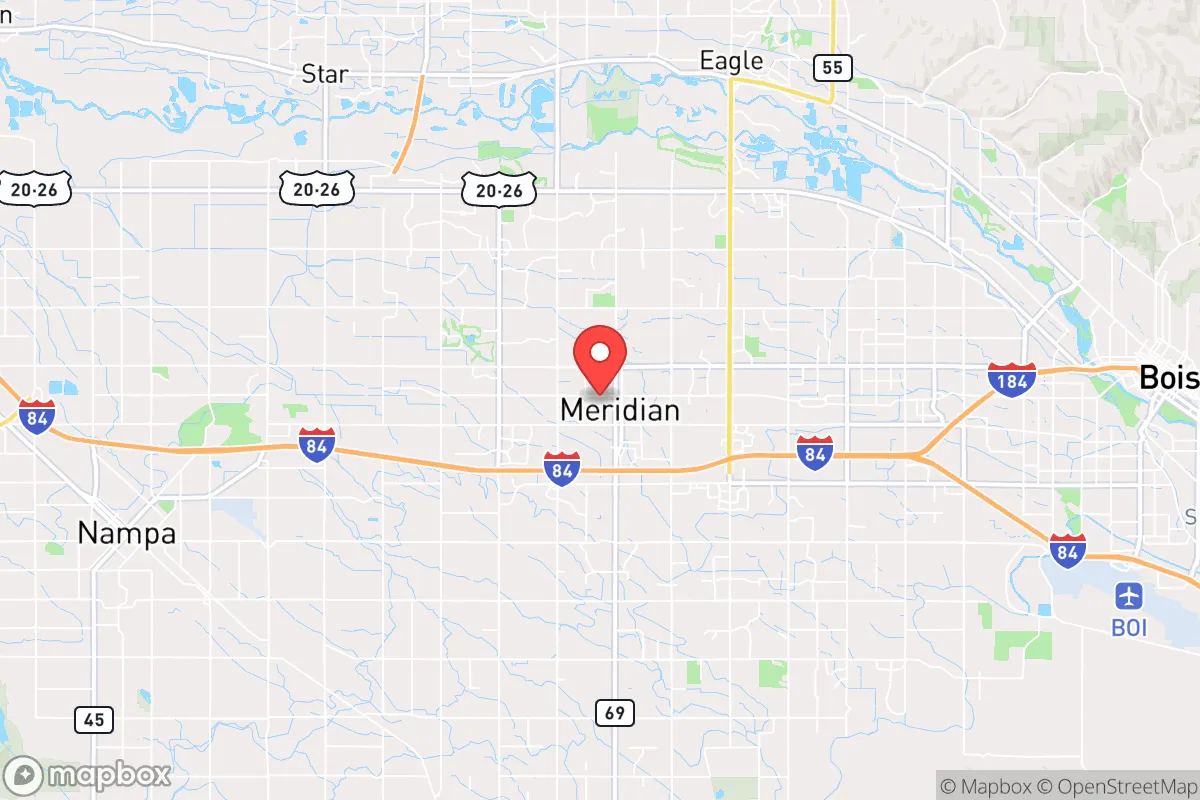
Meridian, Idaho, occupies a strategic position in the Treasure Valley that offers a blend of suburban convenience and access to critical natural resources, making it a noteworthy option for those prioritizing disaster readiness and self-sufficiency. Its location roughly 15 miles west of Boise places it within a growing metropolitan corridor, yet its proximity to the Snake River Plain and the foothills of the Rocky Mountains provides a buffer zone that many purely urban or coastal locations lack. For a relocator weighing resilience, Meridian’s advantages center on water access, agricultural adjacency, and a relatively low exposure to the most common natural catastrophes, though its proximity to Boise and regional infrastructure introduces specific man-made risks that require careful consideration.
Geographic position and natural advantages for long-term stability
Meridian sits on the high desert of the Snake River Plain at an elevation of roughly 2,600 feet, a setting that naturally insulates it from several major disaster types. The region is seismically stable compared to the Pacific Coast, with no active fault lines running directly through the city—the nearest significant seismic hazard is the Wasatch Fault in Utah, over 300 miles away. Tornado activity is rare in southwestern Idaho, and the area’s inland location eliminates any risk of storm surge or hurricane-force winds. The climate is semi-arid, with annual precipitation around 12 inches, which reduces the likelihood of flooding outside of localized spring runoff events near the Boise River. For a reader concerned with long-term habitability, Meridian’s elevation and latitude also offer a degree of climate resilience: warming trends are less severe than in the desert Southwest, and the region’s snowpack in the nearby Sawtooth and Boise Mountains provides a natural water reservoir that buffers against drought years. The city’s position on the western edge of the Mountain Time Zone also means it is far from major coastal population centers, reducing the risk of cascading infrastructure failures from a West Coast seismic event or an East Coast grid collapse.
Risks, exposures, and proximity to fallout-relevant landmarks
The most significant vulnerability for Meridian is its location within the Treasure Valley, a rapidly growing metropolitan area anchored by Boise. While Meridian itself is a suburb of roughly 130,000 residents, it lies within 20 miles of Boise’s downtown core, the Boise Airport, and the Idaho National Guard’s Gowen Field—all potential targets in a conflict scenario involving conventional or nuclear strikes. The Idaho National Laboratory (INL), a major nuclear research and energy facility, is located about 50 miles east near Idaho Falls. While not an immediate fallout hazard for Meridian under normal conditions, a catastrophic event at INL could release radioactive material that, depending on wind patterns, might affect the Treasure Valley. Additionally, the city’s growth has placed it near Interstate 84, a major east-west freight corridor that also serves as a potential chokepoint during an evacuation or supply disruption. Wildfire risk is moderate but increasing: the 2024 Valley Fire burned over 10,000 acres in the nearby Owyhee Mountains, and smoke events from regional fires can degrade air quality for weeks. Flooding is limited to low-lying areas near the Boise River and canals, but the city’s stormwater infrastructure is generally adequate for the 100-year floodplain. For a relocator, the primary man-made risk is proximity to Boise’s critical infrastructure, which could become a liability during a regional crisis, rather than any inherent natural hazard.
Practical resilience for a relocator: food, water, energy, and defensibility
Meridian’s practical resilience is bolstered by its agricultural surroundings and water access. The city sits within the Boise Project, a network of irrigation canals fed by the Boise River and Lucky Peak Reservoir, which provides a reliable surface water supply even during dry years. Groundwater is also accessible via private wells in many outlying areas, though suburban subdivisions typically rely on municipal systems. For a relocator seeking self-sufficiency, properties on the city’s fringe—particularly toward the foothills or near the Snake River—offer better options for well drilling and rainwater catchment. The Treasure Valley is one of Idaho’s primary agricultural zones, with extensive potato, sugar beet, and alfalfa farms within a 20-mile radius. This means local food production is robust, and farmers’ markets and CSAs are common. However, the city itself has limited farmland within its boundaries, so a relocator would need to secure acreage outside the suburban core for serious food self-sufficiency. Energy resilience is moderate: Idaho Power’s grid is largely hydroelectric (about 50% of generation), which is more stable than coal or gas-dependent systems, but the region is not immune to winter storms that can knock out power lines. Solar potential is excellent, with over 200 sunny days per year, and net metering policies are favorable for residential solar installations. Defensibility is a mixed picture: Meridian’s suburban layout with cul-de-sacs and arterial roads offers some natural chokepoints, but the flat terrain and dense development in newer subdivisions make perimeter security challenging. Rural properties to the south or east, closer to the foothills, provide better defensibility through elevation and limited access points. For a relocator, the key is to choose a location that balances proximity to Meridian’s amenities with the ability to secure water, energy, and food independently.
The overall strategic picture for Meridian is one of moderate resilience with clear trade-offs. It avoids the worst natural disasters—hurricanes, earthquakes, and tornadoes—and benefits from abundant water and local agriculture, which are foundational for long-term self-sufficiency. Its inland location and distance from coastal megacities reduce exposure to cascading infrastructure failures. However, the city’s growth and proximity to Boise’s critical infrastructure introduce man-made risks that cannot be ignored, particularly for those concerned with conflict scenarios or major industrial accidents. For a relocator who values a stable climate, access to water, and a community with a conservative, self-reliant ethos, Meridian is a strong candidate—provided they secure a property with independent water and energy systems, and maintain situational awareness of regional hazards. It is not a remote survivalist retreat, but it offers a pragmatic balance of safety, resources, and community that aligns with a serious disaster readiness mindset.

* Values derived from national, state, county, city and local statistics and may differ in a specific area. Last updated: 2026-07-08T12:44:28.000Z
Narrative content on this page is AI-generated and may contain mistakes. Verify any details that matter before acting on them.
ReloMaps may earn a commission from affiliate links at no extra cost to you.

