Personal Sovereignty in Marco Island, FL
Viable for self-reliance. Generally workable, though some barriers may limit total independence.
What does Personal Sovereignty tell us?
Personal Sovereignty measures your capacity for self-reliance and independence with minimal government friction. Higher scores mean fewer barriers between you and the way you want to live... but it assumes you have the space you need and good neighbors.
What does this tell us?
Personal Sovereignty measures your capacity for self-reliance and independence with minimal government friction. Higher scores mean fewer barriers between you and the way you want to live... but it assumes you have the space you need and good neighbors.
State Policy
Energy independence: Importer (10% of energy produced in-state)
Personal Liberty
Homesteading

Personal Liberty Analysis
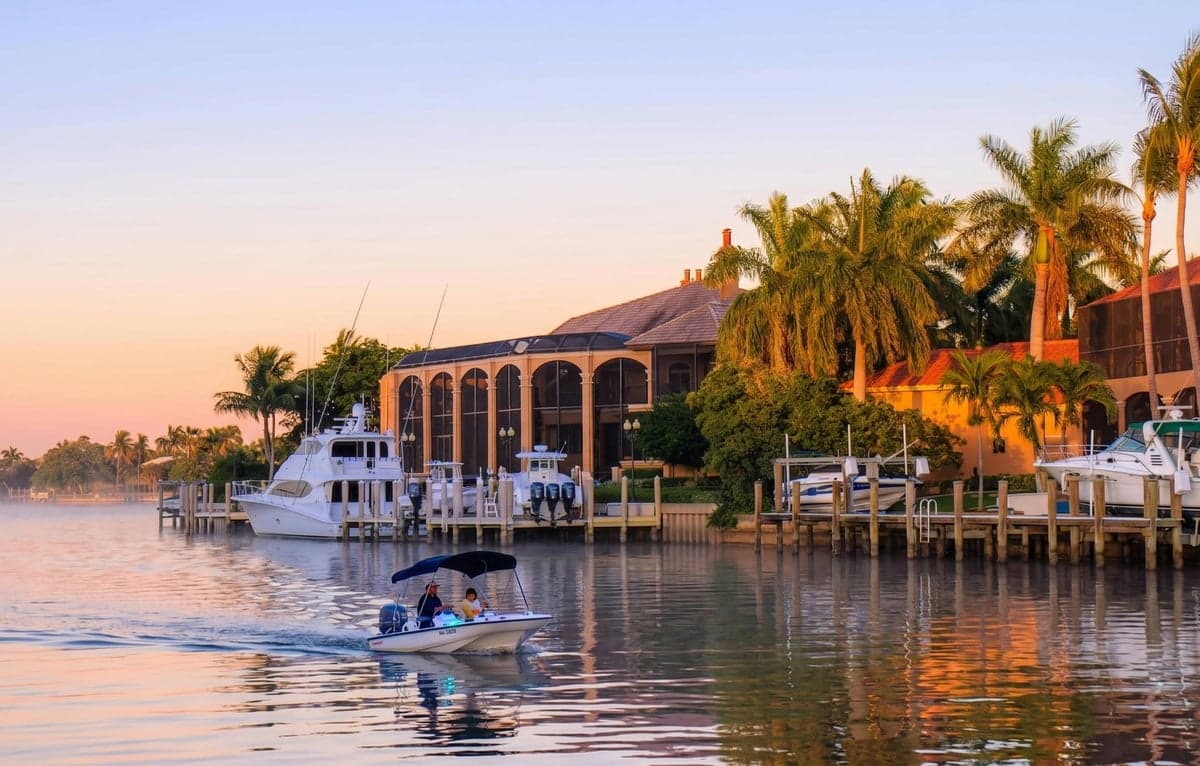
Marco Island, Florida, offers a unique environment for personal sovereignty that balances the autonomy of a small, gated community with the broader protections of a state that has aggressively pushed back against federal overreach in recent years. For the individual or family operating from a survivalist or prepper mindset, the island’s insular geography provides a natural buffer against the chaos of the mainland, while Florida’s legal framework—from its stand-your-ground laws to its tax structure—creates a foundation for self-reliance. However, the trade-off is a high cost of living and strict local ordinances that can feel like a velvet-glove version of government overreach, particularly for those accustomed to unrestricted land use. The key question for the strategic relocator is whether the island’s defensive advantages and state-level liberties outweigh the constraints of a planned community that governs everything from lawn height to boat storage.
Tax burden and regulatory posture: How Florida’s fiscal policies support self-reliance
Florida’s lack of a state income tax is the single most powerful tool for preserving personal sovereignty here. Every dollar you earn stays in your pocket, free from the state’s grasp, which directly funds your own preparedness efforts—whether that’s stockpiling supplies, investing in property improvements, or building a private security setup. Marco Island sits in Collier County, where property taxes average around 0.75% of assessed value, slightly below the state median, and there is no state-level property tax. This low burden means less of your wealth is siphoned into government coffers for programs you may not support. On the regulatory side, Florida has preempted many local gun and zoning laws, but Marco Island’s city government still enforces a thicket of codes—no commercial vehicles parked overnight, strict noise ordinances, and limits on short-term rentals—that can feel like a petty bureaucracy. For the prepper, the state’s overall posture is favorable: no inventory tax, no estate tax, and a constitutional amendment requiring a two-thirds supermajority in the legislature to raise taxes. But the island’s HOA-like municipal rules are a reminder that local control can be a double-edged sword, especially if you value the freedom to modify your property without a permit.
Self-defense and gun law specifics: Stand-your-ground and castle doctrine in practice
Florida’s gun laws are among the most robust in the nation for the individualist. The state’s stand-your-ground statute, codified in Florida Statute 776.013, eliminates any duty to retreat before using deadly force if you are in a place where you have a right to be and reasonably believe it is necessary to prevent death or great bodily harm. This applies directly to your home, vehicle, and workplace under the castle doctrine, and Marco Island’s low crime rate—violent crime is roughly 60% below the national average—means you are statistically unlikely to need it, but the legal backing is there. Florida is a permitless carry state as of 2023, meaning any law-abiding adult can carry a concealed firearm without a license, though a permit is still useful for reciprocity with other states. There are no magazine capacity limits, no state-level assault weapon ban, and no waiting periods for long guns. For the prepper, the practical concern is that Marco Island is a dense, built-up area with limited rural space for private shooting ranges. You will need to travel to the Collier County Sheriff’s Office gun range or join a private club like the Immokalee Gun Range about 30 miles inland. The local sheriff’s office is generally pro-2A, but the island’s police department has been known to enforce minor firearms-related ordinances, such as discharging a weapon within city limits, which is prohibited. Overall, the legal framework supports self-defense, but the geography limits your ability to train on your own land.
Self-reliance and homesteading viability: Lot sizes, zoning, and off-grid feasibility
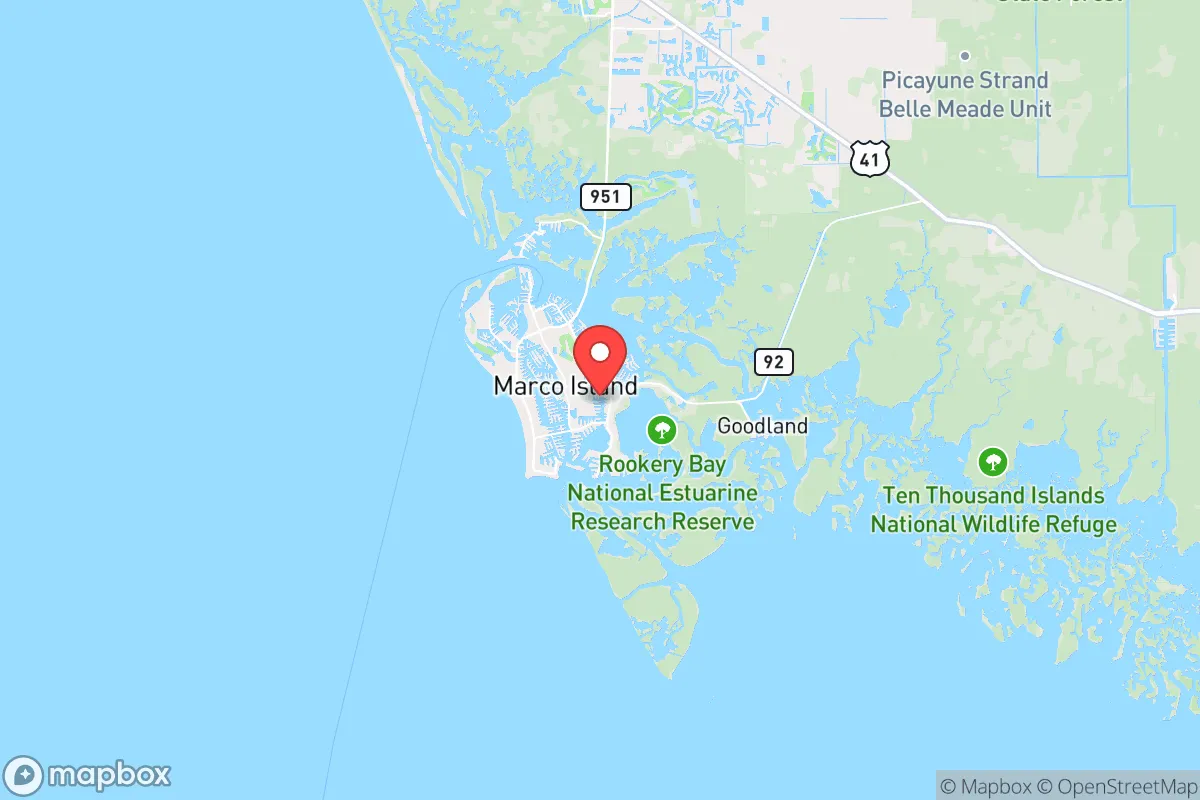
Marco Island is not a homesteader’s paradise. The typical residential lot is a quarter-acre or less, with most homes built on canals or near the beach, leaving little room for large gardens, livestock, or significant off-grid infrastructure. Zoning codes are strict: the city’s land development regulations prohibit keeping chickens, goats, or any farm animals on residential lots, and there are height restrictions for fences and structures that limit your ability to build a secure compound. Off-grid feasibility is low because the island is connected to the mainland by a single bridge (the S.S. Jolley Bridge), making it a bottleneck in a crisis. The city requires connection to municipal water and sewer, so drilling a private well or installing a septic system is not an option for most properties. Solar panels are allowed but must be flush-mounted and cannot exceed roof height, limiting their efficiency. For the serious prepper, the island’s reliance on external supply chains for food, water, and power is a vulnerability. However, the surrounding Everglades and Ten Thousand Islands offer some opportunities for fishing, crabbing, and foraging if you have a boat and the skills to navigate the backcountry. The real self-reliance play here is financial and logistical: low taxes and a strong local economy (tourism and construction) allow you to build savings for a more remote retreat inland, while using Marco Island as a secure base for coastal access.
Personal liberties: Parental rights, medical autonomy, speech, and property
Florida has been a battleground for personal liberties, and the state’s recent laws tilt heavily toward individual autonomy. Parental rights are strongly protected under the Parental Bill of Rights (Florida Statute 1014.04), which affirms that parents have the fundamental right to direct the upbringing, education, and healthcare of their children. This means no government-mandated medical procedures or curriculum overrides without parental consent, a key consideration for those wary of federal overreach in education and health. Medical autonomy is mixed: Florida banned vaccine passports and mandates for private employers, but the state still requires certain immunizations for school entry, and there is no explicit right to refuse all medical treatment without consequence. Speech is broadly protected under the state constitution, and Marco Island’s public forums—like the city council meetings—are generally open, though local officials have occasionally been accused of suppressing dissenting views on development issues. Property rights are strong under Florida’s Private Property Rights Protection Act, which requires compensation for regulatory takings, but Marco Island’s zoning board has broad discretion to deny variances, so you cannot assume you can do whatever you want with your land. For the prepper, the most relevant liberty is the ability to stockpile supplies without interference: there are no state-level limits on food storage, ammunition, or medical supplies, and the island’s police do not conduct wellness checks unless there is a specific complaint.
In the broader landscape of personal sovereignty, Marco Island offers a high degree of autonomy within a controlled environment. It is not a place for the rugged individualist who wants to live off the grid with a rifle and a garden—the lot sizes, zoning, and infrastructure dependencies prevent that. But for the strategic relocator who values financial freedom, strong self-defense laws, and a community that largely minds its own business, it is a defensible outpost. Compared to the Pacific Northwest or the Northeast, where state-level overreach on taxes, guns, and parental rights is far more aggressive, Marco Island is a sanctuary. Compared to rural Montana or Idaho, it is a gilded cage. The decision hinges on whether you see the island’s natural barriers and legal protections as a fortress or a trap. For those with the resources to maintain a dual-life strategy—a primary residence here and a secondary retreat inland—it is arguably one of the best-balanced sovereignty plays in the country.

* Values derived from national, state, county, city and local statistics and may differ in a specific area. Last updated: 2026-05-14T01:32:48.000Z
Narrative content on this page is AI-generated and may contain mistakes. Verify any details that matter before acting on them.
ReloMaps may earn a commission from affiliate links at no extra cost to you.

