Photo: Wikipedia
Demographics of Madison, VA
Affluence Level in Madison, VA
A below-average socioeconomic profile. Incomes, home values, and educational attainment trail the U.S., with higher poverty and unemployment.
People of Madison, VA
Madison, Virginia, is a small, tight-knit community of 328 residents where nearly three-quarters of the population identifies as White and about one in seven as Black, reflecting a deeply rooted biracial heritage with virtually no foreign-born or Hispanic presence. The town’s character is defined by its rural setting in Madison County, a low-density area where family ties often stretch back generations and where the college-educated share sits at just 12.7%, well below state averages. Residents here value self-reliance, local tradition, and a slower pace of life, with a population density that makes neighbors a familiar part of daily life rather than anonymous faces.
How the city was settled and grew
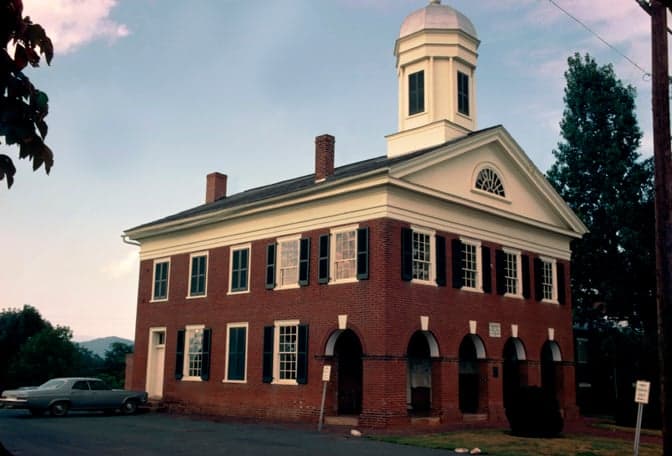
Madison was established in the early 19th century as the county seat of Madison County, named after President James Madison, and its original population was drawn by the promise of fertile farmland in the Piedmont foothills. The first European settlers were primarily English and Scots-Irish farmers who arrived via the Shenandoah Valley and the Piedmont region, taking up land grants in the surrounding countryside. These families built the town’s earliest structures around the courthouse square, an area now known as Downtown Madison, which remains the historic and commercial core. By the mid-1800s, enslaved Black laborers made up a significant portion of the county’s population, working the tobacco and grain fields that sustained the local economy. After the Civil War, freedmen established their own community in what became known as the Bottom, a historically Black neighborhood along the southern edge of town where many descendants still live today. The arrival of the railroad in the late 19th century brought a modest wave of merchants and tradesmen, but Madison never experienced the industrial boom that transformed other Virginia towns, leaving its population small and its economy tied to agriculture and local government.
Modern era (post-1965)
Following the 1965 Hart-Cellar Act, Madison saw virtually no immigration — the foreign-born population remains at 0.0% — and the town’s demographic story since then has been one of domestic stability rather than ethnic diversification. The most significant shift has been the gradual out-migration of younger residents seeking jobs in larger cities like Charlottesville, 30 miles to the southwest, which has left an aging population in place. The Black community, which once made up a larger share of the town’s population, has declined proportionally as some families moved to urban centers, while the White population has remained steady, anchored by longtime residents in neighborhoods like Oak Park and Hillcrest, both established mid-century subdivisions on the town’s northern and eastern edges. The college-educated share, at 12.7%, reflects the limited local demand for advanced degrees — most employment is in retail, construction, and county government — and the town has not attracted the remote-worker influx seen in more scenic parts of the Blue Ridge. The Hispanic and Asian populations remain at 0.0%, making Madison one of the least ethnically diverse towns in Virginia, a fact that shapes its cultural identity as a place where change comes slowly.
The future
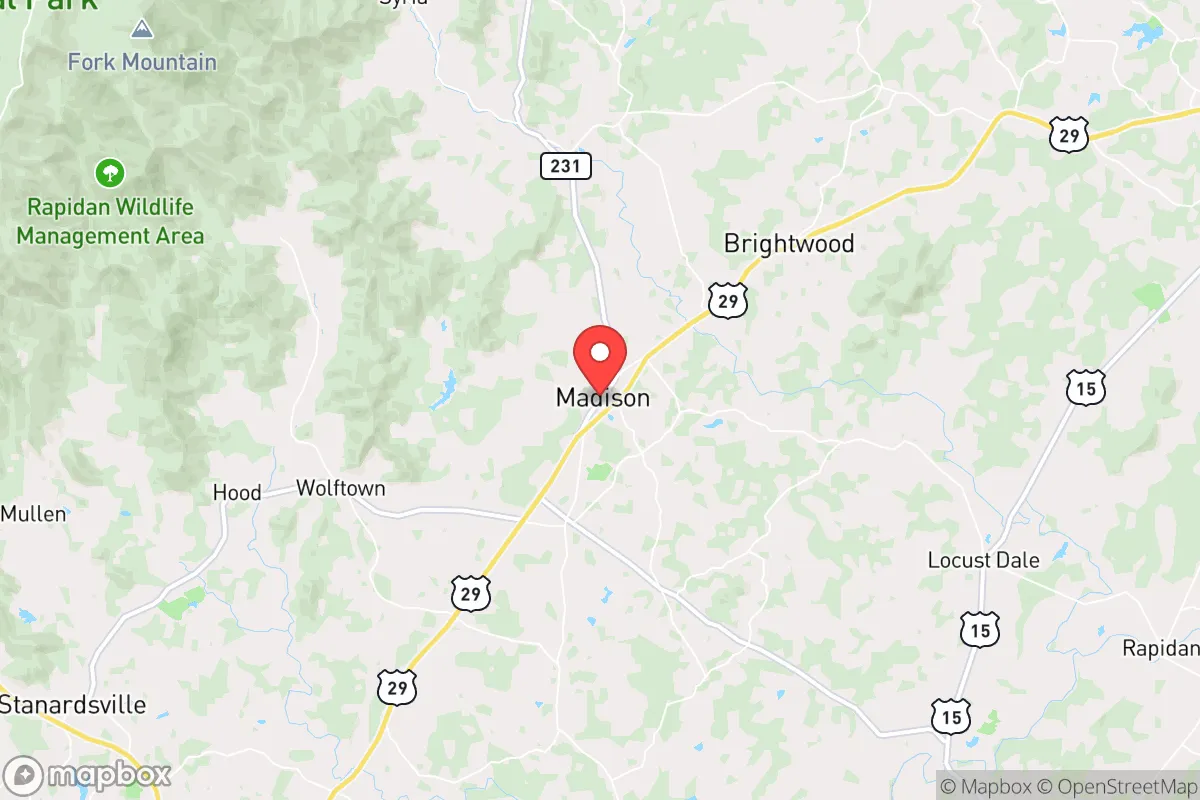
Madison’s population is projected to remain small and stable, with no major development or demographic shift on the horizon. The town’s location along U.S. Route 29 offers some potential for growth as a bedroom community for Charlottesville, but the lack of new housing construction and the absence of significant job creation suggest that any increase will be modest. The population is likely to become slightly older and slightly more White as younger Black residents continue to leave for opportunities elsewhere, while the Hispanic and Asian shares are expected to remain near zero given the area’s limited economic draw. New residents who do arrive are most likely to settle in the newer subdivisions on the town’s periphery, such as Mountain View Estates, a small development of single-family homes built in the 2000s, rather than in the historic core. The cultural identity of Madison will likely remain rooted in its rural, conservative character, with little pressure toward the diversification seen in Virginia’s larger cities.
For someone moving in now, Madison offers a stable, predictable community where family history and local connections matter more than rapid change or urban amenities. The town is becoming neither more diverse nor more cosmopolitan — it is holding steady as a predominantly White and Black, deeply rural place where the pace of life is slow and the social fabric is woven from generations of shared experience. New arrivals should expect to integrate into an existing order rather than reshape it, and the appeal lies in the quiet, the familiarity, and the absence of the pressures that define faster-growing parts of the state.

* Values derived from national, state, county, city and local statistics and may differ in a specific area. Last updated: 2026-11-23T12:57:01.000Z
Narrative content on this page is AI-generated and may contain mistakes. Verify any details that matter before acting on them.
ReloMaps may earn a commission from affiliate links at no extra cost to you.

