Photo: Wikipedia
Demographics of Mableton, GA
Affluence Level in Mableton, GA
A middle-class area roughly in line with national averages across income, home values, education, and employment.
People of Mableton, GA
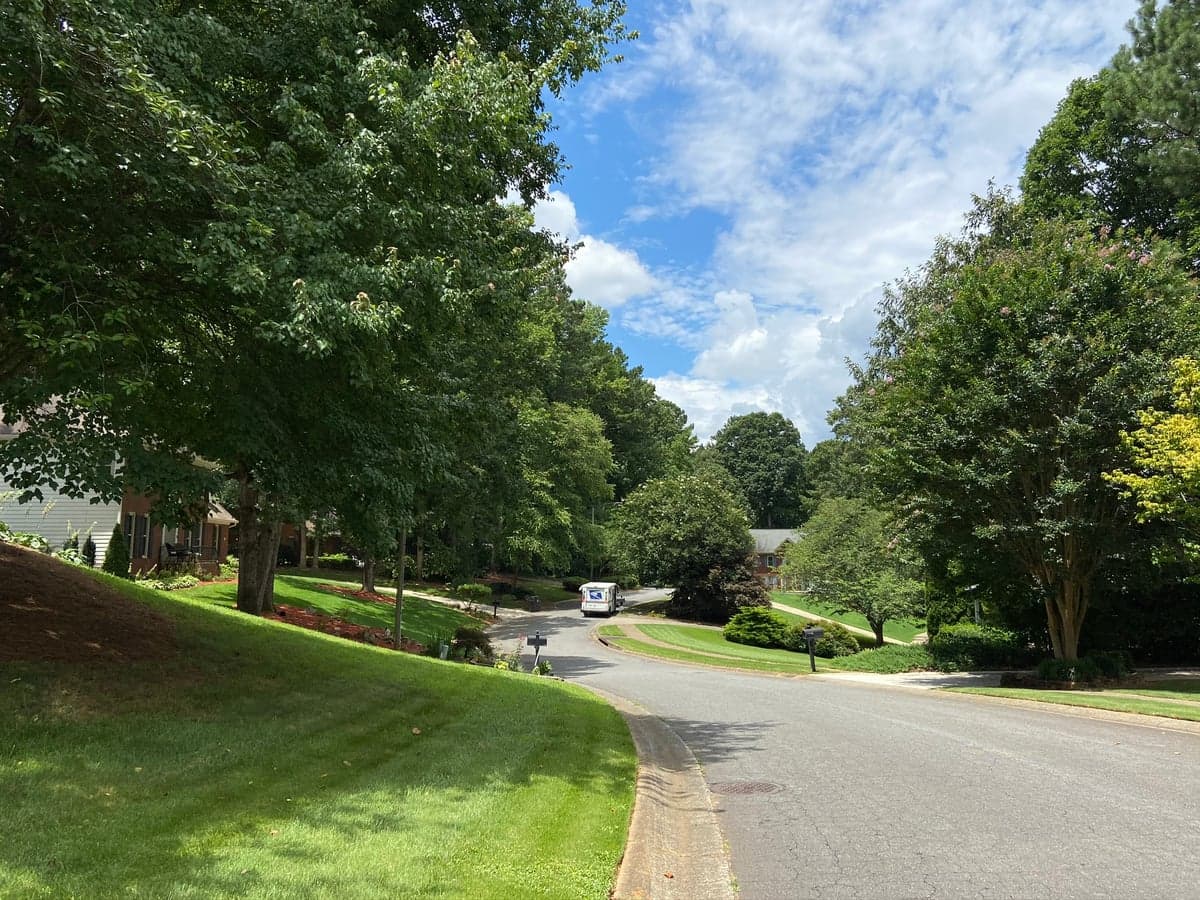
Mableton, Georgia, is a majority-Black, diversifying suburb of 42,403 residents where no single racial or ethnic group holds a majority, yet the city retains a distinctly Southern, family-oriented character. Its population is 42.9% Black, 29.7% White, 21.5% Hispanic, and 2.3% Asian and Indian combined, with a foreign-born share of 9.8% and a college-educated rate of 37.7%. The city’s identity is rooted in its railroad-era founding and its evolution from a rural crossroads into a bedroom community for Atlanta, shaped by successive waves of White settlement, Black migration, and recent Hispanic and Asian in-movement.
How the city was settled and grew
Mableton was founded in the 1840s as a railroad stop on the Western & Atlantic line, named after the Mable family who donated land for the depot. The original population was overwhelmingly White, drawn by the railroad and the timber and cotton economy. The historic Mableton Historic District, centered around Floyd Road and the old train depot, was built by these early settlers and remains a core of the city’s oldest homes. A second wave arrived after the Civil War, when freed Black families established farming communities on the outskirts, particularly in the Nickajack area (south of the modern city limits) and along Old Powder Springs Road. These families built churches and schools that anchored the Black community for generations. The city remained a small, rural hamlet through the early 20th century, with a population under 1,000 as late as 1950.
Modern era (post-1965)
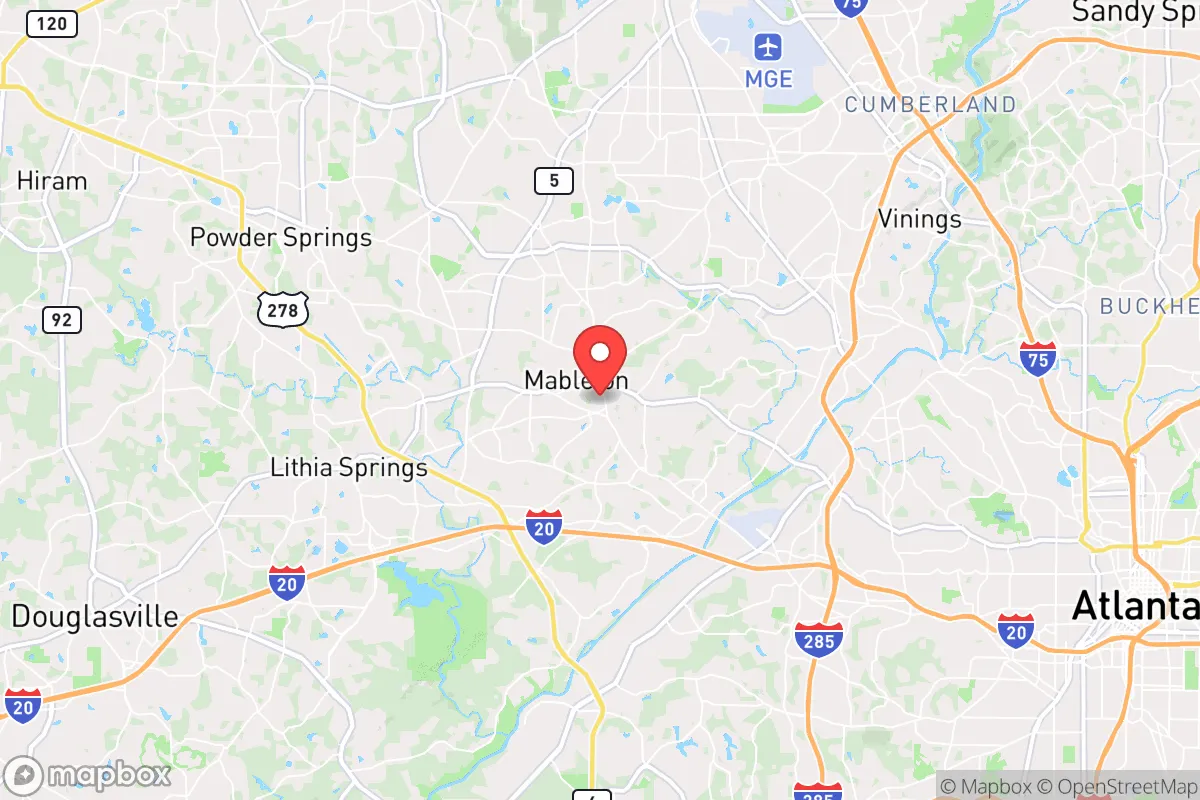
The post-1965 suburban boom transformed Mableton. The construction of Interstate 285 and the expansion of the Atlanta metropolitan area made Mableton a commuter suburb, attracting White families moving from Atlanta and other parts of Cobb County. The Brookwood neighborhood, developed in the 1960s and 1970s, became a predominantly White, middle-class enclave. Simultaneously, the Black population grew as families moved from Atlanta’s west side and rural Georgia, settling in the Riverside area and along Mableton Parkway. By the 1990s, Mableton had become a majority-Black suburb, a shift that accelerated after 2000 as White families moved to exurbs like Paulding County. The 2020 Census confirmed this: the Black share rose to 42.9%, while the White share fell to 29.7%. The Hispanic population surged from under 5% in 2000 to 21.5% by 2020, concentrated in the South Mableton area near the Chattahoochee River and along Veterans Memorial Highway, where new apartment complexes and mobile home parks absorbed immigrant families from Mexico and Central America. East/Southeast Asian (1.0%) and Indian (1.3%) communities are smaller but growing, with families settling in newer subdivisions like Heritage Park and the Mableton Crossing townhome development.
The future
Mableton’s population is projected to become more diverse and more educated. The city’s 37.7% college-educated rate is below the Cobb County average (48%) but rising as young professionals and families are drawn by lower home prices compared to Smyrna and Marietta. The Hispanic share is expected to continue growing, potentially reaching 25-28% by 2035, driven by natural increase and continued immigration. The Black population will likely remain the largest single group but may decline slightly as a share as other groups grow. The White population is stabilizing after decades of decline, with some new White families moving into renovated historic homes in the Mableton Historic District. The Asian and Indian communities, while small, are dispersing across the city rather than concentrating in a single neighborhood, a sign of integration. The city’s annexation of the Six Flags area in 2023 added several thousand residents and commercial land, which will likely accelerate development of mixed-use projects along the I-20 corridor. The cultural identity is shifting from a historically Black suburb toward a multiethnic, working-to-middle-class community with a growing Hispanic influence in local businesses and schools.
For someone moving in now, Mableton is a suburb in transition: increasingly diverse, still affordable by metro Atlanta standards, and gaining urban amenities like the new Mableton Town Center and the Silver Comet Trail extension. The city offers a genuine multiethnic community where no single group dominates, but where the Black Southern heritage remains the strongest cultural anchor. It is not a gentrifying enclave or a homogeneous exurb, but a place where families of different backgrounds are building a shared future in a historically Black suburb that is becoming something new.

* Values derived from national, state, county, city and local statistics and may differ in a specific area. Last updated: 2026-08-22T15:29:38.000Z
Narrative content on this page is AI-generated and may contain mistakes. Verify any details that matter before acting on them.
ReloMaps may earn a commission from affiliate links at no extra cost to you.

