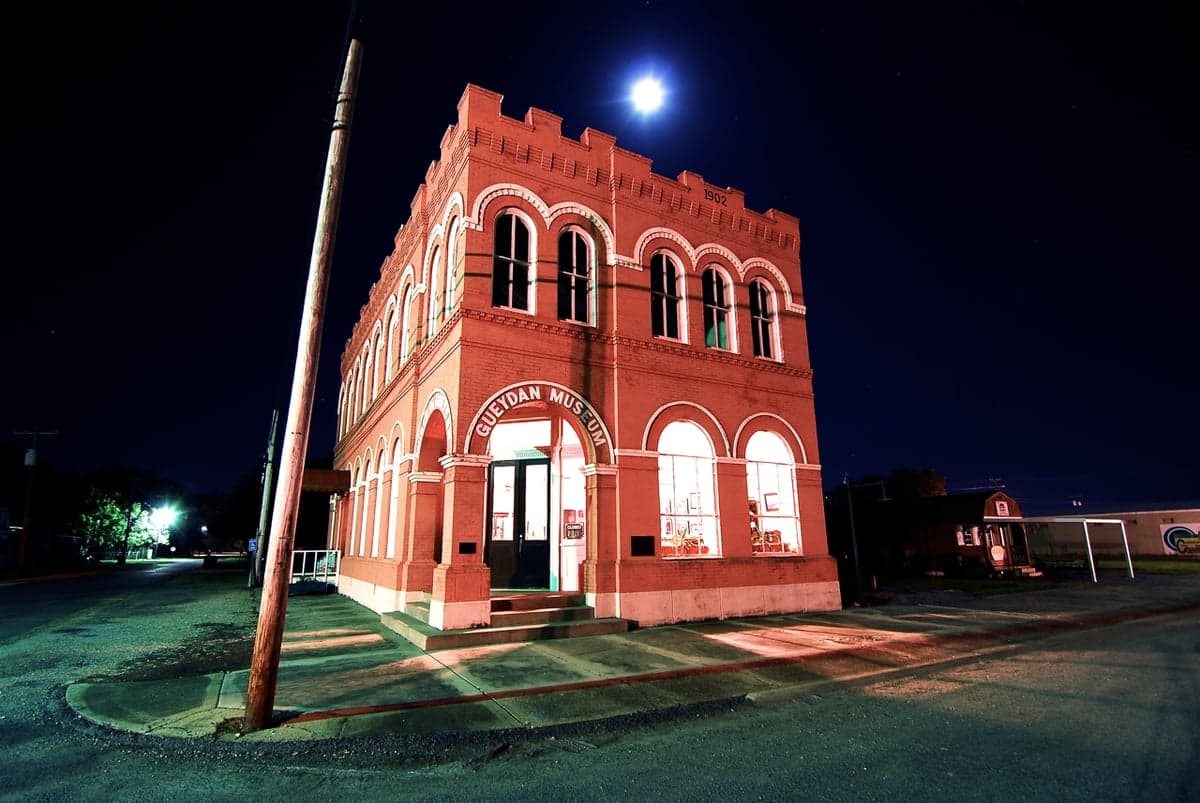
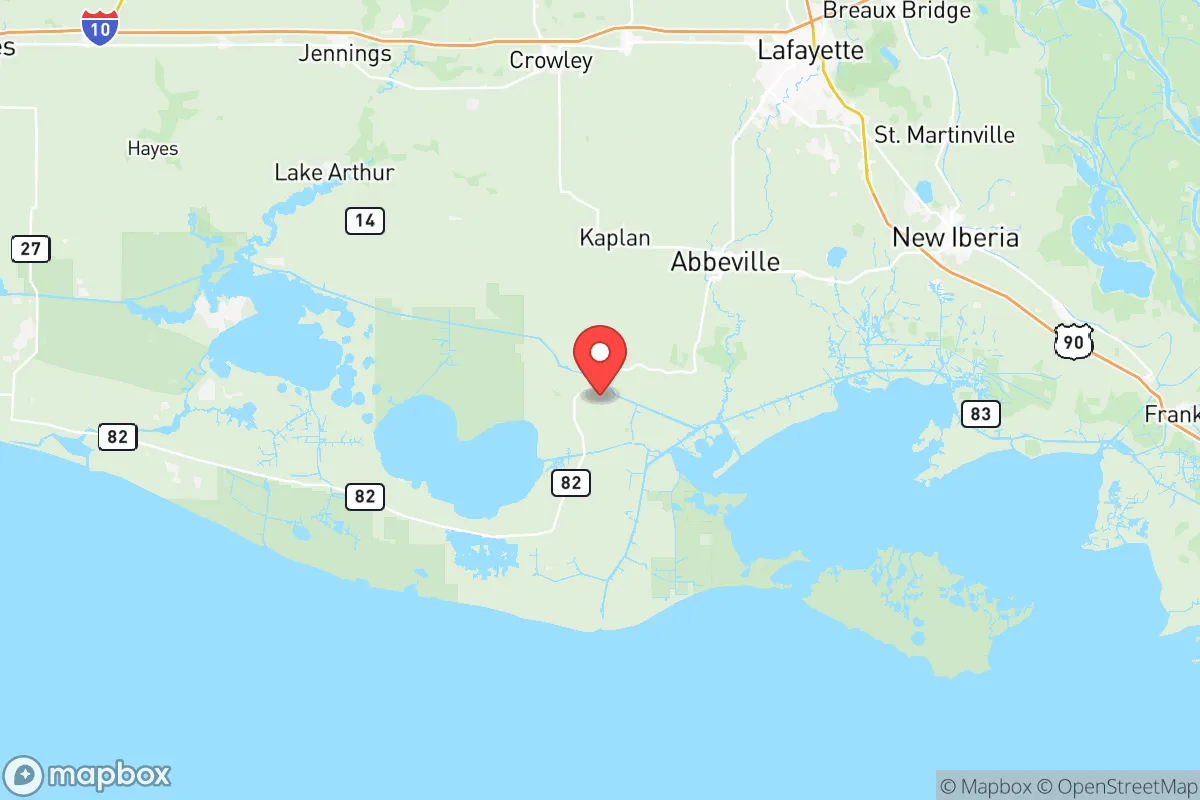
Photo: Wikipedia
Political ClimatePolitical Climate in Vermilion County
Showing district-level results — no local-only data available.
Local Political AnalysisPolitical Analysis of Vermilion County
Vermilion County is one of the most reliably Republican corners of Louisiana, with a Cook Partisan Voting Index of R+22 — meaning it votes about 22 points more Republican than the national average. That’s more than double the statewide lean of Louisiana itself, which sits at R+10. The county hasn’t backed a Democrat for president since 1996, and in 2024, Donald Trump carried it by a margin closer to 40 points. The real story isn’t whether Vermilion is red — it’s how deep that red runs, and where the few blue pockets still hold out.
How it compares
Statewide, Louisiana is a solidly Republican state, but it still has Democratic strongholds in New Orleans, Baton Rouge, and the Mississippi Delta. Vermilion County has none of that. The county’s R+22 PVI is closer to places like rural Texas or inland Alabama than to the rest of Cajun Louisiana. The biggest difference shows up in the suburbs and small towns. Abbeville, the county seat, votes about 65-70% Republican in most races — reliably red but not extreme. Head north to Gueydan or Kaplan, and you’re looking at 75-80% Republican margins. The only place where Democrats crack 40% is in Erath, a smaller town with a slightly younger and more diverse population, and in a few precincts around Maurice and Youngsville on the southeastern edge, where Lafayette’s suburban influence brings in more moderate and college-educated voters. Even there, it’s not competitive — just less lopsided.
What this means for residents
For conservative residents, Vermilion County is about as comfortable as it gets. Local offices — sheriff, school board, parish council — are almost entirely held by Republicans or conservative independents. Tax policy and regulation tend to lean pro-business and low-tax, and the cultural tone of public life is traditional, with a strong Catholic and evangelical presence. For liberal residents, the reality is more isolating. There’s no real progressive infrastructure — no Democratic clubs, no activist networks to speak of. If you’re a liberal in Abbeville, you’re likely keeping your politics to yourself at the coffee shop or the crawfish boil. That said, the county isn’t hostile in an aggressive way; it’s more that the political conversation simply doesn’t include a left-of-center perspective. Most people just don’t talk politics much outside election season, and when they do, it’s usually about local issues like flood control, coastal restoration, or school funding — things that don’t break cleanly along party lines.
The cultural and policy distinctions between Vermilion County and Louisiana as a whole are subtle but real. The county is more uniformly Cajun French in heritage than the state average, which gives local politics a distinct flavor — less focused on the urban-rural divide that dominates state politics, and more on preserving the area’s unique culture, language, and way of life. You’ll hear more French spoken at a council meeting in Abbeville than you will in most of Louisiana. That cultural pride sometimes cuts across partisan lines, especially on environmental issues like coastal erosion and the proposed saltwater barrier projects. On social issues, Vermilion is consistently more conservative than the state as a whole — abortion restrictions, gun rights, and school choice all poll higher here. Looking ahead, the county’s political trajectory is stable: it will stay deep red, with no signs of shifting. The only question is whether the growing suburban fringe near Lafayette will pull it slightly toward the center over the next decade, or whether the rural core will keep it anchored hard right.

State Political ClimatePolitical Climate in Louisiana
State Political AnalysisPolitical Environment in the State
Louisiana is a solidly Republican state with a Cook PVI of R+10, but its political reality is far more layered than that number suggests. The state has shifted rightward over the past 20 years, driven by the realignment of white working-class voters and the out-migration of Black populations from rural areas, though Democrats still hold significant down-ballot power in New Orleans and Baton Rouge. For a relocator, this means living in a state where conservative cultural values dominate state policy, but local politics can feel dramatically different depending on whether you're in the bayou, the capital, or the Crescent City.
Urban vs. rural divide
The political map of Louisiana is a study in stark contrasts. New Orleans (Orleans Parish) is the state's deep-blue anchor, consistently delivering 75-80% of its vote to Democratic presidential candidates, powered by a large Black electorate and a progressive white professional class. Baton Rouge (East Baton Rouge Parish) is a purple battleground, with the city proper leaning Democratic while the suburban areas like Zachary and Central vote heavily Republican. Lafayette and Shreveport are more moderate, with Lafayette's oil-and-gas economy pulling it right and Shreveport's union and Black populations keeping it competitive for Democrats. The rural parishes—places like Allen, Beauregard, and Washington—routinely vote 75-80% Republican, creating a map where land mass is deep red but population centers provide the only blue. The Florida Parishes (north of Lake Pontchartrain) have become reliably Republican, with St. Tammany Parish emerging as one of the most conservative suburban strongholds in the South.
Policy environment
Louisiana's policy environment is defined by low taxes and limited government services. The state has no personal property tax, and the combined state and local sales tax rate averages around 9.5%, among the highest in the nation, because the state relies heavily on consumption taxes rather than income taxes. The corporate income tax is a flat 3.5%, and the state has a right-to-work law that has kept union density low outside of a few industrial sectors. Education policy is a mixed bag: Louisiana has one of the nation's most expansive school choice programs, including the Louisiana Scholarship Program and a robust charter school sector, especially in New Orleans, which has the highest charter school enrollment rate in the country. Healthcare is a perennial flashpoint—the state expanded Medicaid under the Affordable Care Act in 2016, but rural hospital closures remain a crisis. Election laws are moderately restrictive: Louisiana requires a photo ID to vote and does not offer no-excuse absentee voting, though early voting is available for seven days.
Recent policy direction
The last five years have seen Louisiana move decisively to the right on cultural and regulatory issues. In 2024, the state passed Act 545, requiring the Ten Commandments to be displayed in all public school classrooms, a law that is currently tied up in federal litigation. Louisiana also enacted a near-total abortion ban in 2022 with no exceptions for rape or incest, only for the life of the mother. On gun rights, the state is a constitutional carry jurisdiction since 2021, meaning no permit is required to carry a concealed firearm. Property rights are strong: Louisiana follows the "Louisiana Civil Code" tradition, which gives landowners broad latitude but also includes unique mineral rights laws that can complicate rural land purchases. On education, the state passed the LA GATOR Scholarship program in 2023, creating universal education savings accounts that any family can use for private school tuition or homeschooling expenses. Voter ID laws were tightened in 2022, and the state has resisted automatic voter registration efforts. On privacy and surveillance, Louisiana has no comprehensive data privacy law, though a 2024 bill to create one failed in committee.
Civil unrest & political movements
Louisiana has a long history of political flashpoints, and recent years have been no exception. The 2020 murder of George Floyd sparked large protests in New Orleans and Baton Rouge, with the Baton Rouge protests drawing particular attention given the city's history with the Alton Sterling shooting in 2016. The state has seen a growing "constitutional sheriff" movement in rural parishes, where sheriffs have publicly stated they will not enforce certain state or federal gun laws. Immigration politics are less visible here than in border states, but St. Tammany Parish and Livingston Parish have seen organized opposition to any proposed immigrant detention facilities. Election integrity remains a live issue: in 2022, the Louisiana Secretary of State's office investigated and debunked claims of widespread fraud in the 2020 election, but distrust persists among some Republican voters. The state has no sanctuary city policies, and local law enforcement generally cooperates with federal immigration authorities.
Projection
Over the next decade, Louisiana's political trajectory points toward continued Republican dominance at the state level, but with important caveats. Demographic trends are working against Democrats: the Black population share is slowly declining due to out-migration, and the white population is aging and becoming more conservative. However, New Orleans and Baton Rouge are seeing an influx of younger, more progressive transplants from other states, which could keep those cities blue and potentially turn some suburban areas purple. The state's economy remains heavily dependent on oil and gas, which reinforces the conservative tilt, but the growth of the petrochemical corridor along the Mississippi River between Baton Rouge and New Orleans could bring in a more diverse workforce. Climate change and coastal erosion will force hard policy choices that could reshape the political landscape, particularly in coastal parishes like Terrebonne and Lafourche, where residents face existential questions about relocation and infrastructure spending.
For a new resident, the practical takeaway is straightforward: if you're conservative, you'll find Louisiana's state government largely aligned with your values on taxes, guns, education, and abortion. If you're liberal, you'll find a welcoming community in New Orleans and parts of Baton Rouge, but you'll be living under a state government that is actively hostile to many of your policy preferences. The key is choosing your parish carefully—the difference between living in Orleans Parish and Livingston Parish is as wide as the difference between living in two different states. For families, the school choice options are a genuine advantage regardless of your politics, and the low property taxes make homeownership more attainable than in many other parts of the country. Just be prepared for high sales taxes, hot summers, and a political culture that takes its cues from the bayou, not the Beltway.
* Values derived from national, state, county, city and local statistics and may differ in a specific area. Last updated: 2026-06-26T19:20:13.000Z
Narrative content on this page is AI-generated and may contain mistakes. Verify any details that matter before acting on them.
ReloMaps may earn a commission from affiliate links at no extra cost to you.

