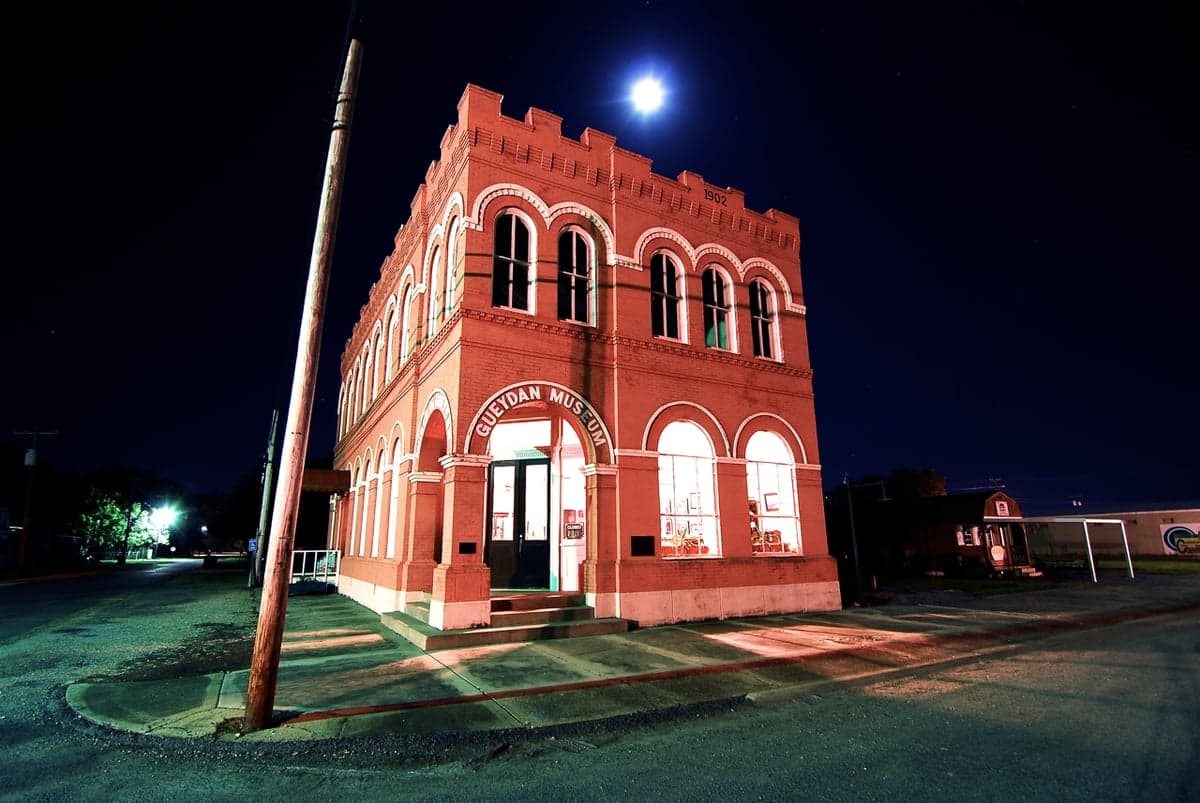
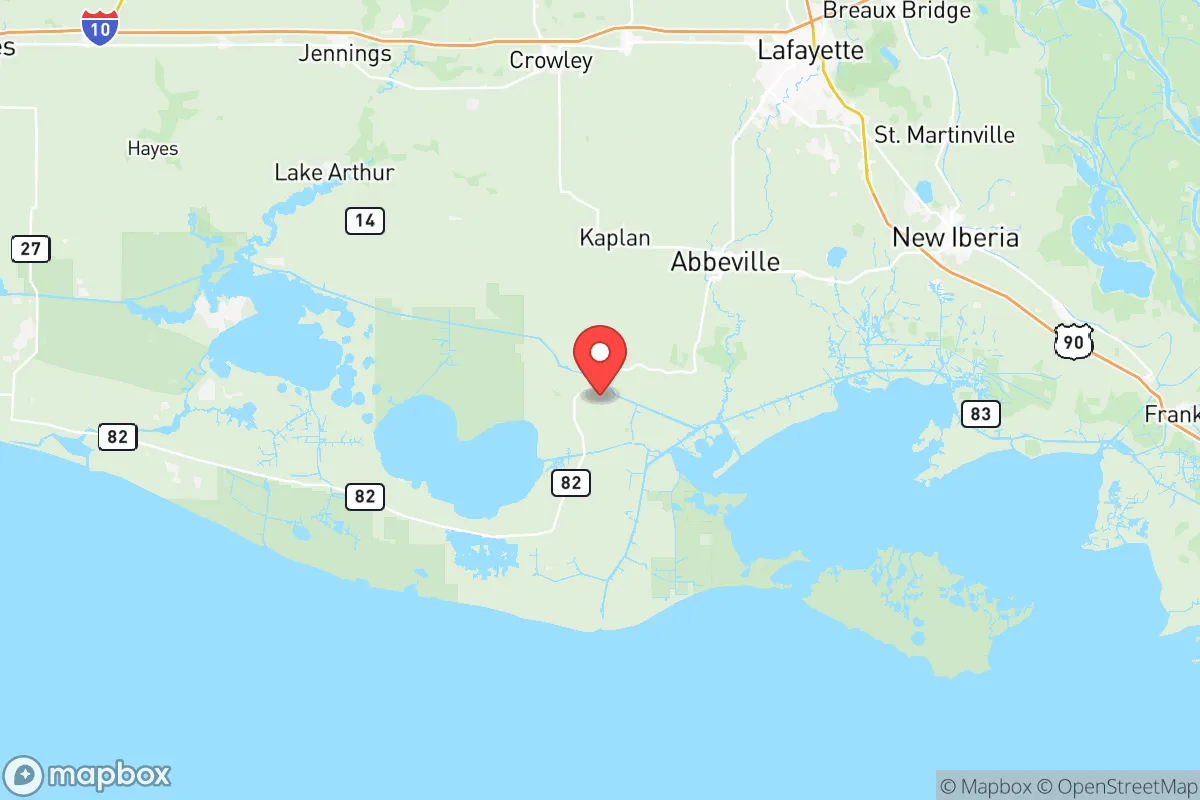
Photo: Wikipedia
Demographics of Vermilion County
Affluence Level in Vermilion County
A below-average socioeconomic profile. Incomes, home values, and educational attainment trail the U.S., with higher poverty and unemployment.
People of Vermilion County
The people of Vermilion Parish, Louisiana, are a predominantly White (76.8%) and native-born (98.6% U.S.-born) population of 57,031, defined by a deep-rooted Cajun and Creole heritage that traces back to 18th-century Acadian exiles. This is a rural, coastal community where French is still spoken in some households, and the cultural identity is strongly tied to the Gulf Coast’s seafood industry and Catholic traditions. With a low college attainment rate of 16.8% and a small but growing Hispanic (4.2%) and Black (13.0%) presence, the parish remains one of Louisiana’s most culturally distinct and demographically stable regions.
Settlement & growth (pre-1960)
Long before European arrival, the area now known as Vermilion Parish was inhabited by the Atakapa-Ishak people, a Native nation whose name means "people of the water." They lived along the bayous and Gulf Coast, relying on fishing, hunting, and gathering. French and Spanish explorers encountered them in the late 17th and early 18th centuries, but sustained European settlement did not begin until the mid-1700s, when the French established small trading posts and farms along the Vermilion River and Bayou Teche.
The defining population event for Vermilion Parish was the Acadian expulsion (Le Grand Dérangement) of 1755–1764. Thousands of French-speaking Acadians were forcibly deported from Nova Scotia by the British. After decades of wandering, many resettled in south Louisiana, then a Spanish colony. By the 1780s and 1790s, Acadian families had established homesteads along Bayou Vermilion, Bayou Queue de Tortue, and the Mermentau River. The town of Abbeville, founded in 1843 by Father Antoine Désiré Mégret, became the parish seat and the cultural heart of the Cajun community. Nearby Kaplan, Gueydan, and Erath were settled by these same Acadian families, who brought a distinct French dialect, Catholic faith, and a subsistence economy based on farming, trapping, and fishing.
In the 19th century, a smaller wave of German and Irish immigrants arrived, drawn by land grants and the expanding rice and sugarcane industries. Many Germans settled in the Forked Island and Pecan Island areas, where they intermarried with Cajun families and became part of the broader French-speaking culture. The post-Civil War period saw the arrival of freed African Americans, who formed small communities in and around Abbeville and Perry, working as sharecroppers, laborers, and later in the oil and gas industry. The Black population in Vermilion Parish has historically been concentrated in these areas, though it has never exceeded roughly 15% of the total population.
By the early 20th century, the parish economy shifted from subsistence farming to commercial agriculture (rice, sugarcane, soybeans) and the emerging oil and gas industry. The discovery of oil in the 1930s and 1940s brought a modest influx of workers from other parts of Louisiana and Texas, but the population remained overwhelmingly Cajun and Catholic. The 1950s and early 1960s saw little in-migration from outside the region; Vermilion Parish remained a culturally insular, French-influenced enclave with a population that was roughly 85% White, 12% Black, and less than 1% Hispanic or Asian.
Modern era (post-1965)
The 1965 Hart-Cellar Act, which dramatically increased immigration from Asia and Latin America, had a minimal direct impact on Vermilion Parish. The foreign-born population today is just 1.4%, far below the national average. Unlike Houston or New Orleans, the parish did not receive significant waves of Vietnamese, Filipino, or Mexican immigrants. Instead, the modern demographic story is one of slow diversification through domestic migration and natural increase.
The Hispanic population has grown from less than 1% in 1990 to 4.2% today, driven primarily by Mexican and Central American workers recruited by the sugarcane and rice industries. These workers have settled in and around Abbeville and Kaplan, where they form small but visible communities. The Black population has remained stable at 13.0%, concentrated in Abbeville and the rural community of Perry. The East/Southeast Asian population (1.8%) is small and consists mostly of Vietnamese and Filipino families who arrived in the 1980s and 1990s, many working in the fishing and seafood processing industries along the Gulf Coast. The Indian subcontinent population (0.2%) is negligible, limited to a handful of professionals in healthcare and academia.
Domestic migration has been modest. The parish has not experienced the rapid suburbanization seen in nearby Lafayette Parish. Instead, young adults often leave for college or jobs in Lafayette, Baton Rouge, or Houston, while retirees and those in the seafood and oil industries remain. The population has grown slowly, from about 54,000 in 2000 to 57,031 today, a rate well below the state average. The parish remains overwhelmingly White (76.8%) and native-born, with a cultural identity that is still recognizably Cajun — French is taught in some schools, and the annual Abbeville Cajun Festival draws thousands.
The future
Vermilion Parish is likely to become slightly more diverse over the next 10–20 years, but at a very slow pace. The Hispanic share is projected to rise to 6–8% by 2040, driven by continued labor demand in agriculture and seafood processing. The Black and East/Southeast Asian shares are expected to remain stable, as there are no major pull factors for new immigrant groups. The White population will continue to shrink as a share of the total, but will remain the overwhelming majority.
The biggest demographic challenge is out-migration of young adults. The parish has a low college attainment rate (16.8%) and limited high-skilled job opportunities, which pushes educated young people toward Lafayette, Baton Rouge, and Houston. This trend will likely continue, leading to an aging population and slower overall growth. The parish may see modest in-migration of retirees seeking a low-cost, culturally rich environment, but it will not become a major destination for newcomers.
Culturally, the parish will retain its Cajun and Creole identity, but the French language will continue to decline. Younger generations are less likely to speak French fluently, and the parish’s cultural distinctiveness may become more symbolic than lived. The growing Hispanic population will add a new layer to the region’s food and music traditions, but the parish will remain one of Louisiana’s most culturally homogeneous and traditional areas.
For someone moving in now, Vermilion Parish offers a stable, low-cost, culturally rich environment with a strong sense of community and a deep connection to the land and water. It is not a place of rapid change or high diversity, but rather a place where Cajun traditions, Catholic faith, and a rural, family-oriented lifestyle remain central. The population is slowly aging and slowly diversifying, but the parish’s character — rooted in the bayous and the Gulf — is likely to endure for decades to come.

* Values derived from national, state, county, city and local statistics and may differ in a specific area. Last updated: 2026-06-26T19:20:13.000Z
Narrative content on this page is AI-generated and may contain mistakes. Verify any details that matter before acting on them.
ReloMaps may earn a commission from affiliate links at no extra cost to you.

