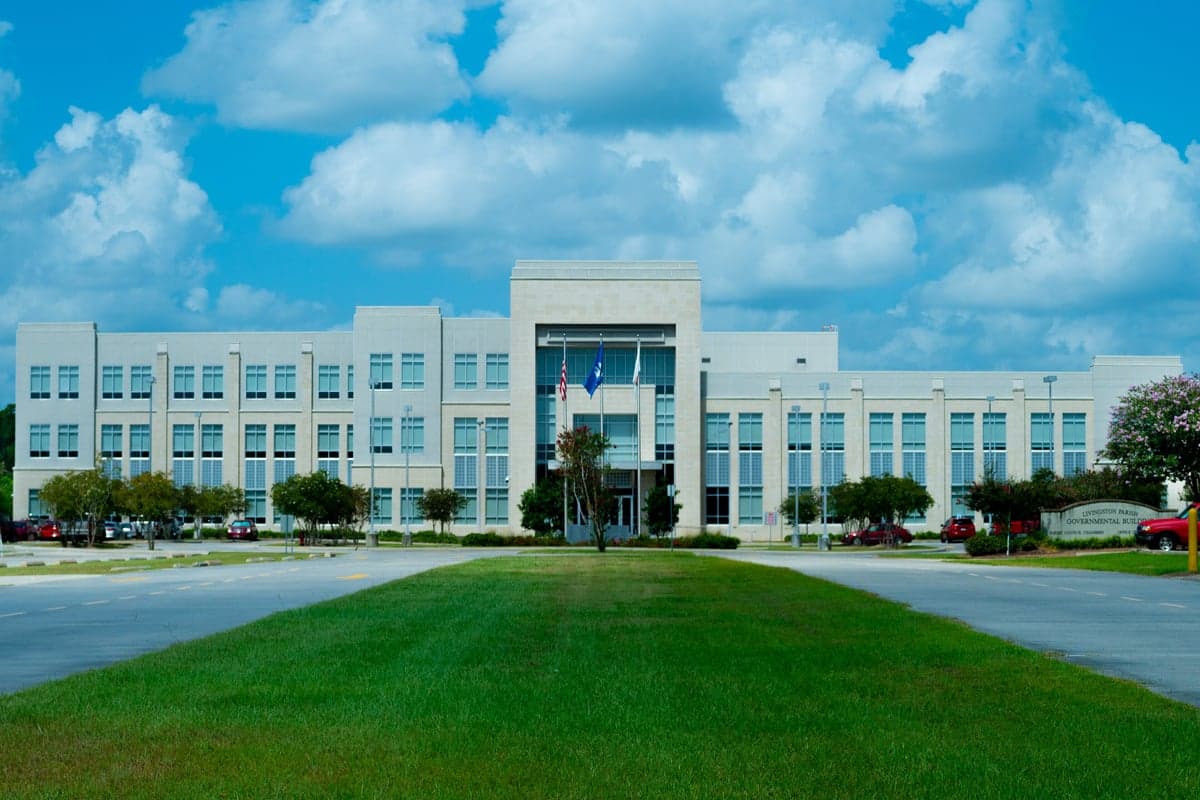
Photo: Wikipedia
Political ClimatePolitical Climate in Livingston County
Showing district-level results — no local-only data available.
Local Political AnalysisPolitical Analysis of Livingston County
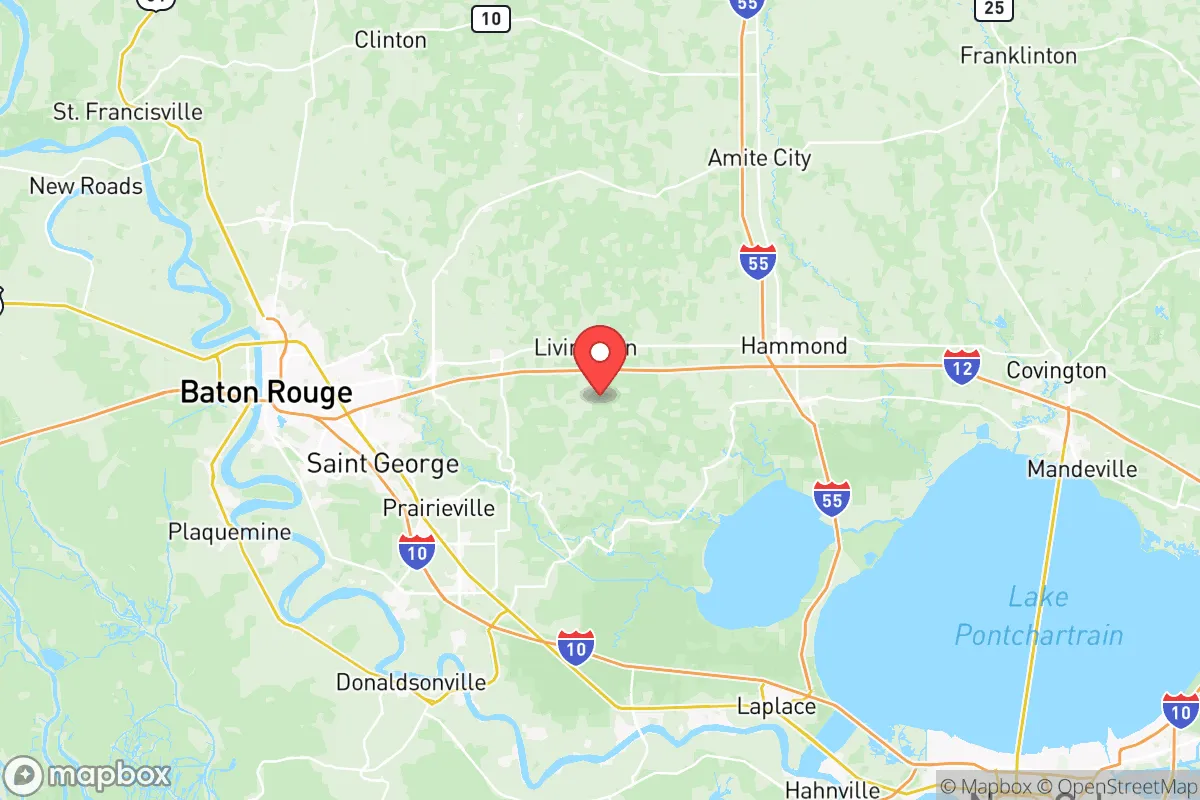
Livingston Parish, Louisiana, is one of the most reliably conservative corners of the state, with a Cook Partisan Voting Index (PVI) of R+18, meaning it votes about 18 points more Republican than the national average. This isn’t a recent shift; the parish has been a GOP stronghold for decades, and the trend is only solidifying. While the rest of Louisiana has pockets of deep blue (like New Orleans and Baton Rouge) and some swing areas, Livingston Parish has become a consistent red anchor in the state’s political map. The 2024 presidential election saw Donald Trump carry the parish with over 75% of the vote, a margin that has grown steadily since 2016.
How it compares
Compared to Louisiana as a whole, Livingston Parish is significantly more conservative. The state’s overall PVI is not officially calculated, but it’s widely considered a lean-Republican state (roughly R+12 to R+14 in recent cycles), meaning Livingston is about 4-6 points redder than the state average. This gap is driven by the parish’s demographics: it’s predominantly white, suburban, and heavily influenced by evangelical and Catholic voters. In contrast, Louisiana’s politics are shaped by the urban-rural divide—places like Orleans Parish (D+28) and East Baton Rouge Parish (D+18) pull the state left, while rural parishes like Livingston anchor the right. Within Livingston Parish itself, there’s little variation. The towns of Denham Springs and Walker are solidly red, with precincts often voting 70-80% Republican. Livingston (the town) and Springfield are even more conservative, frequently hitting 80%+ for GOP candidates. The only slight deviation is in the southern part of the parish near French Settlement, where a handful of precincts have shown slightly more competitive margins (still R+10 to R+12), but these are outliers. There are no blue towns or swing precincts in any meaningful sense—the entire parish is a Republican stronghold.
What this means for residents
For conservative residents, the political climate is comfortable and affirming. Local elections are often decided in the Republican primary, and the parish council, school board, and sheriff’s office are all GOP-dominated. Policy leans heavily toward low taxes, limited regulation, and strong Second Amendment protections. For liberal residents, the reality is more isolating. There’s no organized Democratic presence to speak of, and progressive viewpoints are rarely represented in local government or media. Socially, it can feel like a one-party environment, though most residents describe it as civil—politics just isn’t a frequent topic of public debate. The practical effect is that the parish has avoided many of the culture-war flashpoints seen in more divided areas, but it also means that progressive voices have little institutional support.
Culturally, Livingston Parish stands apart from the rest of Louisiana in a few key ways. It’s less Cajun and more Southern Baptist than the Acadiana region to the west, and its politics reflect that evangelical influence. The parish has also been a focal point for debates over school curriculum and library content, with conservative majorities on the school board and library board pushing for stricter oversight. This is a place where the local government actively reflects the values of its voters, for better or worse. If you’re looking for a community where your vote will be in the majority and your values are reflected in policy, Livingston Parish delivers. If you’re looking for political diversity or a progressive foothold, you’ll find it a tough environment—but one that’s stable, predictable, and deeply rooted in its conservative identity.

State Political ClimatePolitical Climate in Louisiana
State Political AnalysisPolitical Environment in the State
Louisiana has been a reliably Republican state in federal elections for over two decades, but its political reality is far more complex than a simple red-state label suggests. The state voted for Donald Trump by 19 points in 2024, continuing a trend that began in 2000, but Democrats still hold a significant number of local offices and maintain a strong presence in New Orleans and Baton Rouge. Over the last 10-20 years, the shift has been driven by white working-class voters leaving the Democratic coalition, particularly in rural areas and smaller cities like Alexandria and Monroe, while the state’s Black electorate—roughly one-third of the population—remains overwhelmingly Democratic. The result is a deeply polarized landscape where statewide races are reliably Republican, but down-ballot contests and local governance can still swing Democratic in the right districts.
Urban vs. rural divide
The political map of Louisiana is a textbook case of urban-rural polarization. New Orleans and its surrounding parishes—Orleans, Jefferson, and St. Bernard—are the state’s Democratic stronghold, with Orleans Parish delivering over 80% of its vote to Joe Biden in 2020. Baton Rouge, the state capital, is a battleground within itself: East Baton Rouge Parish leans Democratic thanks to the city’s large Black population and university influence, but the surrounding suburbs like Livingston Parish are deeply Republican. Lafayette, the heart of Acadiana, has shifted rightward over the past decade, though its university community keeps it more competitive than the surrounding rural parishes. The state’s rural areas—places like the Florida Parishes (Tangipahoa, St. Tammany), the northern parishes around Shreveport and Bossier City, and the bayou country of Terrebonne and Lafourche—are overwhelmingly Republican. The I-10 corridor from Baton Rouge to Lake Charles is a mix of suburban and rural conservative voters, while the Mississippi River parishes north of Baton Rouge, like East and West Feliciana, are reliably red. The only real Democratic footholds outside of New Orleans are in the majority-Black parishes of the Delta region, such as Madison and East Carroll, which vote heavily Democratic but have small populations.
Policy environment
Louisiana’s policy environment is shaped by a conservative legislature and a governor’s office that flipped from Democrat John Bel Edwards to Republican Jeff Landry in 2024. The state has no income tax on Social Security benefits and a flat 4.25% personal income tax rate, with a corporate rate of 7.5%. Sales taxes are high, averaging over 9.5% statewide when local taxes are included, which hits lower-income residents hardest. The state’s regulatory posture is generally business-friendly, particularly in the oil and gas sector, which dominates the economy along the Gulf Coast. Education policy is a mixed bag: Louisiana has a robust school choice program, including vouchers and charter schools, but public school performance ranks near the bottom nationally. Healthcare is a flashpoint—the state expanded Medicaid under the Affordable Care Act in 2016, a move that was controversial among conservatives but has since become entrenched. Election laws are moderately restrictive: Louisiana requires a photo ID to vote, has no-excuse absentee voting, and uses a unique jungle primary system where all candidates appear on the same ballot regardless of party. The state has not passed the kind of sweeping voting restrictions seen in Texas or Georgia, but it also hasn’t expanded access significantly.
Recent policy direction
Under Governor Jeff Landry, Louisiana has moved decisively to the right on a range of issues. In 2024, the legislature passed a near-total abortion ban with no exceptions for rape or incest, only for the life of the mother, which went into effect after the Dobbs decision. Gun laws are among the most permissive in the country: Louisiana is a constitutional carry state, meaning no permit is required to carry a concealed firearm, and it has strong Stand Your Ground and Castle Doctrine protections. On education, the state passed a universal school choice program in 2024, allowing any family to use public funds for private or homeschool expenses. Parental rights in education were strengthened with a law requiring schools to notify parents of any curriculum involving sexual orientation or gender identity, similar to Florida’s “Don’t Say Gay” law. On privacy and surveillance, Louisiana has not passed major police reform or data privacy legislation, but it did enact a law in 2023 banning TikTok on state devices. Property rights are strong, with no statewide zoning and low property taxes (averaging 0.55% of home value), though flood insurance costs are a major burden in much of the state. Tax policy is trending toward further cuts: the legislature is considering eliminating the corporate franchise tax and reducing the personal income tax rate further. Voting access remains stable, with no major changes to the jungle primary system or absentee voting rules in recent years.
Civil unrest & political movements
Louisiana has a history of political activism that reflects its deep divides. The Black Lives Matter protests in New Orleans and Baton Rouge in 2020 were large and occasionally violent, particularly after the death of Alton Sterling in Baton Rouge. These protests highlighted ongoing tensions over policing and racial justice, especially in the state’s majority-Black cities. On the right, the Louisiana Republican Party has been energized by the Landry administration’s conservative agenda, and groups like the Louisiana Family Forum have been influential in pushing the abortion ban and school choice legislation. Immigration politics are less heated than in border states, but there is a growing conservative backlash against the influx of migrants in New Orleans, which has a small but visible immigrant community. There is no sanctuary city policy in Louisiana, and the state has cooperated with federal immigration enforcement. Secession and nullification rhetoric is minimal—Louisiana is not a hotbed of such movements, though some rural parishes have passed symbolic resolutions opposing federal gun control or vaccine mandates. Election integrity controversies have been relatively quiet compared to states like Georgia or Arizona, though some Republican activists have pushed for stricter voter ID laws and audits. Overall, the political climate is less volatile than in many other Southern states, but the cultural divide between urban and rural areas is stark and visible in everyday life.
Projection
Over the next 5-10 years, Louisiana is likely to become more solidly Republican at the state level, driven by continued out-migration from New Orleans and Baton Rouge to the suburbs and rural areas, as well as the aging of the state’s Democratic-leaning population. The Black electorate, which is the backbone of the Democratic Party in Louisiana, is shrinking as a share of the population due to lower birth rates and out-migration to other Southern states. Meanwhile, the white working-class voters who have shifted to the GOP are not leaving. The state’s economy, heavily dependent on oil and gas, will continue to shape its politics—any federal push toward green energy will be met with fierce resistance from the state’s political leadership. In-migration is modest compared to Texas or Florida, but the people moving in tend to be retirees and conservatives from other states, which will reinforce the rightward trend. The wild card is climate change: rising sea levels and stronger hurricanes could displace coastal communities, particularly in the bayou parishes, which could shift population patterns and political alignments. For a new resident, the Louisiana of 2035 will likely look much like today’s, but with a more entrenched Republican majority and a smaller, more isolated Democratic base in New Orleans and Baton Rouge.
For someone moving to Louisiana, the bottom line is that you are choosing a state with a deeply conservative policy environment that is trending further right, but with significant local variation. If you live in New Orleans or Baton Rouge, you’ll experience a more diverse and Democratic-leaning culture, with access to urban amenities and a vibrant arts scene. If you settle in the suburbs or rural areas, you’ll find a reliably conservative community with low taxes, strong gun rights, and a focus on family and faith. The trade-offs are clear: low cost of living and permissive laws on guns and property come with high sales taxes, poor public schools in many areas, and a healthcare system that is underfunded and politically contested. Whether that trade-off works for you depends on your priorities, but Louisiana is not a state that hides its political character—it wears it openly, for better or worse.
* Values derived from national, state, county, city and local statistics and may differ in a specific area. Last updated: 2026-08-08T17:10:30.000Z
Narrative content on this page is AI-generated and may contain mistakes. Verify any details that matter before acting on them.
ReloMaps may earn a commission from affiliate links at no extra cost to you.

