Photo: Wikipedia
Demographics of Jefferson Davis County
Affluence Level in Jefferson Davis County
A below-average socioeconomic profile. Incomes, home values, and educational attainment trail the U.S., with higher poverty and unemployment.
People of Jefferson Davis County
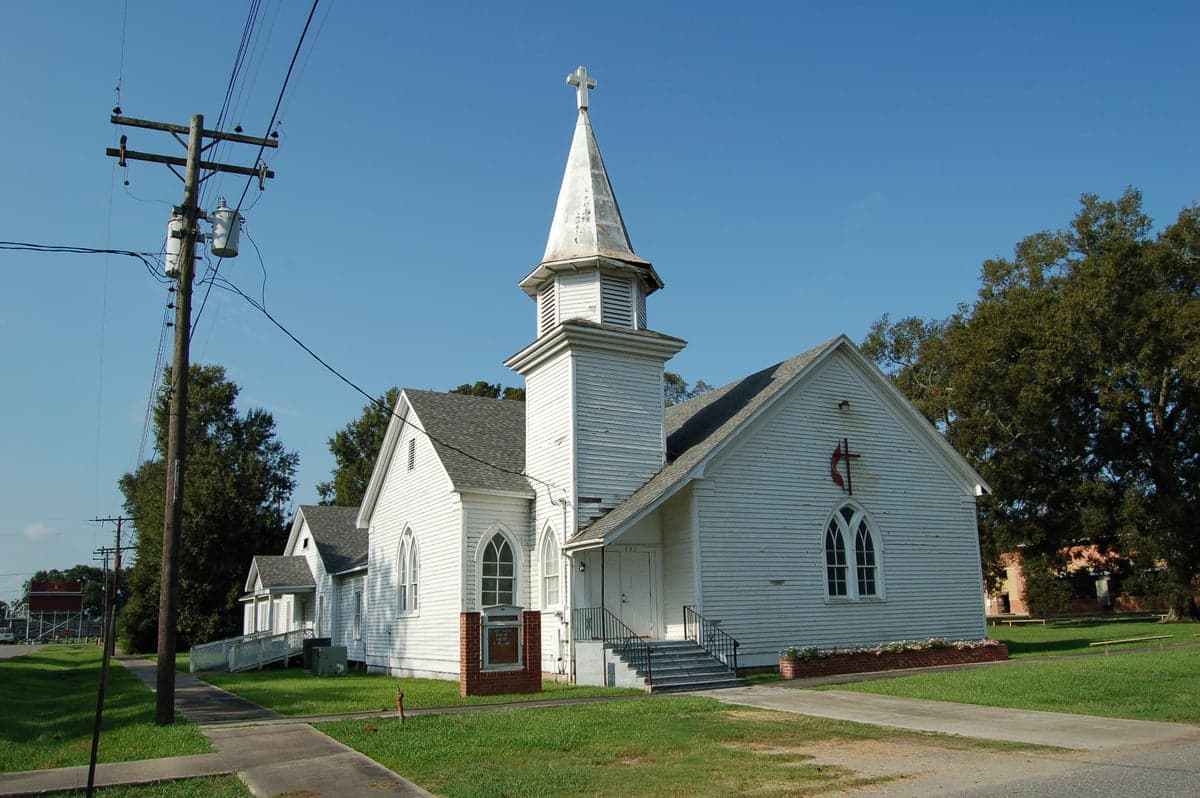
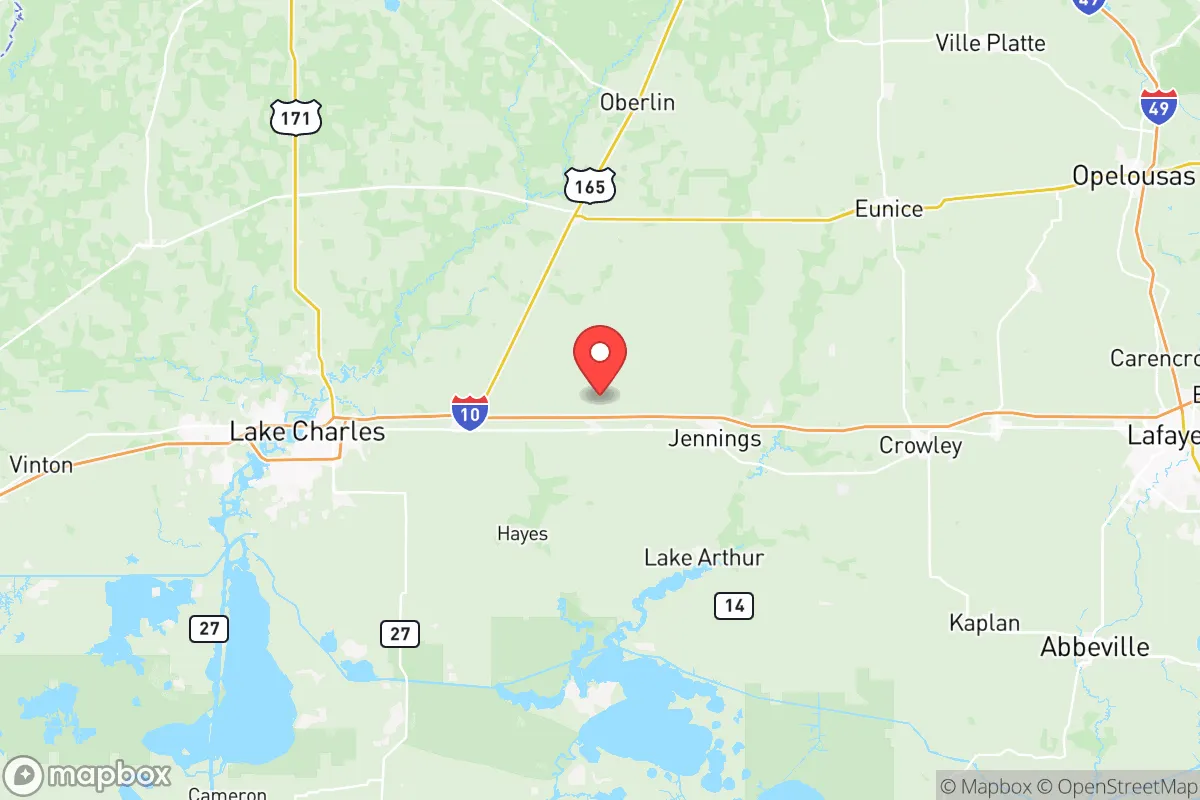
The people of Jefferson Davis Parish, Louisiana, today number 32,083, forming a predominantly rural, white-majority community with a distinctive Cajun and Creole cultural foundation. With a foreign-born population of just 0.4%, the parish is one of the least ethnically diverse in Louisiana, where 77.0% of residents identify as white, 14.7% as Black, and 2.4% as Hispanic. The population is notably less educated than state averages, with only 15.0% holding a college degree, and is concentrated in small towns like Jennings, the parish seat and largest town, along with Welsh, Lake Arthur, and Elton. This is a place where family roots run deep, local identity is tied to the land and the oilfield, and the pace of life remains distinctly unhurried.
Settlement & growth (pre-1960)
Before European contact, the area now known as Jefferson Davis Parish was inhabited by the Atakapa people, a Gulf Coast tribe whose name means "man-eater" in Choctaw, though they were primarily hunter-gatherers living along the Mermentau River and its tributaries. The Atakapa were largely displaced by the early 1800s through disease and encroachment by French and Spanish colonists. The region was part of the vast Louisiana Purchase in 1803, and the first permanent European settlers were French-speaking Acadians—Cajuns—who arrived after their expulsion from Nova Scotia in the 1750s and 1760s. These Acadian families, along with a smaller number of French Creoles and Spanish settlers, established small farms and cattle ranches along the bayous, laying the foundation for the parish's enduring Cajun culture.
The parish itself was created in 1913 from parts of Calcasieu and Lafayette parishes, named after the Confederate president. Its early economy was driven by timber, rice farming, and cattle. The arrival of the Southern Pacific Railroad in the 1880s spurred the founding of Jennings as a rail stop and trading center. The discovery of oil in the Jennings Oil Field in 1901—the first major oil strike in Louisiana—transformed the local economy. This brought a wave of white and Black workers from other parts of Louisiana and Texas, though the population remained overwhelmingly native-born and rural. By 1930, the parish had roughly 20,000 residents, a figure that grew slowly through the Great Depression and World War II as the oil industry expanded. The post-war period saw modest suburbanization around Jennings and Welsh, but the parish never experienced the rapid growth of Louisiana's larger cities. The population in 1960 stood at about 26,000, still predominantly white and Cajun, with a significant Black minority concentrated in the rural areas around Elton and Lake Arthur.
Modern era (post-1965)
The 1965 Hart-Cellar Act had almost no impact on Jefferson Davis Parish. The foreign-born population remains negligible at 0.4%, and the parish has not seen the waves of immigration from Latin America, Asia, or the Indian subcontinent that reshaped much of the United States. Instead, the demographic story of the last 60 years is one of slow decline and out-migration. The parish's population peaked at around 32,500 in the 1980s, driven by the oil boom, but has since stagnated and slightly declined as the oil industry mechanized and young people left for jobs in Lafayette, Lake Charles, and Houston.
The white population has remained stable at around 77%, while the Black share has declined slightly from about 17% in 1990 to 14.7% today, reflecting out-migration of Black families to larger cities. The Hispanic population, at 2.4%, is small but growing, primarily through domestic migration of Hispanic workers from Texas and other parts of Louisiana into the oilfield and agricultural sectors. These families tend to settle in Jennings and Welsh, where rental housing and service jobs are available. The East/Southeast Asian population is tiny at 0.2%, and the Indian-subcontinent population is effectively zero. The parish has not experienced suburban sprawl in the way that coastal Louisiana has; instead, the small towns have remained compact, and the rural areas have seen population thinning as family farms consolidate.
One notable trend is the aging of the population. The median age has risen to over 40, as younger adults leave and retirees stay. The parish's cultural identity remains strongly Cajun, with French still spoken by some older residents, and festivals like the Louisiana Fur and Wildlife Festival in Jennings and the Rice Festival in Welsh reinforcing local traditions. The Black community, centered in Elton and the rural areas around Lake Arthur, maintains its own churches and social institutions, though integration has been gradual and incomplete.
The future
Jefferson Davis Parish is projected to continue its slow population decline over the next 10-20 years, with the state forecasting a drop to around 30,000 by 2040. The parish is becoming slightly more diverse, but only through a modest increase in the Hispanic share, which may reach 4-5% by 2040, while the white and Black shares will likely hold steady. The East/Southeast Asian and Indian populations are expected to remain negligible, as the parish lacks the urban job base or educational institutions that attract these groups. The aging trend will accelerate, with the median age potentially rising to 45 or higher, as the parish becomes a retirement destination for some former residents returning from larger cities.
New communities are not forming; instead, existing towns like Jennings and Welsh will continue to see infill development and some new subdivisions, but the overall footprint will shrink. The cultural identity will remain Cajun and rural, though the French language will likely fade further. The economy will depend on oil and gas, with some diversification into tourism (hunting, fishing, and the Zigler Museum in Jennings) and healthcare. The parish will not become a destination for newcomers seeking diversity or urban amenities, but it will retain its appeal for those who value low cost of living, strong community ties, and a slower pace.
For someone moving in now, Jefferson Davis Parish offers a stable, culturally rooted community where change comes slowly. It is a place for families who want to be part of a tight-knit, predominantly white and Cajun environment, where church and family are central, and where the cost of living is among the lowest in Louisiana. The parish is not becoming more diverse or dynamic, but it is not in crisis either—it is simply aging in place, holding onto its traditions while the world around it changes.

* Values derived from national, state, county, city and local statistics and may differ in a specific area. Last updated: 2026-07-18T19:46:25.000Z
Narrative content on this page is AI-generated and may contain mistakes. Verify any details that matter before acting on them.
ReloMaps may earn a commission from affiliate links at no extra cost to you.

