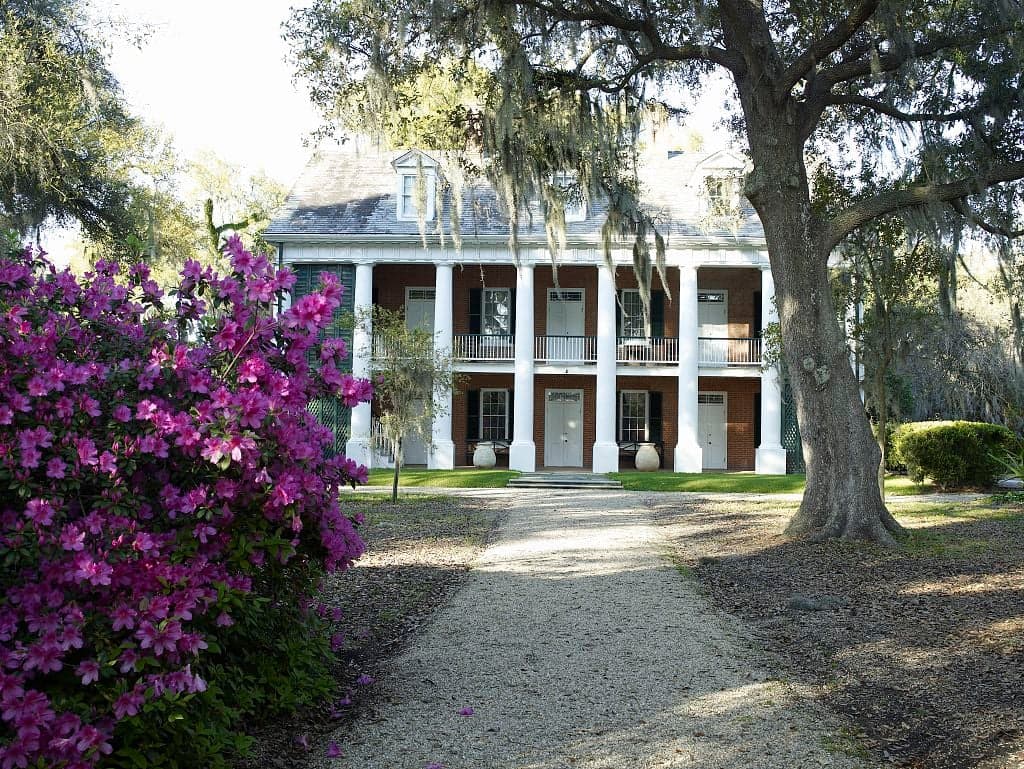
Photo: Wikipedia
Political ClimatePolitical Climate in Iberia County
Showing district-level results — no local-only data available.
Local Political AnalysisPolitical Analysis of Iberia County
Iberia County, Louisiana, is one of the most reliably Republican parishes in the state, carrying a Cook Partisan Voting Index of R+22 — more than twice as red as Louisiana as a whole, which sits at R+10. This isn't a recent shift; the area has been trending rightward for decades, but the margin has widened noticeably since 2016. In the 2024 presidential election, Donald Trump carried Iberia with roughly 73% of the vote, outperforming his statewide margin by about 12 points. The county's political identity is deeply rooted in its Cajun and Creole heritage, oil-and-gas economy, and strong Catholic traditions, though the conservative tilt is now more secular and populist than it was a generation ago.
How it compares to Louisiana as a whole
Statewide, Louisiana is a solidly red state, but Iberia County is in a different league. The R+22 PVI means Iberia is roughly 12 points more Republican than the state average. To put that in perspective, while Louisiana has a handful of Democratic strongholds — Orleans Parish (New Orleans) and East Baton Rouge Parish — Iberia has no such counterweight. The county's largest town, New Iberia, is the political bellwether: it leans Republican overall, but its precincts near the historic downtown and around Iberia Medical Center show more competitive races, occasionally breaking for moderate Democrats in local elections. Meanwhile, Loreauville and Jeanerette are reliably red, with Jeanerette's working-class precincts often delivering 75%+ Republican margins. The rural precincts around Delcambre and Lydia are even more conservative, frequently hitting 80% Republican. The only precincts that lean blue are a handful in New Iberia's north side, near the historically Black neighborhoods around Hopkins Street and the Shadows-on-the-Teche plantation area. These precincts typically vote 60-65% Democratic, but they're too small to shift the countywide total. Compared to Louisiana's more competitive parishes — like Lafayette or St. Tammany — Iberia has almost no swing precincts; the county is uniformly conservative outside those few north-side New Iberia blocks.
What this means for residents
For conservative residents, Iberia County's deep-red lean means their values are reflected in nearly every level of local government. The parish council, school board, and sheriff's office are all held by Republicans, and policy debates tend to center on tax cuts, oil-and-gas regulation, and Second Amendment rights. Conservative voters here rarely feel the need to organize defensively; their priorities are usually the default. For liberal residents, the reality is more isolating. There is no organized progressive infrastructure in the county — no Democratic Party office, no regular activist meetups. Liberal-leaning residents often drive to Lafayette (about 20 minutes north) for community events or political organizing. That said, Iberia is not a place of open political hostility. People know their neighbors' politics, but it's not a topic that dominates casual conversation. The county's Catholic culture encourages a certain civility, and even in deeply red precincts, you'll find Democrats serving on volunteer fire departments and church councils. The practical effect of the R+22 lean is that local elections are often decided in the Republican primary, which means the general election in November is usually a formality. This depresses turnout among Democratic voters, who know their vote for county council or school board won't change the outcome.
Culturally, Iberia County stands apart from Louisiana's more polarized regions. There's no equivalent of the Baton Rouge-New Orleans cultural divide here. Instead, the county's politics are filtered through a Cajun lens that values family, faith, and food over ideological purity. You'll find conservative voters who support Medicaid expansion (which Louisiana adopted under a Democratic governor) and liberal voters who own guns and hunt. The county's biggest policy distinction from the rest of Louisiana is its aggressive support for the oil-and-gas industry — Iberia is home to the Port of Iberia, a major energy hub, and local officials consistently push back against coastal restoration policies that might restrict drilling. This creates a political environment where economic pragmatism often trumps national party lines. Looking ahead, Iberia's R+22 lean is likely to persist. The county's population is aging and becoming more white and rural, trends that favor Republicans. The only wild card is the growing Hispanic population in the sugarcane fields around Jeanerette and New Iberia, which could shift precinct-level dynamics over the next decade — but for now, Iberia remains one of Louisiana's most reliably red parishes, with a political culture that's conservative but not combative.

State Political ClimatePolitical Climate in Louisiana
State Political AnalysisPolitical Environment in the State
Louisiana is a solidly Republican state with a Cook PVI of R+10, but its politics are far from monolithic. The state has shifted rightward over the past 20 years, driven largely by the realignment of white working-class voters and the decline of the once-dominant "Blue Dog" Democrats. However, this Republican lean coexists with a strong Democratic presence in New Orleans and Baton Rouge, creating a political landscape that is more about cultural and regional identity than a simple left-right spectrum.
Urban vs. rural divide
The political map of Louisiana is a classic study in contrasts. The reliably Democratic stronghold is Orleans Parish (New Orleans), which consistently delivers 75-80% of its vote to Democratic candidates. Baton Rouge (East Baton Rouge Parish) is more competitive but leans Democratic, especially in the city proper. The other major metro, Lafayette, is a conservative hub, anchored by the oil and gas industry and a strong Cajun cultural identity. The rural "Acadiana" region, including parishes like Lafourche and Terrebonne, is deeply Republican, as is the northern part of the state around Shreveport and Monroe. The Florida Parishes (north of Lake Pontchartrain), including St. Tammany Parish, are among the most reliably Republican areas in the state, with a heavy concentration of conservative-leaning families who have moved from New Orleans over the past two decades.
Policy environment
Louisiana’s policy environment is defined by a low-tax, limited-government philosophy, but with notable exceptions. The state has no personal property tax on vehicles or boats, and property taxes are among the lowest in the country (average effective rate around 0.55%). However, the state sales tax is high, often exceeding 10% in many parishes when local taxes are added. The state has a right-to-work law and is a "shall-issue" state for concealed carry permits. Education policy is a mixed bag: Louisiana has a robust school choice program, including vouchers and charter schools, but public school performance remains below national averages. Healthcare is a major issue, with the state expanding Medicaid under the Affordable Care Act in 2016, a decision that has been politically contentious but has significantly reduced the uninsured rate. Election laws are relatively straightforward, with no-excuse absentee voting available and early voting periods.
Recent policy direction
In the last few years, Louisiana has moved decisively in a conservative direction on several fronts. In 2024, the state passed a near-total abortion ban, with no exceptions for rape or incest, and only narrow exceptions for the life of the mother. On gun rights, Louisiana became a permitless carry state in 2024, allowing any adult who can legally possess a firearm to carry it concealed without a permit. The state has also passed laws restricting transgender youth from accessing gender-affirming care and participating in school sports consistent with their gender identity. On education, the state has expanded its school voucher program and passed a law requiring the display of the Ten Commandments in all public school classrooms, a move that is currently facing legal challenges. Property rights are generally strong, with no statewide zoning laws, though local ordinances vary. On voting, the state has tightened ballot access by requiring a photo ID to vote and limiting drop boxes, but early voting remains available.
Civil unrest & political movements
Louisiana has a history of political activism, but it tends to be more localized and issue-specific than in other states. The most visible flashpoints in recent years have been around police reform and racial justice, particularly in New Orleans and Baton Rouge. The 2016 shooting of Alton Sterling in Baton Rouge sparked widespread protests and a national conversation about policing. More recently, the debate over the Ten Commandments law has drawn national attention, with both supporters and opponents organizing around it. Immigration politics are less prominent than in border states, but there is a growing conservative movement focused on border security and opposing sanctuary city policies. There is no serious secessionist movement in Louisiana, though there is a strong sense of cultural identity, particularly in Acadiana, that sometimes manifests in calls for greater local autonomy. Election integrity has been a topic of debate, with Republican officials pushing for stricter voter ID laws and auditing procedures, though no major controversies have emerged.
Projection
Over the next 5-10 years, Louisiana is likely to become even more Republican, driven by the continued out-migration of Democratic-leaning voters from New Orleans and the in-migration of conservative retirees and remote workers to areas like St. Tammany Parish and the Northshore. The state's population is aging and becoming more white and suburban, which will reinforce the current political trajectory. However, the growth of Baton Rouge as a more diverse and economically dynamic city could create a new Democratic-leaning metro area that offsets some of the rural Republican gains. The biggest wildcard is the impact of climate change and coastal erosion, which could reshape the state's economy and population distribution in unpredictable ways. For a new resident, the most likely scenario is a state that continues to lean heavily Republican on social and cultural issues, while maintaining its low-tax, business-friendly posture.
For a relocator, the bottom line is that Louisiana offers a deeply conservative political environment outside of New Orleans and parts of Baton Rouge. If you are a conservative, you will find a state that aligns with your values on taxes, gun rights, and education. If you are a liberal, you will find strong communities in the urban centers, but you should be prepared for a state government that is actively pursuing a conservative agenda. The state's politics are not as polarized as in some other parts of the country, but the divide between urban and rural is real and growing. The key is to choose your parish carefully, as local politics can vary significantly from the state-level trend.
* Values derived from national, state, county, city and local statistics and may differ in a specific area. Last updated: 2026-07-04T01:47:37.000Z
Narrative content on this page is AI-generated and may contain mistakes. Verify any details that matter before acting on them.
ReloMaps may earn a commission from affiliate links at no extra cost to you.

