Photo: Wikipedia
Demographics of Beauregard County
Affluence Level in Beauregard County
A below-average socioeconomic profile. Incomes, home values, and educational attainment trail the U.S., with higher poverty and unemployment.
People of Beauregard County
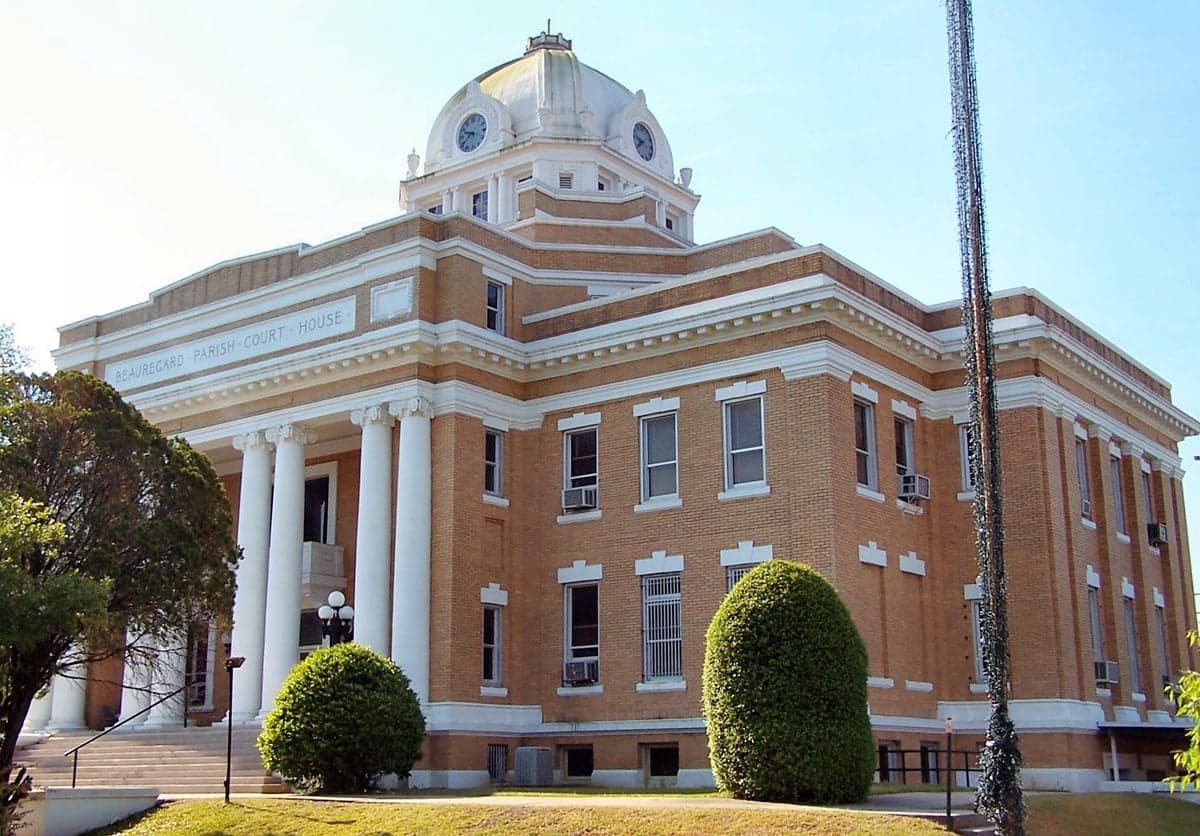
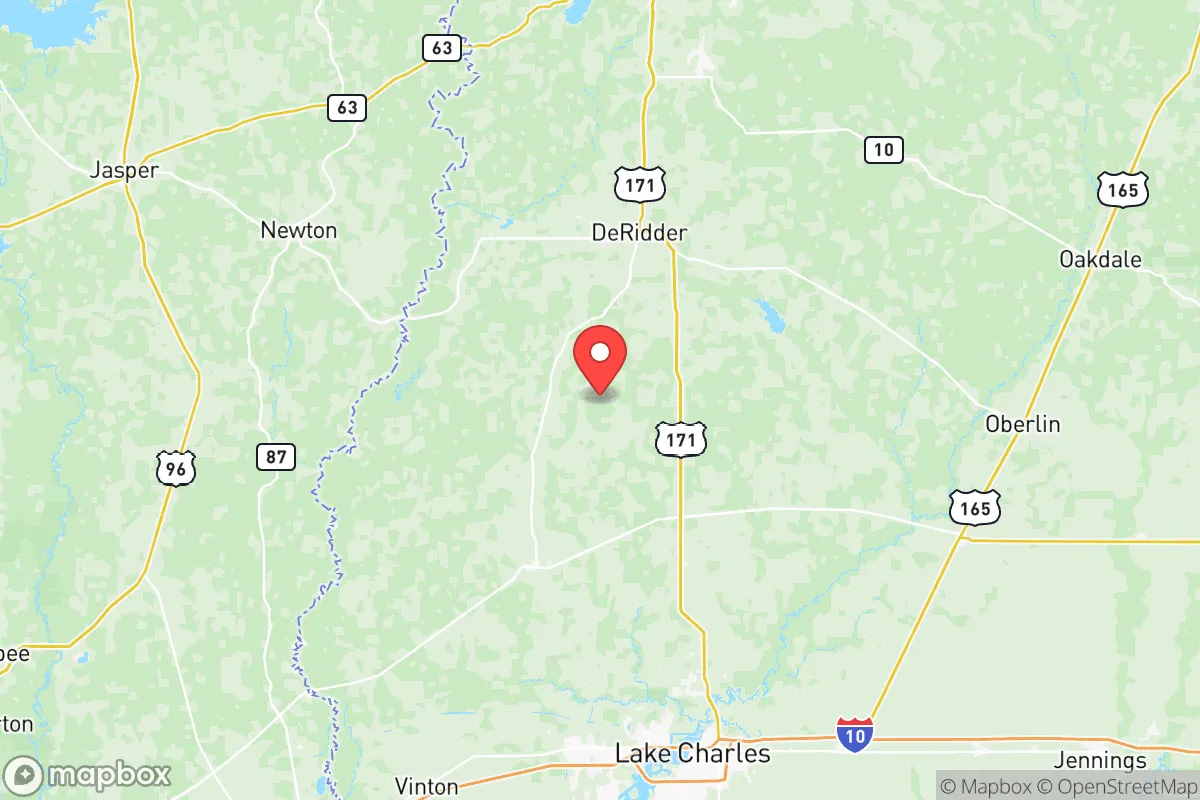
Today, the people of Beauregard Parish, Louisiana form a predominantly White, rural community of 36,646 residents, with a Black population of 10.6% and a very small Hispanic (3.8%) and East/Southeast Asian (0.6%) presence. The parish is notably homogeneous, with only 0.5% foreign-born, and has a lower college education rate (17.8%) than state and national averages. Its identity is rooted in timber, agriculture, and a deep sense of local heritage, with population concentrated in the county seat DeRidder and the smaller towns of Merryville and Sugartown.
Settlement & growth (pre-1960)
Long before European settlement, the area now known as Beauregard Parish was part of the homelands of the Caddo and Atakapa peoples, who lived in small bands along the Sabine River and its tributaries. Spanish and French explorers passed through in the 17th and 18th centuries, but permanent European settlement did not take hold until the early 19th century, as Anglo-American settlers from the southern states—primarily of English and Scots-Irish descent—pushed westward into the piney woods of western Louisiana. These first settlers, arriving around the 1820s and 1830s, were drawn by cheap, abundant land for small-scale farming and timber. They established communities along the Calcasieu River and its branches, with Sugartown (founded circa 1840) becoming one of the earliest settlements, serving as a trading post for local farmers and cattlemen.
The Civil War and Reconstruction era brought significant disruption. Many families lost land, and the post-war period saw an influx of newly freed African Americans, who settled in small, often rural communities within the parish, working as sharecroppers and tenant farmers in the timber and cotton industries. The end of the 19th century witnessed the region's economic transformation driven by the timber boom. Large-scale lumber companies, notably the Great Southern Lumber Company, established operations, and the construction of the Kansas City Southern Railway spurred the founding of new towns. DeRidder was platted in 1884 and quickly became the commercial and railroad hub, incorporating in 1903. The town's growth exploded, attracting laborers from across the South, including Black workers drawn to sawmill and railroad jobs. Merryville, founded in 1887 near the Texas border, also grew as a railroad and timber town. The early 20th century saw further expansion, with farming and ranching supplementing timber. The discovery of oil in the 1930s added a new layer to the local economy, though it never dominated like timber. By 1950, the parish population had grown to over 25,000, and it remained overwhelmingly rural and agrarian in character, heavily reliant on the extraction of natural resources.
Modern era (post-1965)
The post-1965 era brought far less demographic transformation to Beauregard Parish than to urban or coastal America. The 1965 Hart-Cellar Act, which dramatically increased immigration from Asia and Latin America, had a negligible effect here: the foreign-born population today remains at just 0.5%. Instead, the parish has been shaped primarily by domestic migration patterns. The decline of the timber industry in the latter half of the 20th century led to a gradual population loss and outmigration of younger residents to larger cities. Many of the small communities that once dotted the parish—places like Bancroft, Fields, and Ragley— saw population stagnate or decline as families left for job opportunities in Lake Charles, Baton Rouge, or Texas.
The most notable demographic shift since 1965 has been the growth of the Hispanic population, though from a very small base. Today, Hispanic or Latino residents make up 3.8% of the parish. This growth is largely tied to labor in the timber and agricultural sectors, as well as construction. These families have concentrated most heavily in DeRidder and, to a lesser degree, in Merryville, where they work in mills and on farms. The East/Southeast Asian population, at 0.6%, is minimal and dispersed, with no identifiable enclave; most are professionals connected to industries like healthcare or small business. The Indian-subcontinent population (0.1%) is statistically negligible, typically represented by a few families operating motels or convenience stores in DeRidder. The Black population has remained relatively stable at around 9-11% since the 1970s, concentrated historically in neighborhoods within DeRidder and in rural pockets like the Sugartown area, with many working in local schools, government, and the service sector.
In the 2000s, the opening of a federal prison and a small but steady growth in oil-and-gas-related work brought some new residents, but these gains were largely offset by continued outmigration of young adults. The parish has not experienced significant suburbanization or coastal flight; it remains a place where people often move to for family reasons or for a slower pace of life, rather than for high-paying jobs.
The future
Beauregard Parish is projected to remain one of Louisiana's most culturally and ethnically stable regions, with slow demographic change. The population has been roughly flat (around 36,000) for a decade, and future growth is uncertain. The Hispanic share is expected to continue its gradual increase, possibly reaching 5-7% by 2040, driven by second-generation growth and continued labor demand in forestry and construction. This growth is likely to concentrate in DeRidder and Merryville, where jobs and housing are most accessible. The Black population share is expected to remain steady, while the East/Southeast Asian and Indian populations will remain tiny and unlikely to form visible enclaves. The single largest driver of the future population will be whether the local economy—anchored by timber, a prison, healthcare, and small manufacturing—can retain young adults and attract new families. If it succeeds, the parish will likely see modest, organic growth. If it fails, the population may slowly decline, aging in place. The parish's cultural identity—rural, religious, self-reliant, and predominantly White—will likely persist, though it will become slightly more diverse in its Hispanic element.
The kind of place Beauregard Parish is becoming is one of slow, subtle change rather than rapid transformation. For someone moving in now, it offers a stable, low-density, heritage-minded community where the population is mostly long-settled and where newcomers—especially those who work in the timber, education, or healthcare sectors—will find a welcoming, if homogeneous, environment. The parish is not becoming a destination for diversity; it is remaining a place where knowing your neighbors and your local history still defines daily life.

* Values derived from national, state, county, city and local statistics and may differ in a specific area. Last updated: 2026-06-19T20:39:08.000Z
Narrative content on this page is AI-generated and may contain mistakes. Verify any details that matter before acting on them.
ReloMaps may earn a commission from affiliate links at no extra cost to you.

