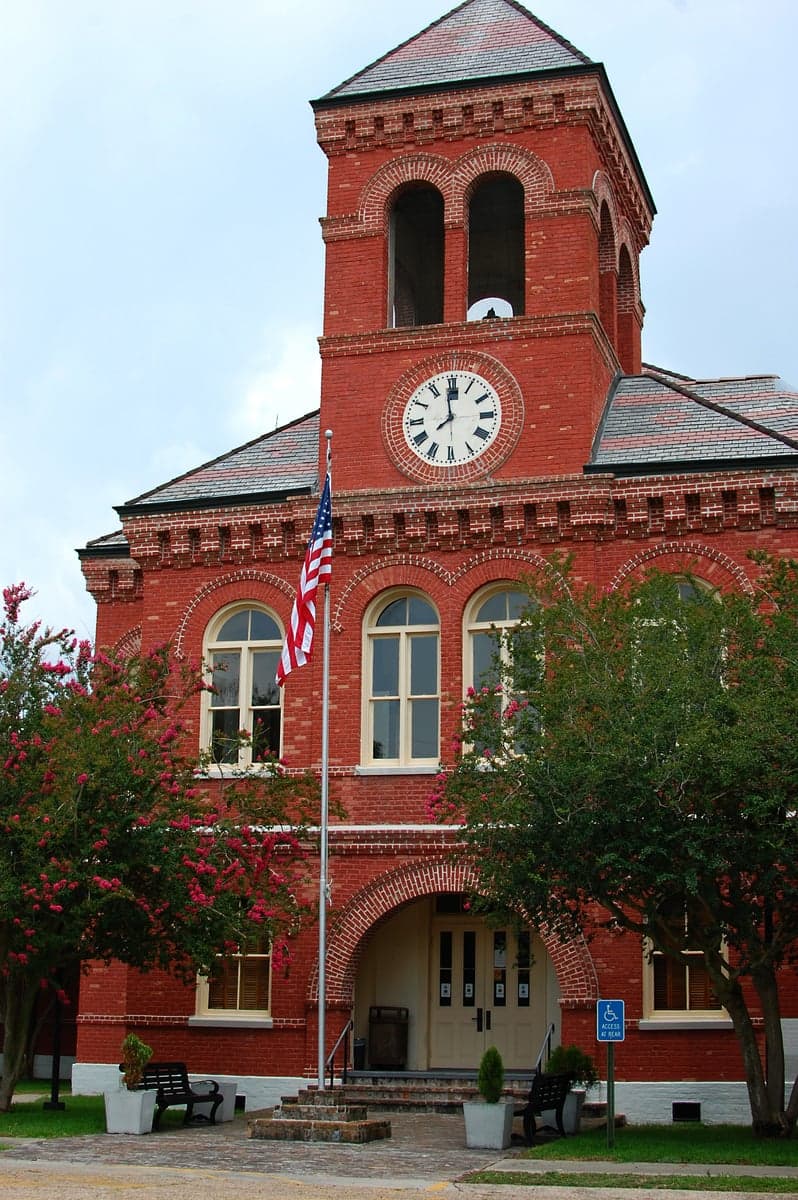
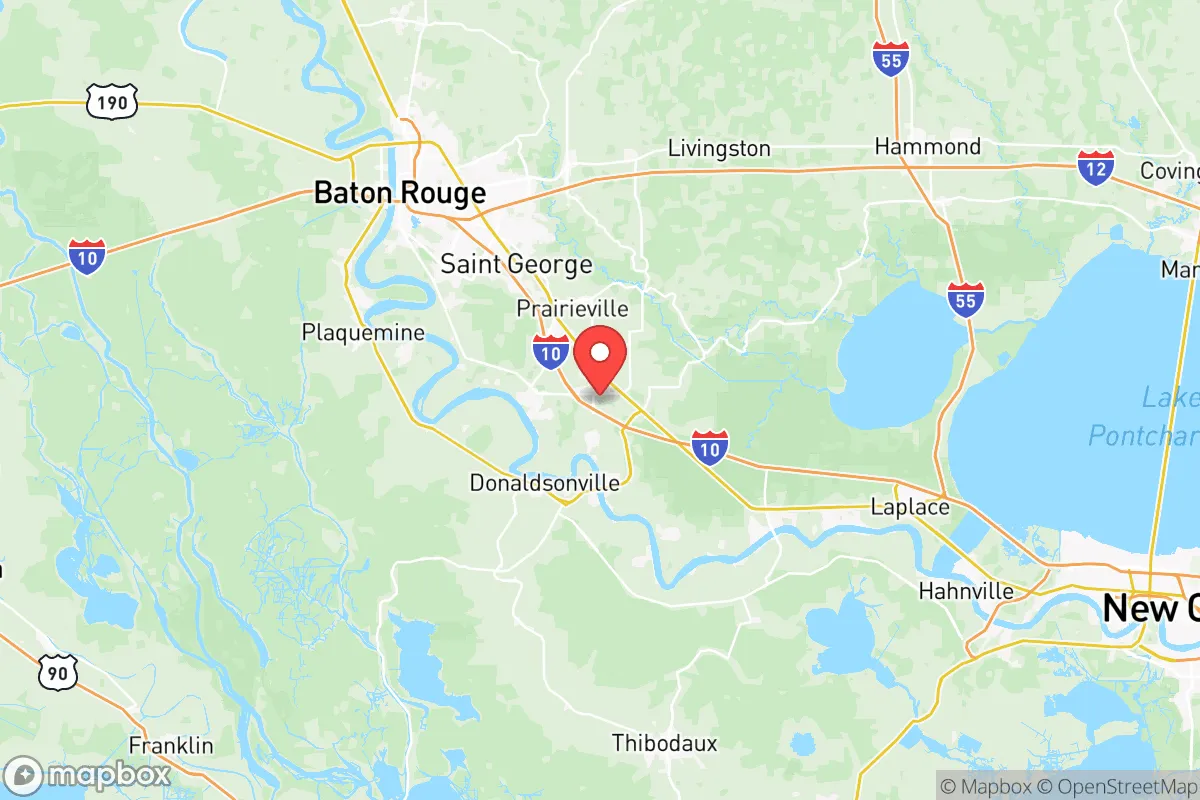
Photo: Wikipedia
Political ClimatePolitical Climate in Ascension County
Showing district-level results — no local-only data available.
Local Political AnalysisPolitical Analysis of Ascension County
Ascension County, Louisiana, is a fascinating political outlier in the state. While Louisiana as a whole carries a Cook PVI of R+10, Ascension County is rated D+17, making it one of the most reliably Democratic strongholds in the Deep South. This isn't a recent shift; the county has been a blue anchor for decades, driven by a unique mix of a large, unionized industrial workforce, a significant African American population concentrated in the northern half, and a strong tradition of local Democratic leadership. The trajectory here is stable, not trending—unlike some suburban areas that are flipping, Ascension’s political identity is deeply entrenched and unlikely to change dramatically in the near term.
How it compares
The contrast between Ascension and the rest of Louisiana is stark. Statewide, the Republican lean is powered by white evangelical voters in the northern and western parishes, plus the growing conservative suburbs around Baton Rouge and New Orleans. In Ascension, the political gravity is centered in the northern towns like Donaldsonville and Gonzales. Donaldsonville, the parish seat, is a historic river town with a majority-Black population and a strong union presence from the nearby petrochemical plants; it consistently delivers Democratic margins of 70% or higher. Gonzales, while more diverse, still leans blue due to its working-class roots and significant minority population. In contrast, the southern part of the parish—towns like Prairieville and Geismar—are more suburban and white, and they vote Republican, but their populations aren't large enough to flip the county. The swing precincts are actually in the unincorporated areas between Gonzales and Prairieville, where newer subdivisions are drawing a mix of Baton Rouge commuters and plant workers, but even those tend to break slightly Democratic. So while Louisiana is a solid red state, Ascension is a blue island, and the two are moving in opposite directions on the state's political map.
What this means for residents
For conservative residents, living in a D+17 county means their votes are effectively canceled out in local elections, but they still have strong representation at the state and federal level. They can expect local policies to lean progressive on issues like labor rights, public education funding, and social services, but they won't face the same cultural isolation they might in a deep-blue city like New Orleans. For liberal residents, the county provides a rare sense of political belonging in a red state. Local government tends to be more responsive to union concerns and community development projects, and there's a visible network of Democratic clubs and activist groups. However, the county's blue tilt doesn't mean it's a progressive utopia; it's a pragmatic, working-class blue, not a coastal progressive one. Both sides can agree that the local economy—dominated by the petrochemical industry and agriculture—shapes politics more than national culture wars do.
Culturally, Ascension County feels distinct from the rest of Louisiana. The influence of the Mississippi River and the industrial corridor gives it a blue-collar, union-heavy identity that's more akin to parts of the Midwest than to the Cajun or evangelical cultures found elsewhere in the state. Policy-wise, the county has historically supported higher funding for local schools and infrastructure, and it's been a battleground over environmental regulations for the plants. The biggest distinction is the absence of the culture war intensity you see in other parts of Louisiana; here, the conversation is more about jobs, wages, and flood protection than about abortion or guns. That's the real inside scoop: in Ascension, politics is less about red vs. blue and more about the plant vs. the parish.

State Political ClimatePolitical Climate in Louisiana
State Political AnalysisPolitical Environment in the State
Louisiana is a solidly Republican state with a Cook PVI of R+10, but calling it a simple red state misses the complex cultural and regional dynamics that define its politics. The state has shifted rightward over the past 20 years, driven largely by the realignment of white working-class voters and the decline of the once-dominant "Blue Dog" Democrats, but it retains a strong Democratic presence in New Orleans and Baton Rouge, powered by African American voters and union households. While statewide elections are now reliably Republican, local offices and some congressional seats remain competitive, creating a political landscape that feels more like a patchwork of fiefdoms than a monolithic conservative bloc.
Urban vs. rural divide
The political map of Louisiana is starkly divided between its urban centers and the rest of the state. New Orleans and its surrounding suburbs in Orleans and Jefferson parishes are the Democratic stronghold, delivering margins of 70-80% for Democratic presidential candidates in recent cycles. Baton Rouge, the state capital, is a battleground within itself — East Baton Rouge Parish leans Democratic thanks to its large Black population and university influence, but the surrounding suburbs like Central and Zachary are deeply conservative. Lafayette, the heart of Acadiana, has trended Republican over the past decade, though it retains a moderate streak, especially on cultural issues. The rural parishes — from the Florida Parishes east of Baton Rouge to the piney woods of north Louisiana — are overwhelmingly Republican, often voting 75-80% for GOP candidates. The only real exception is the Mississippi River Delta region, where parishes like St. John the Baptist and St. James still vote Democratic due to high African American populations and strong union presence in the petrochemical industry. This urban-rural split means that a candidate can win the state by 20 points while losing Orleans Parish by 60, a dynamic that shapes everything from legislative redistricting to state budget priorities.
Policy environment
Louisiana's policy environment is defined by a low-tax, low-service model that appeals to conservatives but creates real tradeoffs. The state has no personal property tax and a flat income tax rate of 4.25% as of 2025, following a series of cuts pushed by Governor Jeff Landry and the Republican supermajority legislature. Sales taxes are high, averaging over 9.5% in many parishes, which makes the tax structure regressive — lower-income residents pay a larger share of their income in taxes than the wealthy. The regulatory posture is business-friendly, especially for the oil and gas, petrochemical, and timber industries, which enjoy significant exemptions and streamlined permitting. Education policy has shifted rightward: the state expanded its school voucher program and charter school access under the Louisiana Scholarship Program, and in 2024 passed a law requiring the display of the Ten Commandments in all public school classrooms, a move that is currently tied up in federal court. Healthcare is a mixed bag — Louisiana expanded Medicaid under the Affordable Care Act in 2016, a decision made by Democratic Governor John Bel Edwards that remains popular, but the state has some of the worst health outcomes in the nation, including high rates of infant mortality and chronic disease. Election laws are moderately restrictive: the state requires a photo ID to vote, has no-excuse absentee voting, and in 2024 banned the use of private funding for election administration, a response to the "Zuckerbucks" controversy that spread through conservative states.
Recent policy direction
The last two years have seen a dramatic acceleration of conservative policy under Governor Jeff Landry, who took office in 2024 after a decisive victory. On gun and self-defense law, Louisiana became a permitless carry state in 2024, allowing any adult who can legally possess a firearm to carry it concealed without a permit. The state also strengthened its "stand your ground" law, removing the duty to retreat in any place where a person has a right to be. On parental and education rights, the state passed the "Parents' Bill of Rights" in 2024, which requires schools to notify parents of any changes to a student's mental, emotional, or physical health — a law that critics say targets LGBTQ+ students. The Ten Commandments display law, mentioned above, is part of a broader push to inject religious language into public life. On speech and privacy, Louisiana passed a law in 2024 requiring age verification for access to adult content online, and it has been a leader in the movement to restrict social media platforms' ability to moderate content, though these laws face First Amendment challenges. Medical and bodily autonomy is a flashpoint: the state has a near-total abortion ban with no exceptions for rape or incest, passed in 2022 after the Dobbs decision, and in 2024 it banned gender-affirming care for minors, overriding the veto of the previous governor. Property rights are generally strong, with low property taxes and few zoning restrictions outside of incorporated cities, though the state's heavy reliance on oil and gas means that mineral rights disputes are common. Voting and ballot access have tightened: the state closed its primary elections to only registered party members in 2024, ending the "jungle primary" system that had allowed crossover voting, and it purged over 100,000 inactive voters from the rolls ahead of the 2024 election.
Civil unrest & political movements
Louisiana has a long history of political activism, from the civil rights movement to the more recent battles over policing and Confederate monuments. In 2016 and 2017, Baton Rouge was the site of major protests after the police shooting of Alton Sterling, drawing national attention and leading to clashes between demonstrators and law enforcement. The removal of Confederate monuments in New Orleans in 2017 was a flashpoint that still reverberates in local politics, with some rural parishes erecting new monuments in defiance. On the right, the Louisiana Republican Party has been energized by the rise of the "MAGA" wing, and groups like the Louisiana Family Forum have been influential in pushing the social conservative agenda on abortion, education, and religious liberty. Immigration politics are less visible here than in border states, but the state has taken a hard line: in 2024, Governor Landry sent Louisiana National Guard troops to the Texas border as part of Operation Lone Star, and the state passed a law requiring local law enforcement to cooperate with federal immigration authorities. There is no sanctuary city movement in Louisiana — even New Orleans, the most liberal city in the state, has not adopted sanctuary policies, though it has resisted full cooperation with ICE. Election integrity controversies have been relatively muted compared to states like Georgia or Arizona, but the 2024 voter purge and the closure of primaries have drawn criticism from voting rights groups who argue they disproportionately affect Black and Democratic voters. Secession and nullification rhetoric is mostly fringe, though there is a small but vocal "Louisiana First" movement that advocates for greater state autonomy, particularly on energy policy and coastal restoration.
Projection
Over the next 5-10 years, Louisiana is likely to become even more Republican, but the pace of change may slow as demographic shifts create new tensions. The state's population is aging and slowly declining, with young people leaving for Texas, Georgia, and the Carolinas, which reinforces the conservative tilt. However, the growth of the Hispanic population, particularly in the New Orleans metro and the southwestern parishes, could create a new Democratic-leaning voting bloc over time. The biggest wildcard is climate change and coastal erosion — as the Gulf Coast loses land and communities are forced to relocate, the political map could shift in unpredictable ways, with some parishes losing population and others gaining. The Republican supermajority is likely to continue pushing on cultural issues, including further restrictions on abortion and LGBTQ+ rights, while maintaining the low-tax, low-service model. A new resident moving in now should expect a state where conservative values dominate policy, but where local politics still matter a great deal — the difference between living in New Orleans and living in Shreveport is as wide as the difference between living in two different states. The Democratic Party will remain competitive only in the urban cores and the Delta parishes, and statewide Democrats will struggle to win without a moderate, culturally conservative candidate who can appeal to rural voters.
For a new resident, the bottom line is that Louisiana offers a genuinely conservative policy environment with low taxes and strong gun rights, but it comes with tradeoffs in public services, infrastructure, and health outcomes. If you are a conservative looking for a state where your values are reflected in law and where you can live affordably, Louisiana is a strong fit — just be prepared for the heat, the humidity, and the reality that the state's budget constraints mean roads, schools, and healthcare will not match what you might find in a higher-tax state. If you are a liberal, you will find a welcoming community in New Orleans or Baton Rouge, but you will be swimming against the current in statewide politics, and you should expect the cultural and legal landscape to continue shifting rightward. Either way, Louisiana is a place where politics is personal, and where the best way to understand the state is to sit down with a cup of coffee and listen to someone who has been here a while — because everyone has a story, and everyone has an opinion.
* Values derived from national, state, county, city and local statistics and may differ in a specific area. Last updated: 2026-06-16T21:05:59.000Z
Narrative content on this page is AI-generated and may contain mistakes. Verify any details that matter before acting on them.
ReloMaps may earn a commission from affiliate links at no extra cost to you.

