Photo: Wikipedia
Demographics of Ascension County
Affluence Level in Ascension County
A middle-class area roughly in line with national averages across income, home values, education, and employment.
People of Ascension County
Ascension County, Louisiana, is home to roughly 128,600 residents, a population that has more than doubled since 1990 and continues to grow at a pace that outstrips most of the state. The county's character is defined by a blend of historic Cajun and Creole roots, a strong industrial and petrochemical employment base, and a recent influx of families and workers drawn from Baton Rouge and beyond. With a population that is 64.3% White, 22.7% Black, and 8.1% Hispanic, Ascension is notably less diverse than the national average but is becoming more varied as new communities settle in its fast-growing suburban towns.
Settlement & growth (pre-1960)
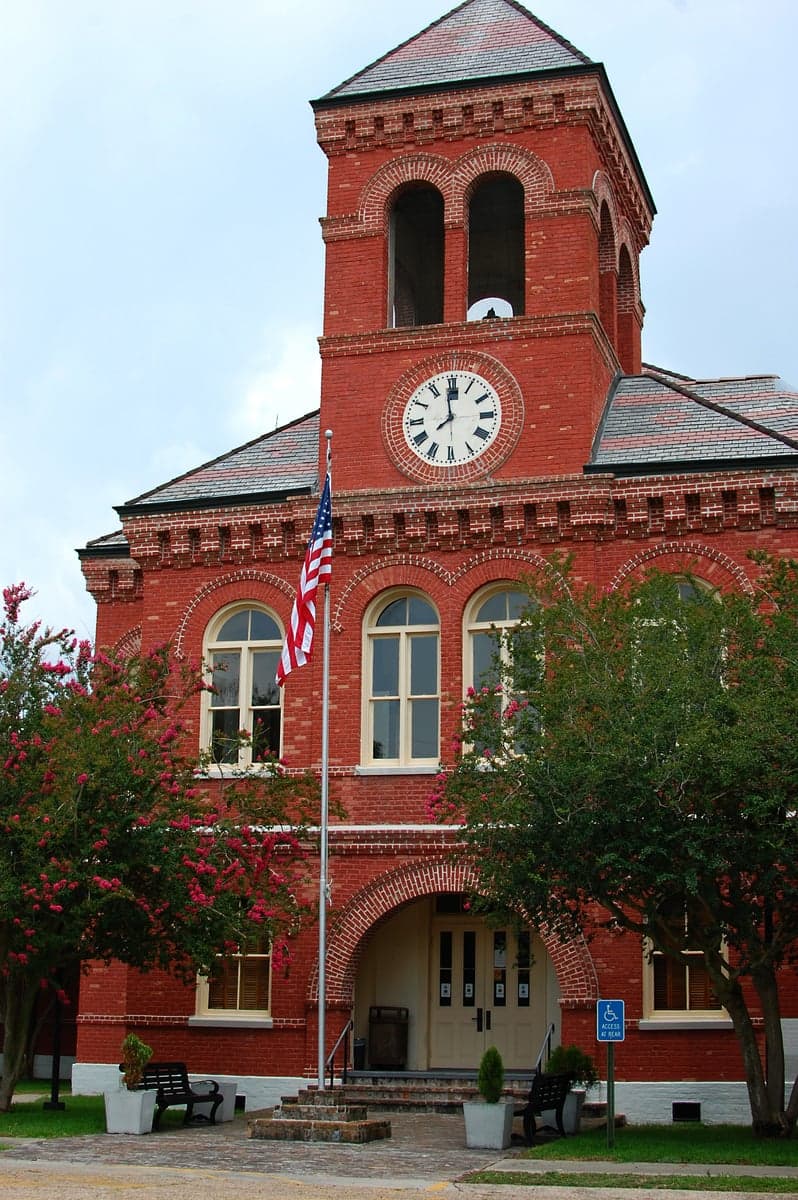
Before European contact, the area now known as Ascension County was inhabited by the Houma and Bayougoula Native American peoples, who lived along the Mississippi River and its bayous. French and Spanish colonists began arriving in the early 18th century, establishing small settlements along the river. The region was part of the German Coast, a stretch of the Mississippi where German immigrants were recruited by the French to farm and provide food for the colony. These early settlers concentrated in what is now Donaldsonville, the county seat, and along the riverfront near Burns and Smoke Bend. The area remained sparsely populated through the 19th century, dominated by sugar plantations worked by enslaved African Americans. After the Civil War, many freedmen remained in the parish, forming the foundation of the Black communities that still exist in Donaldsonville and Gonzales.
The late 19th and early 20th centuries brought a new wave of settlement tied to the expansion of the railroad and the sugar industry. Small farming communities like Prairieville, Geismar, and St. Amant grew as Cajun and Acadian families moved inland from the coast. These groups, descended from French-speaking Acadians expelled from Canada, gave the parish its distinctive cultural flavor. The discovery of oil and natural gas in the 1930s and 1940s, followed by the construction of massive petrochemical plants along the Mississippi River in the 1950s, transformed the local economy. Workers from across Louisiana and the Gulf South moved to Ascension for jobs at plants in Geismar and Gonzales, but the population remained overwhelmingly native-born and Southern.
Modern era (post-1965)
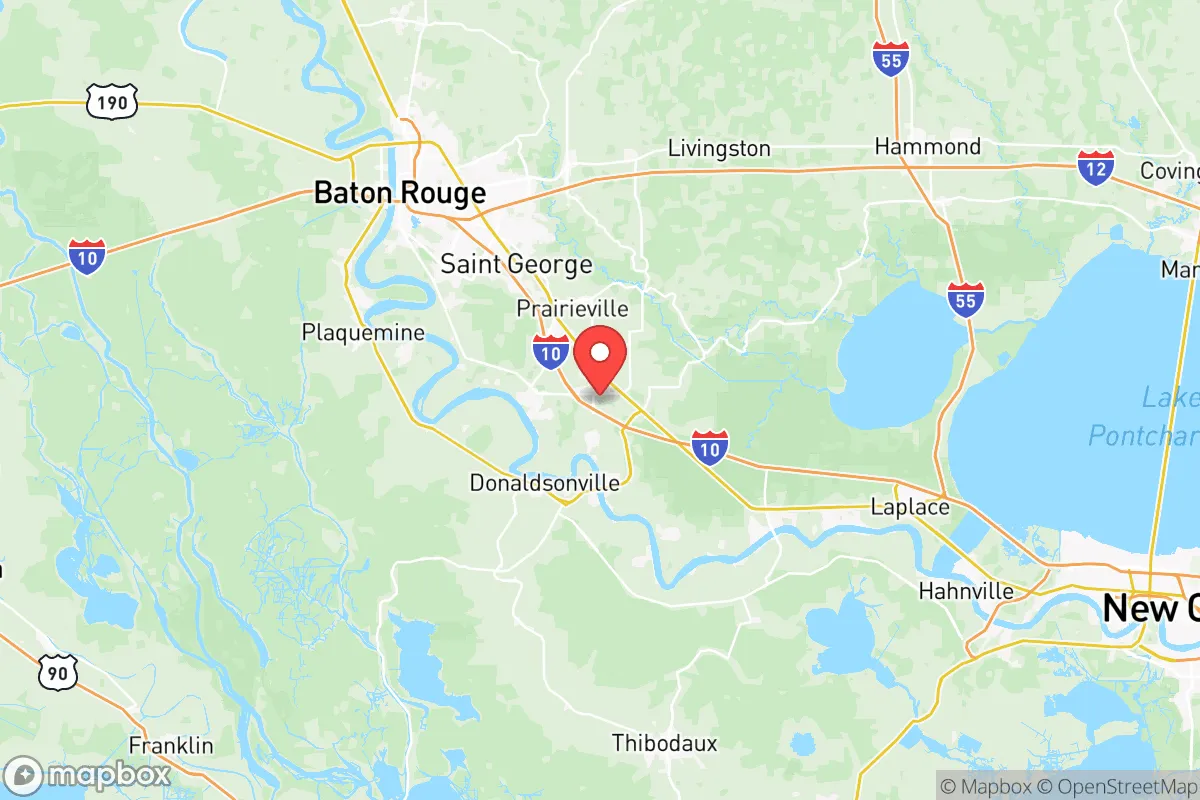
The 1965 Hart-Cellar Act had a limited immediate impact on Ascension County, as the parish did not attract the large-scale international immigration seen in coastal cities. The foreign-born population today stands at just 3.0%, far below the national average. However, the post-1965 period brought significant domestic migration. The expansion of the petrochemical corridor along the Mississippi River, often called "Cancer Alley," drew workers from across Louisiana and neighboring states. The construction of Interstate 10 in the 1970s made Gonzales and Prairieville accessible commuter suburbs for Baton Rouge, which is only 20 miles north. This triggered a wave of suburbanization that continues today.
The most notable demographic shift since 1965 has been the growth of the Hispanic population, now 8.1% of the county. This community began forming in the 1990s and 2000s, driven by labor demand in construction, petrochemical plant maintenance, and the service industry. Hispanic residents are concentrated in Gonzales and Donaldsonville, where a small but growing network of Spanish-language churches, markets, and community organizations has emerged. The Black population, 22.7% of the county, remains concentrated in Donaldsonville and parts of Gonzales, though many Black families have also moved to newer subdivisions in Prairieville. East and Southeast Asian communities, at 0.7% of the population, are small and dispersed, with a slight concentration in Gonzales and Prairieville, often tied to professional jobs in engineering and healthcare. The Indian-subcontinent population, at 0.3%, is similarly small and scattered, with no distinct ethnic enclave.
The most dramatic change has been the sheer pace of growth. Ascension County's population has surged from roughly 50,000 in 1980 to over 128,000 today. This growth is almost entirely driven by domestic migration — families and workers moving from Baton Rouge, New Orleans, and other parts of Louisiana seeking lower crime rates, better schools, and newer housing. Prairieville has become the epicenter of this boom, transforming from a rural crossroads into a sprawling suburban community with master-planned subdivisions, strip malls, and highly rated public schools. Gonzales has also grown rapidly, while Donaldsonville has seen slower growth and population loss, reflecting a shift of economic activity and residents toward the interstate corridor.
The future
Ascension County is projected to continue growing, though the pace may moderate as available land for new subdivisions diminishes. The county is becoming slightly more diverse, driven primarily by Hispanic in-migration and a slow increase in Asian and Indian populations tied to professional jobs in the petrochemical and healthcare sectors. The White population, while still the majority, is declining as a share of the total, a trend common across the Sun Belt. The Black population share has remained relatively stable, but geographic concentration is shifting as more Black families move to newer suburban areas like Prairieville.
The cultural identity of Ascension County is evolving from a historically Cajun and rural character toward a more generic Sun Belt suburban identity, though the parish retains strong local traditions, including Mardi Gras celebrations, crawfish boils, and a deep attachment to high school football. The next 10-20 years will likely see continued suburban infill, with Prairieville and Gonzales absorbing most new development. Donaldsonville may see modest revitalization efforts but is unlikely to regain its historic role as the county's economic center. The foreign-born population will remain low compared to national averages, but the Hispanic community will continue to grow and become more established, particularly in Gonzales.
For someone moving to Ascension County now, the parish offers a classic Sun Belt suburban experience: rapid growth, new housing, good schools, and a strong job market tied to the petrochemical industry. The trade-offs are a relatively homogeneous population, limited public transit, and a cultural scene that revolves around family, church, and outdoor recreation rather than urban amenities. The county is becoming more diverse and more suburban with each passing year, but its core identity as a conservative, family-oriented, industrial community remains intact.

* Values derived from national, state, county, city and local statistics and may differ in a specific area. Last updated: 2026-06-16T21:05:59.000Z
Narrative content on this page is AI-generated and may contain mistakes. Verify any details that matter before acting on them.
ReloMaps may earn a commission from affiliate links at no extra cost to you.

