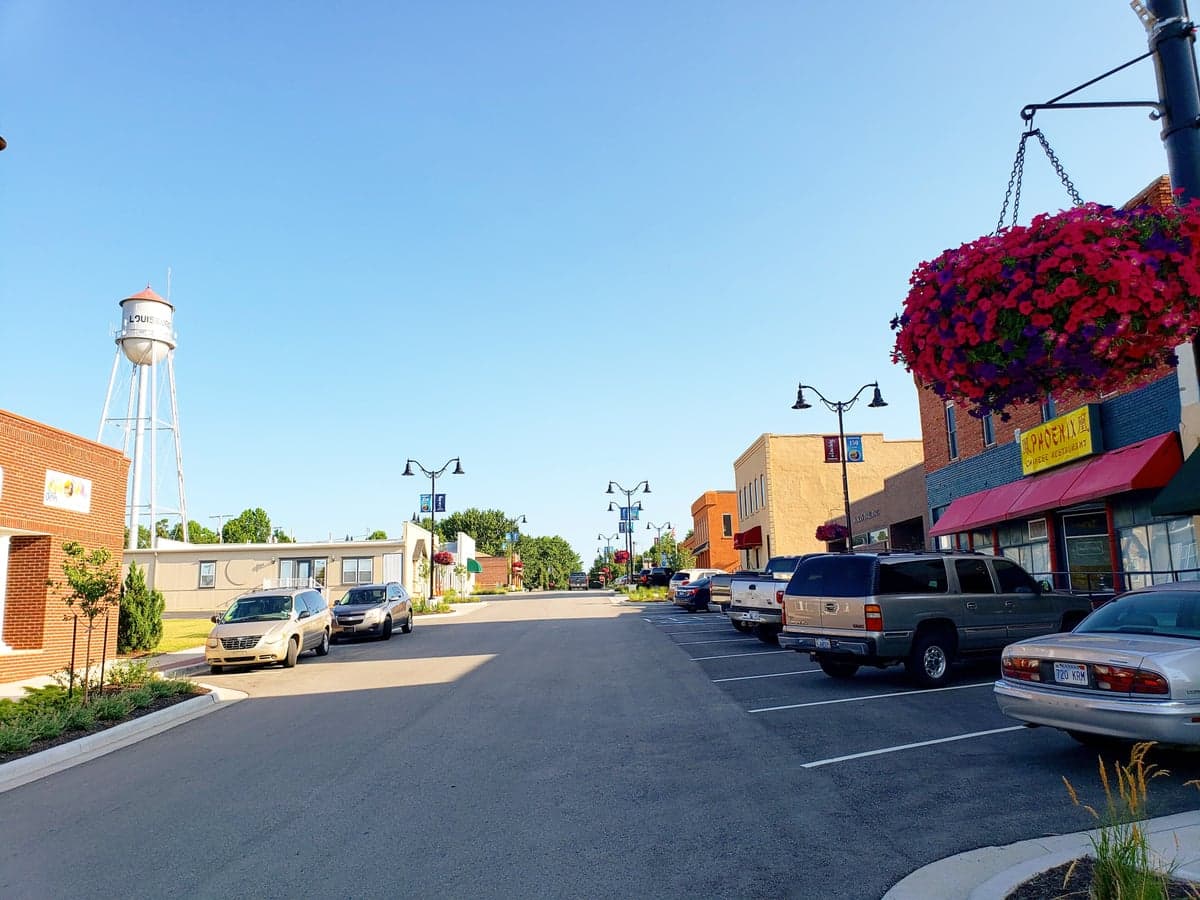
Photo: Wikipedia
Strategic Assessment of Louisburg, KS
Workable tactical position. Some exposure to population density or targets, but generally defensible in a crisis.
What does the Strategic Assessment tell us?
Our Strategic Assessment grades tactical survivability of an area. Major population centers, military targets, fallout zones, natural disasters, and border exposure all drive risk — lower exposure means a more defensible position in a crisis.
This is heavily inspired by Joel Skousen's Strategic Relocation book. Highly recommended you checkout the book ($)What does this tell us?
Our Strategic Assessment grades tactical survivability of an area. Major population centers, military targets, fallout zones, natural disasters, and border exposure all drive risk — lower exposure means a more defensible position in a crisis.
This is heavily inspired by Joel Skousen's Strategic Relocation book. Highly recommended you checkout the book ($)Strategic Pillars

Key Distances
Regional Safe Places
Below is our recommended "safe zones" in Kansas and the surrounding area based on our strategic heuristics. For most people, it's unrealistic to live in a “safe zone” full-time due to work, family or other personal reasons. They tend to be more rural. However, many of these areas are perfect for second homes and retreat properties that double as a vacation home or even a short-term rental.
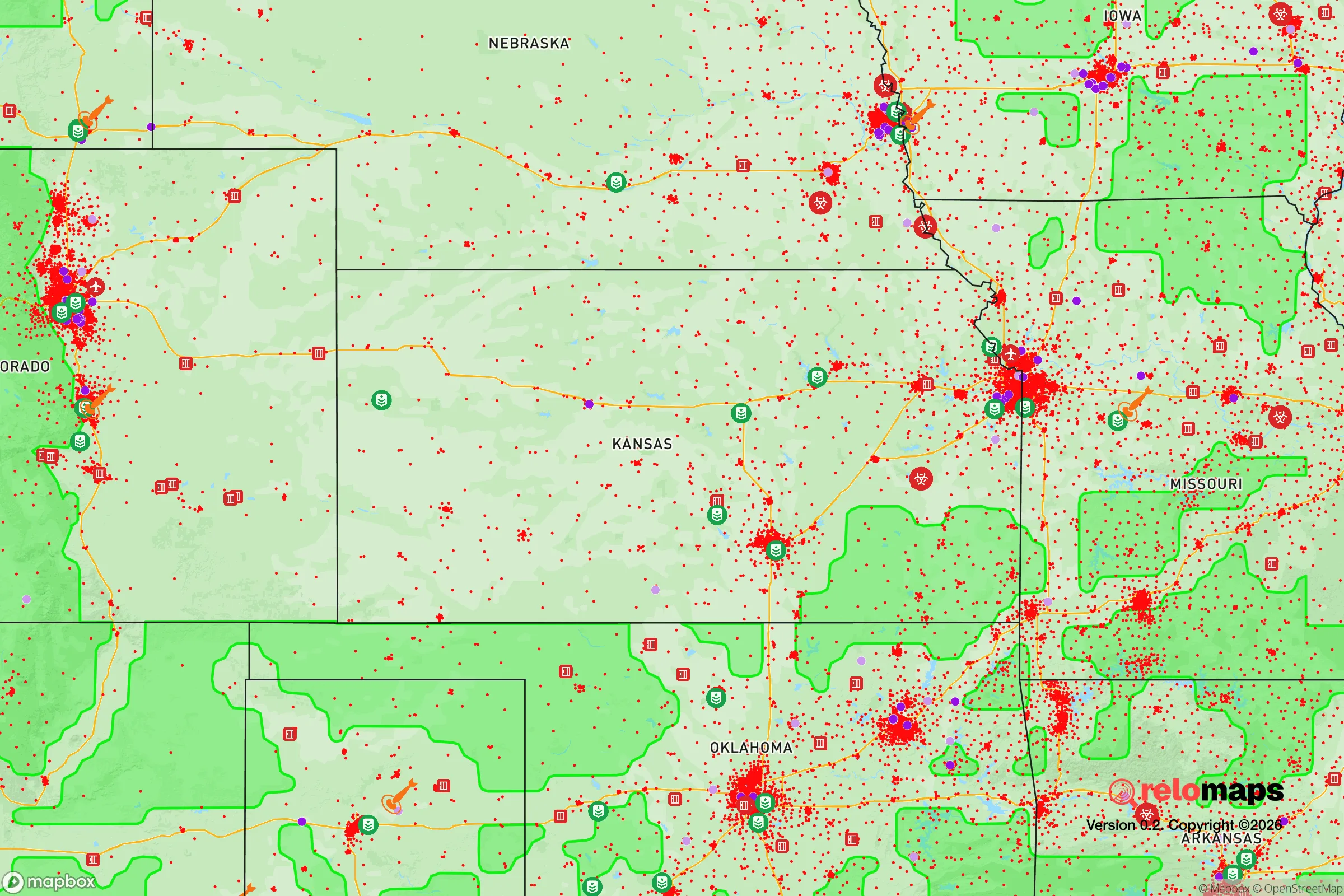
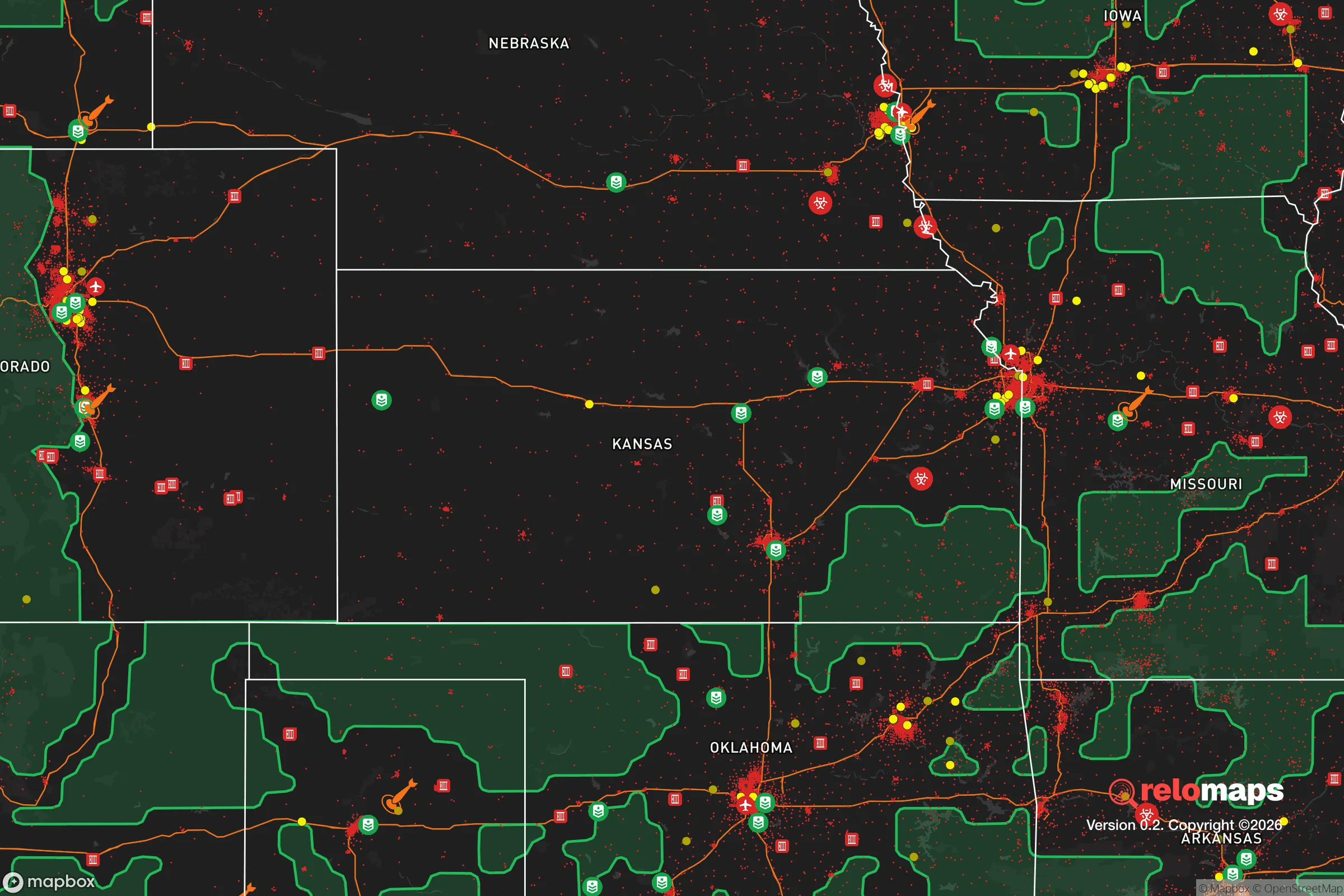


Important Note: For informational purposes only. This does not mean nothing bad ever happens in the green zones. Please use common sense. This is based on public data and modeled with AI. We tried to take a conservative approach but mistakes happen. We update this regularly as new information becomes available.
Solar Generator Recommendations
Backup power matters more here than in safer locations. We've picked three solar generators across budgets and capacity tiers — start with the budget unit if you only need a few essentials, or step up if you want to run a fridge and HVAC for days at a time.

Jackery Portable Power Station Explorer 300
Budget OptionPower on the Go: Weighing only 11 lbs, it's convenient to set up and store with book-sized foldable solar panels

BLUETTI Portable Power Station AC180
Designed for both indoor and outdoor scenarios, AC180 is highly capable as it has a robost capacity and continuous output power.

EF ECOFLOW DELTA Pro Ultra Power Station
Upgraded PickEcoFlow DELTA Pro Ultra is a whole-home energy system designed to grow with your family. Integrated with the Smart Home Panel 2, it scales to meet your evolving energy needs — keeping your home powered, intelligent, and secure through every stage of life.
We earn a commission, at no additional cost to you.
Strategic Assessment Analysis
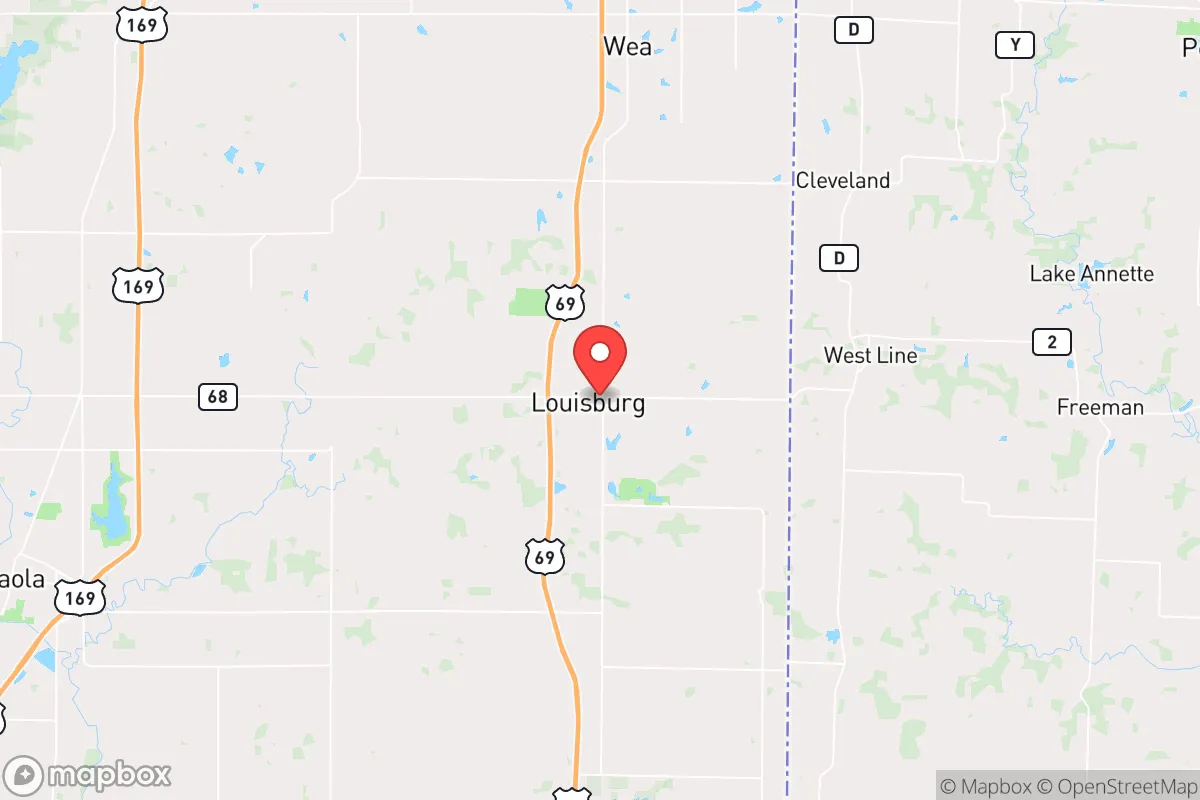
Louisburg, Kansas, offers a compelling mix of small-town stability and strategic positioning for those prioritizing resilience and self-sufficiency, sitting roughly 35 miles south of downtown Kansas City and just north of the Kansas-Missouri state line. Its location places it within a comfortable daily commute to the metro’s jobs and amenities, yet far enough to avoid the immediate fallout and congestion of a major urban center. The town’s population hovers around 4,500, giving it a tight-knit community feel without being so remote that supply chains or medical access become a concern. For a relocator weighing disaster readiness, Louisburg’s key advantage is its position as a buffer zone—close enough to leverage urban resources, but with enough distance to provide a meaningful safety margin.
Geographic position and natural advantages for long-term stability
Louisburg sits in the rolling hills of eastern Miami County, an area defined by the Marais des Cygnes River basin and a patchwork of farmland and oak-hickory woodlands. The terrain is gently sloped, which reduces the risk of flash flooding compared to flatter, river-adjacent towns, though low-lying properties near the Marais des Cygnes itself should be vetted for floodplain status. The region’s geology is stable—no significant seismic activity, no sinkhole-prone karst, and no hurricane or tornado alley extremes, though Kansas as a whole sees its share of severe thunderstorms. The local water table is generally reliable, with many rural properties drawing from private wells, and the area’s annual rainfall of about 40 inches supports rain catchment and small-scale agriculture without the drought stress seen further west. For a relocator, the natural advantages are subtle but real: moderate climate, decent soil for gardening, and a landscape that doesn’t amplify most natural hazards.
Risks, exposures, and proximity to fallout-relevant landmarks
The primary risk for Louisburg is its proximity to the Kansas City metropolitan area, a population center of over 2 million that includes major industrial, transportation, and military infrastructure. In a major conflict or terrorist scenario, the metro’s concentration of rail yards, fuel depots, and the Kansas City International Airport could become targets. The nearby BNSF and Union Pacific rail lines running through the region also carry hazardous materials, including anhydrous ammonia and chlorine, which could pose a secondary risk if derailed or targeted. Additionally, the area lies within roughly 50 miles of Whiteman Air Force Base in Missouri, home to the B-2 Spirit stealth bomber fleet—a high-value military asset that could draw strategic strikes. While Louisburg itself is not a primary target, its location within the broader Kansas City defense zone means fallout patterns from a nuclear event could affect the area depending on wind direction. For the serious prepper, this is a moderate risk—not a dealbreaker, but a factor that demands a solid shelter plan and a stockpile of potassium iodide if you’re staying put.
Practical resilience for a relocator: food, water, energy, and defensibility
Louisburg’s practical resilience is where it shines for the self-sufficiency-minded. The surrounding Miami County is agricultural, with corn, soybeans, and cattle operations providing a local food base that isn’t entirely dependent on long-haul trucking. The town itself has a small but functional grocery store, a hardware store, and a farm supply co-op, which means basic supplies and tools are within a short drive. For water, the city’s municipal supply comes from the Marais des Cygnes River and groundwater wells, but many rural properties have private wells that offer independence from the grid. Rainwater collection is feasible given the region’s precipitation, and the soil is suitable for vegetable gardens and fruit trees—apples, pears, and blackberries do well here. Energy-wise, the area is served by Evergy, but solar potential is decent (about 4.5 peak sun hours per day), and wood heating is a realistic option given the surrounding woodlands. Defensibility is moderate: the town is laid out on a grid with open farmland to the east and south, which limits concealment but also provides clear sightlines. The local sheriff’s office and a small police department maintain a visible presence, and the community’s rural character means most residents are armed and familiar with self-reliance. For a relocator, the practical takeaway is that Louisburg offers a workable balance—you can set up a resilient homestead without being completely off-grid, and the local culture supports preparedness rather than stigmatizing it.
Overall, Louisburg presents a solid strategic picture for someone who wants to be near a major city for work and services but values the buffer of distance and rural infrastructure. Its risks are real but manageable—the biggest being proximity to Kansas City’s target profile—while its natural advantages in water, soil, and climate support a self-sufficient lifestyle. The town’s small size and agricultural base mean you’re not relying on fragile urban supply chains, and the community’s ethos leans toward practical independence. For a relocator with a conservative, preparedness-minded outlook, Louisburg is a credible option that doesn’t require extreme measures to make work, but it does demand a clear-eyed plan for the metro-area risks that come with the territory.

* Values derived from national, state, county, city and local statistics and may differ in a specific area. Last updated: 2026-10-06T20:35:14.000Z
Narrative content on this page is AI-generated and may contain mistakes. Verify any details that matter before acting on them.
ReloMaps may earn a commission from affiliate links at no extra cost to you.

