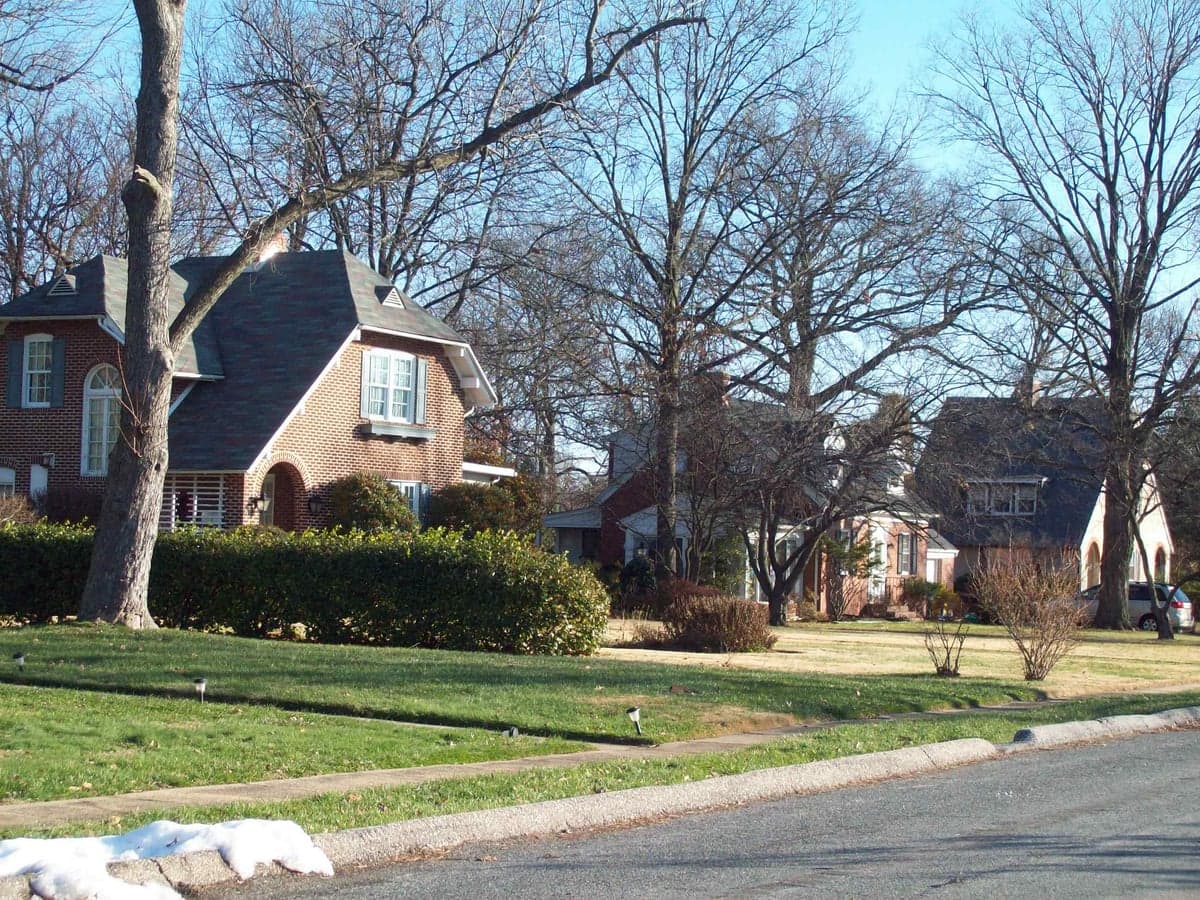
Photo: Wikipedia
Political ClimatePolitical Climate in Linthicum Heights, MD
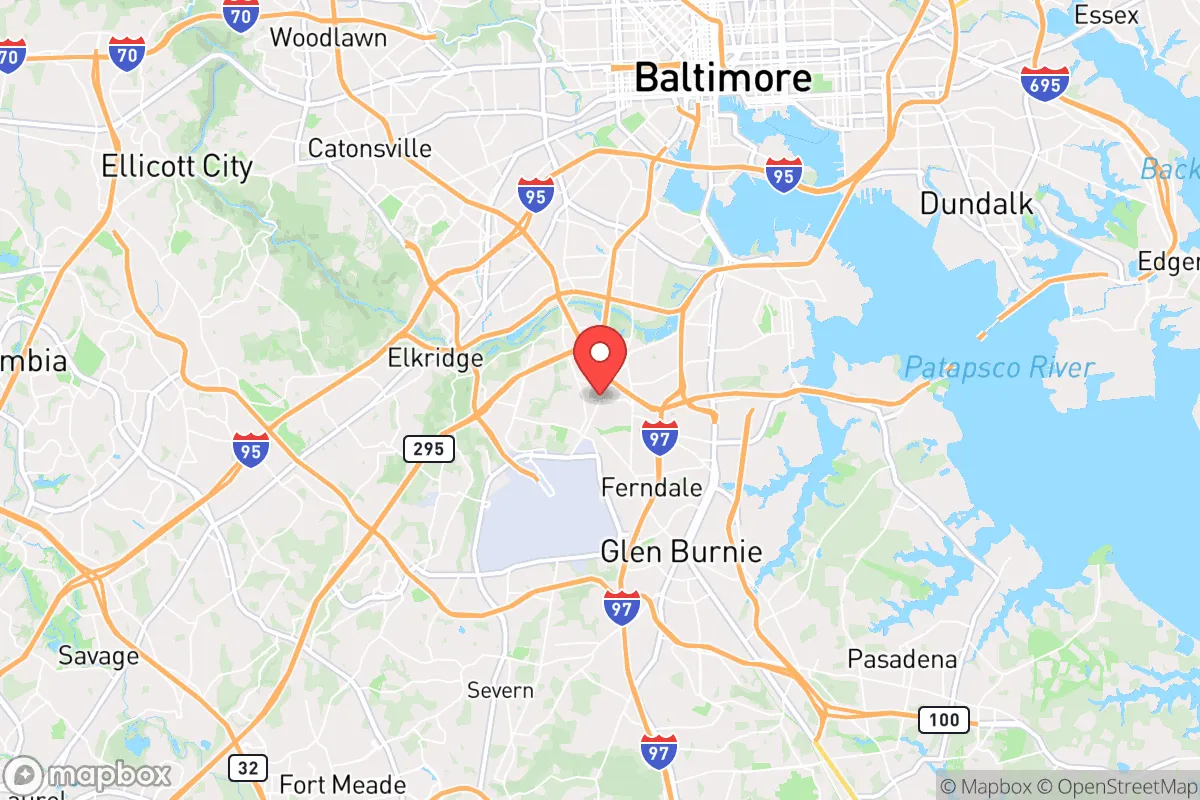
District shown is the primary district for this city’s centroid. Cities may span multiple districts.
Local Political AnalysisPolitical Analysis of Linthicum Heights, MD
Linthicum Heights leans reliably Democratic, with a Cook PVI of D+12, though it is noticeably less blue than the state of Maryland as a whole, which sits at D+17. This isn't a radical swing district; it's a stable, center-left community where Democratic candidates typically win by comfortable margins, but where Republican candidates can still pull a respectable 40-42% of the vote in a strong year. Over the past decade, the area has drifted slightly leftward, mirroring the broader suburban shift in Anne Arundel County, but it hasn't flipped as dramatically as some nearby precincts in Glen Burnie or Severna Park, which have seen more volatile swings.
How it compares
The D+12 rating puts Linthicum Heights in a distinct middle ground within the region. Drive ten minutes south to Pasadena or east to parts of Glen Burnie, and you'll find precincts that are much more competitive—some even lean Republican at the local level. Head north into Baltimore City (D+40) or west into Howard County (D+18), and the Democratic dominance becomes overwhelming. What makes Linthicum Heights stand out is its relative moderation within a deep-blue state. In the 2022 gubernatorial race, for example, Wes Moore carried the area by a smaller margin than his statewide average, while Republican Dan Cox—who lost badly statewide—still managed to pull around 38% here. This isn't a place where either party feels completely shut out; local council races and school board elections are often genuinely contested.
What this means for residents
For liberal residents, the political climate is generally comfortable. You'll find plenty of neighbors who share your views on national issues, and local elected officials tend to align with Democratic priorities on education funding, transit (the Light RailLink is a big deal here), and environmental protections for the Patapsco River. For conservative residents, life is far from hostile. You won't feel like a pariah at the grocery store or at a BWI Federal Credit Union branch. Many of your neighbors are moderate or independent, and local Republican clubs remain active. The practical effect of the D+12 lean is that conservative voices are heard in local debates—especially on zoning, taxes, and public safety—but they rarely carry the day in countywide or statewide elections. The area's trajectory suggests it will stay in this D+10 to D+14 range for the foreseeable future, as new development around BWI and along the I-295 corridor brings in more young professionals who lean left, but not at the breakneck pace seen in places like Columbia or Silver Spring.
Culturally, Linthicum Heights reflects its political middle ground. You won't see as many yard signs or bumper stickers as you would in Annapolis or Towson. The local civic associations tend to focus on practical issues—noise from the airport, school overcrowding, road maintenance—rather than national political battles. The area has a strong sense of being a "blue-collar suburb with white-collar commuters," which keeps political conversations grounded. Policy-wise, residents benefit from Maryland's generally progressive state-level laws (paid family leave, strong environmental regulations, expanded Medicaid) while enjoying property taxes that are lower than in neighboring Baltimore County. The trade-off is that state-level tax burdens are higher than in Virginia or Pennsylvania, a perennial local complaint that crosses party lines. If you're moving here, expect a political environment that is reliably Democratic but not dogmatic, where you can disagree with your neighbor over a beer at the Linthicum Tavern without it turning into a fight.

State Political ClimatePolitical Climate in Maryland
State Political AnalysisPolitical Environment in the State
Maryland is a deeply blue state with a Cook PVI of D+17, meaning it votes about 17 points more Democratic than the national average in presidential elections. The dominant coalition is built on the massive, heavily Democratic populations of the Washington, D.C. suburbs (Montgomery and Prince George’s counties) and the Baltimore metro area, which together account for over half the state’s vote. Over the last 20 years, the state has shifted leftward, driven by rapid suburban growth and demographic change, but the margins have tightened slightly in some exurban and rural areas as national polarization has deepened.
Urban vs. rural divide
The political map of Maryland is a textbook study in contrast. The western panhandle (Garrett, Allegany, Washington counties) and the Eastern Shore (Caroline, Dorchester, Talbot, Wicomico counties) are reliably Republican, often voting 60-70% for GOP candidates. In 2024, for example, Garrett County gave Trump over 75% of the vote. Meanwhile, the D.C. suburbs—Montgomery County and Prince George’s County—are among the most Democratic jurisdictions in the nation, routinely delivering 80%+ for Democratic presidential candidates. Baltimore City is similarly lopsided. The swing areas that decide state-level races are the exurban and suburban counties like Frederick, Howard, and Anne Arundel. Frederick County, once a Republican stronghold, has trended purple and now often votes Democratic in presidential years, though it still elects some GOP local officials. Harford County north of Baltimore remains a conservative redoubt, while Charles County in Southern Maryland has flipped from purple to solid blue as its population has diversified.
Policy environment
Maryland’s state-level policies reflect its Democratic dominance. The state has a progressive income tax structure with rates from 2% to 5.75%, plus county-level add-ons that can push the top combined rate above 8%. Property taxes are locally set and vary widely—Baltimore City has one of the highest rates in the state, while rural counties like Garrett are much lower. The state has a strong regulatory posture on environmental issues, including a ban on fracking and aggressive renewable energy mandates. Education policy is centralized, with the Blueprint for Maryland’s Future law pouring billions into K-12 funding, though implementation has been uneven. Healthcare is heavily regulated, with a state-based insurance exchange and expanded Medicaid. Election laws are among the most liberal in the country: no-excuse mail-in voting, same-day registration, and early voting are all standard. The state also has a strict gun control regime, including a ban on assault weapons, a handgun permit requirement (with a "good and substantial reason" standard that was effectively eliminated by a 2022 Supreme Court ruling, but the state has since tightened its permitting process), and a 10-round magazine limit.
Recent policy direction
In the last five years, Maryland has moved decisively left on several fronts. The 2023 Gun Safety Act, passed after the Bruen decision, requires a live-fire training component and a state-approved handgun qualification license, effectively maintaining a de facto permitting hurdle. On education, the Blueprint law mandates universal pre-K, increased teacher salaries, and expanded career and technical education, but has sparked backlash from some rural counties over funding mandates and loss of local control. On parental rights, the state passed the Trans Health Equity Act in 2023, which prohibits insurance companies from excluding gender-affirming care, and the state’s education board has adopted policies supporting transgender students’ participation in sports and use of facilities—a flashpoint for conservative families. On privacy and surveillance, Maryland passed the Online Data Privacy Act in 2024, giving residents more control over how companies use their personal data, but law enforcement access to data remains a concern for civil libertarians. On property rights, the state has expanded rent control authority for local jurisdictions and tightened eviction protections. On voting, the state has moved to automatic voter registration and expanded mail-in ballot access, which has drawn criticism from election integrity advocates over concerns about ballot harvesting and signature verification. On medical and bodily autonomy, Maryland has codified abortion rights into state law and expanded access to reproductive health services, including allowing nurse practitioners to perform abortions. The state has also legalized recreational marijuana (2023), with a regulated market that is now operational.
Civil unrest & political movements
Maryland has a history of significant protest activity, particularly in Baltimore following the 2015 death of Freddie Gray, which sparked riots and a lasting distrust between the community and police. The state has seen organized left-wing movements around police reform, rent control, and environmental justice, particularly in the D.C. suburbs and Baltimore. On the right, there is a growing "Free State" movement in rural counties, with some local governments passing resolutions asserting local control over gun laws and education. Garrett County and Allegany County have seen small but vocal groups advocating for secession from Maryland to join West Virginia, though this remains a fringe idea. Immigration politics are a flashpoint: Maryland is a sanctuary state, with state law prohibiting state and local law enforcement from cooperating with federal immigration authorities in most circumstances. This has led to tensions in more conservative counties like Harford and Frederick, where some sheriffs have publicly resisted the policy. Election integrity controversies have been relatively muted compared to other states, but there were scattered disputes in 2020 and 2022 over mail-in ballot processing and the state’s use of electronic poll books.
Projection
Over the next 5-10 years, Maryland is likely to remain solidly blue at the state level, but the margins could narrow slightly as the D.C. suburbs continue to grow and diversify while rural areas become more Republican. The biggest wild card is the ongoing exodus of residents from the Baltimore metro area to exurban and rural counties, which could shift the political balance in places like Carroll County and Frederick County toward the GOP. However, in-migration from other states is heavily concentrated in the D.C. suburbs, which are overwhelmingly Democratic. The state’s tax burden and regulatory environment are unlikely to change significantly unless a major economic downturn forces a rethink. The biggest policy battles will likely be over education funding, gun rights, and the balance between local control and state mandates. A new resident moving in now should expect a state where the political culture is dominated by the D.C. and Baltimore metro areas, with rural and conservative voices increasingly marginalized in state government but still influential in local politics.
For a conservative-leaning relocator, the bottom line is that Maryland offers a high cost of living, a heavy tax burden, and a policy environment that is often at odds with conservative values on guns, education, and social issues. However, the state also has excellent schools in many areas, a strong economy driven by the federal government and defense contracting, and beautiful natural areas in the western mountains and on the Eastern Shore. If you’re moving here, you’ll find your political voice most effective at the county and municipal level, where local elections can still swing conservative in places like Frederick, Harford, and the Eastern Shore. Just don’t expect state-level politics to shift anytime soon.
* Values derived from national, state, county, city and local statistics and may differ in a specific area. Last updated: 2026-10-10T16:28:05.000Z
Narrative content on this page is AI-generated and may contain mistakes. Verify any details that matter before acting on them.
ReloMaps may earn a commission from affiliate links at no extra cost to you.

