Photo: Wikipedia
Demographics of Linthicum Heights, MD
Affluence Level in Linthicum Heights, MD
An upper-middle-class area. Household wealth, education levels, and homeownership run ahead of national benchmarks.
People of Linthicum Heights, MD
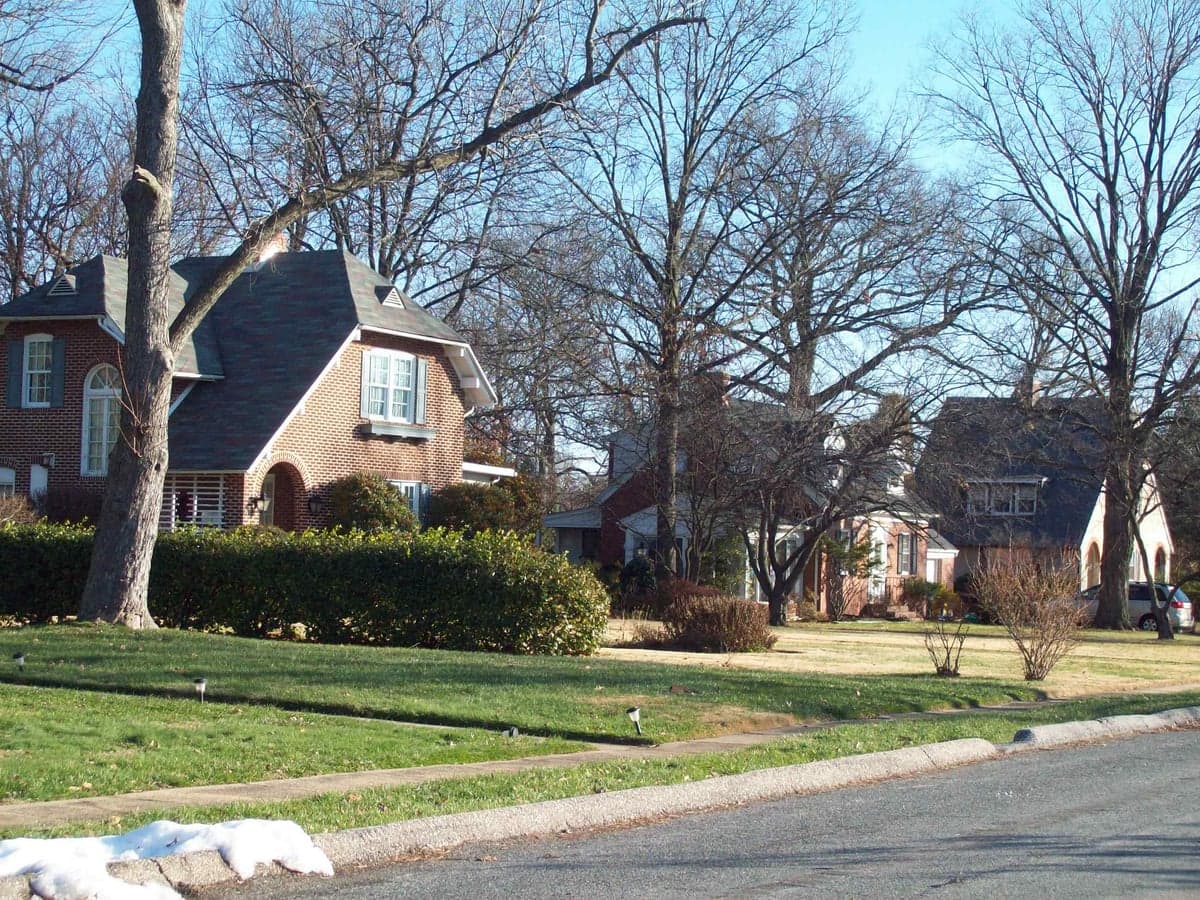
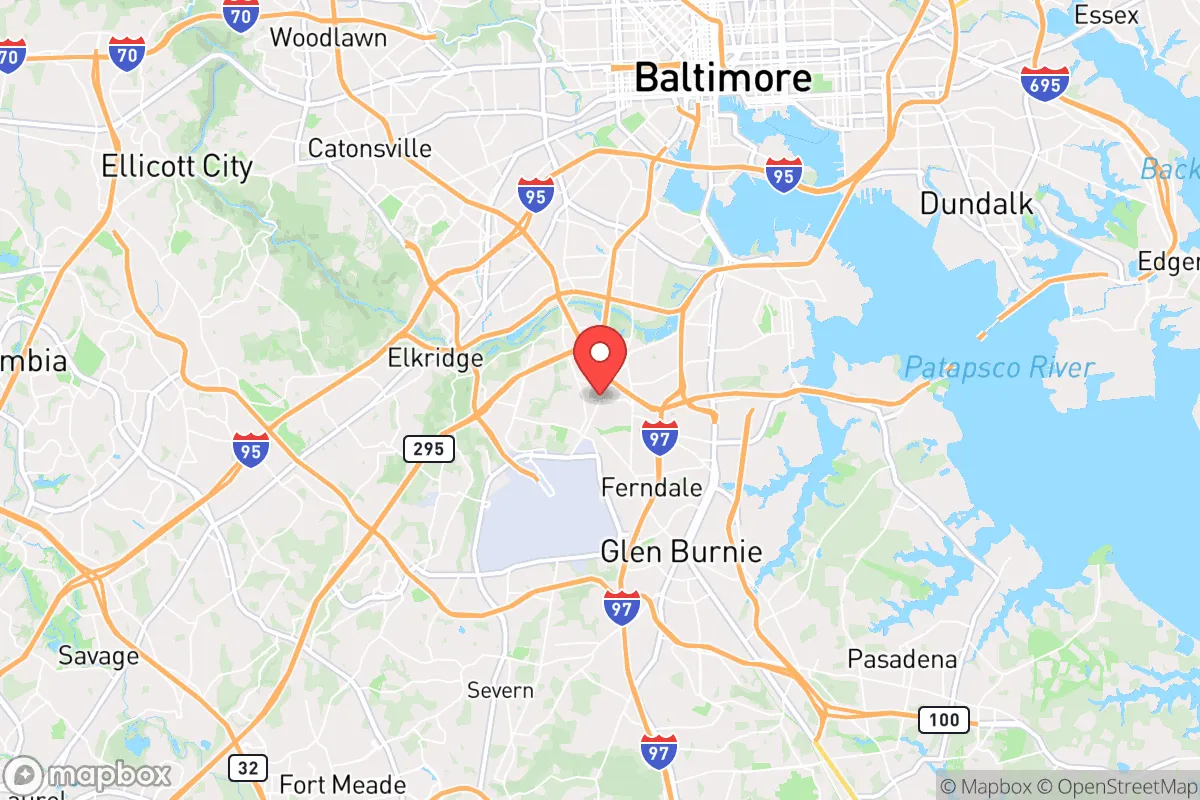
Today, Linthicum Heights is a tight-knit, predominantly white-collar community of 4,139 residents, known for its quiet suburban character, strong sense of local identity, and deep roots in the aviation and transportation industries. With a population that is 80.1% white and a foreign-born rate of just 1.4%, it remains one of the less diverse suburbs in the Baltimore-Washington corridor, though modest growth in Indian (5.0%) and East/Southeast Asian (3.2%) communities is slowly shifting its demographic profile. The city’s distinctive identity is shaped by its location between BWI Thurgood Marshall Airport and Fort Meade, its historic bungalow and ranch-style housing stock, and a population that is notably well-educated—42.1% hold a college degree. Linthicum Heights feels less like a transient airport suburb and more like a stable, family-oriented enclave where generational residents live alongside newcomers drawn by proximity to defense and tech jobs.
How the city was settled and grew
Linthicum Heights was not a colonial-era settlement. Its development began in earnest after 1900, driven by the expansion of the Baltimore & Annapolis Railroad and the construction of what is now BWI Airport. The area was originally farmland owned by the Linthicum family, whose name the community bears. The first residential wave came in the 1910s and 1920s, when middle-class white families from Baltimore purchased lots for summer cottages and year-round homes in what is now the Linthicum Heights Historic District, a neighborhood of Craftsman bungalows and American Foursquares centered along Camp Meade Road and Maple Road. A second wave followed the opening of the Glenn L. Martin Company (later Martin Marietta) in nearby Middle River in the 1930s, drawing defense workers to new subdivisions like Hilltop Manor and Linthicum Village, which filled with modest brick ranchers and Cape Cods. The post-World War II boom cemented the area’s character: returning GIs and their families, many employed at the growing Friendship International Airport (now BWI) or at Fort Meade, settled in neighborhoods such as Linthicum Park and BWI Business District-adjacent blocks, creating the stable, predominantly white, middle-class suburb that defined Linthicum Heights through the 1960s.
Modern era (post-1965)
After the 1965 Hart-Cellar Act, Linthicum Heights experienced only modest demographic change compared to neighboring Anne Arundel County communities. The city’s small size and limited rental housing stock meant that new immigrant groups did not concentrate here in large numbers. Instead, the most significant post-1965 shift was domestic: the expansion of BWI Airport and the rise of Fort Meade as a National Security Agency hub drew a new wave of professionals—engineers, pilots, and federal contractors—from other parts of the United States. These newcomers, predominantly white and college-educated, settled into established neighborhoods like Linthicum Woods and newer infill developments along Hammonds Ferry Road. The Indian and East/Southeast Asian populations that do exist—now 5.0% and 3.2% respectively—are largely concentrated in the BWI Gateway area and the apartment complexes near the airport, reflecting a pattern of professionals moving for tech and defense jobs rather than chain migration. The Black (4.2%) and Hispanic (5.2%) populations remain small and are dispersed across the city, with no single ethnic enclave. Linthicum Heights has thus retained its historic character as a white-majority, middle-class suburb, even as the broader region has diversified more rapidly.
The future
Linthicum Heights’ population is likely to grow slowly and become slightly more diverse over the next 10–20 years, but it will not undergo a rapid demographic transformation. The city’s built-out status—nearly all land is developed—limits large-scale new construction, so population change will come primarily from redevelopment of older homes and a small number of infill townhome projects near the BWI corridor. The Indian and East/Southeast Asian shares are expected to rise gradually, driven by professionals working at Fort Meade and the expanding cybersecurity sector, but these groups will likely remain dispersed rather than forming concentrated ethnic neighborhoods. The white share, while still dominant, will edge downward as older residents age out and younger, more diverse families move in. The city’s cultural identity will remain rooted in its aviation and defense heritage, with a growing emphasis on walkability and small-town amenities as Anne Arundel County pushes for transit-oriented development around the Linthicum light rail station. For a newcomer, Linthicum Heights offers a stable, low-crime, well-rated school district (Anne Arundel County Public Schools) and a community where neighbors still know each other—but it is not a place of rapid change or high ethnic diversity.
For someone moving in now, Linthicum Heights is becoming a slightly more diverse, still predominantly white, and increasingly professional suburb that offers a quiet, family-oriented alternative to the faster-growing parts of Anne Arundel County. Its future is one of gradual, incremental change rather than transformation—a place where the historic character remains intact, even as new residents from India, East Asia, and other parts of the U.S. bring fresh perspectives to a community that has long been defined by its roots in aviation, defense, and the Baltimore region.

* Values derived from national, state, county, city and local statistics and may differ in a specific area. Last updated: 2026-10-10T16:28:05.000Z
Narrative content on this page is AI-generated and may contain mistakes. Verify any details that matter before acting on them.
ReloMaps may earn a commission from affiliate links at no extra cost to you.

