Photo: Wikipedia
Strategic Assessment of Libby, MT
Workable tactical position. Some exposure to population density or targets, but generally defensible in a crisis.
What does the Strategic Assessment tell us?
Our Strategic Assessment grades tactical survivability of an area. Major population centers, military targets, fallout zones, natural disasters, and border exposure all drive risk — lower exposure means a more defensible position in a crisis.
This is heavily inspired by Joel Skousen's Strategic Relocation book. Highly recommended you checkout the book ($)What does this tell us?
Our Strategic Assessment grades tactical survivability of an area. Major population centers, military targets, fallout zones, natural disasters, and border exposure all drive risk — lower exposure means a more defensible position in a crisis.
This is heavily inspired by Joel Skousen's Strategic Relocation book. Highly recommended you checkout the book ($)Strategic Pillars

Key Distances
Regional Safe Places
Below is our recommended "safe zones" in Montana and the surrounding area based on our strategic heuristics. For most people, it's unrealistic to live in a “safe zone” full-time due to work, family or other personal reasons. They tend to be more rural. However, many of these areas are perfect for second homes and retreat properties that double as a vacation home or even a short-term rental.
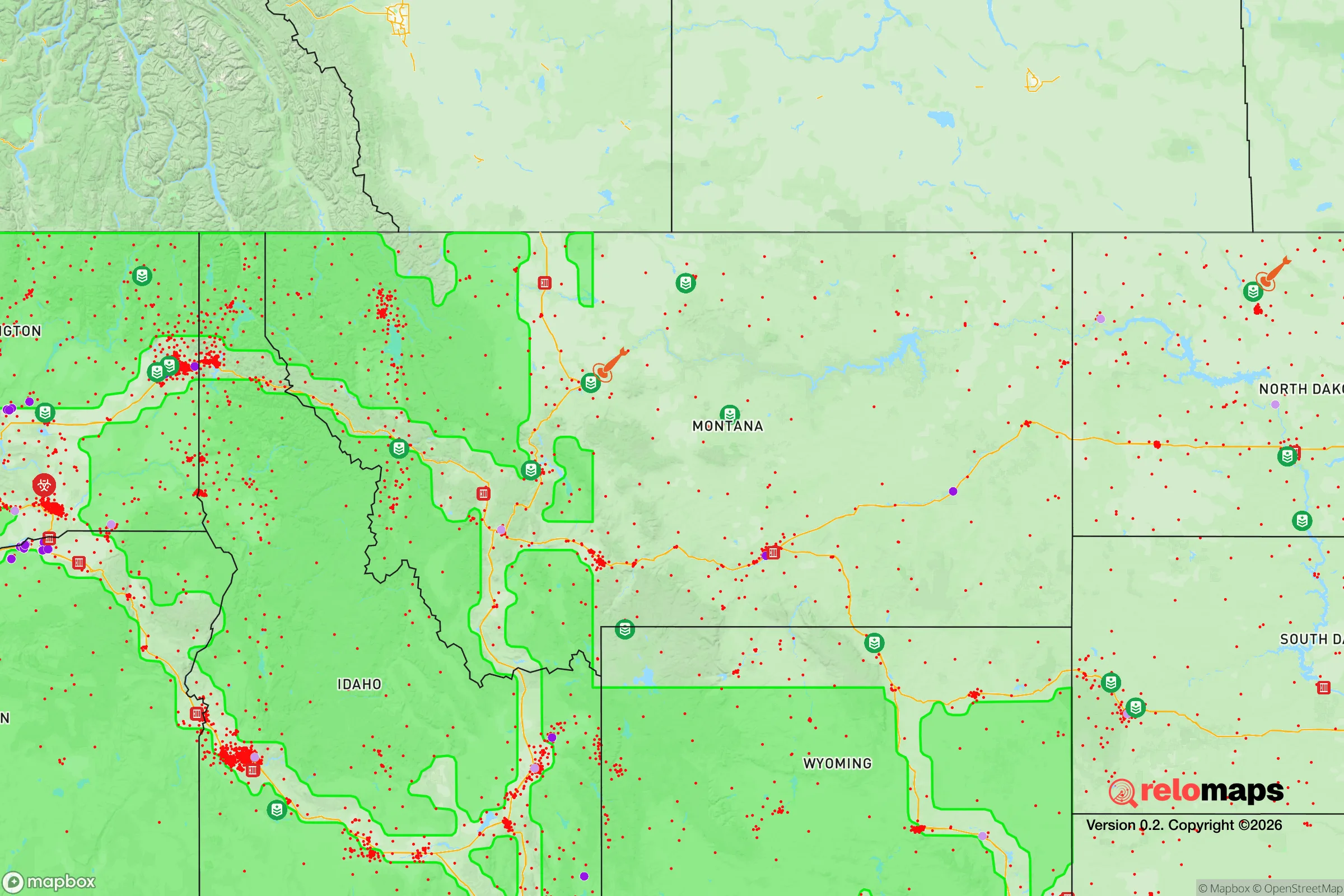


Important Note: For informational purposes only. This does not mean nothing bad ever happens in the green zones. Please use common sense. This is based on public data and modeled with AI. We tried to take a conservative approach but mistakes happen. We update this regularly as new information becomes available.
Solar Generator Recommendations
Backup power matters more here than in safer locations. We've picked three solar generators across budgets and capacity tiers — start with the budget unit if you only need a few essentials, or step up if you want to run a fridge and HVAC for days at a time.

Jackery Portable Power Station Explorer 300
Budget OptionPower on the Go: Weighing only 11 lbs, it's convenient to set up and store with book-sized foldable solar panels

BLUETTI Portable Power Station AC180
Designed for both indoor and outdoor scenarios, AC180 is highly capable as it has a robost capacity and continuous output power.

EF ECOFLOW DELTA Pro Ultra Power Station
Upgraded PickEcoFlow DELTA Pro Ultra is a whole-home energy system designed to grow with your family. Integrated with the Smart Home Panel 2, it scales to meet your evolving energy needs — keeping your home powered, intelligent, and secure through every stage of life.
We earn a commission, at no additional cost to you.
Strategic Assessment Analysis
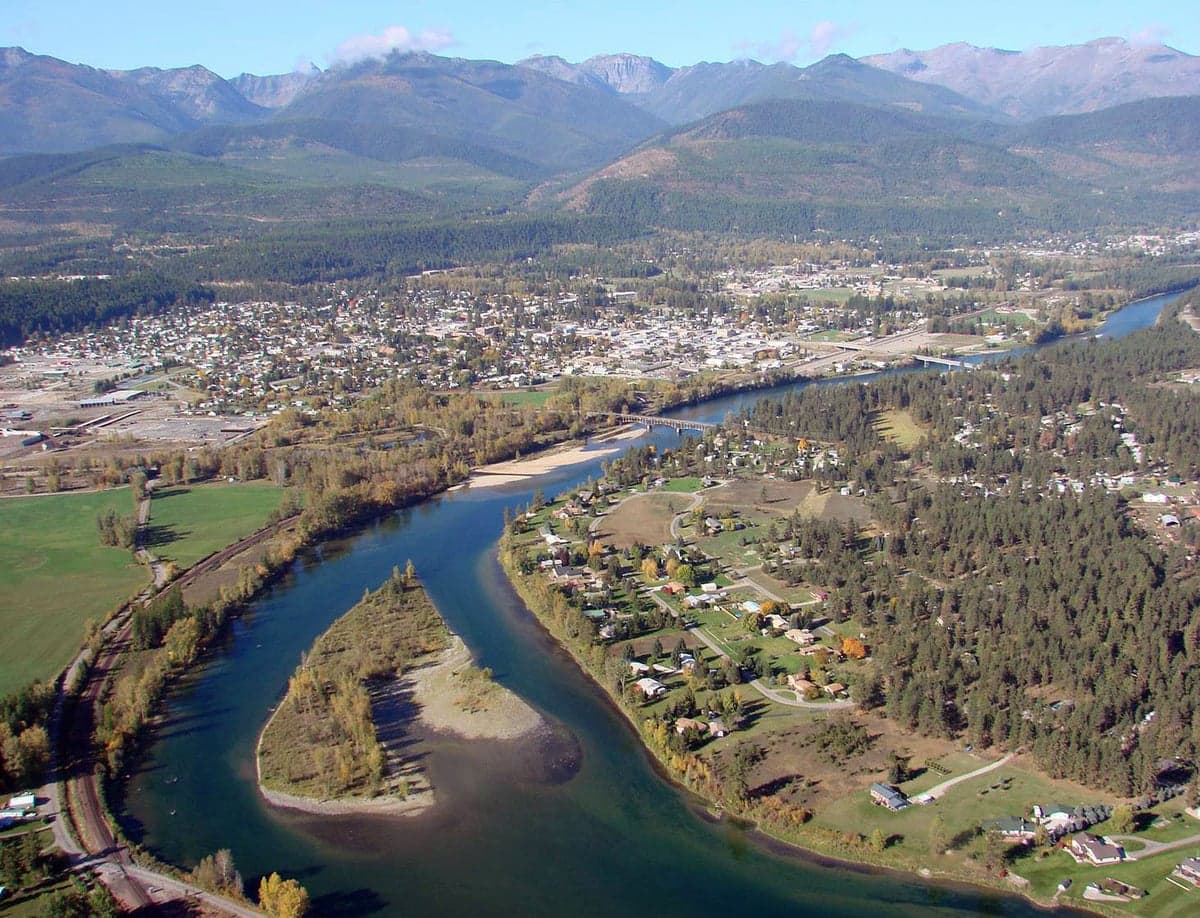
Libby, Montana, offers a strategic resilience profile that is hard to match in the lower 48, combining deep natural resource security with extreme geographic isolation from major population centers and likely fallout targets. Nestled in the Kootenai National Forest and surrounded by the Cabinet Mountains, this former mining town of roughly 2,700 people sits at the end of a highway corridor, making it a natural dead-end for anyone not intentionally coming there. For a relocator prioritizing self-sufficiency, low visibility, and distance from the chaos of coastal collapse or civil unrest, Libby presents a compelling—if austere—option that rewards preparation over convenience.
Geographic isolation and natural buffer zones
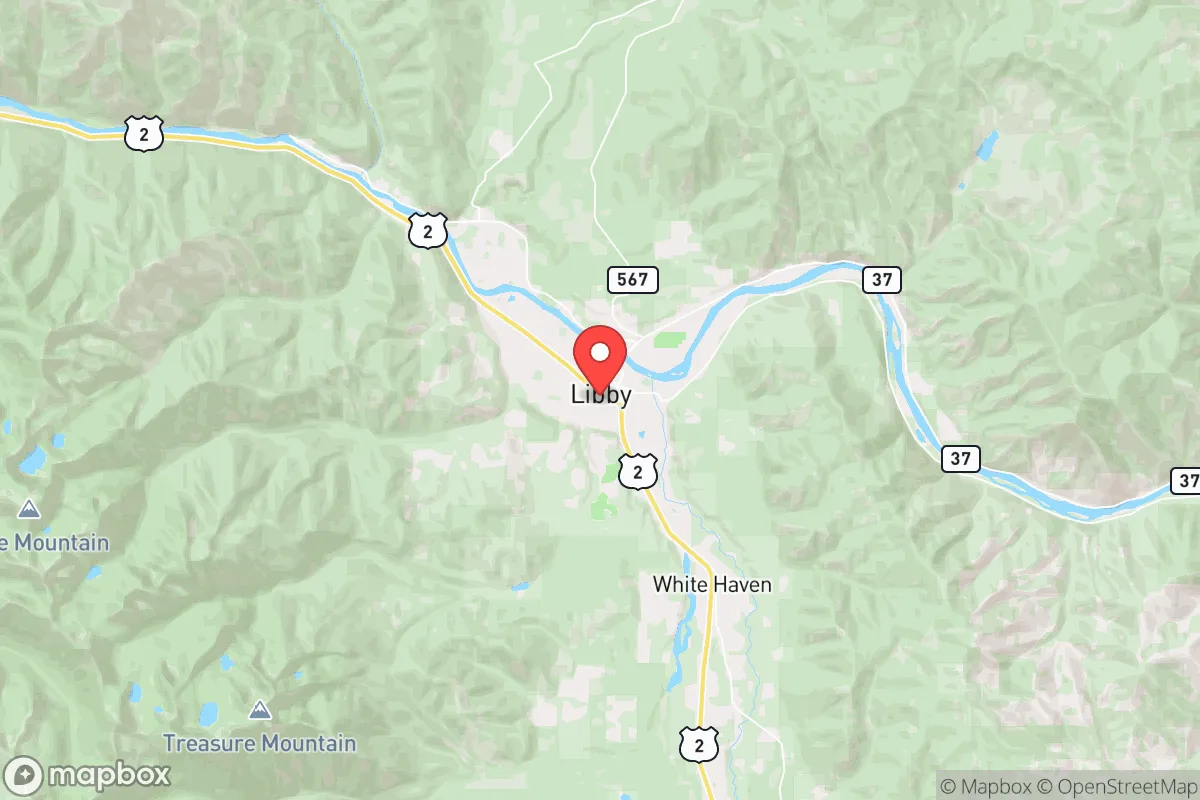
Libby’s primary strategic advantage is its position in the far northwestern corner of Montana, roughly 50 miles from the Idaho border and 90 miles from the Canadian line. The town is accessible primarily via U.S. Highway 2, which winds through the Kootenai River valley, and Montana Highway 37, which hugs the shores of Lake Koocanusa. Both routes are narrow, mountainous, and easily blocked or monitored, creating a natural chokepoint for any unwanted movement. The surrounding terrain is rugged, heavily forested, and sparsely populated—Lincoln County has about 20,000 people in an area larger than Delaware. This means that even if regional instability occurs in Kalispell (120 miles east) or Spokane (200 miles southwest), Libby remains effectively buffered by hours of difficult travel. The Cabinet Mountains Wilderness and the Kootenai National Forest provide thousands of square miles of potential retreat and resource extraction, though access requires serious backcountry skills. For a prepper, the key takeaway is that Libby is not on any major transit corridor, not near a military base, and not close to a major power grid hub—all factors that reduce its likelihood of being a secondary target or a refugee magnet.
Risks, exposures, and proximity to fallout-relevant landmarks
No location is risk-free, and Libby has specific vulnerabilities that a strategic relocator must weigh. The most obvious is the legacy of vermiculite mining that made Libby infamous for asbestos contamination; the Environmental Protection Agency still manages a Superfund site in the town, and while remediation is ongoing, soil disturbance in certain areas remains a concern. For a prepper focused on long-term soil health and water purity, this means careful site selection outside the immediate floodplain and former mine zones is essential. On the fallout front, Libby’s distance from major targets is a strength: the nearest city of any strategic significance is Spokane (population 230,000), which hosts Fairchild Air Force Base—a likely nuclear target. However, prevailing winds in the region generally blow from west to east, meaning fallout from a Spokane strike would likely drift toward Coeur d’Alene and the Idaho Panhandle, not directly into Libby. The nearest major interstate (I-90) runs 100 miles south, and the nearest rail lines are minor. The Libby Dam on the Kootenai River is a hydroelectric facility that could be a target for sabotage or EMP attack, but its remote location and low profile make it a lower-priority target than dams on the Columbia or Missouri. The bigger risk is natural: wildfire. The 2017 and 2021 fire seasons saw large burns in Lincoln County, and the town’s position in a narrow valley can trap smoke and create evacuation challenges. For a prepper, defensible space, a reliable water source for firefighting, and a well-stocked go-bag are non-negotiable here.
Practical resilience for a relocator: food, water, energy, and defensibility
Libby’s practical resilience is where it shines for a serious prepper. Water is abundant: the Kootenai River runs through town, and the surrounding mountains are laced with creeks and springs. Year-round flow is reliable, and with proper filtration (given the asbestos legacy in some drainages), a household can secure potable water indefinitely. The growing season is short—roughly 90 to 100 frost-free days—but the Kootenai Valley has fertile alluvial soil, and local gardeners successfully grow potatoes, carrots, kale, and other cold-hardy crops. Greenhouses or high tunnels are almost mandatory for serious food production. Hunting and fishing are excellent: the Kootenai and its tributaries hold rainbow and bull trout, and the surrounding forests are thick with elk, mule deer, and black bear. Moose and mountain goats are present but require more skill to harvest. For protein security, a family with a freezer and a hunting license can stock a year’s supply of venison and fish. Energy is a mixed picture: Libby is on the grid fed by the Libby Dam and Bonneville Power Administration, which is vulnerable to EMP or cyberattack. However, the area has strong solar potential (though winter days are short and cloudy), and wood heat is the dominant backup—nearly every rural home has a wood stove, and firewood permits are cheap and plentiful on national forest land. Defensibility is excellent: the valley is narrow, with only two primary roads in and out, and the surrounding ridges offer natural observation points. A small, organized group could effectively monitor and control access to the town’s core. The local population is predominantly conservative, self-reliant, and armed—Lincoln County has one of the highest per-capita firearm ownership rates in Montana. For a relocator, this means a community that will not panic easily and that values mutual aid over government dependency. The downside is that outsiders are viewed with suspicion, so building trust through volunteer work, church attendance, or local business patronage is essential before any crisis hits.
The overall strategic picture for Libby is one of high reward paired with moderate, manageable risk. It is not a place for someone seeking comfort or convenience—the nearest Walmart is 90 minutes away, medical care is limited to a small hospital, and winter can be harsh and isolating. But for a prepper or survivalist who values distance from the chaos of the coasts, natural resource abundance, and a community that will not fold at the first sign of trouble, Libby is a strong candidate. The asbestos legacy and wildfire risk require careful site selection and preparation, but they are not dealbreakers. If the goal is to be off the beaten path, out of the blast radius, and surrounded by people who share a conservative, self-sufficient mindset, Libby deserves a serious look. Just bring a good water filter, a chainsaw, and a willingness to earn your place in the community.

* Values derived from national, state, county, city and local statistics and may differ in a specific area. Last updated: 2026-04-24T20:03:30.000Z
Narrative content on this page is AI-generated and may contain mistakes. Verify any details that matter before acting on them.
ReloMaps may earn a commission from affiliate links at no extra cost to you.

