 Popular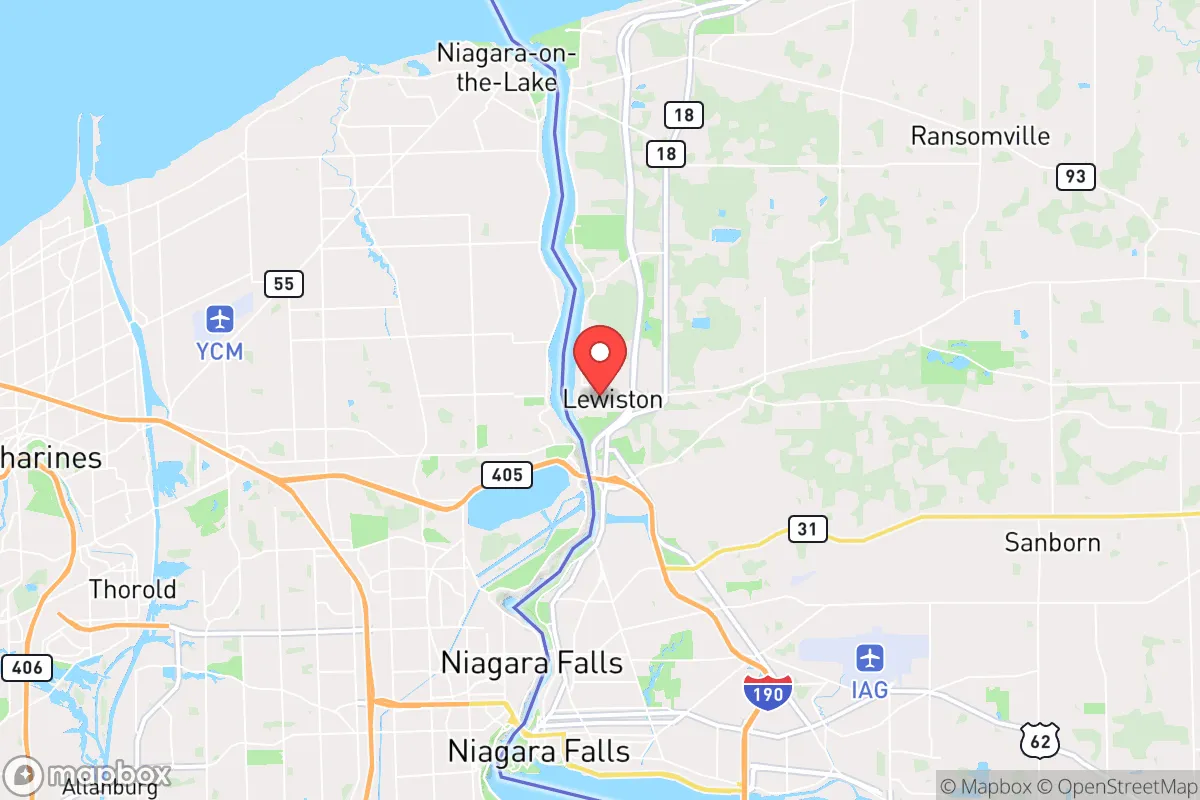
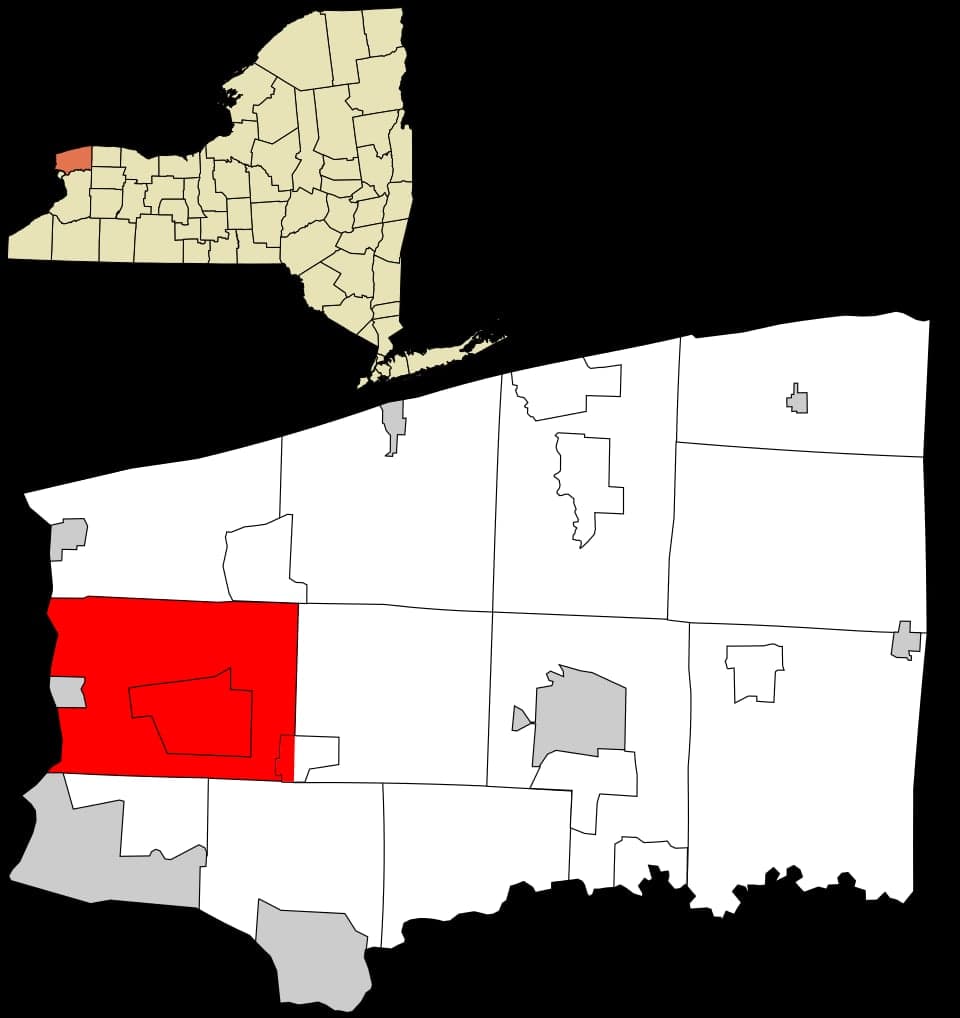
Photo: Wikipedia
Demographics of Lewiston, NY
Affluence Level in Lewiston, NY
A middle-class area roughly in line with national averages across income, home values, education, and employment.
People of Lewiston, NY
The people of Lewiston, New York, today form a small, predominantly white community of 2,527 residents, characterized by a high college attainment rate of 44.6% and a foreign-born population of 11.9% that is notably higher than the national average for a town its size. The village maintains a distinct identity as a historic riverfront settlement with a strong sense of place, anchored by its proximity to Niagara Falls and the Canadian border. While the population is overwhelmingly white (96.2%), the presence of East and Southeast Asian residents (1.3%) and a small Indian subcontinent community (0.1%) reflects a modest but real international connection, largely tied to the area's tourism and hospitality sectors. The village feels more like a close-knit, established small town than a transient suburb, with a demographic profile that has remained remarkably stable over the past half-century.
How the city was settled and grew
Lewiston's human history begins with the Neutral and Seneca nations, who used the area as a portage site around the Niagara River's rapids long before European contact. The first permanent European settlers arrived after the American Revolution, primarily Anglo-American farmers and tradesmen from New England and New York's Hudson Valley, drawn by land grants offered to veterans of the war. The village was formally laid out in 1818, and its location at the northern terminus of the portage road made it a natural hub for trade and transportation. The original settlement clustered around what is now the Center Street Historic District, where the first homes, taverns, and churches were built by these early Anglo settlers. A second wave of Irish immigrants arrived in the 1840s and 1850s, many fleeing the Great Famine, and they found work building the Erie Canal's extension and later the railroads. These Irish families settled primarily in the Lower Landing area near the river, where they established St. Peter's Roman Catholic Church (1848) as their spiritual and social anchor. German immigrants followed in the late 19th century, drawn by the region's growing fruit orchards and the Niagara River's industrial potential; they concentrated in the Ridge Road corridor, where many worked as farmers, vintners, and skilled tradesmen. By 1900, Lewiston was a thriving village of about 1,500 people, overwhelmingly of British, Irish, and German stock, with a small but established African American community centered near the 8th Street area, many of whom worked as domestic servants or laborers for wealthy Niagara Falls families.
Modern era (post-1965)
The post-1965 period brought relatively little demographic change to Lewiston compared to larger American cities. The village did not experience the large-scale immigration from Asia, Latin America, or the Middle East that reshaped many urban centers. Instead, the most significant population shift was domestic: the construction of the Robert Moses Parkway and the Niagara Falls International Airport made Lewiston accessible as a bedroom community for professionals working in Niagara Falls and Buffalo. This drew a wave of college-educated families into the Lewiston Heights neighborhood, a mid-century suburban development on the bluffs above the river, where larger homes and newer schools attracted those seeking a quieter, safer environment than the city. The village's racial composition remained overwhelmingly white throughout this period, with the small Black population that had existed in the early 20th century largely dispersing to other parts of Niagara County. The foreign-born share, which had been negligible for decades, began to tick upward in the 1990s and 2000s, driven primarily by East and Southeast Asian professionals—many of them engineers or medical researchers—who took positions at the nearby Niagara Falls Memorial Medical Center or the State University of New York at Buffalo's North Campus. These newer residents have tended to settle in the Upper Village area, near the intersection of Center Street and Ridge Road, where newer apartment complexes and condominiums offer walkable access to the village's shops and restaurants. The Indian subcontinent community remains very small (0.1%), with most families living in the Lewiston Heights neighborhood alongside their white professional neighbors.
The future
Lewiston's population is projected to remain stable or decline slightly over the next decade, mirroring trends across upstate New York. The village's high housing costs and limited rental stock make it difficult for younger families to move in, while the aging white population—many of whom are empty-nesters or retirees—is not being replaced at the same rate by new arrivals. The foreign-born share is likely to increase modestly, as the area's tourism and healthcare sectors continue to attract East and Southeast Asian professionals, but the village is unlikely to become significantly more diverse in the near term. The most notable demographic trend is the gradual aging of the population, with the median age already above 50 in some census tracts. New residential development is concentrated in the Lewiston Heights area, where infill townhomes and senior-living complexes are being built, while the historic Center Street District continues to attract retirees and second-home buyers who value walkability and historic character. The village's cultural identity remains firmly rooted in its Anglo-American and Irish Catholic heritage, as reflected in the annual Lewiston Art Festival and the continued prominence of St. Peter's Church and the First Presbyterian Church. For someone moving in now, Lewiston offers a stable, safe, and highly educated community with a strong sense of history, but it is not a place of rapid demographic change or youthful energy—it is a village that knows what it is and is comfortable staying that way.
Lewiston is becoming an increasingly professional and retirement-oriented community, with a population that is whiter, older, and more educated than the national average. For a family or individual seeking a quiet, historically rooted village with excellent schools and low crime, it is an attractive choice—but those looking for racial or ethnic diversity, a young singles scene, or rapid growth will find it lacking. The village's future lies in preserving its character rather than reinventing it, and new residents will be expected to fit into that existing fabric.

* Values derived from national, state, county, city and local statistics and may differ in a specific area. Last updated: 2026-08-22T14:52:43.000Z
Narrative content on this page is AI-generated and may contain mistakes. Verify any details that matter before acting on them.
ReloMaps may earn a commission from affiliate links at no extra cost to you.

