
Photo: Wikipedia
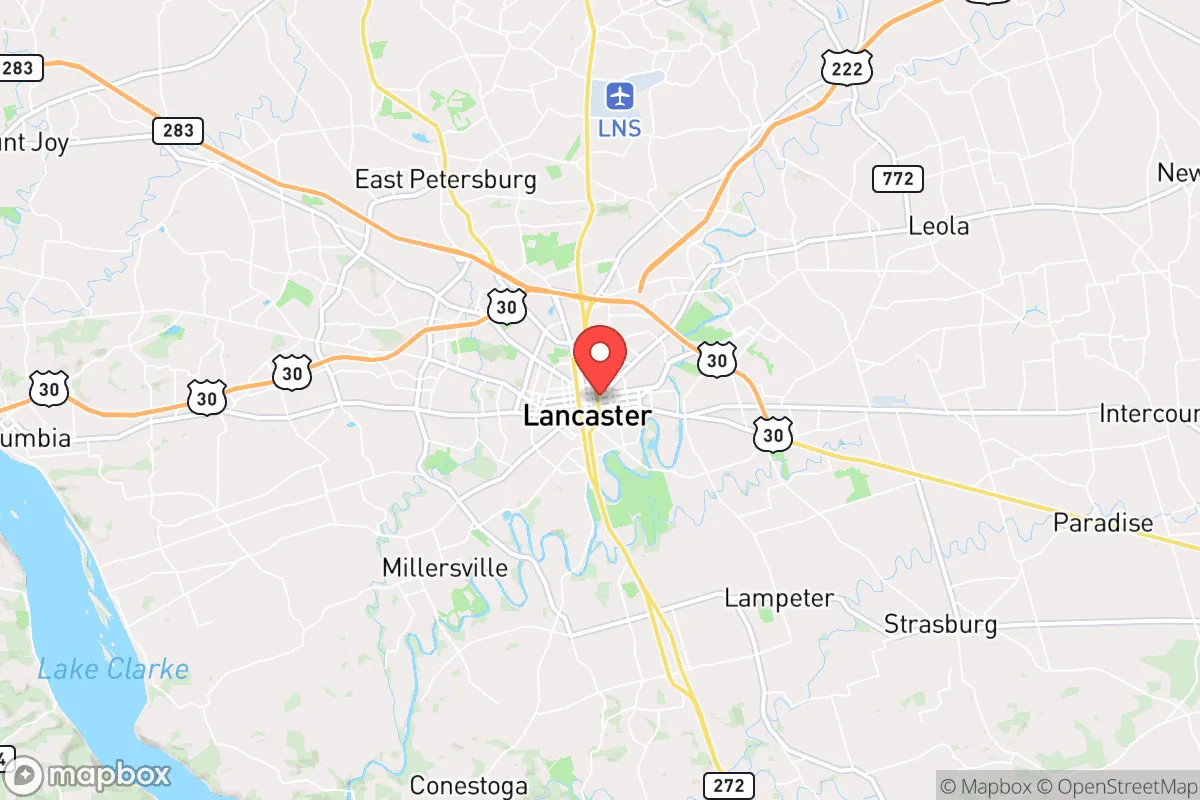
Personal Sovereignty in Lancaster, PA
Strong independent fundamentals that actively favor personal liberty and low regulation.
What does Personal Sovereignty tell us?
Personal Sovereignty measures your capacity for self-reliance and independence with minimal government friction. Higher scores mean fewer barriers between you and the way you want to live... but it assumes you have the space you need and good neighbors.
What does this tell us?
Personal Sovereignty measures your capacity for self-reliance and independence with minimal government friction. Higher scores mean fewer barriers between you and the way you want to live... but it assumes you have the space you need and good neighbors.
State Policy
Energy independence: Net exporter (150% of energy produced in-state)
Personal Liberty
Homesteading

Personal Liberty Analysis
Lancaster, Pennsylvania, offers a mixed but generally favorable environment for personal sovereignty, particularly when viewed through a survivalist or prepper lens. While the state-level framework imposes some notable constraints—especially on firearm rights and taxation—the county’s strong agricultural heritage, relatively low population density outside the city, and deeply rooted culture of self-reliance create real opportunities for those seeking to minimize government overreach. For a conservative-leaning individual or family prioritizing autonomy, Lancaster County represents a strategic middle ground: not as free as a rural Western state, but far more viable than the coastal urban centers where regulatory creep is most aggressive.
Tax burden and regulatory posture: how Lancaster compares to surrounding areas
Pennsylvania’s tax structure is a double-edged sword for sovereignty-minded residents. The state imposes a flat 3.07% personal income tax—one of the lowest flat rates in the nation—and does not tax retirement income, including Social Security, pensions, or 401(k) withdrawals. This is a significant advantage for those building long-term self-sufficiency. However, Lancaster County’s local tax burden is heavier. Combined county and municipal taxes, plus school district levies, can push the effective property tax rate to around 1.5–2.0% of assessed value, which is moderate for the Northeast but high compared to states like Texas or Florida. Sales tax is a flat 6% statewide, with no additional county surcharge. On the regulatory front, Pennsylvania is not a right-to-work state, and its environmental regulations—particularly around well water, septic systems, and land use—are more stringent than in many Southern or Midwestern states. For a prepper, this means you can own land and build a homestead, but you’ll face permitting hurdles for things like alternative energy systems or rainwater collection beyond basic garden use. The county’s zoning is generally rural-friendly, but municipalities like Manheim Township and East Hempfield have stricter codes that can limit off-grid experiments.
Self-defense and gun law specifics: what Lancaster allows and restricts
Pennsylvania is a “shall-issue” state for concealed carry permits, and Lancaster County’s sheriff’s office processes applications efficiently—typically within 30 days. No permit is required for open carry, though it’s legally restricted in Philadelphia and during declared emergencies. The state preempts local firearm ordinances, meaning Lancaster city cannot impose its own bans or magazine limits, which is a critical protection against municipal overreach. However, Pennsylvania does not have constitutional carry; a License to Carry Firearms (LTCF) is required for concealed carry. The state also imposes a 48-hour waiting period for handgun purchases and requires a background check for all firearm transfers, including private sales (through the Pennsylvania Instant Check System). For preppers, the key limitation is the lack of permitless carry and the fact that the state’s Castle Doctrine is strong but not absolute—you have no duty to retreat in your home or vehicle, but the “stand your ground” provision is limited to those locations. Magazine capacity is not restricted, and NFA items (suppressors, short-barreled rifles) are legal with federal paperwork. Overall, Lancaster County is a solid environment for armed self-reliance, but it’s not as permissive as states like Texas or Arizona.
Self-reliance and homesteading viability: lot sizes, zoning, and off-grid feasibility
Lancaster County’s agricultural zoning is a major asset for those seeking self-sufficiency. Outside the city and boroughs, minimum lot sizes for rural residential zones typically range from 1 to 5 acres, with many parcels in the 2–10 acre sweet spot for a serious homestead. The county’s Agricultural Security Areas and Clean and Green program offer tax breaks for land kept in farm use, which can reduce property tax burden by 30–50% if you’re raising livestock or crops. Off-grid feasibility is mixed. Pennsylvania’s Uniform Construction Code requires permits for most structures, including sheds over 200 square feet, and septic systems must meet DEP standards—meaning composting toilets and graywater systems are generally not legal without expensive engineered designs. Solar panels are permitted but must be grid-tied in most municipalities to qualify for net metering; true off-grid solar is technically allowed but faces zoning and utility pushback. Rainwater collection is legal for non-potable uses (irrigation, livestock) but limited to 2,500 gallons of storage without a permit. For a prepper, the best strategy is to buy land in a township with minimal zoning—like Salisbury or Bart—and work within the system: install a conventional septic, use grid-tied solar with battery backup, and keep livestock under the radar. The Amish and Mennonite presence in the county normalizes a self-reliant lifestyle, which reduces scrutiny from neighbors and officials.
Personal liberties: parental rights, medical autonomy, speech, and property
Pennsylvania has a mixed record on parental rights. The state does not have a comprehensive parental rights in education law like Florida’s, but school districts in Lancaster County—particularly in conservative townships—generally respect parental input on curriculum and medical decisions. The state’s vaccine mandate for school attendance includes exemptions for medical and religious reasons, but philosophical exemptions were eliminated in 2017. For medical autonomy, Pennsylvania is not a “right to try” state for terminal patients, and the state’s medical marijuana program is tightly regulated, with no home cultivation allowed. This is a significant limitation for preppers who want full control over their healthcare. On speech and property rights, the state is relatively strong: there is no statewide hate speech law that criminalizes political expression, and property taxes are not based on assessed value increases from improvements (though reassessments can occur at sale). Lancaster County’s courts are conservative-leaning, which generally favors property owners in eminent domain or zoning disputes. The biggest threat to personal sovereignty here is the state’s aggressive environmental and health regulations, which can feel like overreach to those accustomed to Western or Southern states. For example, the Pennsylvania Department of Environmental Protection has broad authority to inspect private wells and septic systems, and the state’s emergency powers—though curtailed after 2020—still allow the governor to impose restrictions during declared disasters.
Overall, Lancaster County offers a solid B-tier environment for personal sovereignty when compared to the national landscape. It’s far freer than New York, New Jersey, or California, but it’s not a libertarian haven like New Hampshire or a prepper paradise like Idaho. The tax burden is manageable, gun laws are reasonable but not permissive, and the agricultural zoning and cultural acceptance of self-reliance create real opportunities for homesteading. The main drawbacks are the state-level regulatory creep—especially around off-grid systems and medical autonomy—and the lack of constitutional carry. For a conservative-leaning individual or family who values community, land, and a slower pace of life, Lancaster County is a strategic relocation choice that balances freedom with practicality. Just be prepared to work within the system rather than against it, and you’ll find plenty of room to build the autonomous life you’re after.

* Values derived from national, state, county, city and local statistics and may differ in a specific area. Last updated: 2026-05-02T01:19:40.000Z
Narrative content on this page is AI-generated and may contain mistakes. Verify any details that matter before acting on them.
ReloMaps may earn a commission from affiliate links at no extra cost to you.

