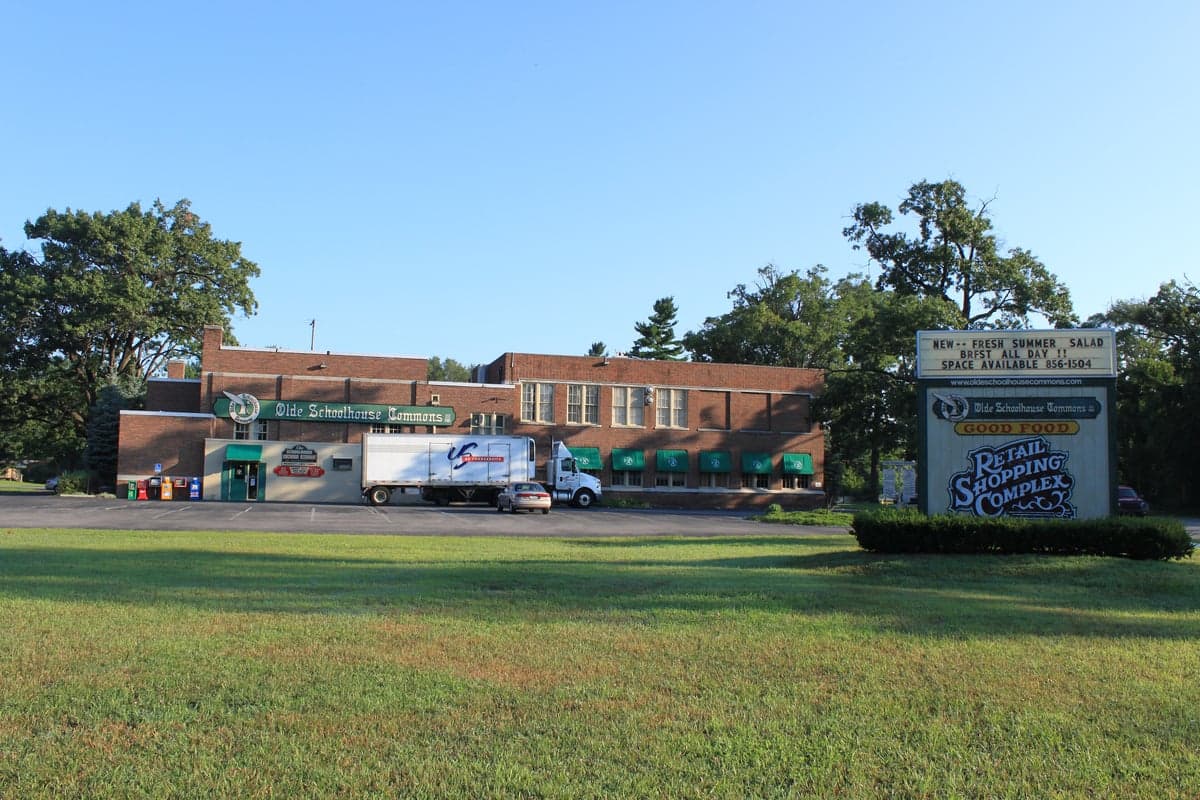
Photo: Wikipedia
Political ClimatePolitical Climate in Lambertville, MI
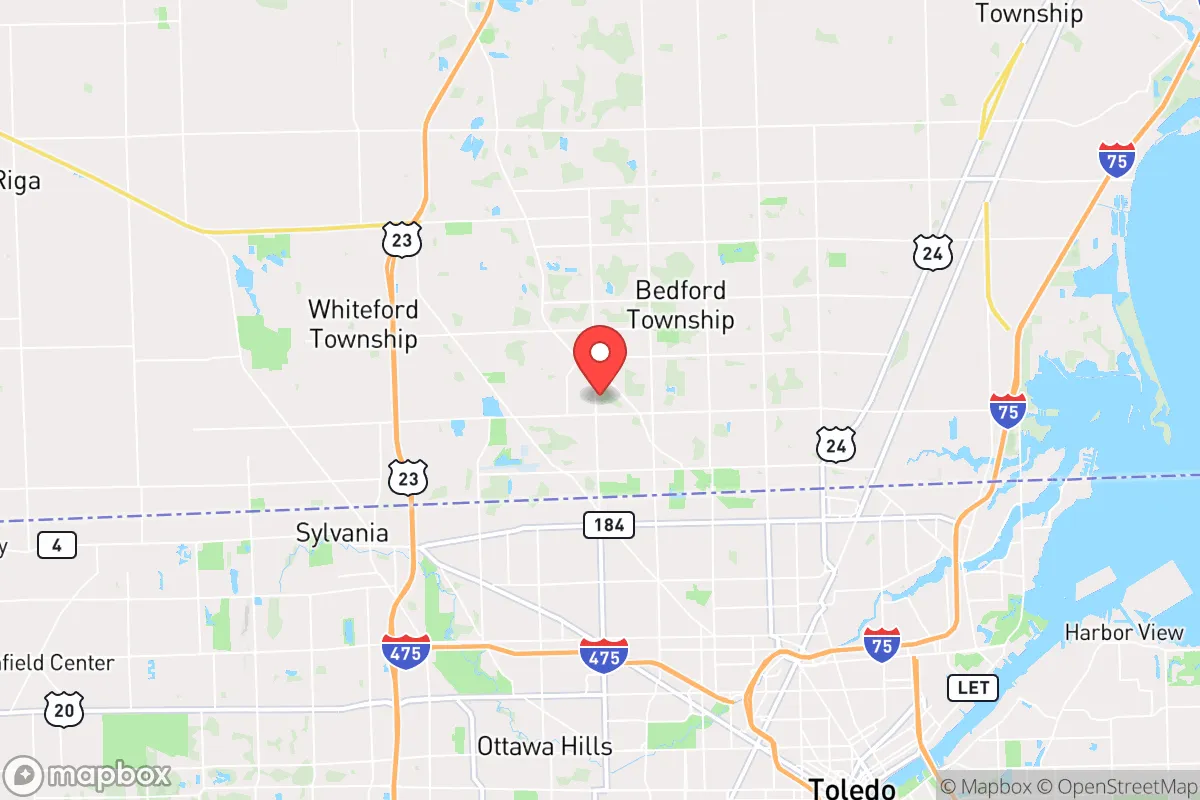
District shown is the primary district for this city’s centroid. Cities may span multiple districts.
Local Political AnalysisPolitical Analysis of Lambertville, MI
Lambertville is a solidly conservative pocket in northwest Ohio, with a Cook PVI of R+13 that puts it well to the right of the state as a whole (Michigan, MI is rated EVEN). This isn't a recent shift—the area has been reliably Republican for decades, driven by a mix of blue-collar manufacturing roots, strong union households that vote culturally conservative, and a growing population of retirees and families seeking lower taxes and quieter living. The political trajectory here is steady: no dramatic swings, just a slow, consistent deepening of the red tint as younger residents move out to Toledo or Ann Arbor and new arrivals from more liberal areas tend to be older and more conservative.
How it compares
Lambertville's politics stand in stark contrast to the rest of Michigan, MI. While the state overall is a pure toss-up (Cook PVI EVEN), Lambertville votes about 13 points more Republican than the national average. For context, nearby Toledo (Lucas County) leans Democratic by about D+15, meaning a drive of just 15 minutes south can feel like crossing into a different political universe. Within the immediate area, Bedford Township (which includes Lambertville) is the most conservative part of Monroe County, which itself is only R+5. The difference is stark when you compare Lambertville to Ann Arbor (Washtenaw County, D+28) or even to the city of Monroe itself, which is more moderate. The rural townships to the west—like Whiteford and Ottawa Lake—are similarly red, but Lambertville's proximity to the Ohio border and its bedroom-community feel make it a bit more insular politically.
What this means for residents
For conservative residents, Lambertville is comfortable. Local elections are rarely competitive, the county commission and school board are reliably Republican, and the cultural vibe—church attendance, gun ownership, family values—is the norm. You won't feel out of place flying a Trump flag or talking about hunting. For liberal residents, it's more of a challenge. There's no real progressive infrastructure—no Democratic club, no regular activist meetups—and social circles can feel homogeneous. That said, the area is not hostile; most people are polite and neighborly, and political arguments are rare in day-to-day life. The practical effect is that local policy leans toward low taxes (the property tax rate is about 1.2% of assessed value), minimal zoning restrictions, and a strong law-and-order approach. School funding is adequate but not lavish, and there's little appetite for new social programs or environmental regulations.
Culturally, Lambertville is distinct from the rest of Michigan, MI in a few ways. The area is heavily influenced by northwest Ohio's more conservative, rural ethos—think church suppers, high school football, and a "live and let live" attitude that can feel both welcoming and insular. There's no real arts scene or downtown core; most social life revolves around family, church, and outdoor activities. The biggest policy distinction is in land use: Lambertville has very few rental properties, almost no public transit, and a strong preference for single-family homes on large lots. This keeps the area quiet and safe but also limits diversity and economic mobility. Looking ahead, the political lean is unlikely to change much—the demographics are stable, and the few newcomers tend to be retirees or remote workers who chose Lambertville precisely because of its conservative character. If anything, the area may become slightly more Republican as the state as a whole trends leftward, widening the cultural gap between Lambertville and the rest of Michigan, MI.

State Political ClimatePolitical Climate in Michigan
State Political AnalysisPolitical Environment in the State
Michigan is the ultimate swing state, with a Cook PVI of EVEN that perfectly captures its knife-edge balance between the two major parties. Over the past 20 years, the state has shifted from a reliably blue stronghold in presidential elections (voting for Democrats from 1992 to 2012) to a true battleground that flipped to Donald Trump in 2016 by just 10,704 votes, then flipped back to Joe Biden in 2020 by 154,188 votes. The dominant coalitions are a three-way standoff: the heavily unionized, diverse, and densely populated southeast (Detroit, Ann Arbor, Flint) pulling left; the traditionally Democratic but culturally conservative Upper Peninsula and northern Lower Peninsula trending right; and the fast-growing, exurban counties like Kent (Grand Rapids) and Ottawa (Holland) that have become Republican strongholds even as their cities moderate. The net result is a state where no single party holds a durable majority, and every election is a ground war fought in the suburbs of Detroit, Grand Rapids, and Lansing.
Urban vs. rural divide
The political map of Michigan is a story of three distinct regions. Southeast Michigan — Wayne County (Detroit), Washtenaw County (Ann Arbor), and Oakland County — is the Democratic engine, delivering roughly 60-70% of the party's statewide vote. Wayne County alone gave Biden 68% in 2020. In contrast, Western Michigan is the Republican heartland: Kent County (Grand Rapids) voted 51% for Trump in 2020, while Ottawa County voted 62% for him. The Thumb and northern Lower Peninsula (counties like Lapeer, Sanilac, and Alpena) are deeply red, often voting 65-70% Republican. The Upper Peninsula is a fascinating microcosm: historically Democratic due to mining unions, it has swung hard right in the Trump era, with counties like Gogebic and Iron flipping from Obama to Trump. The key battlegrounds are the collar counties around Detroit — Macomb, Oakland, and Livingston — where the 2016 Trump surge was most pronounced. Macomb County, a classic Reagan Democrat stronghold, went for Trump by 12 points in 2016 and 8 points in 2020, making it the single most watched county in the state.
Policy environment
Michigan's policy environment reflects its divided government. The state has a flat income tax rate of 4.25%, which was reduced from 4.35% in 2023 via a trigger law tied to revenue growth. Property taxes are governed by the Headlee Amendment and Proposal A (1994), which cap annual increases at the rate of inflation or 5%, whichever is lower, making them relatively predictable for homeowners. The state has a right-to-work law passed in 2012, but Democrats repealed it in 2023, re-allowing union security agreements. Education policy is a flashpoint: Michigan has a universal school choice system (charter schools and inter-district open enrollment), but the state's per-pupil funding is below the national average. Healthcare is dominated by the expansion of Medicaid under the Healthy Michigan Plan (2014), which covers over 1 million residents. Election laws are relatively accessible: no-excuse absentee voting was approved by voters in 2018 via Proposal 3, and same-day voter registration is available. However, a 2021 law (SB 311) tightened voter ID requirements and limited the use of mobile voting sites, sparking legal challenges.
Recent policy direction
The last two years have seen a dramatic shift in policy direction under Democratic Governor Gretchen Whitmer and a Democratic legislative majority (2023-2024). Gun and self-defense law: Michigan passed universal background checks and a red flag law (extreme risk protection order) in 2023, while also repealing the state's preemption law, allowing local governments to enact their own gun ordinances. Parental and education rights: The state repealed the 2012 right-to-work law and expanded LGBTQ+ anti-discrimination protections in schools (the "LGBTQ+ inclusive curriculum" law). Speech and privacy: No major changes, but the state's Freedom of Information Act remains weak, with broad exemptions for the legislature and governor's office. Medical and bodily autonomy: In 2023, Michigan repealed its 1931 abortion ban and codified abortion rights into state law (the Reproductive Health Act), while also expanding Medicaid coverage for gender-affirming care. Property rights: The state's "dark store" tax loophole was closed in 2023, requiring big-box retailers to be assessed at their actual value rather than as vacant stores. Taxation: The retirement tax was repealed in 2023, saving seniors an average of $1,000 per year. Voting and ballot access: Proposal 2 (2022) enshrined nine days of early voting, drop boxes, and military/overseas ballot tracking in the state constitution. For a conservative relocator, the net direction is clearly leftward on social and labor issues, but the tax burden remains moderate compared to neighboring states like Illinois or Ohio.
Civil unrest & political movements
Michigan has been a national flashpoint for political activism. The 2020 Whitmer kidnapping plot by a right-wing militia group (the Wolverine Watchmen) remains the most extreme example of anti-government sentiment, with several members convicted. The Operation Gridlock protests in April 2020 — where thousands of armed protesters, including militia members, gathered at the state capitol to oppose COVID-19 lockdowns — were a defining moment for the state's conservative movement. On the left, the Rise Up Michigan coalition has organized large-scale protests for abortion rights and against right-to-work repeal. Immigration politics are less heated than in border states, but the city of Detroit has a "Welcoming City" ordinance limiting cooperation with ICE, while Grand Rapids and Ann Arbor have similar sanctuary policies. Election integrity remains a live issue: the 2020 election in Michigan was subject to numerous audits and lawsuits, with Republican-led investigations in Antrim County and Detroit finding no evidence of widespread fraud, but the controversy has fueled ongoing distrust. The Michigan Conservative Coalition and Michigan Freedom Fund are active in school board races and local elections, while the Michigan Democratic Party has invested heavily in grassroots organizing in the suburbs.
Projection
Over the next 5-10 years, Michigan is likely to remain a toss-up state, but the demographic trends favor Democrats slightly. In-migration is concentrated in the Grand Rapids and Traverse City areas, which are growing faster than the state average — these areas lean Republican but are moderating as they urbanize. The Detroit suburbs (Oakland, Macomb) are becoming more diverse and college-educated, trends that typically benefit Democrats. The Upper Peninsula and northern Lower Peninsula are aging and losing population, which could reduce the Republican rural vote share. However, the state's electoral map is being redrawn by the independent redistricting commission (created by Proposal 2 in 2018), which has already produced more competitive congressional districts. The 2024 election will be a critical test: if Trump wins Michigan again, it signals the GOP's path forward; if Biden holds it, the state's blue shift may be structural. For a new resident, expect continued policy whiplash — every two years, control of the legislature and governor's office could flip, leading to rapid reversals on labor, gun, and education policy.
For a conservative relocator, Michigan offers a mixed bag. The tax environment is moderate and stable, with no state estate tax and a flat income tax that is trending downward. The school choice system is among the best in the Midwest, with robust charter and private school options in the suburbs. However, the cultural and regulatory climate in the major cities and state government is increasingly progressive on social issues. The practical takeaway: if you want a low-tax, pro-business environment with strong gun rights and traditional values, look to the western Michigan suburbs (Holland, Grand Haven, Rockford) or the northern Lower Peninsula (Traverse City, Petoskey). If you prioritize urban amenities and don't mind a liberal state government, Ann Arbor or Grand Rapids proper offer vibrant economies. Either way, expect the state to remain a political battleground — and your vote will genuinely matter.
* Values derived from national, state, county, city and local statistics and may differ in a specific area. Last updated: 2026-10-04T06:09:34.000Z
Narrative content on this page is AI-generated and may contain mistakes. Verify any details that matter before acting on them.
ReloMaps may earn a commission from affiliate links at no extra cost to you.

