Photo: Wikipedia
Demographics of Lambertville, MI
Affluence Level in Lambertville, MI
A middle-class area roughly in line with national averages across income, home values, education, and employment.
People of Lambertville, MI
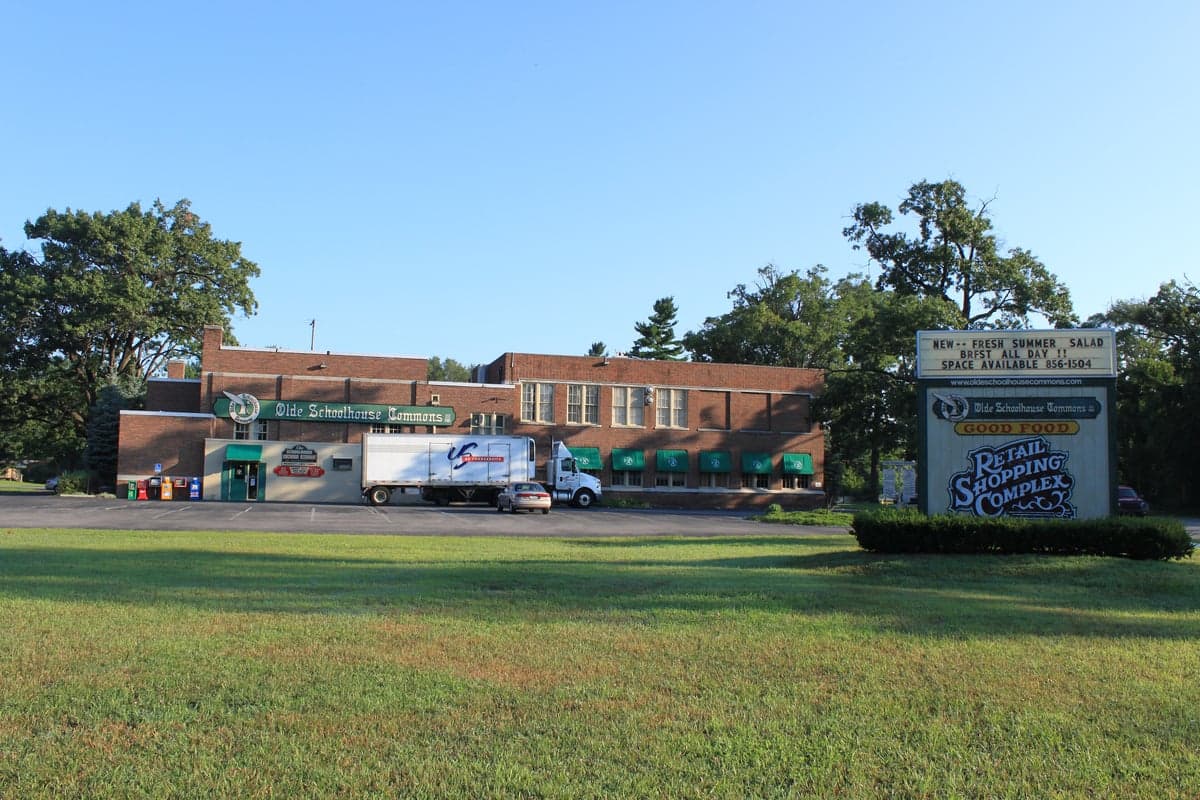
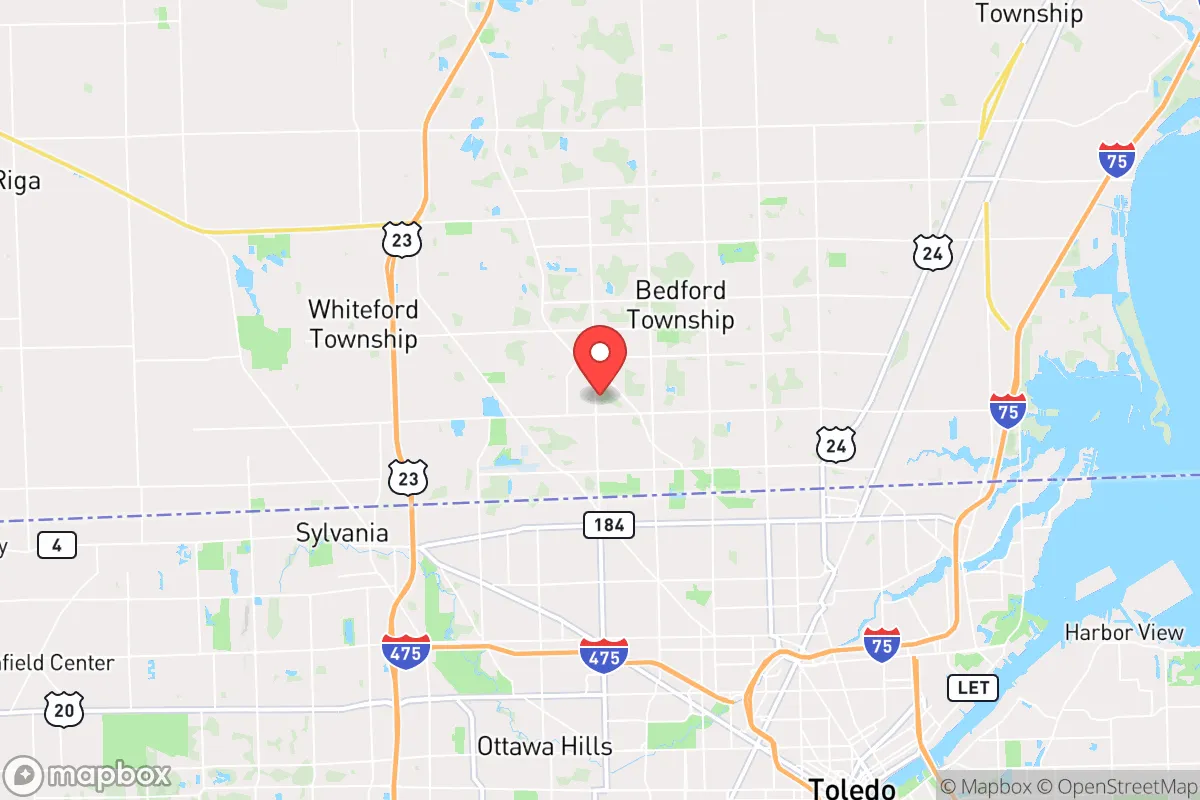
Lambertville, Michigan, is a small, predominantly white bedroom community of just under 10,000 residents, characterized by its quiet, family-oriented atmosphere and strong ties to the Toledo, Ohio metro area just across the state line. With a foreign-born population of only 0.4% and a 87% white demographic, the city retains a distinctly homogeneous character that has changed little over the past half-century. Its identity is rooted in rural, Midwestern values, with a population density that feels more like a village than a suburb, and where the primary draw has long been affordable housing, low crime, and access to outdoor recreation along the River Raisin.
How the city was settled and grew
Lambertville’s human history begins not with a grand founding, but as a quiet agricultural crossroads in the early 19th century. The area was originally part of the French and then British fur trade networks, but permanent settlement by European-Americans began in earnest after the War of 1812, when the federal government opened the Michigan Territory to land grants. The first wave of settlers were primarily farmers of English, German, and Irish descent, drawn by the fertile, flat soil of the River Raisin valley. These families established the earliest homesteads along what is now Monroe Street and Samaria Road, forming the nucleus of the unincorporated village that would later become Lambertville. The community remained a tiny, rural hamlet for over a century, with its growth tied to the local sawmills and gristmills that served the surrounding farms. The arrival of the Detroit, Toledo and Ironton Railroad in the late 1800s spurred modest growth, but Lambertville never industrialized; it remained a place for farmers and a few local tradesmen. The Old Lambertville Historic District, centered around the intersection of Sterns and Secor Roads, preserves the modest frame houses and churches built by these original families, many of whose descendants still live in the area.
Modern era (post-1965)
The modern transformation of Lambertville began in the 1970s and accelerated through the 1990s, driven not by immigration but by domestic suburbanization. As Toledo’s urban core experienced economic decline and white flight, middle-class families—overwhelmingly white—looked north across the Ohio border for larger lots, better schools, and lower property taxes. This wave of in-migration reshaped Lambertville from a sleepy crossroads into a commuter suburb. The new arrivals built homes in subdivisions that sprouted on former farmland, most notably in Heritage Hills and Raisin River Estates, which remain the city’s most sought-after neighborhoods for families. Unlike many Michigan cities, Lambertville saw virtually no influx of foreign-born residents during this period. The 0.4% foreign-born figure today reflects a population that has been almost entirely native-born for generations. The small Hispanic (3.9%) and Black (1.6%) populations are largely concentrated in the more affordable rental housing along Secor Road and near the Lambertville Plaza shopping center, but these communities remain small and dispersed rather than forming distinct ethnic enclaves. The East/Southeast Asian population (1.6%) is similarly scattered, with many families drawn by the highly rated Bedford Public Schools.
The future
Demographic projections for Lambertville point toward slow, incremental change rather than dramatic transformation. The population has remained remarkably stable—hovering around 9,700 for the past two decades—and is expected to stay flat or grow only modestly through 2040. The white share of the population is likely to decline slightly, from 87% to perhaps 82-84%, as younger, more diverse families from the Toledo area seek affordable housing in the northern suburbs. The Hispanic and Black populations are expected to grow slowly, but will likely remain below 10% each. New residential development is concentrated in the Bedford Hills and Raisin Ridge subdivisions on the city’s western edge, where large-lot homes are attracting a mix of young professionals and empty-nesters. The city’s cultural identity is likely to remain conservative and family-centric, with little pressure from the kind of rapid diversification seen in larger Michigan cities. The biggest demographic shift may be an aging population, as the original suburban wave of the 1970s and 1980s enters retirement, potentially creating demand for senior housing and downsized homes.
For someone moving in now, Lambertville offers a stable, predictable community where the population is neither growing nor shrinking dramatically, and where the demographic character is evolving at a glacial pace. It remains a place where neighbors know each other, schools are a priority, and the biggest change is likely to be the construction of a few new subdivisions on the remaining farmland. The city is becoming slightly more diverse, but will almost certainly remain a predominantly white, middle-class suburb for the foreseeable future—a safe, quiet choice for families seeking continuity over change.

* Values derived from national, state, county, city and local statistics and may differ in a specific area. Last updated: 2026-10-04T06:09:34.000Z
Narrative content on this page is AI-generated and may contain mistakes. Verify any details that matter before acting on them.
ReloMaps may earn a commission from affiliate links at no extra cost to you.

