 Popular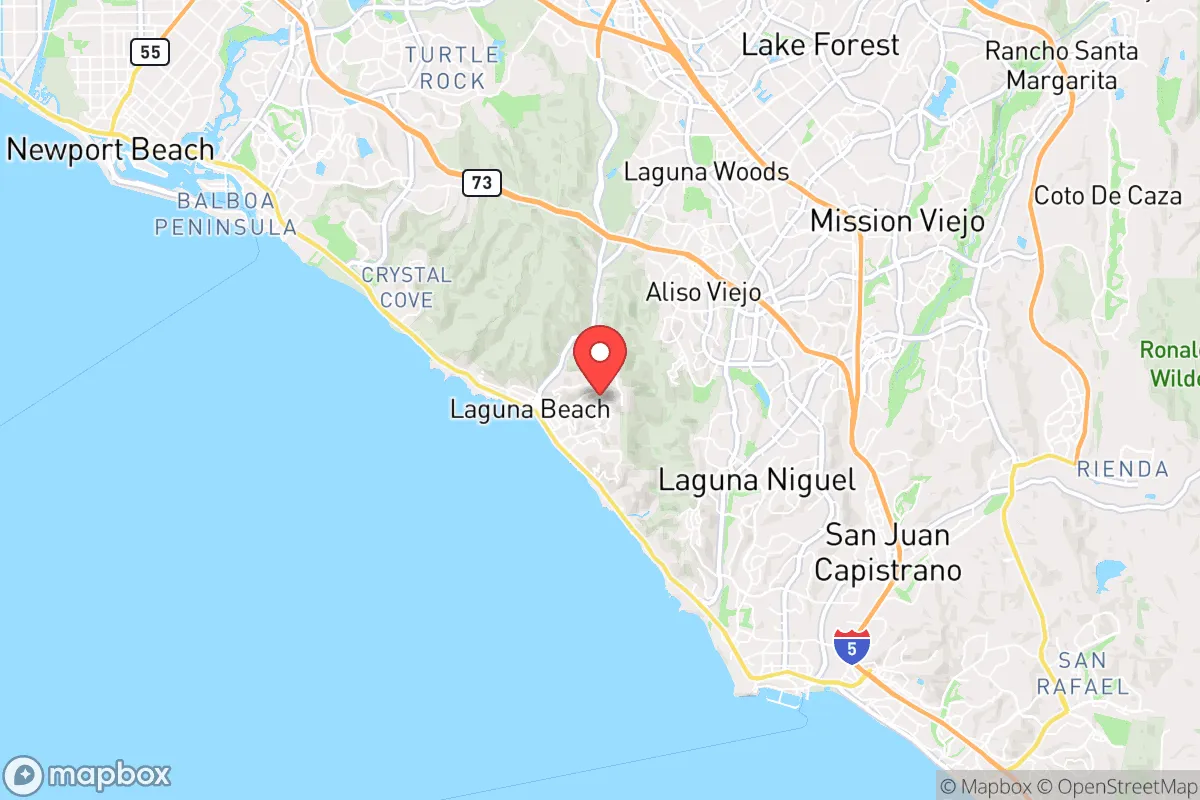
Personal Sovereignty in Laguna Beach, CA
Moderate friction. Expect trade-offs in some aspect of personal liberty and independence.
What does Personal Sovereignty tell us?
Personal Sovereignty measures your capacity for self-reliance and independence with minimal government friction. Higher scores mean fewer barriers between you and the way you want to live... but it assumes you have the space you need and good neighbors.
What does this tell us?
Personal Sovereignty measures your capacity for self-reliance and independence with minimal government friction. Higher scores mean fewer barriers between you and the way you want to live... but it assumes you have the space you need and good neighbors.
State Policy
Energy independence: Importer (33% of energy produced in-state)
Personal Liberty
Homesteading

Personal Liberty Analysis
Laguna Beach presents a complex personal sovereignty environment where California’s heavy state-level regulatory framework collides with a hyper-local culture that prizes individual expression and property rights within strict limits. For a relocation-minded reader who values autonomy, the city offers strong protections for personal lifestyle choices and speech, but imposes some of the highest tax burdens and most restrictive land-use and self-defense laws in the nation. The net effect is a trade-off: significant personal liberty in social and expressive domains, coupled with a dense web of state and municipal rules that constrain financial independence, self-defense options, and self-reliant living.
Tax burden and regulatory posture: what you pay and what you can do
California’s state-level tax burden is among the highest in the country, and Laguna Beach residents feel it acutely. The state’s top marginal income tax rate of 13.3% applies to high earners, and the sales tax rate in Laguna Beach is 7.75% (state + county + local). Property taxes, while capped at roughly 1% of assessed value under Proposition 13, are based on purchase price, meaning newer buyers face significantly higher annual bills than long-term owners. For a median-priced Laguna Beach home—often above $2 million—that translates to annual property taxes of $20,000 or more. The regulatory posture is similarly heavy. California’s California Environmental Quality Act (CEQA) and the California Coastal Commission exert strong control over development, renovations, and even minor property alterations. Laguna Beach’s own municipal code adds layers of design review, hillside development restrictions, and short-term rental bans. For a reader seeking to minimize government interference in financial and property decisions, this environment is decidedly high-touch. There is no state-level right-to-work law, and occupational licensing requirements are extensive. The trade-off is access to robust public services, including well-funded schools and emergency response, but the cost in personal financial sovereignty is substantial.
Self-defense and gun law specifics: what is legally possible
California’s gun laws are among the most restrictive in the United States, and Laguna Beach residents must comply with all state mandates. The state requires a 10-day waiting period for all firearm purchases, a Firearm Safety Certificate, and a background check through the California Department of Justice. Private party transfers must go through a licensed dealer. “Assault weapons” and large-capacity magazines (over 10 rounds) are banned, and the state has a roster of approved handguns that limits which models can be sold new. Open carry of handguns is generally prohibited, and concealed carry permits (CCWs) are issued at the county level. Orange County, which includes Laguna Beach, is a “shall-issue” county in practice, but the process is still rigorous: applicants must complete a 16-hour training course, provide good cause statements (though the Bruen decision has loosened this requirement), and undergo a thorough background check. As of 2025, the sheriff’s office reports a moderate approval rate for CCWs, but the process takes several months. Self-defense with a firearm in the home is legally protected under California’s “castle doctrine,” but there is no “stand your ground” law; a duty to retreat applies in public spaces. For a reader prioritizing the right to armed self-defense, Laguna Beach offers a legal path, but it is narrow, expensive, and time-consuming compared to states with constitutional carry.
Self-reliance and homesteading viability: lot sizes, zoning, and off-grid feasibility
Laguna Beach’s geography and zoning make traditional homesteading or off-grid living nearly impossible. The city is built on steep coastal canyons and hillsides, with most residential lots ranging from 5,000 to 10,000 square feet—far smaller than what is needed for significant food production or livestock. Zoning codes strictly limit accessory structures, and the city’s building department enforces California’s Title 24 energy standards, which mandate grid-tied electrical systems and prohibit true off-grid solar setups without interconnection. Rainwater harvesting is allowed but heavily regulated by the state’s water rights laws, and composting toilets require permits that are rarely granted for residential use. Keeping chickens is permitted on lots of 10,000 square feet or more, but larger livestock (goats, pigs, cows) is prohibited within city limits. The local climate—Mediterranean, with frequent drought—makes year-round gardening challenging without significant water use, which is subject to municipal restrictions during dry periods. For a reader seeking self-reliance through land-based independence, Laguna Beach is a poor fit. The regulatory environment, lot sizes, and climate all push residents toward dependence on municipal water, power, and grocery supply chains. Self-reliance here is more about financial independence and professional flexibility than about growing food or generating power off-grid.
Personal liberties: parental rights, medical autonomy, speech, and property
California law generally protects broad personal liberties in social and expressive domains, but with notable limits. Parental rights are strong in areas like educational choice—the state has robust charter school and homeschooling options, and Laguna Beach Unified School District offers a well-regarded independent study program. However, California mandates comprehensive sex education and vaccine requirements for school attendance (with medical exemptions only), which may conflict with some families’ values. Medical autonomy is mixed: California protects access to reproductive healthcare and gender-affirming care, but also mandates health insurance coverage for specific services and has strict vaccine mandates for healthcare workers and schoolchildren. Free speech is broadly protected under the California Constitution, which explicitly guarantees the right to speak on public property, and Laguna Beach has a history of political activism and public demonstration. Property rights, however, are heavily constrained. The California Coastal Commission and local design review boards have veto power over many renovations, and the city’s rent control ordinance (for mobile home parks and some multi-unit properties) limits what landlords can charge. Short-term rentals (under 30 days) are banned in residential zones, restricting how owners can use their property. For a reader who values the ability to make personal medical decisions, educate children as they see fit, and speak freely, Laguna Beach offers a permissive environment. For those who prioritize unfettered property use and medical choice outside of state mandates, the constraints are significant.
Overall, personal sovereignty in Laguna Beach is a study in contrasts: high autonomy in lifestyle and expression, low autonomy in taxation, self-defense, and property use. Compared to areas in Texas, Florida, or the Mountain West, where tax burdens are lower, gun laws are more permissive, and zoning allows for greater self-reliance, Laguna Beach ranks among the most restrictive coastal enclaves for a freedom-oriented individual. For a reader who values cultural and social liberty above financial and defensive independence, it can be a viable choice. For those seeking a light-touch regulatory environment across all domains, it is not. The decision hinges on which dimensions of sovereignty matter most.

* Values derived from national, state, county, city and local statistics and may differ in a specific area. Last updated: 2026-06-08T04:41:54.000Z
Narrative content on this page is AI-generated and may contain mistakes. Verify any details that matter before acting on them.
ReloMaps may earn a commission from affiliate links at no extra cost to you.

