 Popular
Demographics of Laguna Beach, CA
Affluence Level in Laguna Beach, CA
A wealthy area with high-earning, well-educated households. Incomes, home values, and educational attainment meaningfully outpace national averages.
People of Laguna Beach, CA
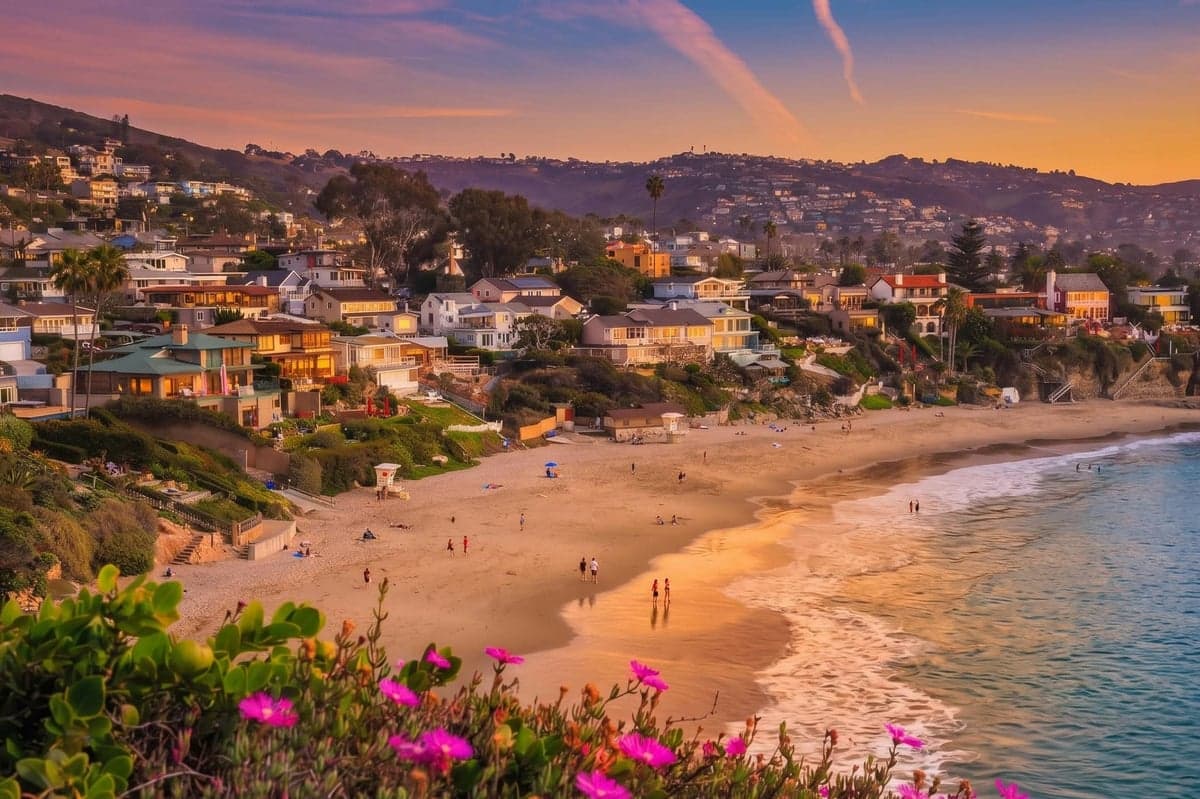
Today, Laguna Beach’s 22,777 residents form one of Orange County’s most distinctive communities: overwhelmingly white (80.5%), highly educated (67.1% hold a bachelor’s degree or higher), and notably insular, with only 2.9% foreign-born. The city’s identity is shaped by a blend of old-money coastal families, creative professionals drawn to its art-colony legacy, and affluent newcomers seeking oceanfront exclusivity. Despite its small size, Laguna Beach maintains a dense, walkable village character along Pacific Coast Highway, with a population that is older and more homogenous than most of Orange County.
How the city was settled and grew
Laguna Beach’s human history begins with the Tongva people, who inhabited the coastline for centuries before Spanish missionaries arrived in the late 1700s. The area remained sparsely populated through the Mexican rancho era, with no permanent settlement until after the U.S. annexation of California. The city’s modern founding dates to the 1870s, when homesteaders like the Thurston family claimed land in what is now Arch Beach and Bluebird Canyon. These early residents were farmers and ranchers, but the rugged canyon terrain limited agriculture. The real population catalyst came in the 1880s, when the Laguna Beach Art Association formed and artists began building summer cottages in North Laguna and along Coast Highway. By 1900, the community had fewer than 300 people, mostly Anglo-American artists and their patrons. The 1920s brought a second wave: middle-class vacationers from Los Angeles, who built bungalows in South Laguna and Woods Cove, drawn by the scenic coves and mild climate. The population grew slowly but steadily, reaching about 4,000 by 1940, still overwhelmingly white and native-born.
Modern era (post-1965)
The 1965 Immigration and Nationality Act had minimal impact on Laguna Beach. Unlike nearby Santa Ana or Westminster, which absorbed large immigrant populations, Laguna Beach’s high property values and restrictive zoning kept the city’s demographic profile remarkably stable. The post-1965 period instead saw domestic in-migration from other parts of California and the U.S., particularly professionals and retirees seeking a coastal lifestyle. The 1970s and 1980s brought a notable influx of gay and lesbian residents, who established a visible community in Main Beach and Laguna Canyon, contributing to the city’s reputation as an LGBTQ-friendly enclave. The Hispanic population grew modestly, reaching 9.2% today, concentrated in service-industry housing along South Coast Highway and in older canyon neighborhoods. East/Southeast Asian residents (3.4%) and Indian-subcontinent residents (0.3%) arrived later, primarily as professionals in tech and finance, settling in the newer hillside developments above Moulton Meadows and Alta Laguna. The Black population remains tiny at 0.4%, reflecting both historical exclusion and the high cost of entry. The city’s foreign-born share (2.9%) is among the lowest in Orange County, underscoring its character as a native-born, English-dominant community.
The future
Laguna Beach’s population is projected to remain stable or decline slightly, constrained by limited developable land and strict coastal building regulations. The city’s demographic trajectory points toward increasing affluence and aging, with the median age rising above 50 as younger families are priced out. Diversity is unlikely to increase significantly: the Hispanic and Asian shares may grow a percentage point or two as service workers and professionals seek housing in the few remaining affordable pockets, but the city’s zoning and price points will continue to filter for high-income, predominantly white buyers. The most notable demographic shift is generational: older homeowners are selling to younger professionals and remote workers from Los Angeles and San Francisco, bringing new economic energy but little racial or ethnic change. The cultural identity is evolving from a bohemian art colony toward a polished, high-end coastal town, with the artist population shrinking as commercial galleries and luxury boutiques replace studios.
For someone moving in now, Laguna Beach offers a stable, safe, and visually stunning environment with a population that is highly educated, politically moderate to liberal, and deeply protective of its small-town character. The trade-off is clear: you gain one of California’s most beautiful coastlines and a tight-knit community, but you join a city that is among the least diverse in the region, with a population that is aging and increasingly exclusive. The future points toward more of the same—a wealthy, white, native-born enclave that resists change as fiercely as it protects its coves and canyons.

* Values derived from national, state, county, city and local statistics and may differ in a specific area. Last updated: 2026-06-08T04:41:54.000Z
Narrative content on this page is AI-generated and may contain mistakes. Verify any details that matter before acting on them.
ReloMaps may earn a commission from affiliate links at no extra cost to you.

