Photo: Wikipedia
Personal Sovereignty in Kona, HI
Self-reliance is harder here. Restrictive laws and challenging geography make a self-reliant lifestyle difficult to maintain.
What does Personal Sovereignty tell us?
Personal Sovereignty measures your capacity for self-reliance and independence with minimal government friction. Higher scores mean fewer barriers between you and the way you want to live... but it assumes you have the space you need and good neighbors.
What does this tell us?
Personal Sovereignty measures your capacity for self-reliance and independence with minimal government friction. Higher scores mean fewer barriers between you and the way you want to live... but it assumes you have the space you need and good neighbors.
State Policy
Energy independence: Importer (2% of energy produced in-state)
Personal Liberty
Homesteading

Personal Liberty Analysis
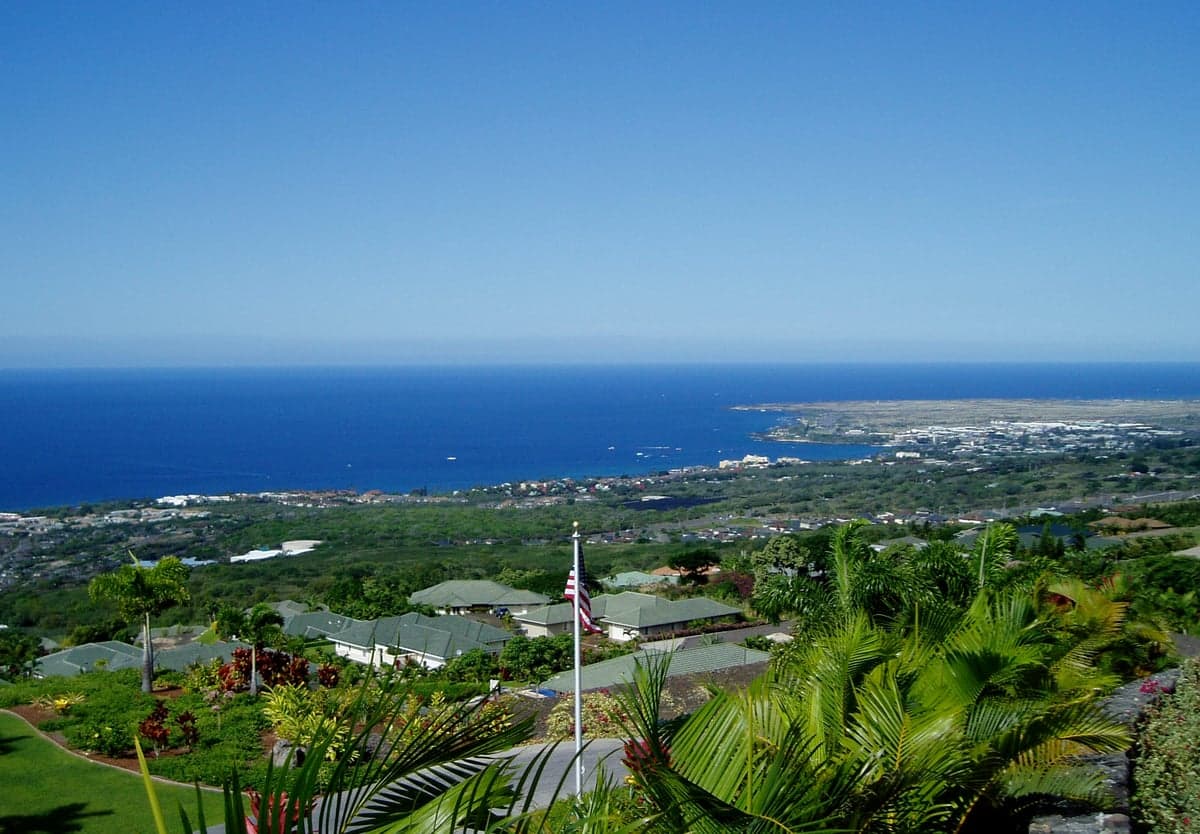
Kona, on the Big Island of Hawaii, presents a complex personal sovereignty environment that is markedly different from the mainland United States. While the island’s geography and culture foster a strong tradition of self-reliance, the state-level regulatory and tax framework imposes significant constraints on individual autonomy. For a freedom-oriented individual or family, Kona offers a unique trade-off: a high degree of personal space and a slower pace of life, counterbalanced by one of the nation’s heaviest tax burdens and most restrictive gun laws. Understanding this balance is critical before relocating, as the day-to-day reality of personal sovereignty here is shaped as much by state mandates as by the island’s independent spirit.
Tax burden and regulatory posture: what you pay and what you can do
Hawaii’s tax and regulatory environment is among the most interventionist in the United States, and Kona is fully subject to it. The state imposes a general excise tax (GET) of 4% on nearly all business transactions, which is passed on to consumers and effectively functions as a sales tax on everything from groceries to housing. There is no local income tax, but the state’s progressive income tax tops out at 11% for single filers earning over $200,000, making it one of the highest in the nation. Property taxes are relatively low by mainland standards—around 0.3% to 0.5% of assessed value—but this is offset by high real estate prices; the median home in Kona exceeds $700,000. The regulatory posture is similarly heavy: building permits, land-use changes, and even minor home improvements can require months of county and state review. The Hawaii County Planning Department enforces strict zoning codes, and the state’s environmental review process can delay or block projects. For a reader accustomed to a light-touch regulatory environment, Kona will feel like a place where government approval is a constant prerequisite for action.
Self-defense and gun law specifics: what is and isn't allowed
Hawaii has some of the most restrictive gun laws in the country, and Kona residents must navigate a system that heavily limits self-defense options. The state is a may-issue jurisdiction for concealed carry permits, meaning local police chiefs have near-total discretion to deny applications. In practice, permits are rarely granted to ordinary citizens; as of 2024, fewer than 100 active concealed carry licenses existed statewide. Open carry is effectively prohibited. Purchasing a handgun requires a permit that involves a background check, a 14-day waiting period, and registration with the county police. Long guns are also subject to a permit and registration. The state bans so-called "assault weapons" and high-capacity magazines. For a self-defense-minded individual, the legal pathway to carrying a firearm is narrow and uncertain. Non-lethal options like pepper spray are legal but must be purchased from a licensed dealer. The practical reality is that personal protection in Kona relies more on situational awareness, home security systems, and community relationships than on firearms.
Self-reliance and homesteading viability: lot sizes, zoning, and off-grid feasibility
Kona offers genuine opportunities for self-reliance, but they come with significant regulatory hurdles. Agricultural-zoned land is abundant in the upland areas above the Kona coast, with lot sizes commonly ranging from 1 to 5 acres. These parcels are often sold with the expectation of farming or homesteading, and many residents raise livestock, grow fruit trees, and keep gardens. However, the state’s land-use laws require that agricultural land be used primarily for farming, and the county enforces this through building permit restrictions. Off-grid living is technically feasible—solar power is common, and rainwater catchment systems are standard—but the county requires that any dwelling have a permitted wastewater system and a building permit. Unpermitted structures are subject to fines and legal action. The cost of connecting to the grid or installing a compliant septic system can run $10,000 to $30,000. For a homesteader, the key challenge is balancing self-sufficiency with compliance: you can grow your own food and generate your own power, but you cannot simply build a cabin in the woods without county approval. The regulatory environment here is a gatekeeper, not a barrier, but it is a persistent one.
Personal liberties: parental rights, medical autonomy, speech, and property
Hawaii’s legal framework generally supports personal liberties in areas like speech and property rights, but it imposes notable constraints on medical autonomy and parental rights. The state has a mandatory vaccination law for school attendance, with only medical exemptions allowed; religious or philosophical exemptions are not recognized. This directly affects families who prefer alternative medical approaches. Medical autonomy is further limited by strict licensing requirements for alternative practitioners, and the state’s health department actively regulates supplements and treatments. Parental rights in education are also constrained: Hawaii has a centralized state school system, and while homeschooling is legal, it requires annual notification and submission of a curriculum plan. School choice options are limited compared to mainland states. On the positive side, free speech is robustly protected, and property rights are generally respected, though the state’s strong environmental and zoning laws can limit what you do with your land. The county’s building code and historic preservation rules can restrict renovations or new construction, especially in coastal areas. For a reader who values maximum personal discretion, Kona’s regulatory environment will feel like a constant negotiation between individual choice and state authority.
Compared to other areas of the United States, Kona offers a moderate-to-low level of personal sovereignty for a freedom-oriented individual. The tax burden is high, gun laws are among the most restrictive, and the regulatory posture is heavy-handed in areas like building, land use, and medical autonomy. However, the island’s culture of self-reliance, the availability of agricultural land, and the practical necessity of off-grid systems create a lived experience of independence that can be satisfying. For a family or individual willing to navigate the state’s legal framework, Kona provides a unique environment where personal freedom is exercised within a tightly regulated system. The key is to go in with eyes open: the sovereignty you gain in space and pace is offset by the sovereignty you lose in regulatory and tax freedom. For those who prioritize low taxes, easy gun access, and minimal government oversight, mainland states like Texas or Idaho will be a better fit. For those who value a slower, more self-sufficient lifestyle and are willing to work within the rules, Kona can be a rewarding—if constrained—place to live.

* Values derived from national, state, county, city and local statistics and may differ in a specific area. Last updated: 2026-07-29T03:58:55.000Z
Narrative content on this page is AI-generated and may contain mistakes. Verify any details that matter before acting on them.
ReloMaps may earn a commission from affiliate links at no extra cost to you.

