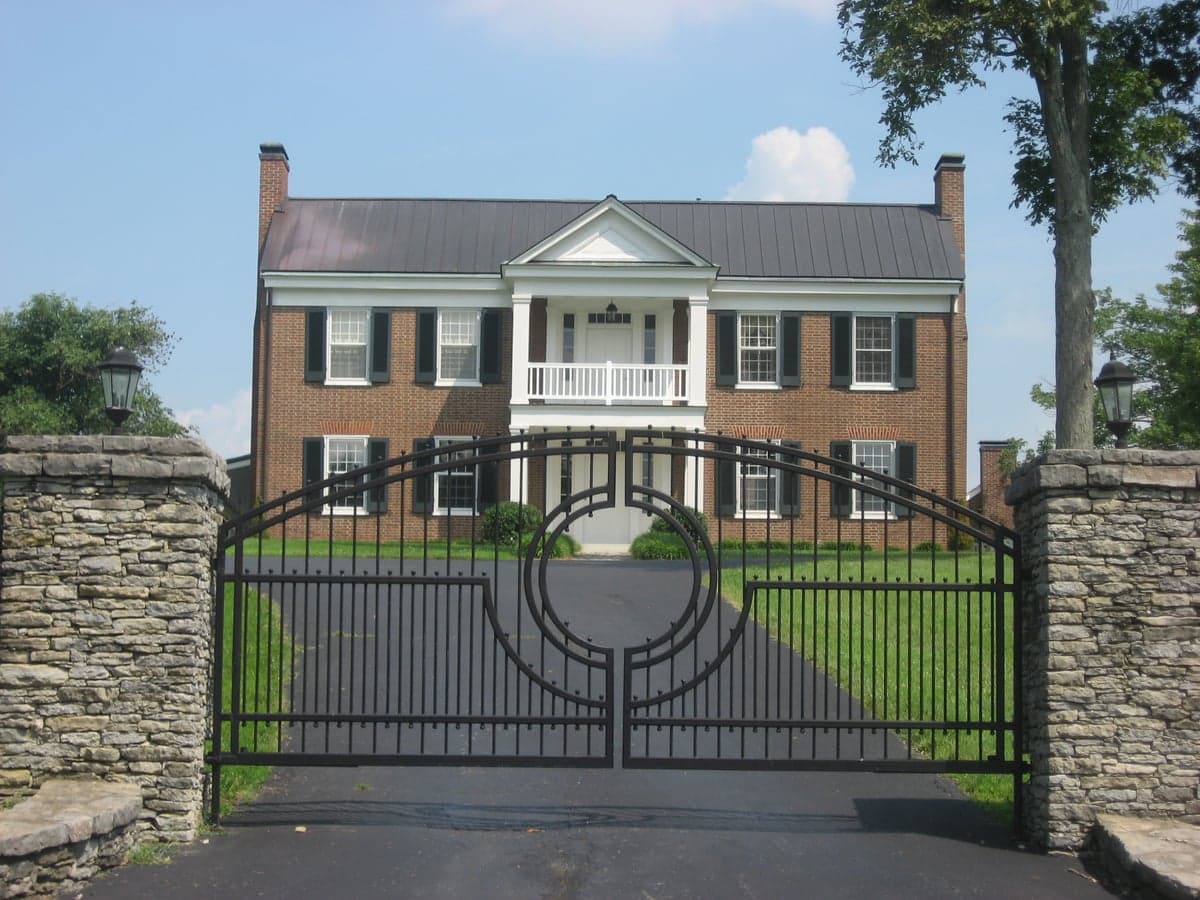
Photo: Wikipedia
Personal Sovereignty in Taylor County
Viable for self-reliance. Generally workable, though some barriers may limit total independence.
What does Personal Sovereignty tell us?
Personal Sovereignty measures your capacity for self-reliance and independence with minimal government friction. Higher scores mean fewer barriers between you and the way you want to live... but it assumes you have the space you need and good neighbors.
What does this tell us?
Personal Sovereignty measures your capacity for self-reliance and independence with minimal government friction. Higher scores mean fewer barriers between you and the way you want to live... but it assumes you have the space you need and good neighbors.
State Policy
Energy independence: Importer (60% of energy produced in-state)
Personal Liberty
Homesteading

Personal Liberty Analysis
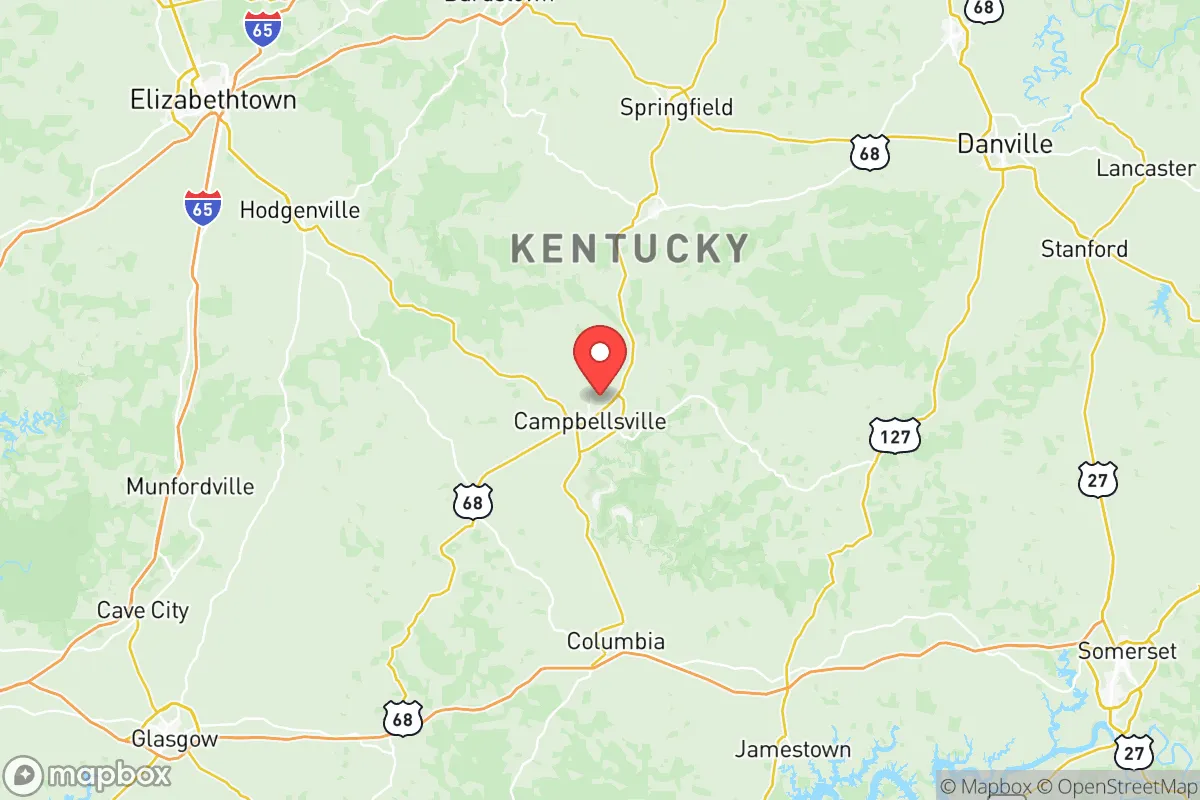
Taylor County, Kentucky offers a notably high degree of personal sovereignty, anchored in Kentucky’s strong constitutional protections for gun rights, a relatively low state and local tax burden, and a permissive regulatory environment that supports self-reliance. For individuals and families who prioritize autonomy—whether in self-defense, homesteading, or medical and parental decision-making—the county provides a legal and cultural framework that leans heavily toward personal liberty. The county seat of Campbellsville anchors the region, but the surrounding unincorporated areas and smaller communities like Elk Horn, Mannsville, and Saloma offer distinct advantages for those seeking even greater freedom from municipal oversight.
Tax burden and regulatory posture in Taylor County
Kentucky’s state-level tax structure is among the more favorable for personal sovereignty in the region. The state imposes a flat individual income tax rate of 4.0% as of 2026, with scheduled reductions toward elimination. Property taxes are low: the state rate is $0.122 per $100 of assessed value, and Taylor County’s local rate adds approximately $0.13 per $100, yielding a combined effective rate well under 1% of market value. There is no state or local tax on Social Security benefits, and military pensions are fully exempt. The regulatory posture in Taylor County is light-touch, especially outside Campbellsville’s city limits. Unincorporated areas like Elk Horn and Mannsville have no zoning ordinances, meaning property owners face minimal bureaucratic hurdles for building, land use, or business operations. The county does not impose a local occupational license fee beyond the state’s minimal requirements, and business registration is a straightforward online process. For a reader comparing this to more heavily regulated states or urban counties, Taylor County represents a jurisdiction where the default answer from government is typically “yes” rather than “you need a permit.”
Self-defense and gun law specifics in Taylor County
Kentucky is a constitutional carry state, meaning no permit is required to carry a concealed firearm for anyone legally allowed to possess one. Taylor County fully aligns with this framework. The county sheriff’s office issues concealed carry permits for reciprocity purposes, but there is no local restriction on open or concealed carry beyond state law. Stand-your-ground and castle doctrine protections are codified in Kentucky Revised Statutes Chapter 503, with no duty to retreat in any place where a person has a right to be. The county has no local gun control ordinances; Campbellsville, Elk Horn, and all other municipalities within Taylor County are preempted by state law from enacting their own firearm regulations. Gun ranges are accessible, including the Campbellsville Gun Club and private ranges in the rural areas around Saloma and Mannsville. For a reader prioritizing self-defense autonomy, Taylor County offers one of the most permissive legal environments in the eastern United States, with no waiting periods, no firearm registration, and no magazine capacity restrictions.
Self-reliance and homesteading viability in Taylor County
Homesteading and off-grid living are highly viable in Taylor County, particularly in the unincorporated areas where zoning is absent. Minimum lot sizes in the county’s rural districts are typically 1 to 5 acres, with no countywide minimum building size. Off-grid systems—solar panels, rainwater collection, composting toilets—are legal and not subject to special permitting beyond standard building code compliance for electrical work. The county does not require a permit for agricultural structures under 1,000 square feet. Areas like Saloma and Mannsville are especially attractive for self-reliant living, with large tracts of undeveloped land available at prices well below the national median—often $3,000 to $6,000 per acre as of 2026. Elk Horn, a small unincorporated community, offers similar conditions with the added benefit of proximity to Green River Lake for water access. Within Campbellsville city limits, zoning is more restrictive, but still far lighter than in suburban Louisville or Lexington. The city allows backyard chickens and small livestock on lots of half an acre or more, and beekeeping is permitted with a simple registration. For a family seeking to grow food, raise animals, and reduce reliance on municipal utilities, Taylor County’s rural areas are among the most accommodating in central Kentucky.
Personal liberties in Taylor County: parental rights, medical autonomy, speech, and property
Kentucky law provides strong protections for parental rights, including a statutory presumption that parents have the fundamental right to direct the upbringing, education, and healthcare of their children. Taylor County public schools, part of the Taylor County School District, do not enforce mask or vaccine mandates as of 2026, and the district’s policies defer to parental consent for most medical decisions. Homeschooling is straightforward: parents file a notice of intent with the local school board and maintain a portfolio of student work, with no standardized testing requirement. Medical autonomy is similarly broad. Kentucky does not require COVID-19 vaccination for any public activity, and there is no state-level vaccine passport. The state’s religious and philosophical exemption from vaccination requirements applies to school attendance. Free speech protections are robust, with no local hate speech or social media ordinances. Property rights are strongly protected by Kentucky’s eminent domain laws, which require a public purpose and just compensation, and Taylor County has no local rent control or landlord licensing schemes. For a reader who values the ability to make decisions about their own body, their children, and their property without government interference, Taylor County’s legal environment is among the most permissive in the commonwealth.
Overall, Taylor County ranks as a high-sovereignty area within Kentucky, comparable to neighboring counties like Adair and Green, and significantly more permissive than urban centers like Louisville or Lexington. The combination of constitutional carry, low taxes, minimal zoning in rural areas, and strong protections for parental and medical autonomy creates an environment where personal freedom is the baseline rather than the exception. For a single individual or family seeking a place where the government stays out of daily life, Taylor County—especially its unincorporated communities like Elk Horn, Mannsville, and Saloma—offers a level of personal sovereignty that is increasingly rare in the United States.

* Values derived from national, state, county, city and local statistics and may differ in a specific area. Last updated: 2026-07-22T14:43:49.000Z
Narrative content on this page is AI-generated and may contain mistakes. Verify any details that matter before acting on them.
ReloMaps may earn a commission from affiliate links at no extra cost to you.

