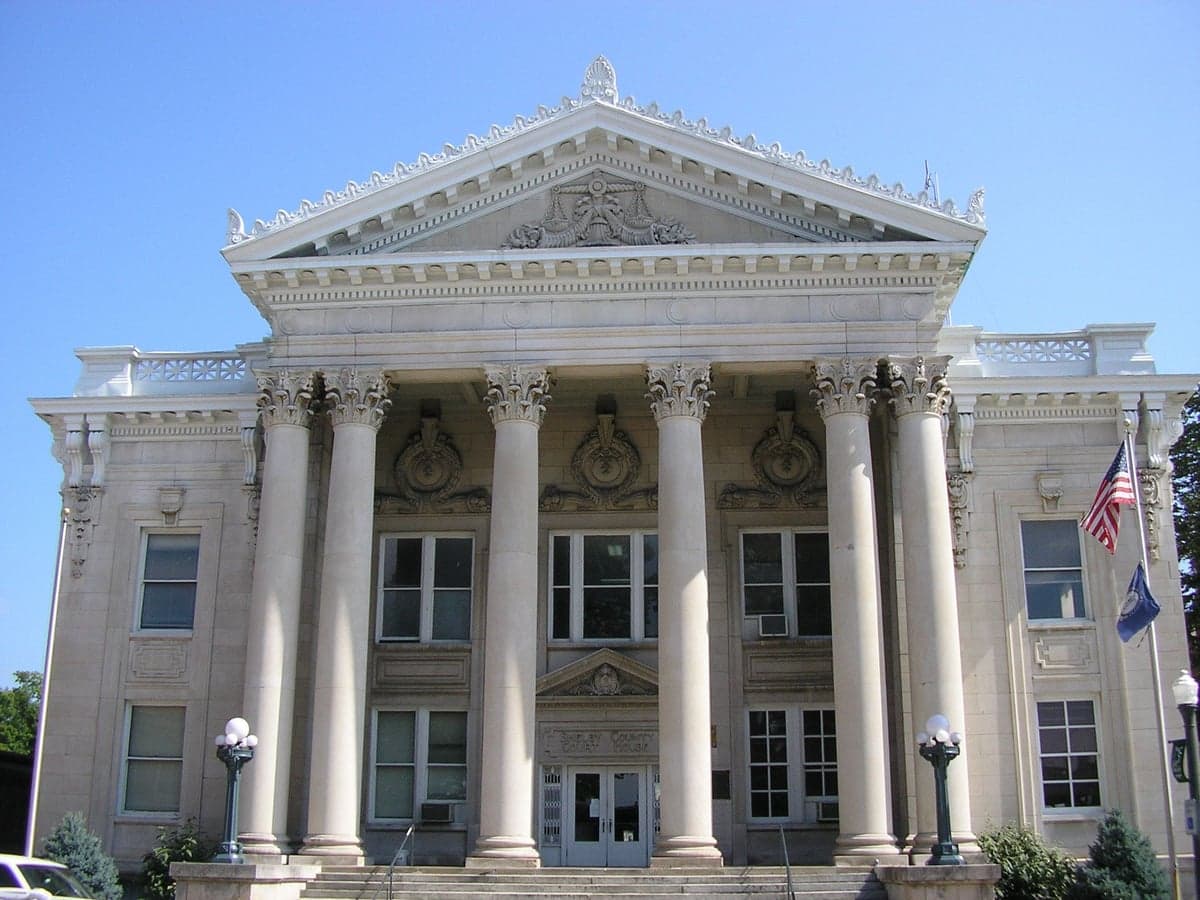
Photo: Wikipedia
Political ClimatePolitical Climate in Shelby County
Showing district-level results — no local-only data available.
Local Political AnalysisPolitical Analysis of Shelby County
Shelby County, Kentucky, is a reliably Republican stronghold with a Cook Partisan Voting Index (PVI) of R+18, making it three points more conservative than the state of Kentucky as a whole (R+15). This isn't a new development; the county has been trending red for decades, but the margin has widened noticeably since the 2010s. In 2024, Donald Trump carried the county by roughly 30 points, outperforming his statewide margin. The real story, however, is the subtle variation within the county—a mix of deep-red rural precincts, a more moderate county seat, and a growing suburban fringe that’s beginning to mirror the politics of neighboring Oldham County.
How it compares
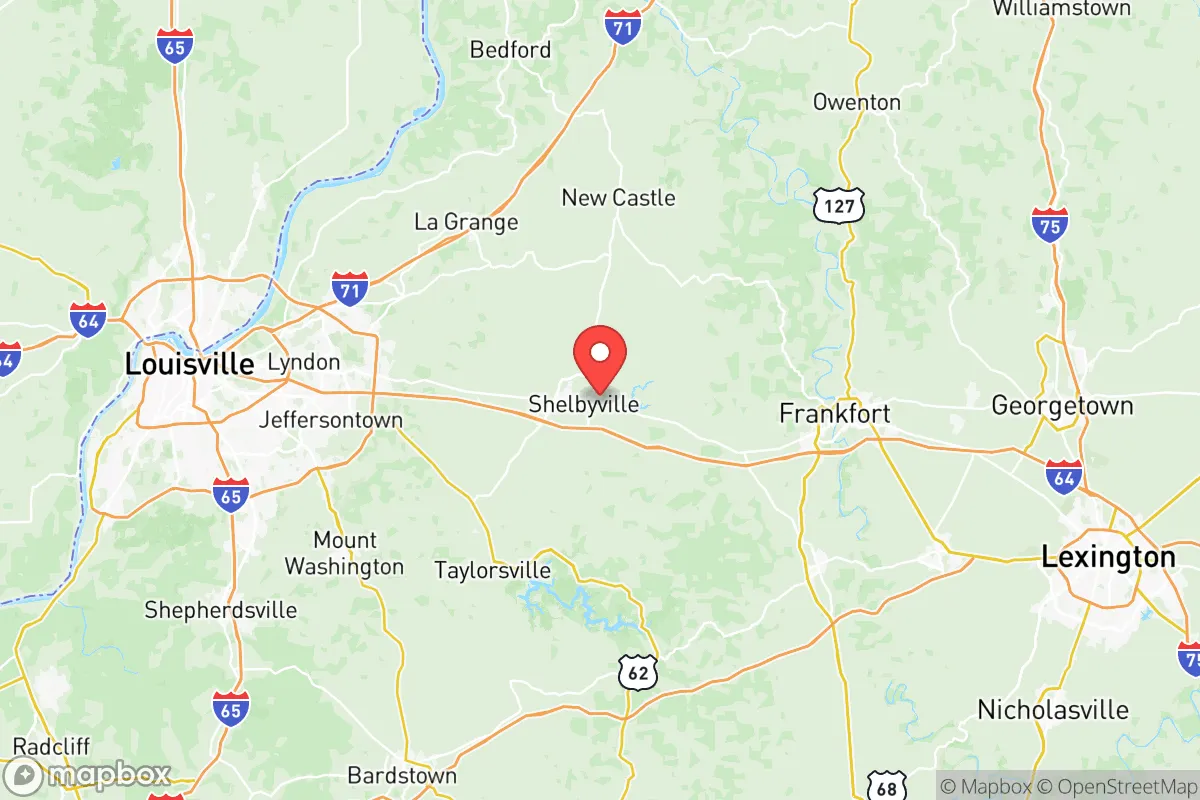
Compared to Kentucky’s statewide R+15 lean, Shelby County’s R+18 is a meaningful shift, but it’s not an outlier. It sits squarely in the conservative heart of the state, alongside counties like Spencer and Henry. The key difference is internal: Shelbyville itself is the county’s most moderate area, with precincts near the downtown and the I-64 corridor occasionally voting within 5-10 points of the statewide average. In contrast, the rural precincts around Simpsonville and Waddy are among the most conservative in the region, often delivering 70-80% of the vote for Republican candidates. The swing precincts—where races are genuinely competitive—are almost nonexistent; even the most Democratic-leaning precinct in Shelbyville hasn’t voted blue in a presidential race since 1996. The county’s trajectory is toward further conservatism, driven by an influx of families from Louisville seeking lower taxes and larger lots, a demographic that tends to lean right.
What this means for residents
For conservative residents, the political climate is comfortable and affirming. Local offices—from the county judge-executive to the school board—are held by Republicans, and policy debates tend to focus on growth management, infrastructure, and tax rates rather than cultural flashpoints. For liberal residents, the reality is more nuanced. While they are a clear minority, they are not isolated; Shelbyville’s small downtown and the growing arts scene provide a social counterweight, and many find common ground with moderate Republicans on local issues like parks and downtown revitalization. The practical effect of the county’s lean is that national political debates rarely dominate local conversation—most people agree on the broad strokes, and disagreements are more about pace and priority than ideology. That said, the county’s strong Republican tilt means that Democratic candidates rarely invest resources here, so liberal voters have limited influence in primary or general elections.
Culturally, Shelby County is distinct from the rest of Kentucky in a few ways. It has a stronger equestrian and bourbon tourism identity than most of the state, which brings a steady stream of out-of-state visitors and a slightly more cosmopolitan feel in Shelbyville’s historic district. The county also has a notable Hispanic population—around 8%—concentrated in the Shelbyville area, which adds a layer of diversity not seen in many neighboring counties. Policy-wise, the county has been aggressive in pursuing economic development along the I-64 corridor, with a focus on logistics and manufacturing, which has kept local taxes relatively low and the job market stable. For anyone moving here, the political climate is best understood as stable, predictable, and broadly conservative—with enough local nuance to keep things interesting without ever feeling contentious.

State Political ClimatePolitical Climate in Kentucky
State Political AnalysisPolitical Environment in the State
Kentucky is a deeply red state with a Cook PVI of R+15, meaning it votes about 15 points more Republican than the national average in presidential elections. The dominant coalition is a mix of rural, socially conservative voters and a growing suburban base, but the state has not always been this way—it was a reliably Democratic stronghold for most of the 20th century, only flipping decisively in the 2000s. Over the last 10-20 years, the shift has been dramatic: in 2000, George W. Bush won Kentucky by 16 points, but by 2024, Donald Trump carried it by over 30 points, reflecting a national trend of rural realignment and Democratic losses among white working-class voters.
Urban vs. rural divide
The political map of Kentucky is a textbook study in urban-rural polarization. The two major metros—Louisville (Jefferson County) and Lexington (Fayette County)—are the only consistent Democratic strongholds, with Louisville voting about 60% Democratic in recent cycles and Lexington around 55%. These cities are surrounded by a sea of deep red: the rest of the state, from the Appalachian coalfields in the east (Pikeville, Hazard) to the western Purchase region (Paducah, Murray), votes Republican by margins of 30 to 50 points. The suburbs are where the action is: counties like Oldham (northeast of Louisville) and Boone (part of the Cincinnati metro in northern Kentucky) have shifted from swing to solid red over the past decade. Oldham County, for example, went from a 12-point Republican margin in 2008 to a 40-point margin in 2024. The rural-urban split is stark—Jefferson and Fayette counties combined account for about 20% of the state's population, but they are the only blue islands in a red ocean.
Policy environment
Kentucky's policy environment is shaped by a Republican supermajority that has controlled both chambers of the legislature since 2017 and the governorship since 2019 (with a brief Democratic interlude under Andy Beshear, who won in 2019 and 2023 as a moderate). The tax structure is low and flat: the state has a 4% flat income tax (down from 6% in 2018, with a path to elimination), a 6% sales tax, and no estate or inheritance tax. Property taxes are among the lowest in the nation, averaging about 0.8% of assessed value. Regulatory posture is business-friendly, with right-to-work laws and a tort reform cap on non-economic damages. Education policy is a flashpoint: the state has a robust school choice movement, with charter schools legalized in 2017 (though none have opened yet due to funding disputes) and a tax-credit scholarship program for private school tuition. Healthcare is mixed—the state expanded Medicaid under the Affordable Care Act in 2014, covering over 500,000 residents, but the legislature has imposed work requirements and premiums for able-bodied adults. Election laws are moderately restrictive: voter ID is required, early voting is limited to three weeks (including two Saturdays), and no-excuse absentee voting was expanded during COVID but later rolled back. The state does not have automatic voter registration or same-day registration.
Recent policy direction
Recent legislation points toward a consolidation of conservative priorities across multiple fronts. On gun and self-defense law, Kentucky is a constitutional carry state (permitless carry for adults 21 and older, passed in 2019), and has a "stand your ground" law (no duty to retreat, enacted in 2006). Parental and education rights saw a major push in 2022 with House Bill 9, which created a "Parents' Bill of Rights" requiring schools to notify parents about curriculum changes and allowing them to opt children out of certain materials. Speech and privacy are less regulated: the state has no broad shield law for journalists, but it does have a law protecting student data from commercial use. Medical and bodily autonomy is a hot-button area: Kentucky has a near-total abortion ban (trigger law from 2019, effective after Dobbs in 2022), with no exceptions for rape or incest, only to prevent death or serious injury of the mother. The state also has a 15-week ban that was struck down but replaced by the trigger law. Property rights are strong: the state has a "right to farm" law protecting agricultural operations from nuisance lawsuits, and eminent domain for private development is restricted. Taxation is trending downward: the 2022 tax reform package set a path to eliminate the individual income tax entirely by 2028 if revenue triggers are met. Voting and ballot access have tightened: in 2021, the legislature passed a law requiring voter ID and limiting drop boxes, though it stopped short of the strictest measures seen in other states.
Civil unrest & political movements
Kentucky has a history of civil unrest, most notably the 2020 protests in Louisville following the death of Breonna Taylor, which drew national attention and resulted in several nights of clashes between demonstrators and police. The state also saw significant protests in 2021 over the abortion ban, with rallies in Frankfort and Louisville. Organized activist movements are present but not dominant: the left has a strong presence in Louisville (the Kentucky Alliance Against Racist and Political Repression) and Lexington (the Bluegrass Peace Alliance), while the right is anchored by groups like the Kentucky Family Foundation (social conservative advocacy) and local Tea Party chapters. Immigration politics are relatively low-key—Kentucky has a small foreign-born population (about 4%), and there are no sanctuary cities. The state passed a law in 2018 requiring local governments to cooperate with federal immigration enforcement. Secession or nullification rhetoric is fringe, though there was a brief push in 2021 for a "Second Amendment Sanctuary" resolution in several rural counties. Election integrity controversies flared in 2020 and 2022, with Republican legislators citing concerns about mail-in voting, but no major fraud was found. Visible flashpoints for a new resident would include the occasional protest at the state capitol during legislative sessions, especially around abortion and education bills, and the presence of political yard signs and bumper stickers in rural areas.
Projection
Over the next 5-10 years, Kentucky is likely to become even more Republican, driven by two trends: continued out-migration from Louisville and Lexington to the suburbs and exurbs (where voters tend to be more conservative), and in-migration of retirees and remote workers from blue states (Ohio, Illinois, California) who are drawn by low taxes and a conservative cultural environment. The Democratic Party's base is shrinking as rural areas hollow out and the urban cores age. The state's PVI could shift from R+15 to R+18 or R+20 by 2030. However, the Democratic stronghold of Louisville may become more influential if the city continues to grow and attract younger, more diverse residents. The wild card is the governor's race: Andy Beshear's 2023 win (by 5 points) showed that a moderate Democrat can still win statewide by focusing on economic development and disaster response (tornadoes, floods), but the legislature will remain firmly Republican. A new resident moving in now should expect a state where conservative policies deepen—lower taxes, more school choice, tighter abortion restrictions—and where the political conversation is dominated by rural and suburban voices, not urban ones.
For a new resident, the bottom line is that Kentucky offers a stable, low-tax, culturally conservative environment with a strong sense of local community. If you lean conservative, you will find a government that aligns with your values on most issues, from gun rights to education. If you lean liberal, you will find a state where your vote matters most in Louisville or Lexington, but where state-level policies will often feel out of step with your views. The political climate is not particularly volatile—protests are rare outside of major cities, and the pace of change is steady rather than chaotic. The key practical takeaway: your experience will vary dramatically depending on whether you settle in a blue city or a red county, but the state as a whole is moving in a clear, conservative direction.
* Values derived from national, state, county, city and local statistics and may differ in a specific area. Last updated: 2026-06-12T17:54:26.000Z
Narrative content on this page is AI-generated and may contain mistakes. Verify any details that matter before acting on them.
ReloMaps may earn a commission from affiliate links at no extra cost to you.

