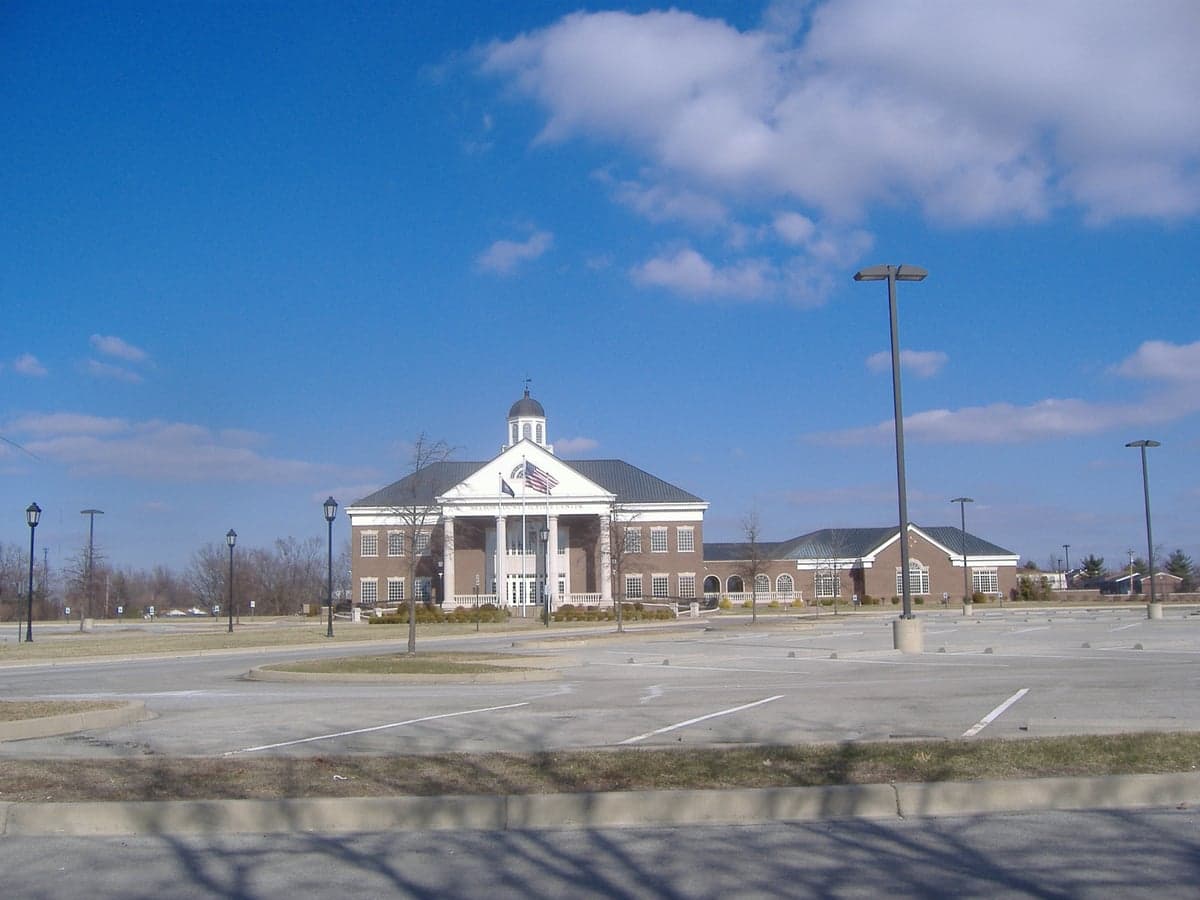
Photo: Wikipedia
Strategic Assessment of Nelson County
Workable tactical position. Some exposure to population density or targets, but generally defensible in a crisis.
What does the Strategic Assessment tell us?
Our Strategic Assessment grades tactical survivability of an area. Major population centers, military targets, fallout zones, natural disasters, and border exposure all drive risk — lower exposure means a more defensible position in a crisis.
This is heavily inspired by Joel Skousen's Strategic Relocation book. Highly recommended you checkout the book ($)What does this tell us?
Our Strategic Assessment grades tactical survivability of an area. Major population centers, military targets, fallout zones, natural disasters, and border exposure all drive risk — lower exposure means a more defensible position in a crisis.
This is heavily inspired by Joel Skousen's Strategic Relocation book. Highly recommended you checkout the book ($)Strategic Pillars

Key Distances
Strategic Assessment Analysis
Nelson County, Kentucky, anchored by the historic city of Bardstown, offers a strategic relocation option for those prioritizing resilience and self-sufficiency without complete isolation. Its position in the Bluegrass region provides a blend of agricultural richness, moderate population density, and a location that is close enough to major logistics hubs like Louisville and Lexington for supply access, yet far enough to avoid the direct fallout risks associated with those larger urban centers. For a family or individual thinking seriously about disaster readiness, the county presents a balanced profile of natural advantages and manageable, identifiable risks.
Geographic position and natural advantages for long-term stability
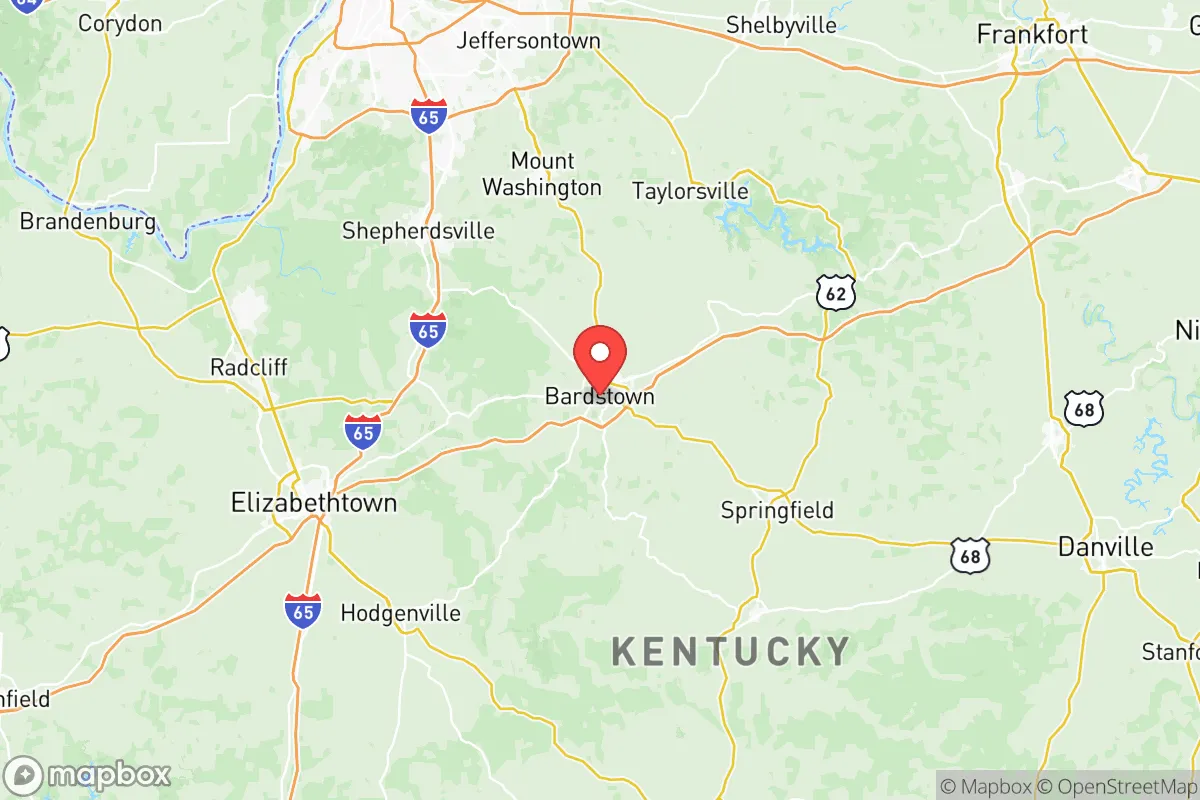
Nelson County sits in a sweet spot of the Kentucky landscape, roughly 40 miles south of Louisville and 50 miles west of Lexington. This places it outside the immediate blast and fallout zones of those major cities, which are potential targets in a conflict scenario, while still being within a comfortable day's drive for resupply or medical evacuation. The county's terrain is rolling hills and fertile valleys, part of the Outer Bluegrass region, which provides natural drainage and a lower risk of the catastrophic flooding seen in eastern Kentucky. The area is not prone to earthquakes, hurricanes, or wildfires, making it geologically stable. The presence of the Rolling Fork River and the Beech Fork River, which converge near Bardstown, offers a reliable surface water source, though access is not universal. The county's position also means it is far from the Fort Knox military installation (about 30 miles northwest) and the Blue Grass Army Depot near Richmond (about 60 miles east), both of which could be secondary targets or sources of hazardous material incidents. The Bernheim Arboretum and Research Forest, a large protected area on the county's northern edge, serves as a significant natural buffer and a potential source of wild game and forage.
Risks, exposures, and proximity to fallout-relevant landmarks
While Nelson County avoids the highest-risk zones, it is not without exposure. The primary man-made risk comes from its position relative to the Louisville International Airport and the Louisville riverport and industrial corridor. A major event at the airport or the chemical plants along the Ohio River could produce a plume that, depending on wind direction, could affect the northern parts of the county. The Bardstown Industrial Park itself, home to major employers like Heaven Hill Distillery and James Beam Distilling Co., presents a localized risk. These facilities store large quantities of ethanol and other flammable liquids. A fire or explosion at one of these distilleries could create a local hazard, but it is not a nuclear or chemical warfare target. The county's main vulnerability is its reliance on the Bluegrass Parkway and US-31E for evacuation and supply routes. These two-lane and four-lane roads can become choked during a mass evacuation from Louisville. The CSX rail line that runs through Bardstown carries hazardous materials, including chlorine and ammonia, which could be a concern if a derailment occurs near a water source. The county's position in the "Kentucky Bourbon Trail" also means a steady stream of tourists, which could complicate a rapid evacuation scenario. However, the lack of any major military bases, nuclear power plants, or major ports within the county itself is a significant positive.
Practical resilience for a relocator: food, water, energy, and defensibility
For a relocator focused on self-sufficiency, Nelson County offers strong fundamentals. The agricultural base is robust: the county is a leading producer of corn, soybeans, and tobacco, and the surrounding area is dense with cattle and horse farms. This means local food production is a realistic option. The Bardstown Farmers Market operates seasonally, and there are numerous u-pick operations and small-scale farms selling directly to consumers. Water access is generally good, with most rural properties relying on wells. The Nelson County Water District serves the more populated areas, but a well with a hand pump or a backup generator is a standard recommendation for anyone serious about resilience. The county's energy grid is served by Salt River Electric, a cooperative that has a decent track record for restoration, but rural areas can experience extended outages after ice storms. Solar potential is moderate; the region gets about 4.5 peak sun hours per day, enough for a supplemental system but not for full off-grid living without significant battery storage. Defensibility is a mixed bag. The rolling hills and wooded areas provide natural cover and chokepoints, but the county is not a natural fortress. The population is spread out, with Bardstown being the only real population center (about 13,000 people). The Nelson County Sheriff's Office and Bardstown Police Department are professional but stretched thin in a crisis. The county's strong community ties and the presence of a local chapter of the Kentucky National Guard in Bardstown are assets for mutual aid. The Nelson County Emergency Management Agency is active and runs regular preparedness drills, which is a sign of a community that takes readiness seriously.
The overall strategic picture for Nelson County is one of a solid, middle-ground option. It is not the most remote or defensible location in Kentucky, but it offers a realistic balance of access to resources, manageable risk, and a community that is not complacent. For a family looking to relocate with a serious mindset toward preparedness, the county provides a workable base: good soil, reliable water, a stable climate, and a location that is far enough from major targets to avoid the worst of a crisis, yet close enough to maintain economic and social ties. The key is to choose a property wisely—away from the main highways and the industrial areas of Bardstown, and with a private well and some acreage. Nelson County is not a bug-out location; it is a live-in location that can weather a storm.

* Values derived from national, state, county, city and local statistics and may differ in a specific area. Last updated: 2026-07-27T10:00:16.000Z
Narrative content on this page is AI-generated and may contain mistakes. Verify any details that matter before acting on them.
ReloMaps may earn a commission from affiliate links at no extra cost to you.

