Photo: Wikipedia
Political ClimatePolitical Climate in Keene, TX
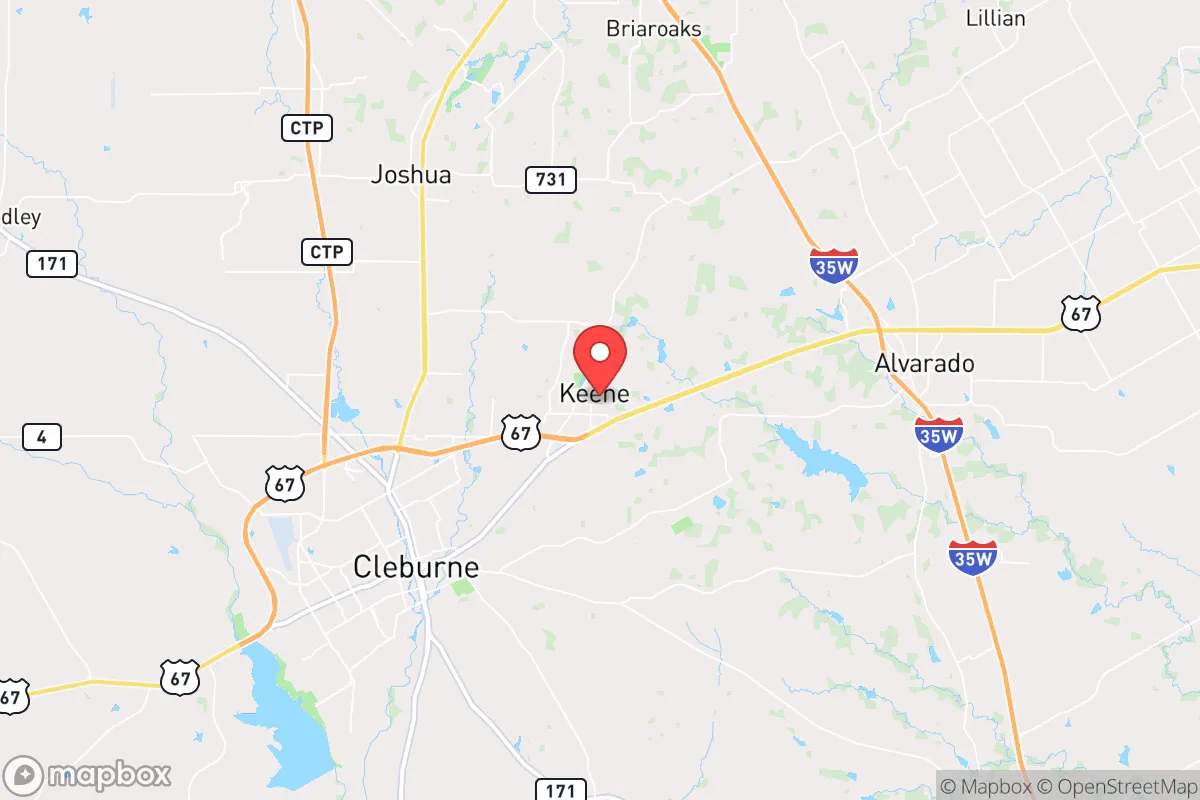
District shown is the primary district for this city’s centroid. Cities may span multiple districts.
Local Political AnalysisPolitical Analysis of Keene, TX
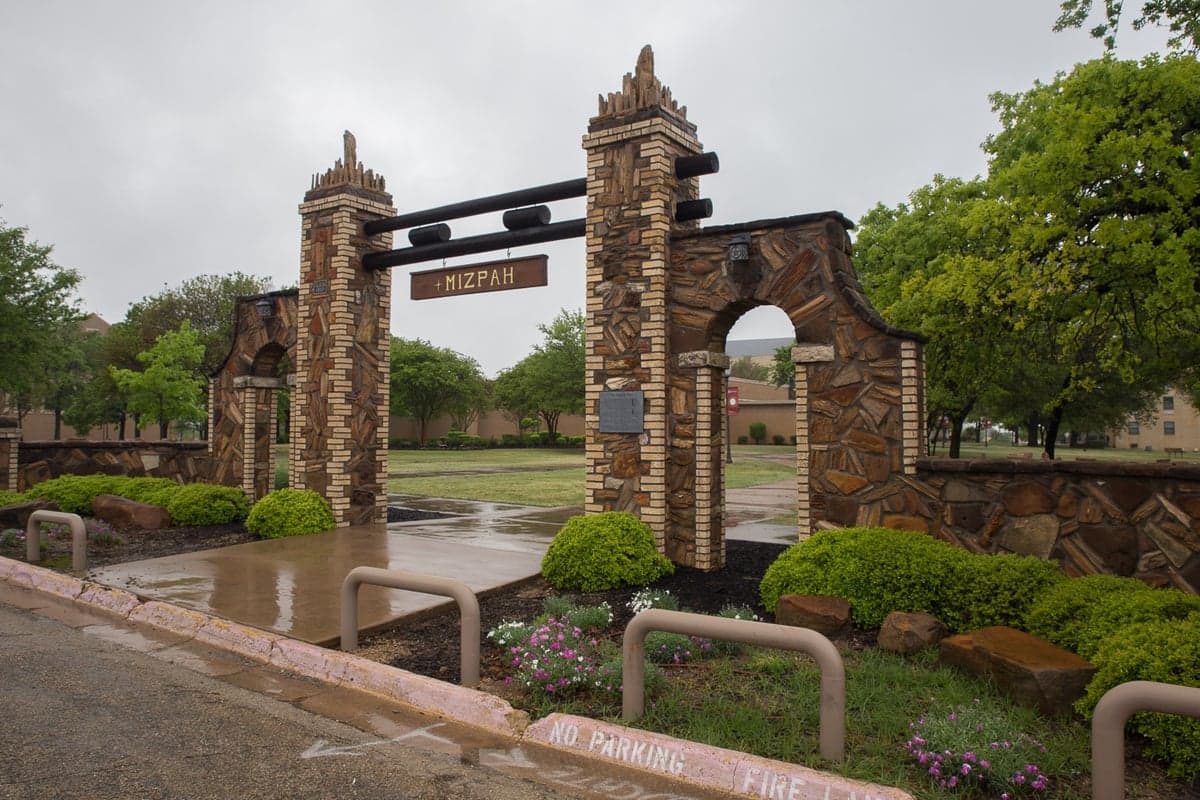
Keene, Texas, is a reliably conservative community, anchored by a Cook Partisan Voting Index of R+14, meaning the area votes about 14 percentage points more Republican than the national average. This isn’t a recent shift—it’s been the baseline for as long as most folks around here can remember. The town’s political identity is shaped heavily by its roots as a Seventh-day Adventist community (home to Southwestern Adventist University), which brings a distinct blend of social conservatism and civic-mindedness. While the surrounding Johnson County has trended red for decades, Keene itself has stayed steady, not swinging as hard as some of the more exurban boomtowns to the north or east.
How it compares
Compared to the rest of Texas, Keene sits comfortably in the state’s conservative mainstream, but with a few local quirks. The state as a whole has a Cook PVI that’s unknown in the data you provided, but statewide elections in Texas have leaned Republican by roughly 5-10 points in recent cycles—so Keene’s R+14 is notably redder than the state average. For context, nearby cities like Burleson (R+12) and Cleburne (R+16) are in the same ballpark, while Fort Worth (D+5) to the north and Dallas (D+28) to the northeast are starkly more liberal. Within Johnson County, Keene is actually a bit more moderate than rural spots like Grandview or Alvarado, where you’ll see fewer yard signs for Democrats and more pickup trucks with “Don’t Tread on Me” plates. The university presence softens the edges—you’ll find a handful of faculty and students who lean left, but they’re a quiet minority in local politics.
What this means for residents
For conservative residents, Keene is a comfortable fit. Local elections are dominated by Republicans, and issues like property taxes, school curriculum, and Second Amendment rights are debated within a narrow conservative framework. You won’t see much pushback on a “Blue Lives Matter” flag or a Trump sign in a front yard. For liberal residents, it’s a different story. While you won’t face outright hostility, you’ll likely feel politically isolated—there’s no active Democratic club in town, and progressive candidates rarely bother campaigning here. The practical effect is that local policy tends to favor low taxes, limited regulation, and traditional social values. For example, the city council has resisted expanding public transit or affordable housing initiatives, citing fiscal conservatism. On the flip side, the Adventist influence means the town is dry (no alcohol sales within city limits), which is a cultural distinction that surprises newcomers—even many conservative Texans find that unusual.
What this means for residents (continued)
In practice, the political climate shapes daily life in subtle ways. The local school board, for instance, has focused on “patriotic education” and parental rights, mirroring statewide trends but with less controversy than in purple suburbs. The biggest cultural distinction is the strong emphasis on community service and health tied to the Adventist presence—you’ll see more vegetarian options at local restaurants and a higher-than-average number of Seventh-day Adventist churches per capita. This gives Keene a slightly more “live and let live” vibe than the typical Texas small town, even as the politics remain solidly red. Looking ahead, the trajectory is stable: Keene isn’t growing as fast as nearby cities like Mansfield or Waxahachie, so it’s unlikely to see a demographic shift that would alter its political lean. For both conservatives and liberals, the takeaway is that Keene is a place where the political temperature is warm but not boiling—predictable, community-focused, and unlikely to surprise you at the ballot box.

State Political ClimatePolitical Climate in Texas
State Political AnalysisPolitical Environment in the State
Texas has been a reliably Republican state for the past three decades, with the GOP holding every statewide office and both chambers of the legislature since the mid-1990s. The state’s overall partisan lean is roughly R+8 to R+10 in federal elections, though that margin has been shrinking steadily — Donald Trump won Texas by 9 points in 2016 and by just 5.5 points in 2020, while down-ballot races have tightened even faster. The dominant coalition is a mix of rural and suburban conservatives, oil-and-gas interests, and evangelical voters, but that coalition is being reshaped by explosive growth in the urban crescent from Dallas-Fort Worth to San Antonio, where a younger, more diverse electorate is slowly turning the state purple.
Urban vs. rural divide
The political map of Texas is a study in extremes. The state’s four biggest metros — Houston, Dallas-Fort Worth, San Antonio, and Austin — are increasingly Democratic strongholds. Harris County (Houston) went for Biden by 13 points in 2020, while Dallas County voted for him by 17 points. Austin’s Travis County is the bluest major county in the state, delivering a 41-point margin for Biden. But outside these urban cores, the landscape is deeply red. The Texas Panhandle, West Texas, and most of East Texas vote Republican by 30 to 50 points. The real battleground is the suburbs: counties like Collin (north of Dallas), Denton, and Fort Bend have shifted leftward as new residents arrive. Collin County, once a GOP stronghold, voted for Trump by just 5 points in 2020 — down from a 27-point margin in 2012. Meanwhile, the Rio Grande Valley, historically Democratic, has been trending Republican, with Zapata County flipping to Trump in 2020 after voting for Obama twice. This urban-rural split means that a resident in Lubbock lives in a completely different political world than someone in El Paso or Austin.
Policy environment
Texas’s policy environment is defined by a low-tax, low-regulation posture that has attracted both businesses and conservative relocators. There is no state income tax, and property taxes are high — averaging about 1.6% of home value — to compensate. The state’s regulatory climate is business-friendly, with minimal zoning in many cities and a right-to-work law that limits union power. On education, Texas has a school choice voucher program that passed in 2023, allowing parents to use state funds for private or homeschool expenses, though it remains limited in scope. Healthcare policy is notably restrictive: Texas has not expanded Medicaid under the Affordable Care Act, leaving roughly 1.5 million uninsured residents, and abortion is banned from conception with narrow exceptions. Election laws have tightened in recent years, with strict voter ID requirements and limits on mail-in voting. The state also has a permitless carry law for handguns, passed in 2021, and a “stand your ground” self-defense statute.
Recent policy direction
The last five years have seen Texas move decisively to the right on a range of issues that matter to relocators. On gun rights, the 2021 permitless carry law (HB 1927) allows any adult who can legally own a firearm to carry it openly or concealed without a license. On parental rights and education, the 2023 “Parents’ Bill of Rights” (HB 900) requires schools to post curriculum materials online and allows parents to opt their children out of certain instruction. The state also banned diversity, equity, and inclusion programs at public universities (SB 17) and restricted how race and gender can be taught in K-12 classrooms (HB 3979). On speech and privacy, Texas passed a law in 2021 (HB 20) that restricts social media platforms from moderating content based on viewpoint, though it has been partially blocked by courts. Medical and bodily autonomy saw the biggest shift: the 2021 “Heartbeat Act” (SB 8) banned abortion after about six weeks, enforced through private lawsuits, and the 2023 trigger law (HB 1280) imposed a near-total ban. Property rights remain strong, with no statewide rent control and limited eminent domain. On voting, the 2021 omnibus bill (SB 1) added new ID requirements for mail ballots, limited drive-through and 24-hour voting, and gave partisan poll watchers more access. The overall direction is toward more individual liberty on guns and property, less on reproductive and medical choices, and a tightening of election procedures.
Civil unrest & political movements
Texas has seen its share of political flashpoints. The 2020 protests following George Floyd’s murder in Minneapolis were particularly intense in Austin, Houston, and Dallas, with property damage and clashes between demonstrators and police. The state’s response was a series of laws in 2021 that increased penalties for rioting and protected drivers who hit protesters from civil liability. Immigration politics are a constant source of tension: Governor Greg Abbott’s Operation Lone Star has deployed state troopers and National Guard to the border, bused migrants to Democratic-led cities like New York and Chicago, and installed razor wire along the Rio Grande — actions that have drawn lawsuits from the Biden administration. The “sanctuary city” ban (SB 4) passed in 2017 remains in effect, requiring local law enforcement to cooperate with federal immigration authorities. Secession rhetoric flares up periodically — the Texas Nationalist Movement has some grassroots support — but it remains a fringe position without serious political traction. Election integrity controversies have been persistent since 2020, with Republican officials in counties like Harris and Tarrant facing lawsuits over ballot access and counting procedures. A new resident in a blue city like Austin will see regular protests at the Capitol, while someone in a red suburb like Frisco will encounter a quieter, more civically engaged conservative culture.
Projection
Over the next 5 to 10 years, Texas is likely to become more competitive at the statewide level, but not necessarily more liberal. The state is adding about 1,000 new residents per day, most of them moving to the suburban rings of Dallas-Fort Worth, Houston, and San Antonio. These newcomers are a mixed bag: some are conservatives fleeing California and Illinois, others are younger professionals who lean Democratic. The Hispanic population, which makes up 40% of the state, is not monolithic — it’s trending Republican in the Rio Grande Valley but remains Democratic-leaning in urban areas. The net effect is that Texas will probably remain under Republican control for the next decade, but with narrower margins. The state legislature is likely to continue passing conservative bills on guns, education, and immigration, but the governor’s race in 2026 and the presidential contest in 2028 will be genuine battlegrounds. A relocator moving in now should expect a state that is politically dynamic, where the culture wars of the rest of the country play out in real time, and where their vote will matter more than it does in a deep-blue or deep-red state.
For a new resident, the bottom line is that Texas offers a political environment that is broadly conservative but increasingly contested. If you lean right, you’ll find a state government that aligns with your values on taxes, guns, and education, and you’ll be part of a growing conservative migration. If you lean left, you’ll find strong communities in the cities and suburbs where your views are shared, but you’ll be living under a state government that opposes many of your priorities. The practical takeaway is that Texas rewards political engagement — your local school board, city council, and county commissioner races matter more here than in states where one party dominates everything. Whether you’re moving to Amarillo or Austin, you’ll be part of a state that is actively shaping the national political conversation, for better or worse.
* Values derived from national, state, county, city and local statistics and may differ in a specific area. Last updated: 2026-10-17T17:11:59.000Z
Narrative content on this page is AI-generated and may contain mistakes. Verify any details that matter before acting on them.
ReloMaps may earn a commission from affiliate links at no extra cost to you.

