Photo: Wikipedia
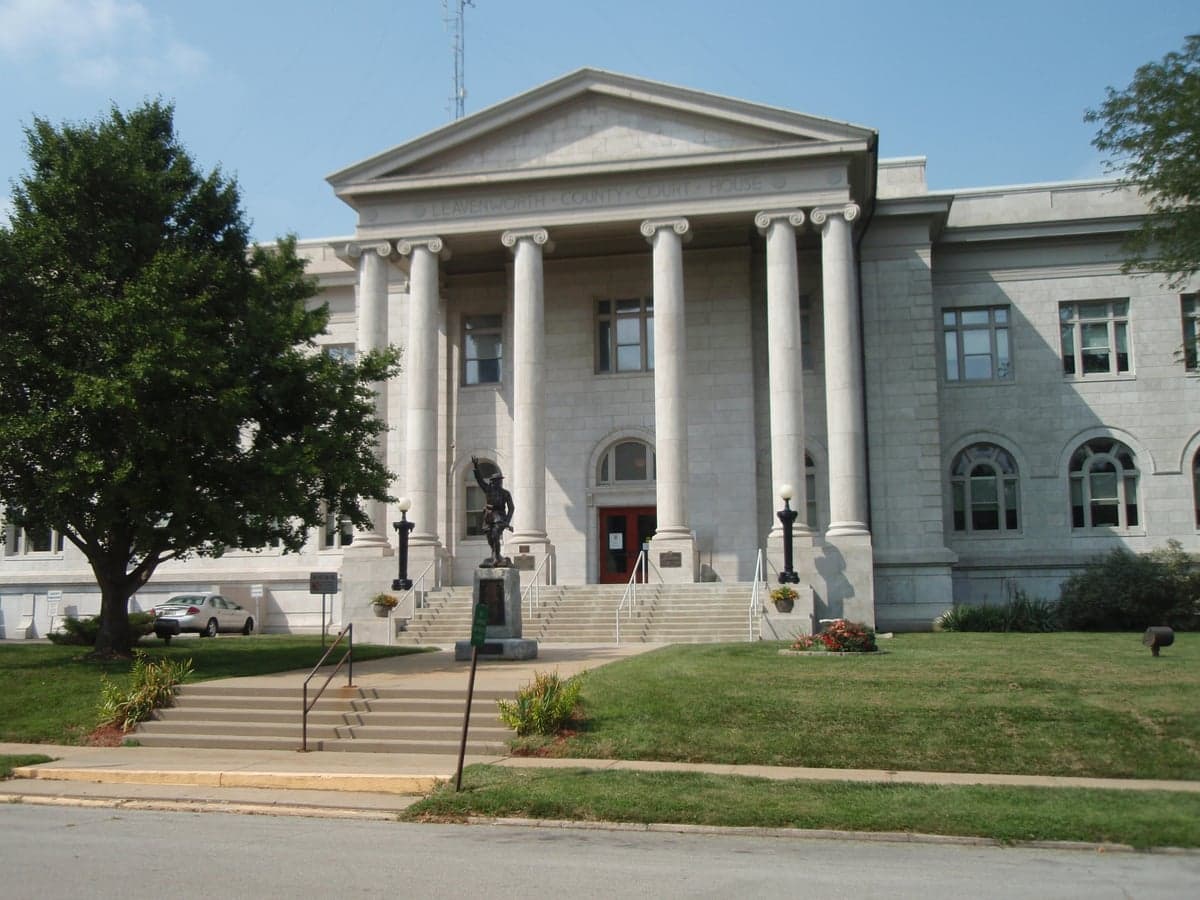
Political ClimatePolitical Climate in Leavenworth County
Showing district-level results — no local-only data available.
Local Political AnalysisPolitical Analysis of Leavenworth County
Leavenworth County, Kansas, has long been a reliably conservative area, and the numbers back that up with a Cook PVI of R+10, making it slightly more Republican than the state of Kansas as a whole, which sits at R+9. But if you’ve lived here as long as I have, you know the political story isn’t just about a single number—it’s about the tug-of-war between the old guard and the new influences creeping in from the Kansas City metro. The county’s lean is solidly red, but you can feel the ground shifting under your feet, especially in certain pockets where progressive ideas are starting to take root, and that’s something worth keeping an eye on if you value personal freedoms and limited government.
How it compares
When you stack Leavenworth County up against the rest of Kansas, the difference is subtle but real. The state’s R+9 PVI means it’s already a conservative stronghold, but Leavenworth’s R+10 shows it’s a notch redder, driven largely by the rural and exurban areas outside the main towns. For instance, Lansing and Basehor lean heavily Republican, with precincts routinely voting 65-70% for GOP candidates in recent elections. Meanwhile, Tonganoxie is a bit more of a mixed bag—still conservative overall, but you’ll find swing precincts near the downtown area where independent voters can tip the scales. The real contrast is Leavenworth City itself, where the historic downtown and areas near the university (University of Saint Mary) have a noticeable blue tint, with some precincts going 55-60% Democratic in presidential races. That’s where the progressive influence is most visible, and it’s a stark reminder that not everyone here buys into the traditional Kansas values of self-reliance and minimal government interference.
What this means for residents
For folks who’ve been here a while, the political climate means you can generally count on local leaders to keep taxes low and regulations light—things like zoning and business permits are still pretty straightforward compared to Johnson County. But there’s a growing concern about government overreach, especially as the county commission has seen some turnover. A few years back, you could trust that your property rights wouldn’t be trampled by new ordinances, but now there’s chatter about stricter land-use rules and even talk of “equity” initiatives in the school district. That’s a red flag for anyone who thinks the government should stay out of your backyard and your kids’ education. The shift is slow, but it’s there, and it’s worth watching if you don’t want to end up like some of those metro counties where personal freedoms get chipped away one regulation at a time.
Culturally, Leavenworth County still holds onto its conservative roots better than most of the state. You’ll see more “Don’t Tread on Me” flags than rainbow banners, and the local gun culture is alive and well—no one’s batting an eye at concealed carry here. The policy distinctions are clear: while Kansas as a whole has fought over Medicaid expansion and school funding, Leavenworth County has mostly stayed focused on keeping the government out of your wallet and your life. That said, the proximity to Kansas City means you can’t ignore the progressive drift entirely. If you’re looking for a place where the old-school Kansas spirit of independence still holds strong, Leavenworth County is it—but keep your guard up, because the winds of change are blowing, and they’re not all from the right direction.

State Political ClimatePolitical Climate in Kansas
State Political AnalysisPolitical Environment in the State
Kansas is a solidly Republican state with a Cook PVI of R+9, but don’t let that number fool you into thinking it’s a monolith. Over the past 10-20 years, the state has been a battleground between traditional conservative values and a growing progressive push, particularly from the Kansas City metro area. The dominant coalition is still center-right, but the trajectory has been a wild ride—from the massive tax-cutting experiment under Governor Sam Brownback in the 2010s to a recent swing back toward more moderate fiscal policies. If you’re a conservative looking for a place where your values aren’t constantly under siege, Kansas offers a mixed bag: deep red rural areas and a state legislature that leans right, but also a governor’s office that flipped to Democrat in 2018 and a few urban counties that vote increasingly blue.
Urban vs. rural divide
The political map of Kansas is a textbook case of the urban-rural split. The eastern edge, anchored by Johnson County (suburban Kansas City), is the state’s population center and its most politically competitive region. Johnson County used to be reliably Republican, but it has shifted left in recent cycles—Hillary Clinton won it in 2016, and Joe Biden carried it in 2020. This is where you’ll find the state’s wealth, corporate headquarters, and a growing number of college-educated professionals who lean moderate to liberal. Meanwhile, Wyandotte County (Kansas City, KS) and Douglas County (Lawrence, home to the University of Kansas) are deep blue strongholds, consistently voting Democratic by 20-30 points. In contrast, the rest of the state is overwhelmingly red. Sedgwick County (Wichita) is a bellwether—it voted for Trump in 2020 but by a narrower margin than rural counties. Drive west of I-135, and you hit counties like Thomas County (Colby) and Finney County (Garden City) that routinely vote 75-80% Republican. The rural-urban divide isn’t just about party ID; it’s about culture. In places like Dodge City or Hays, you’ll find strong church attendance, gun ownership, and a “live and let live” attitude. In Lawrence or Kansas City, you’ll see more BLM signs, LGBTQ flags, and activist energy. A new resident should know: where you live in Kansas determines almost everything about your political experience.
Policy environment
Kansas’s policy environment is a study in contrasts. On the plus side for conservatives, the state has a flat income tax rate of 5.7% (down from a progressive system), no estate tax, and a right-to-work law that keeps unions weak. The legislature has passed permitless carry for firearms, and abortion is heavily restricted—a 2019 Kansas Supreme Court ruling protecting abortion rights was effectively nullified by a 2022 constitutional amendment vote that failed, but the legislature has since passed a 22-week ban and other restrictions. Property taxes are relatively low, but local school bond issues can spike them. On the downside, the state has a sales tax on groceries (though it’s being phased down to 2% by 2025), and the Brownback tax cuts led to budget crises that forced the legislature to raise taxes in 2017—a cautionary tale for fiscal conservatives. Education policy is a flashpoint: the state has a school choice program (tax credits for private school scholarships) but also heavy regulation of homeschoolers compared to states like Texas. Healthcare is mixed—Medicaid expansion has been blocked by the legislature for years, which keeps government out of your healthcare decisions but also leaves rural hospitals struggling. Election laws are solid: voter ID is required, and Kansas has a clean voter roll system, though the state was sued over a now-defunct proof-of-citizenship requirement. Overall, the policy environment is conservative-leaning but not as aggressively free as, say, Florida or Texas.
Trajectory & freedom
Is Kansas becoming more or less free? It depends on the issue. On gun rights, the state has moved decisively in the right direction: permitless carry became law in 2015, and there’s no state-level red flag law. On parental rights, the legislature passed a bill in 2023 requiring schools to notify parents of any “sexuality content” in curricula, and a 2024 law bans gender transition procedures for minors—both major wins for family autonomy. On taxation, the trend is mixed: the flat tax is a step toward simplicity, but the state still has one of the highest combined state-local sales tax rates in the country (over 9% in some cities). The biggest red flag for freedom is the Kansas Supreme Court, which has repeatedly ruled that the state constitution mandates “adequate” school funding, leading to court-ordered tax increases. This judicial activism is a real concern—it means your property taxes can be raised by unelected judges. On medical freedom, Kansas was one of the first states to ban COVID-19 vaccine mandates for state employees and contractors, and it has a law protecting medical conscience rights. However, the state also has a strict certificate-of-need law that limits new healthcare facilities, which stifles competition and keeps costs high. The trajectory is cautiously positive for conservatives, but the judiciary and the growing influence of Johnson County’s suburban voters are headwinds.
Civil unrest & political movements
Kansas is not a hotbed of civil unrest, but it has its flashpoints. The most visible in recent years was the 2020 George Floyd protests in Kansas City and Lawrence, which saw some property damage and clashes with police. More sustained is the activism around abortion: after the 2022 “Value Them Both” amendment failed (Kansans voted to keep abortion protections in the state constitution), pro-life groups have focused on local ordinances and clinic buffer zones. On the right, the Kansas Republican Party has seen a factional war between establishment moderates and Trump-aligned populists, with the latter gaining ground in rural counties. Immigration politics are relatively quiet—Kansas is not a border state, but there’s tension in Garden City and Dodge City, where meatpacking plants have drawn large Hispanic populations. Some local officials have pushed for sanctuary city policies, but the state legislature has banned them. Election integrity is a live issue: the 2020 election saw Trump win Kansas by 15 points, but activists on the right have pushed for hand-counting of ballots and stricter absentee ballot rules, leading to a 2024 law that shortened the mail-in ballot window. A new resident would notice the lack of visible political violence—Kansas is generally polite, even in disagreement—but the undercurrent of tension between the urban blue islands and the rural red sea is real.
Projection
Over the next 5-10 years, Kansas is likely to become slightly more purple, but not dramatically so. The key driver is Johnson County: as it continues to grow and attract out-of-state professionals (many from blue states), its suburban voters will push the state toward more moderate policies on education, taxes, and social issues. The rural population is shrinking, which means the legislature will become more conservative even as the statewide vote tightens. Expect continued fights over school funding, property taxes, and abortion. The biggest wildcard is the Kansas Supreme Court—if the governor (currently Democrat Laura Kelly) gets to appoint more justices, the court could become more activist, leading to a constitutional crisis with the legislature. On the freedom front, I’d expect more preemption laws (state laws overriding local ordinances on things like plastic bags, rental regulations, and firearm restrictions) as the legislature tries to rein in Johnson County’s progressive impulses. If you’re moving in now, plan for a state that will remain conservative in its rural and small-town core, but where the suburbs will increasingly feel like a battleground. The good news: Kansas is still a place where you can own a home, carry a gun, and raise your kids without constant government interference—but you’ll need to stay engaged to keep it that way.
Bottom line for a new resident: Kansas is a solid bet if you want a low-cost, family-friendly state with a conservative legislature and strong gun rights, but don’t expect a libertarian paradise. The urban-rural divide means your day-to-day experience will vary wildly depending on whether you settle in Wichita, Overland Park, or a small town like Abilene. The state’s trajectory is toward more suburban moderation, so if you’re a conservative, you’ll want to get involved in local politics—especially school board and county commission races—to keep the culture wars from swinging too far left. Kansas is still a place where your vote counts, but it’s no longer a sure thing.
* Values derived from national, state, county, city and local statistics and may differ in a specific area. Last updated: 2026-05-27T22:22:45.000Z
Narrative content on this page is AI-generated and may contain mistakes. Verify any details that matter before acting on them.
ReloMaps may earn a commission from affiliate links at no extra cost to you.

