Photo: Wikipedia
Political ClimatePolitical Climate in Finney County
Showing district-level results — no local-only data available.
Local Political AnalysisPolitical Analysis of Finney County
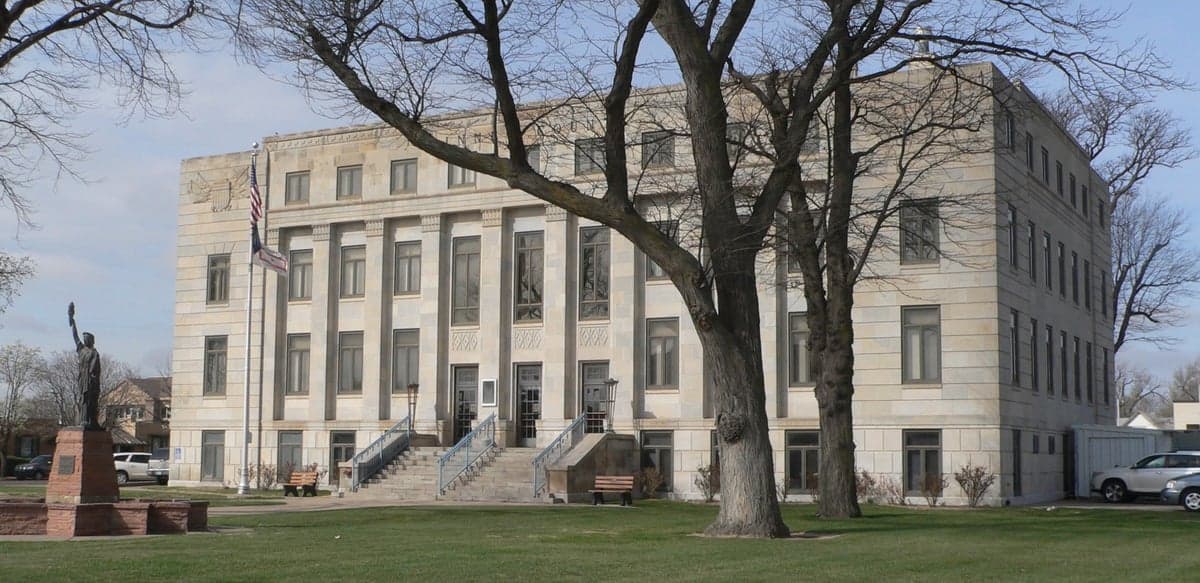
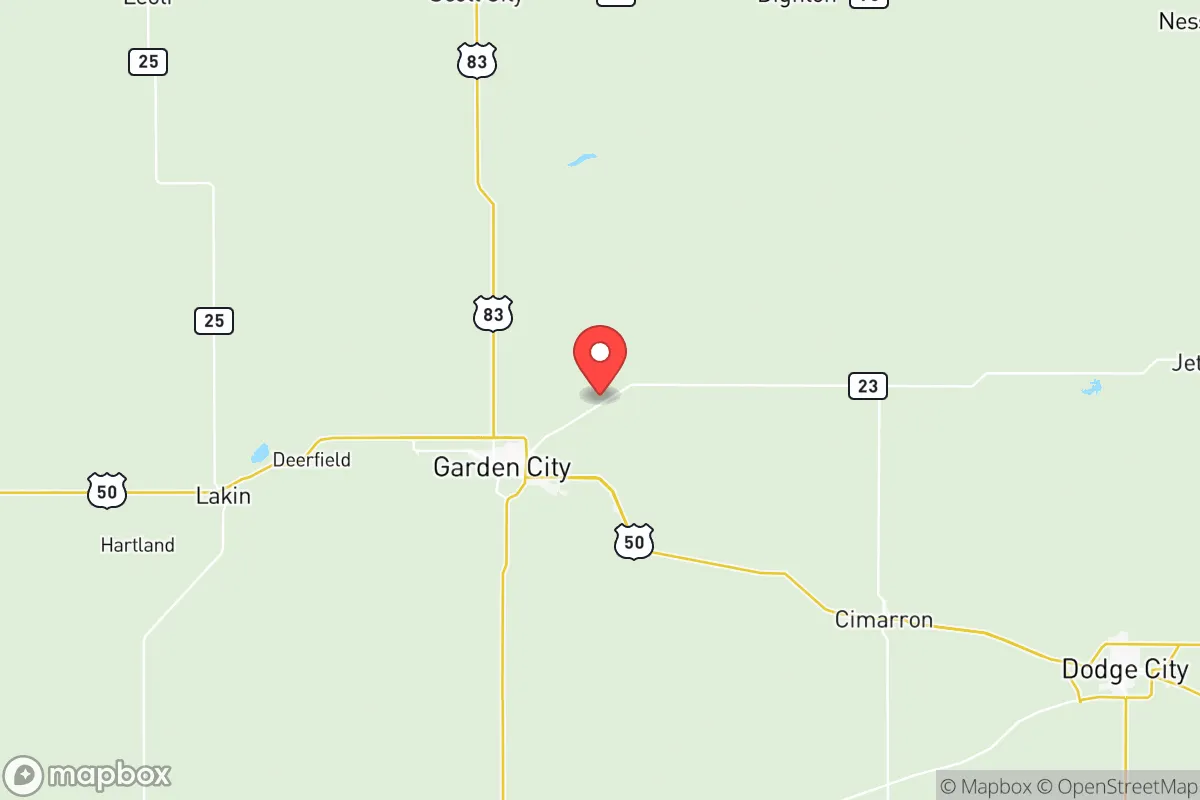
Finney County, anchored by the city of Garden City, is a solidly Republican stronghold with a Cook PVI of R+16, making it significantly more conservative than Kansas as a whole, which sits at R+9. This isn't a recent shift; the county has voted Republican in every presidential election since at least 2000, with margins often exceeding 30 points. However, the political reality on the ground is more nuanced than the raw numbers suggest, shaped by a growing Hispanic population, a strong agricultural base, and a distinct urban-rural divide within the county itself.
How it compares
The R+16 rating places Finney County among the most conservative counties in western Kansas, but it's not a monolith. The state's R+9 lean reflects a mix of deep-red rural areas and more competitive suburban and urban districts, like Johnson County. Within Finney County, the political geography is telling. Garden City, the county seat and economic hub, contains the only precincts that occasionally lean blue or are competitive. Precincts around the city's core, particularly those with higher concentrations of meatpacking plant workers and newer immigrant communities, have shown Democratic tendencies in local and state races. In contrast, outlying towns like Holcomb and Deerfield are deeply red, often voting Republican by margins of 70% or more. The swing precincts are almost exclusively in Garden City's east side and near the Tyson Foods plant, where economic concerns and immigration policy drive a more mixed vote. This creates a county where a Republican can win by 30 points overall, but a Democratic candidate can still carry a few specific precincts by 10-15 points.
What this means for residents
For conservative residents, the political climate means their values are broadly reflected in local governance. The county commission and school board are reliably Republican, and policies around taxes, land use, and Second Amendment rights align with conservative priorities. For liberal residents, the reality is more about finding community in a minority position. Garden City's diversity—with a population that is over 50% Hispanic—creates pockets where progressive voices are heard, particularly on issues like immigrant rights, labor conditions, and public school funding. Local elections in Garden City can be surprisingly competitive, with candidates from both parties vying for city council and school board seats. The practical effect is that while national politics feel one-sided, local governance often involves genuine debate, especially around the budget for the county's growing school district and infrastructure needs tied to the meatpacking industry.
Culturally, Finney County stands apart from much of Kansas due to its heavy reliance on agriculture and meat processing. The presence of major employers like Tyson Foods and Cargill means that immigration policy is not an abstract issue—it's a daily reality for many families. This creates a unique political dynamic where some conservative voters prioritize business-friendly immigration policies, while others hold hardline views. The county also has a strong tradition of local journalism and civic engagement, with the Garden City Telegram covering local politics in depth. Looking ahead, the trajectory is toward a slow but steady diversification of the electorate. As the Hispanic population grows and younger residents move into Garden City, the county's R+16 lean may soften slightly, but it is unlikely to become competitive at the presidential level anytime soon. For now, Finney County remains a place where the political conversation is shaped by the land, the plants, and the people who work them—a distinctly Kansan blend of conservatism and pragmatism.

State Political ClimatePolitical Climate in Kansas
State Political AnalysisPolitical Environment in the State
Kansas has been a reliably Republican state for decades, carrying a Cook PVI of R+9, meaning it votes about nine points more Republican than the nation as a whole. The dominant coalition is a mix of rural conservatives, suburban moderates, and a growing libertarian-leaning wing, but the state’s trajectory over the last 10-20 years has been a slow, steady shift rightward, punctuated by occasional moderate rebellions. While Democrats can win statewide in wave years—like Laura Kelly’s gubernatorial victories in 2018 and 2022—the legislature has grown more conservative, and the state’s presidential voting has become more reliably red, with Trump winning by 15 points in 2020 and 18 in 2024.
Urban vs. rural divide
The political map of Kansas is a classic tale of two worlds. The eastern third, anchored by the Kansas City metro, is the state’s blue island: Wyandotte County (Kansas City, KS) and Douglas County (Lawrence) are reliably Democratic, with Johnson County (Overland Park, Olathe, Lenexa) shifting from a Republican stronghold to a purple battleground over the past decade. Johnson County voted for Biden in 2020 and Harris in 2024, driven by college-educated suburbanites and a growing diverse population. Sedgwick County (Wichita) is a bellwether—it went for Trump in 2020 but by a narrower margin than the state, and its city council and county commission often split between parties. The rest of the state—the vast rural plains, the Flint Hills, and the western third—is deeply Republican. Shawnee County (Topeka) leans Democratic but is more moderate than Lawrence, often splitting tickets between GOP state legislators and Democratic governors. The divide isn’t just urban vs. rural; it’s also about economic base: farm and oil country votes red, while the KC suburbs and college towns vote blue or purple.
Policy environment
Kansas’s policy environment is a mix of conservative fiscal and social policies with a libertarian streak. The state has a flat income tax rate of 5.7% (down from a progressive system after the 2012 “Brownback tax cuts,” which were partially reversed in 2017 but left a flat structure). Property taxes are moderate but vary widely by county. The state is a “right-to-work” state, meaning union membership is optional, and it has no state-level minimum wage above the federal $7.25. Education policy is a perennial battleground: the state constitution requires adequate funding, leading to repeated court battles and legislative overrides. In 2024, the legislature passed a school choice expansion allowing state funds to follow students to private schools, though it was vetoed by Governor Kelly and the override failed. Healthcare is mixed: Kansas did not expand Medicaid under the ACA, leaving a coverage gap for about 150,000 low-income adults, though expansion has been debated annually. Election laws are moderately restrictive: the state requires a photo ID to vote and has a voter registration deadline 21 days before an election, but same-day registration is not allowed. There is no statewide mail-in voting unless you have an excuse, though advance in-person voting is available.
Recent policy direction
Over the last five years, Kansas has moved decisively right on several fronts. Gun and self-defense law: In 2021, the legislature passed a permitless carry law, allowing any adult 21 or older to carry a concealed firearm without a permit. The state also has a “stand your ground” law and preempts local gun ordinances. Parental and education rights: In 2023, the legislature passed a Parents’ Bill of Rights, requiring schools to notify parents about curriculum changes and medical services, and banning instruction on gender identity and sexual orientation in K-5. A 2024 law banned transgender athletes from girls’ sports. Speech and privacy: Kansas has no broad privacy law, but a 2023 law restricted social media platforms from “censoring” political speech, though it’s tied up in court. Medical and bodily autonomy: Abortion is banned after 22 weeks, and a 2022 constitutional amendment that would have removed all abortion protections was rejected by voters in a surprise landslide, keeping the state’s current restrictions in place. The state has a 24-hour waiting period and requires parental consent for minors. Property rights: Kansas is a “Dillon’s Rule” state, meaning local governments have only powers explicitly granted by the state, but property taxes are capped at 2% annual growth for residential properties under a 2024 law. Taxation: The flat income tax was further reduced from 5.7% to 5.5% in 2024, and the state eliminated its food sales tax entirely in 2025. Voting and ballot access: A 2021 law tightened voter ID requirements and limited drop boxes, but a 2024 law expanded early voting hours in rural counties. The overall direction is toward lower taxes, expanded gun rights, and more parental control in schools, while abortion access remains a flashpoint.
Civil unrest & political movements
Kansas has seen its share of political activism, but it’s generally less volatile than coastal states. The most visible flashpoint in recent years was the 2022 abortion amendment campaign, which drew massive grassroots organizing from both sides and saw record turnout. Immigration politics are a hot-button issue in western Kansas, where meatpacking plants in towns like Garden City and Dodge City employ large immigrant populations. The state passed a law in 2024 requiring local law enforcement to cooperate with ICE, though it’s been challenged in court. Election integrity controversies flared after 2020, with a few counties (notably Sedgwick) seeing audits and lawsuits, but no widespread fraud was found. The Kansas State Rifle Association is a powerful lobbying force, and the Kansas Policy Institute (a free-market think tank) drives much of the tax and education debate. On the left, the Kansas National Education Association and Loud Light (a youth voting group) are active. There have been no major secession or nullification movements, though some rural counties have passed symbolic “Second Amendment sanctuary” resolutions. A new resident would notice occasional protests at the Statehouse in Topeka during legislative sessions, but they’re usually small and orderly.
Projection
Over the next 5-10 years, Kansas is likely to continue its slow rightward drift, but with important caveats. The Kansas City suburbs—especially Olathe and Lenexa—are growing and diversifying, which could make Johnson County more competitive for Democrats in statewide races. However, rural depopulation means the GOP’s base is shrinking, so the party is doubling down on cultural issues to turn out its voters. The flat tax and elimination of the food tax are popular, but the state faces a looming budget crunch as property tax caps and income tax cuts reduce revenue. Medicaid expansion is likely to pass eventually, as even some rural hospitals are pushing for it. The biggest wildcard is the Kansas Supreme Court, which has repeatedly struck down school funding formulas and could force a tax increase. For a new resident, expect a state that is culturally conservative but pragmatically moderate on many issues—you’ll find strong gun rights and low taxes, but also a functioning public school system and a surprisingly robust arts scene in Lawrence and Wichita. The political climate is stable, but the tension between the suburban shift and rural entrenchment will define the next decade.
Bottom line for a new resident: If you’re a conservative, you’ll find a state that largely aligns with your values on taxes, guns, and education, with a legislature that’s reliably in your corner. If you’re a liberal, you’ll find blue islands in Lawrence, Kansas City, and parts of Wichita where your vote matters, but you’ll need to accept that state policy will lean right for the foreseeable future. The practical takeaway is that Kansas offers a low-cost, low-regulation environment with a stable political culture—just don’t expect dramatic shifts anytime soon.
* Values derived from national, state, county, city and local statistics and may differ in a specific area. Last updated: 2026-07-17T01:56:51.000Z
Narrative content on this page is AI-generated and may contain mistakes. Verify any details that matter before acting on them.
ReloMaps may earn a commission from affiliate links at no extra cost to you.

