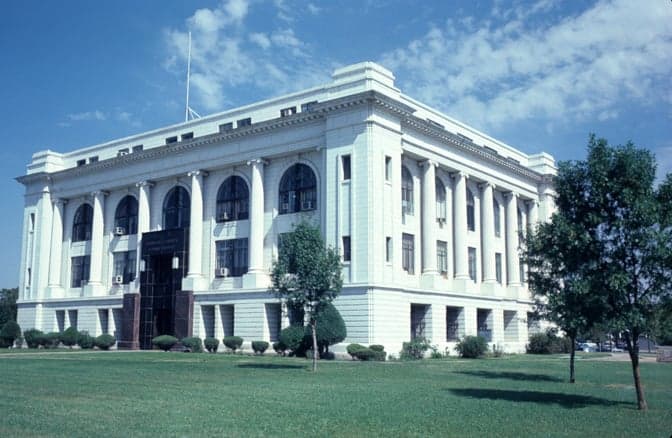
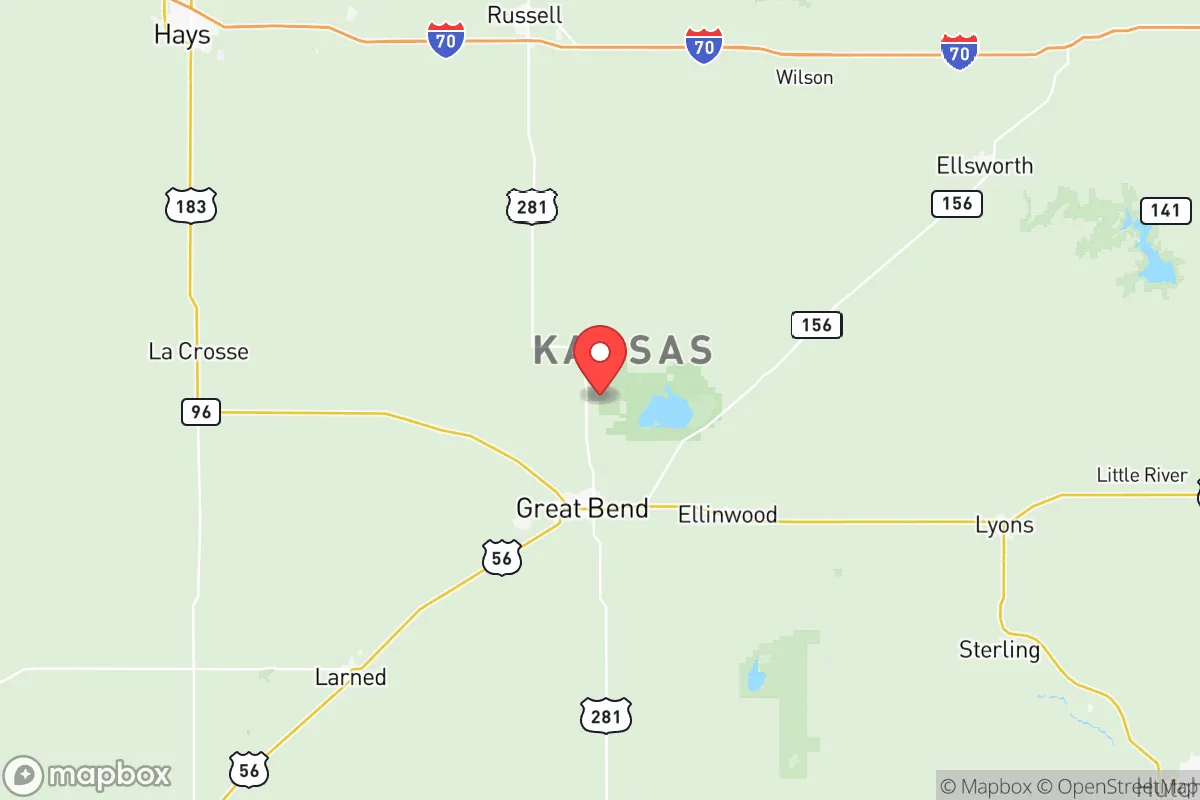
Photo: Wikipedia
Political ClimatePolitical Climate in Barton County
Showing district-level results — no local-only data available.
Local Political AnalysisPolitical Analysis of Barton County
Barton County, Kansas, is about as rock-ribbed Republican as they come, with a Cook PVI of R+16, making it a solid seven points more conservative than the state of Kansas as a whole (R+9). That’s not just a number on a map—it’s the lived reality here, where folks in Great Bend, the county seat, and smaller towns like Hoisington and Ellinwood have voted reliably red for decades. But if you’re looking for a place where the old-school values of personal liberty and limited government still hold strong, this is it. The political trajectory has been steady, though I’ve noticed a few cracks in the foundation lately, especially around the edges of the county where some younger folks are starting to question things.
How it compares
Compared to the rest of Kansas, Barton County is a conservative stronghold. The state’s R+9 rating already leans right, but Barton’s R+16 puts it in a different league. In the 2024 presidential race, the county went for the Republican candidate by a margin closer to 70-30, while the state overall was more like 57-40. The real variation within the county is subtle but worth noting. Great Bend itself is reliably red, but the precincts around the college (Barton Community College) and the hospital tend to be a bit more moderate—sometimes even swinging toward a Democrat if the candidate is a moderate on taxes and guns. Meanwhile, towns like Claflin and Pawnee Rock are deep red, where you’ll see signs for the GOP candidate in every other yard. The only real blue-ish pocket is a small precinct near the county’s southern edge, where a handful of rural voters have gone for third-party candidates in the past, but that’s more about protest votes than any progressive shift.
What this means for residents
For those of us who’ve lived here a while, the political climate means we’ve largely been left alone by the kind of government overreach you see in more progressive areas. There’s no talk of defunding the police or imposing heavy-handed mask mandates here—people value their personal freedoms, from gun rights to how they run their small businesses. But I’d be lying if I said I wasn’t a little concerned about the direction things are heading. Over the last five years, I’ve seen a few more “progressive” candidates pop up in local school board races, pushing things like DEI initiatives and critical race theory into the curriculum. It’s still a small minority, but it’s a red flag. The county commission has held the line on property taxes and zoning, but you can feel the pressure from state-level policies that sometimes trickle down, like the push for renewable energy mandates that could hurt our local ag economy.
Cultural and policy distinctions
What really sets Barton County apart is the culture. This is farm and ranch country, where the county fair and the annual Oktoberfest in Ellinwood are bigger deals than any political rally. People here are practical—they don’t like being told what to do by Topeka or Washington. The local policy reflects that: the county has resisted adopting strict building codes, and the sheriff’s office is known for a “don’t ask, don’t tell” approach to things like backyard chickens and unlicensed garage sales. But I’ve seen a slow creep of progressive ideology in the last decade, especially around Great Bend’s city council, where there’s been talk of “affordable housing” initiatives that sound a lot like government overreach to me. If that trend continues, I worry we’ll lose the very character that makes this place worth living in. For now, though, Barton County remains a place where a man can still mind his own business and keep his government small.

State Political ClimatePolitical Climate in Kansas
State Political AnalysisPolitical Environment in the State
Kansas is a solidly Republican state with a Cook PVI of R+9, but don’t let that single number fool you into thinking it’s a monolith. Over the past 20 years, the state has shifted from a moderate, pragmatic Republicanism—think Bob Dole and Nancy Kassebaum—to a much more conservative, often populist, posture, especially after the 2010 Tea Party wave and the 2018 election of Governor Laura Kelly, a Democrat who has governed from the center. The real story is a tug-of-war between a deeply red rural base and a growing, increasingly blue urban corridor, with the state’s overall trajectory leaning more conservative on cultural and fiscal issues, even as it has moderated on some tax and spending matters.
Urban vs. rural divide
The political map of Kansas is a textbook study in the urban-rural split. The Kansas City metro area, anchored by Johnson County (Overland Park, Olathe, Lenexa), is the state’s most populous and economically powerful region. Johnson County was once reliably Republican but has been trending purple for a decade—it voted for Joe Biden in 2020 by a narrow margin, a seismic shift from its 20-point Romney win in 2012. This is driven by an influx of college-educated professionals and corporate transplants from places like Cerner (now Oracle Health) and Garmin. Wyandotte County (Kansas City, KS) is a Democratic stronghold, heavily union and minority-heavy. Lawrence, home to the University of Kansas, is the state’s most liberal city, a blue island in a red sea. Meanwhile, Sedgwick County (Wichita) is a bellwether: it went for Trump in 2020 but by a much smaller margin than in 2016, reflecting suburban erosion. The rest of the state—the vast, agricultural expanse from Garden City to Dodge City to Hays—is deeply, reliably red. These rural counties routinely deliver 75-85% of their vote to Republicans, and they dominate the state legislature through a map that hasn’t kept pace with urban growth. The divide isn’t just electoral; it’s cultural. Rural Kansans see the state as a bastion of traditional values and limited government, while urbanites increasingly view it as a place that needs to modernize on social issues and public investment.
Policy environment
Kansas’s policy environment is a mixed bag that reflects its internal tensions. The most famous (or infamous) experiment was the 2012 “Kansas Experiment” under Governor Sam Brownback, which slashed income taxes dramatically. It was sold as a supply-side growth model but led to chronic budget shortfalls, school funding crises, and a bond rating downgrade. The legislature partially reversed those cuts in 2017 and 2022, but the state still has a flat income tax rate of 5.7% (as of 2025), with a path to lower it further. Property taxes are relatively high, especially in Johnson County, and there is no state sales tax on groceries. On education, the state has been in a decades-long legal battle over school funding adequacy, with the Kansas Supreme Court repeatedly ordering the legislature to increase spending. This has created a persistent tension between conservative lawmakers who want to cap spending and a court that demands more. On social policy, Kansas is conservative: it has a near-total abortion ban (the “Value Them Both” amendment was passed by voters in 2022, affirming no state constitutional right to abortion), permitless carry of firearms, and a strong parental rights law (HB 2416, passed in 2023, which requires schools to notify parents of any changes to a student’s services or support related to gender identity). Election laws are moderately restrictive: voter ID is required, and the state has purged inactive voters, but same-day registration is not allowed. The state also has a “Right to Farm” constitutional amendment protecting agricultural practices from nuisance lawsuits.
Trajectory & freedom
On the freedom front, Kansas is a state of contradictions. On the positive side for conservatives, the state has expanded gun rights significantly: permitless carry became law in 2015, and there are no state-level magazine capacity bans or “red flag” laws. Property rights are strong, with no state income tax on Social Security benefits and a homestead exemption for seniors. The 2023 parental rights law (HB 2416) is a clear expansion of family freedom, requiring school districts to get parental consent before any “sexual orientation or gender identity” instruction. However, the state has also seen a concerning creep of government overreach. The Kansas Supreme Court’s ongoing involvement in school funding is viewed by many conservatives as judicial activism that usurps legislative authority. More troubling is the state’s aggressive use of civil asset forfeiture—Kansas has one of the weakest protections against it in the nation, allowing law enforcement to seize property without a criminal conviction. Additionally, the state’s COVID-era mandates were uneven: Governor Kelly imposed some of the strictest early lockdowns in the region, but the legislature quickly pushed back, stripping her of emergency powers in 2021. The net trajectory is that Kansas is becoming more conservative on cultural and gun issues, but the tax burden has not fallen as dramatically as promised, and the state’s judiciary remains a wild card on education and property rights.
Civil unrest & political movements
Kansas is not a hotbed of civil unrest, but it has its flashpoints. The most visible recent movement was the 2022 “Value Them Both” campaign, which saw massive pro-life rallies at the Statehouse and a decisive 59-41% vote to remove any state constitutional right to abortion. On the left, the 2020 George Floyd protests in Kansas City, KS and Lawrence were significant, with some property damage and a heavy police response. Immigration politics are a live wire in western Kansas, where meatpacking plants in Garden City and Dodge City rely heavily on immigrant labor. There have been periodic ICE raids and local ordinances targeting “sanctuary city” policies—though no Kansas city has formally adopted such a policy. Election integrity has been a persistent issue since 2020: the state’s Republican Secretary of State, Scott Schwab, has defended the state’s system as secure, but a vocal faction of the party has pushed for more restrictive measures, including a ban on drop boxes (which was passed in 2021). The most visible political movement is the rise of the “Moms for Liberty” chapter in Johnson County, which has been active in school board races and library content challenges. Overall, the political temperature is warm but not boiling—most Kansans are civil, but the urban-rural cultural divide is palpable in any statewide debate.
Projection
Looking ahead 5-10 years, Kansas is likely to remain a red state, but the margin will continue to narrow. The key demographic driver is the growth of Johnson County, which is becoming more diverse, more educated, and more moderate. If Johnson County continues its leftward drift, it could eventually flip the state in presidential elections—but that’s a decade or more away. The rural population is shrinking and aging, which will reduce its electoral weight. The state legislature will likely remain Republican-controlled, but the internal battle between the moderate and conservative wings will intensify. On policy, expect continued pressure to lower or eliminate the income tax, but also ongoing fights over school funding and property taxes. The abortion issue is settled for now, but the parental rights and school curriculum battles will persist. The biggest wild card is the Kansas Supreme Court: if it continues to mandate school spending increases, it could trigger a constitutional crisis or a push for judicial reform. For a new resident, the bottom line is that Kansas offers a stable, conservative policy environment on most cultural and gun issues, but with a tax burden that is higher than many red states and a judiciary that occasionally overrides the legislature. The state is not becoming more free in every dimension—civil asset forfeiture and property taxes are real concerns—but on the issues that matter most to conservative families (school choice, parental rights, Second Amendment), it is a solid bet.
Bottom line for a new resident: If you’re moving to Kansas, you’ll find a state that respects your right to own firearms, keep your tax dollars (mostly), and raise your kids without government interference in their education. But don’t expect a libertarian paradise—the state has a long history of activist courts and a tax structure that still funds a robust public sector. The best places for a conservative-leaning family are the exurbs of Johnson County (like Spring Hill or Gardner) or the smaller cities like Manhattan or Hays, where the culture is traditional and the politics are reliably red. Avoid Lawrence and the core of Kansas City, KS if you want to avoid the progressive drift. Overall, Kansas is a good, solid, middle-of-the-road conservative state—not flashy, not extreme, but dependable.
* Values derived from national, state, county, city and local statistics and may differ in a specific area. Last updated: 2026-05-11T23:27:15.000Z
Narrative content on this page is AI-generated and may contain mistakes. Verify any details that matter before acting on them.
ReloMaps may earn a commission from affiliate links at no extra cost to you.

