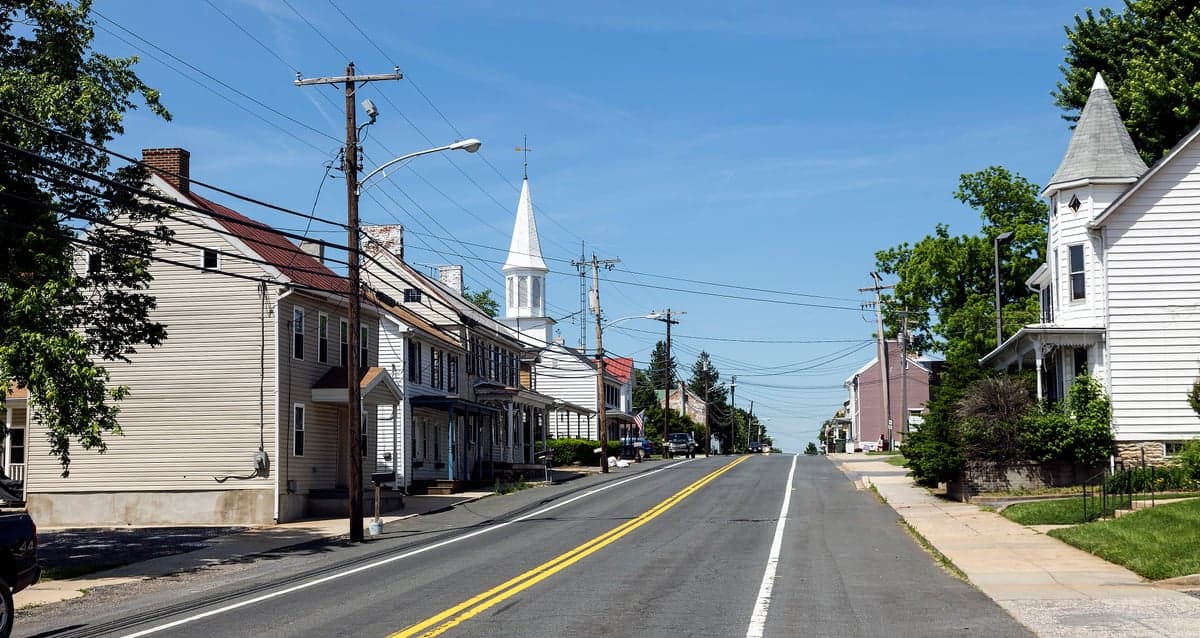
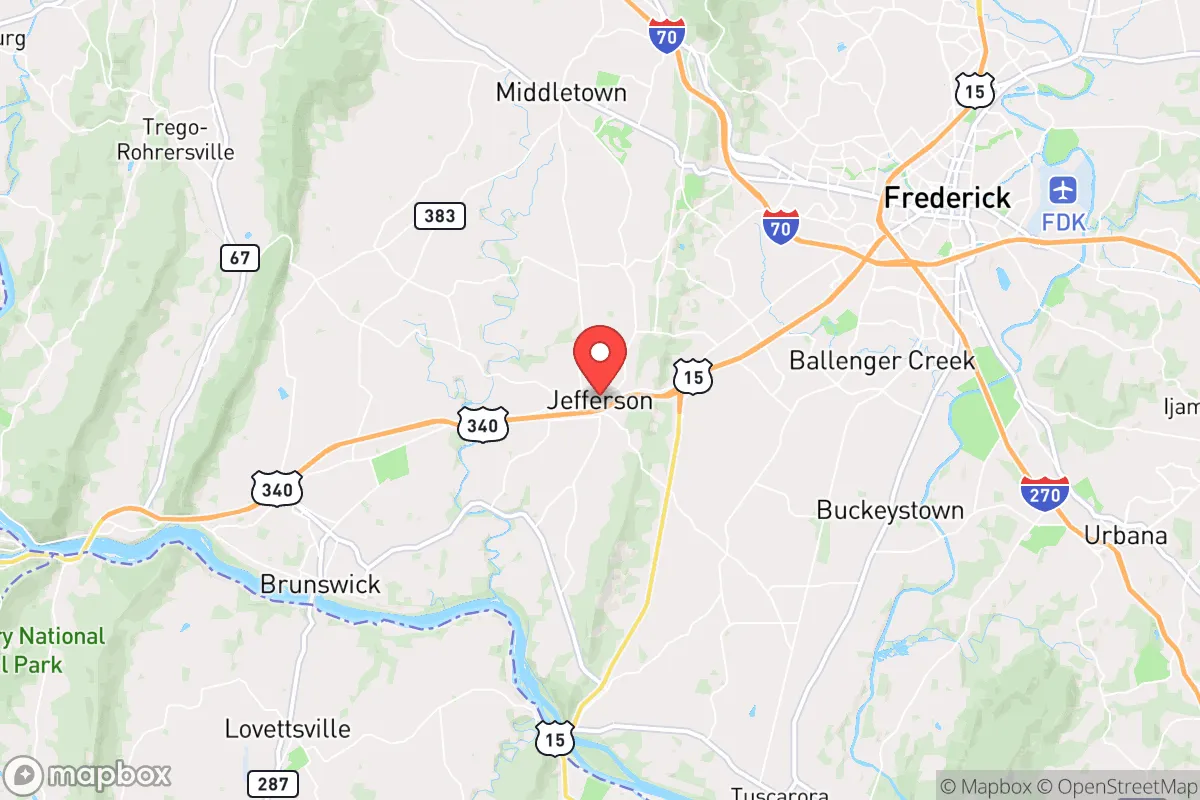
Photo: Wikipedia
Demographics of Jefferson, MD
Affluence Level in Jefferson, MD
An upper-middle-class area. Household wealth, education levels, and homeownership run ahead of national benchmarks.
People of Jefferson, MD
The people of Jefferson, Maryland, today form a small, predominantly white community of 2,891 residents, characterized by a notably high college attainment rate of 40.0% and a very low foreign-born share of just 0.5%. The population is overwhelmingly native-born, with a modest but growing Hispanic presence at 7.7% and a Black population of 6.7%, while East and Southeast Asian residents make up 2.1% and Indian-subcontinent residents a negligible 0.1%. This is a stable, family-oriented town where the historic core and newer subdivisions alike reflect a community that values its rural Frederick County roots while absorbing gradual, measured demographic change.
How the city was settled and grew
Jefferson’s human history begins with its 18th-century founding as a farming and milling center along Israel Creek. The original population was overwhelmingly of English and German stock, drawn by land grants from the Calvert family and the promise of fertile soil in the Middletown Valley. The town was formally laid out in 1832, and its early growth centered on the Historic District around Main Street and Jefferson Pike, where the families of millers, blacksmiths, and merchants built the Federal and Greek Revival homes that still stand. The arrival of the Baltimore and Ohio Railroad in the 1830s brought a second wave of German and Irish laborers, who settled in modest frame houses along Burkittsville Road and Lander Road, working the rail line and the surrounding farms. Through the early 20th century, Jefferson remained a quiet agricultural hamlet, with its population hovering around 500 and its character shaped by the same families for generations.
Modern era (post-1965)
The post-1965 era brought suburbanization as Washington, D.C., and Frederick commuters discovered Jefferson’s affordability and rural charm. The 1970s and 1980s saw the first major subdivisions, such as Jefferson Hills and Springfield Manor, built on former farmland along Jefferson Boulevard and Lander Road. These attracted white-collar professionals—many of them white and college-educated—seeking larger lots and lower taxes than Frederick City or Montgomery County could offer. The Hispanic population began to grow in the 1990s and 2000s, driven by agricultural and construction work in the broader Frederick County region. Today, Hispanic residents are dispersed across the town, with a small concentration in the Jefferson Village townhome development near the intersection of Jefferson Boulevard and Lander Road. The Black population, historically very small, has grown modestly since 2000, with families settling in both the historic core and newer subdivisions. East and Southeast Asian residents, primarily of Chinese and Korean ancestry, arrived in the 2000s and 2010s, drawn by the school system and proximity to Fort Detrick and the biotech corridor; they are scattered across Jefferson Hills and Springfield Manor rather than forming an ethnic enclave.
The future
Jefferson’s population is projected to grow slowly, with the 2020-2030 period likely adding 200-400 residents as remaining farmland along Jefferson Boulevard and Burkittsville Road is developed into single-family subdivisions. The town is becoming slightly more diverse: the Hispanic share is expected to rise to 10-12% by 2035, driven by natural increase and continued in-migration of families seeking affordable housing in Frederick County. The East and Southeast Asian share may also edge upward as the biotech and defense sectors in Frederick and Fort Detrick expand. However, the foreign-born share will likely remain below 2%, as Jefferson lacks the rental stock and public transit that attract immigrant populations in larger cities. The white, native-born majority will remain dominant, but the cultural identity is shifting from a purely rural, agricultural community to a commuter exurb with a conservative-leaning, family-focused character. New residents are dispersing across the town rather than clustering, meaning Jefferson will likely retain its small-town feel even as it diversifies.
For someone moving in now, Jefferson offers a stable, low-crime, highly educated community where the population is slowly becoming more diverse but remains overwhelmingly native-born and white. The town’s future is one of gradual, managed growth—new subdivisions will bring more families, but the historic core and rural surroundings will keep Jefferson a distinctively quiet, family-oriented place within commuting distance of Frederick and Washington.

* Values derived from national, state, county, city and local statistics and may differ in a specific area. Last updated: 2026-07-22T02:17:08.000Z
Narrative content on this page is AI-generated and may contain mistakes. Verify any details that matter before acting on them.
ReloMaps may earn a commission from affiliate links at no extra cost to you.

