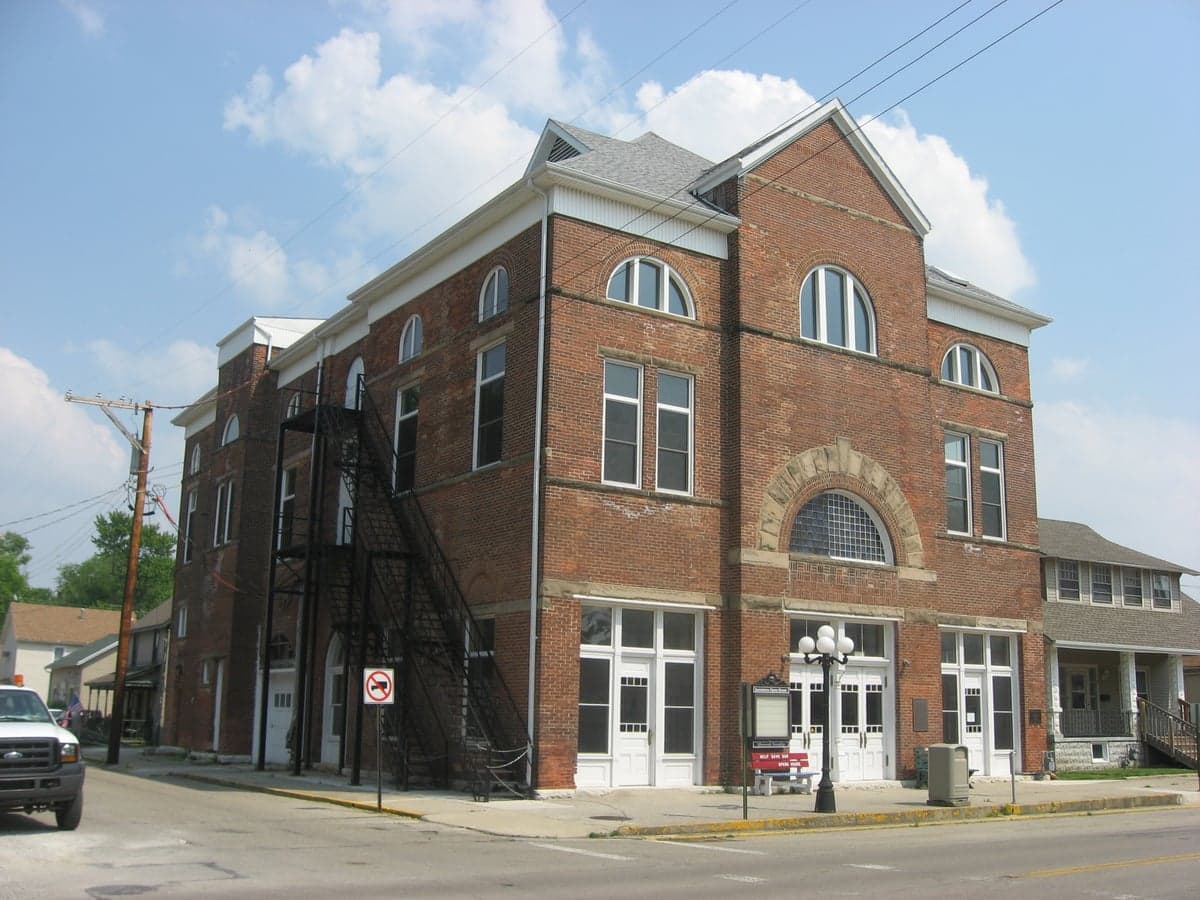
Photo: Wikipedia
Demographics of Jamestown, OH
Affluence Level in Jamestown, OH
A below-average socioeconomic profile. Incomes, home values, and educational attainment trail the U.S., with higher poverty and unemployment.
People of Jamestown, OH
Jamestown, Ohio, is a small, tightly-knit community of 2,241 residents, overwhelmingly White (97.8%) and with no foreign-born population, making it one of the most ethnically homogeneous towns in Greene County. Its character is defined by a quiet, rural-suburban feel, a strong sense of local history, and a population that is notably less college-educated (18.0%) than state averages. For those moving in, Jamestown offers a stable, low-diversity environment where family roots and local institutions like the school district and churches form the core of social life.
How the city was settled and grew
Jamestown’s population history begins with its founding in 1816 by James Galloway, a surveyor and early settler who platted the town along the banks of the Little Miami River. The original wave of settlers were primarily of English, Scots-Irish, and German descent, drawn by the promise of fertile farmland and the construction of the National Road (now U.S. Route 35) nearby. The town grew slowly as a market center for surrounding agricultural communities. The arrival of the railroad in the late 19th century spurred a modest industrial boom, with a woolen mill, a foundry, and several grain elevators employing local labor. The earliest neighborhoods, such as Old Town (the original plat around the intersection of Main and Washington Streets) and Mill District (along the railroad tracks near the old mill sites), were built by these first families. By 1900, the population had reached roughly 1,200, and the town’s ethnic makeup remained almost entirely native-born White, a pattern that would persist for over a century.
Modern era (post-1965)
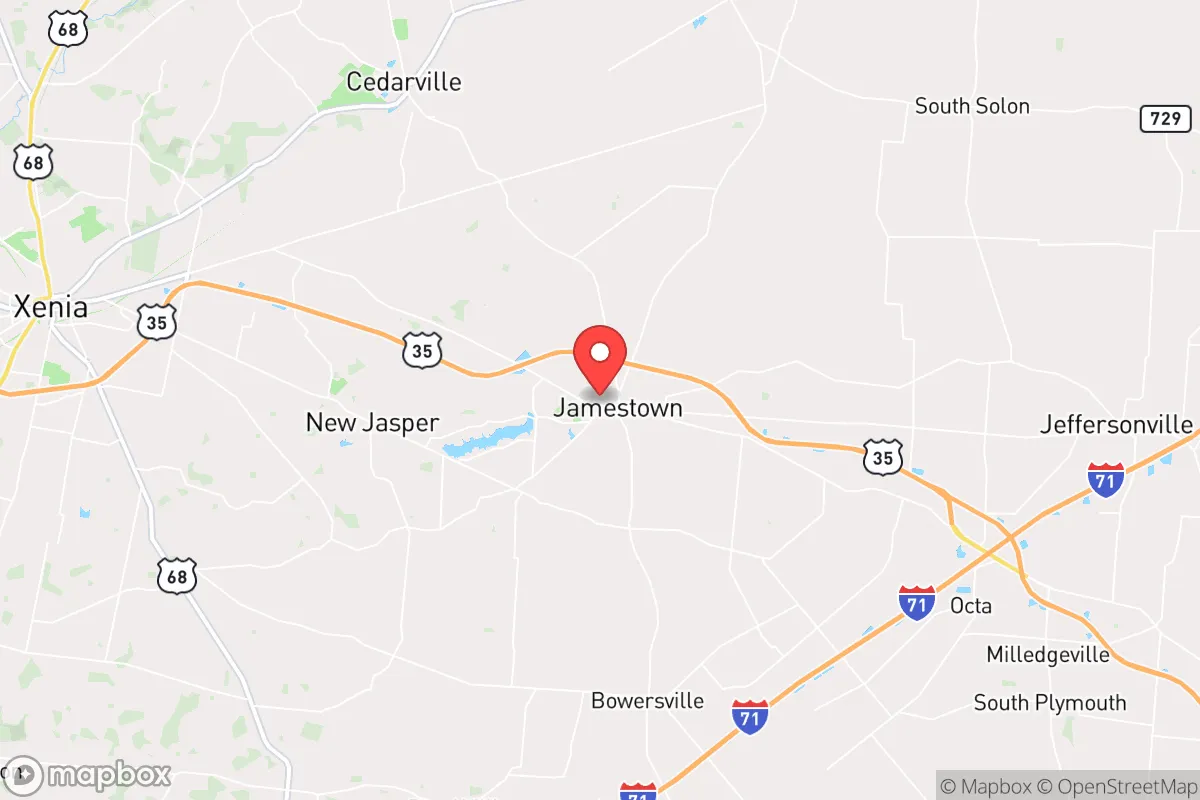
Following the 1965 Immigration and Nationality Act, Jamestown experienced none of the diversification seen in larger Ohio cities. The town’s population peaked at around 2,400 in the 1970s and has since declined slightly, with the 2020 census recording 2,241 residents. Domestic in-migration during this period came primarily from nearby rural areas and from families seeking affordable housing and a slower pace of life compared to Dayton (about 20 miles north) or Columbus (about 45 miles east). The Woodland Hills subdivision, developed in the 1970s and 1980s, absorbed many of these new families, while South Jamestown, an area of older homes and newer infill, attracted a mix of retirees and young couples. The data confirms that this period saw no significant influx of foreign-born or non-White residents: the foreign-born share remains 0.0%, the Black population is just 0.4%, and the Hispanic population is 0.3%. The town’s cultural identity has remained stable, centered on the local school system, the annual Jamestown Street Fair, and a handful of Protestant churches.
The future
Jamestown’s demographic trajectory points toward continued homogeneity and slow population decline. The 18.0% college-educated rate is well below the Ohio average of roughly 30%, suggesting limited attraction for knowledge-economy workers. The town’s location along U.S. 35, however, does offer some potential for commuter growth from Dayton and Xenia. Newer subdivisions like Heritage Trails (built in the 2000s) and Meadow View Estates (early 2010s) have attracted a handful of families, but these developments have not altered the racial or ethnic composition. The population is aging, with a median age of approximately 42, and younger residents often leave for college or jobs in larger cities. Over the next 10-20 years, Jamestown is likely to remain a predominantly White, working-class community with a stable but slowly shrinking population. There is no evidence of emerging ethnic enclaves or significant diversification on the horizon.
For someone moving in now, Jamestown represents a choice for a predictable, low-cost, and culturally consistent small town. It is not a place of demographic change or urban energy, but rather a community where the past and present look very much alike. New residents will find a place where neighbors know each other, local events are well-attended, and the pace of life is deliberately slow. The trade-off is limited diversity, a modest local economy, and a population that is not growing.

* Values derived from national, state, county, city and local statistics and may differ in a specific area. Last updated: 2026-08-19T15:25:37.000Z
Narrative content on this page is AI-generated and may contain mistakes. Verify any details that matter before acting on them.
ReloMaps may earn a commission from affiliate links at no extra cost to you.

