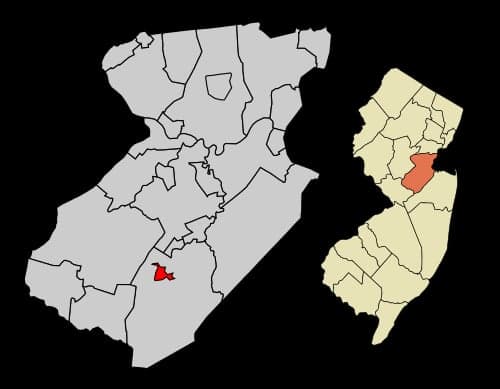
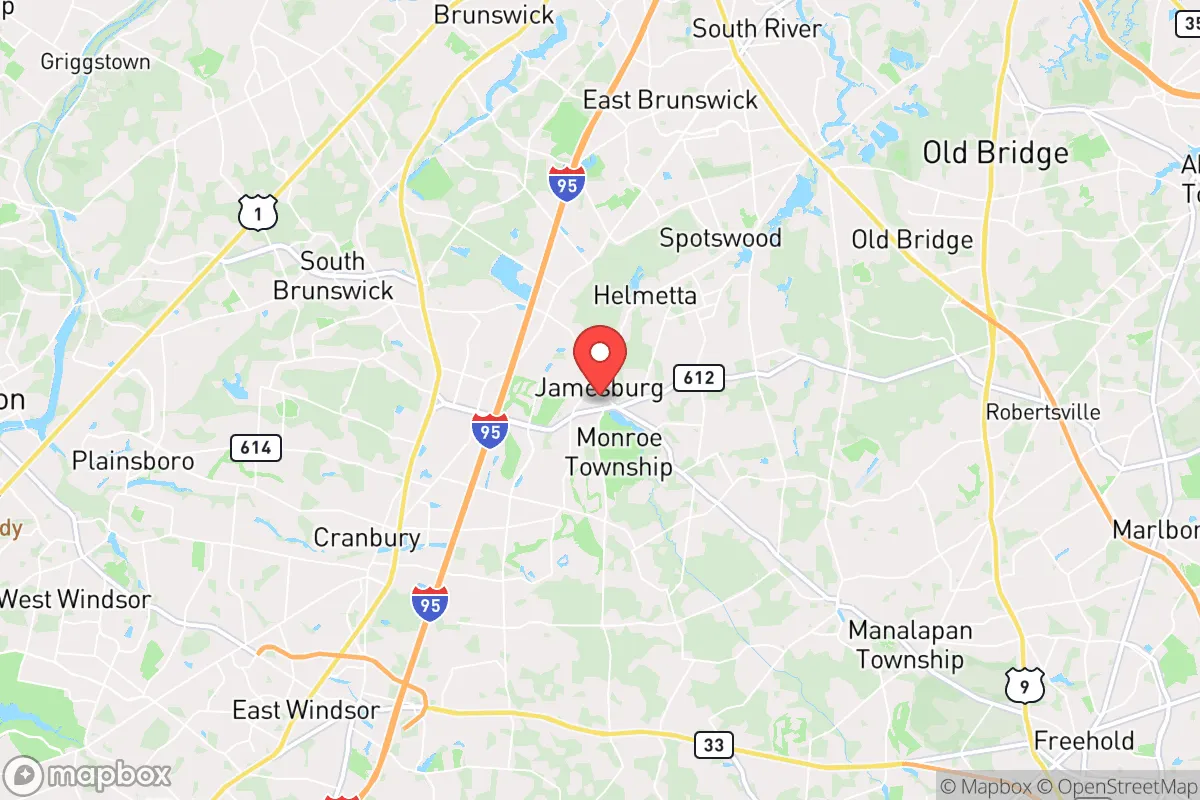
Photo: Wikipedia
Demographics of Jamesburg, NJ
Affluence Level in Jamesburg, NJ
An upper-middle-class area. Household wealth, education levels, and homeownership run ahead of national benchmarks.
People of Jamesburg, NJ
The people of Jamesburg, New Jersey, today form a compact, predominantly blue-collar community of 5,763 residents, marked by a strong Hispanic plurality and a shrinking White majority. The borough is denser than much of central Middlesex County, with a tight grid of single-family homes and small apartment blocks concentrated around the historic downtown. Distinctive identity markers include a deep-rooted Portuguese and Brazilian presence alongside a newer Puerto Rican and Dominican population, giving Jamesburg a bicultural character that sets it apart from neighboring suburban bedroom communities.
How the city was settled and grew
Jamesburg was founded in the 1850s as a railroad stop along the Camden & Amboy line, with the first wave of settlers being Irish and German laborers who built the tracks and later worked in local brickyards and farms. The borough was incorporated in 1887, and by the early 1900s, Italian immigrants arrived to work in the area's thriving clay and brick industries, settling along Railroad Avenue and West Railroad Avenue, which remain the historic Italian core. A smaller wave of Polish and Slovak families followed in the 1910s and 1920s, clustering around Gatzmer Avenue and the streets near the old Jamesburg Park. These groups built the borough's original Catholic and Orthodox churches, and their descendants still occupy many of the older homes in the Historic District around Main Street. The population remained overwhelmingly White and working-class through the mid-20th century, with the 1960 census recording a 99.4% White share.
Modern era (post-1965)
The post-1965 immigration reforms reshaped Jamesburg dramatically. Portuguese and Brazilian immigrants began arriving in the 1970s and 1980s, drawn by affordable housing and existing Portuguese-speaking networks in nearby Newark and Elizabeth. They concentrated along Perrineville Road and the Lakeview neighborhood, establishing restaurants, bakeries, and social clubs that remain active today. By 1990, the Hispanic share had risen to 18%, and it accelerated sharply after 2000 as Puerto Rican, Dominican, and Mexican families moved in, attracted to the borough's lower rents compared to Edison and New Brunswick. These newer Hispanic residents settled primarily in the Bucks Mill area and the apartment complexes along Wright Street. The White share fell from 82% in 2000 to 53.5% in 2024, while the Hispanic share climbed to 35.6%. The East/Southeast Asian population (2.9%) and Indian-subcontinent population (2.4%) are small but growing, with most Asian and Indian families living in the newer single-family homes near Forsgate Drive and the border with Monroe Township.
The future
Jamesburg's population is projected to continue diversifying, with the Hispanic share likely surpassing 40% within the next decade as younger families replace an aging White cohort. The foreign-born share stands at 12.4%, and that figure is expected to rise modestly as Brazilian and Dominican immigration continues, though Jamesburg lacks the large-scale apartment construction that drives rapid growth in nearby towns. The East/Southeast Asian and Indian populations are likely to remain small but stable, as most Asian-origin families in Middlesex County prefer larger homes in Edison or Plainsboro. The borough's cultural identity is evolving from a historically Italian-Portuguese enclave into a predominantly Hispanic community with a significant Brazilian subculture, a shift visible in the replacement of older Italian social clubs with Latin grocery stores and Pentecostal churches. For someone moving in now, Jamesburg offers a dense, walkable small-town feel with a genuinely bicultural character, but the school district and municipal services are under pressure from a tax base that has not kept pace with demographic change.
Jamesburg is becoming a predominantly Hispanic working-class borough with a strong Brazilian and Portuguese heritage layer, a place where the old ethnic neighborhoods are giving way to new ones. For a relocating family or individual, this means a tight-knit community with lower housing costs than much of central New Jersey, but also a school system and infrastructure that are adapting to a rapidly changing population.

* Values derived from national, state, county, city and local statistics and may differ in a specific area. Last updated: 2026-11-13T09:13:52.000Z
Narrative content on this page is AI-generated and may contain mistakes. Verify any details that matter before acting on them.
ReloMaps may earn a commission from affiliate links at no extra cost to you.

