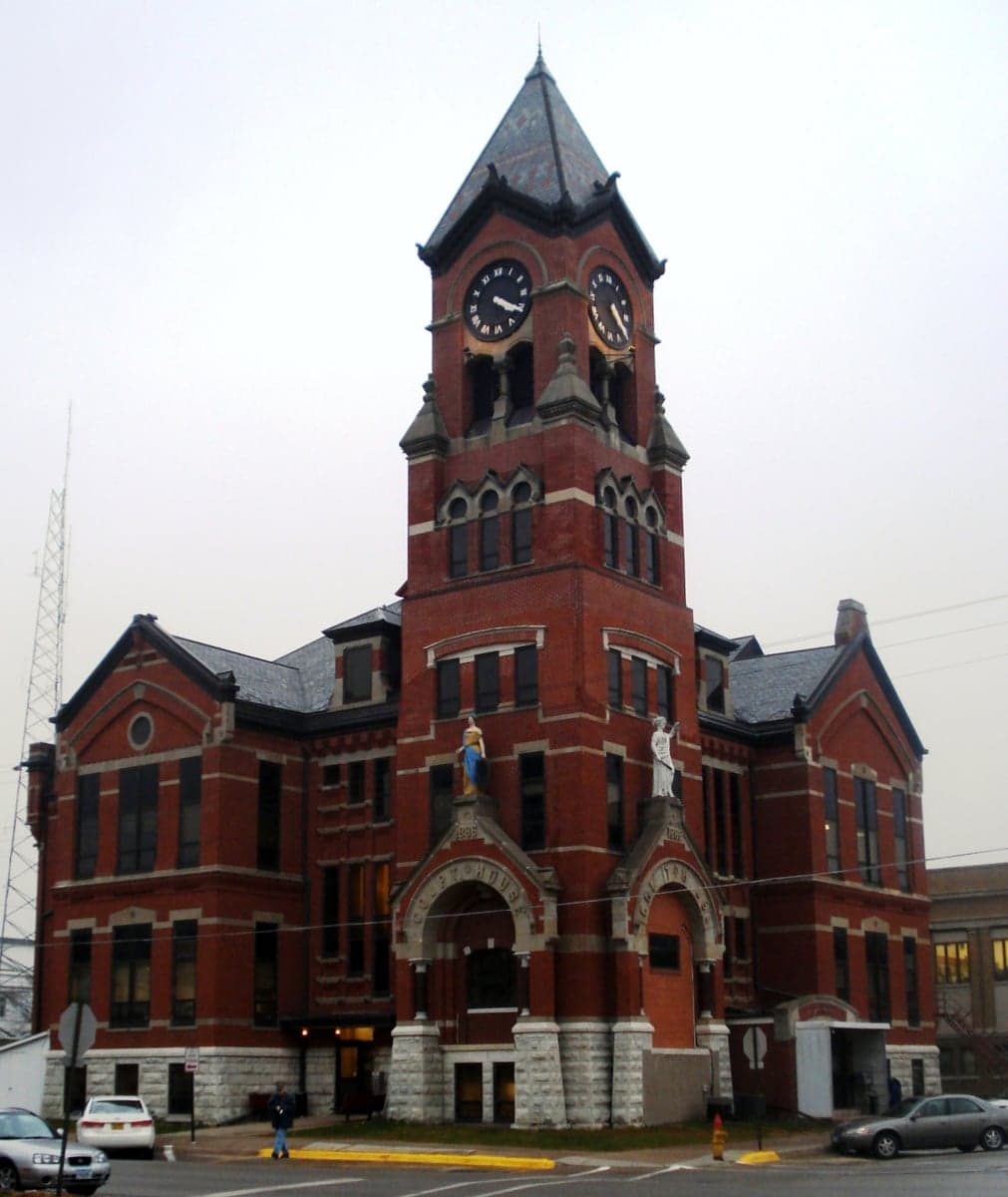
Photo: Wikipedia
Demographics of Washington County
Affluence Level in Washington County
A middle-class area roughly in line with national averages across income, home values, education, and employment.
People of Washington County
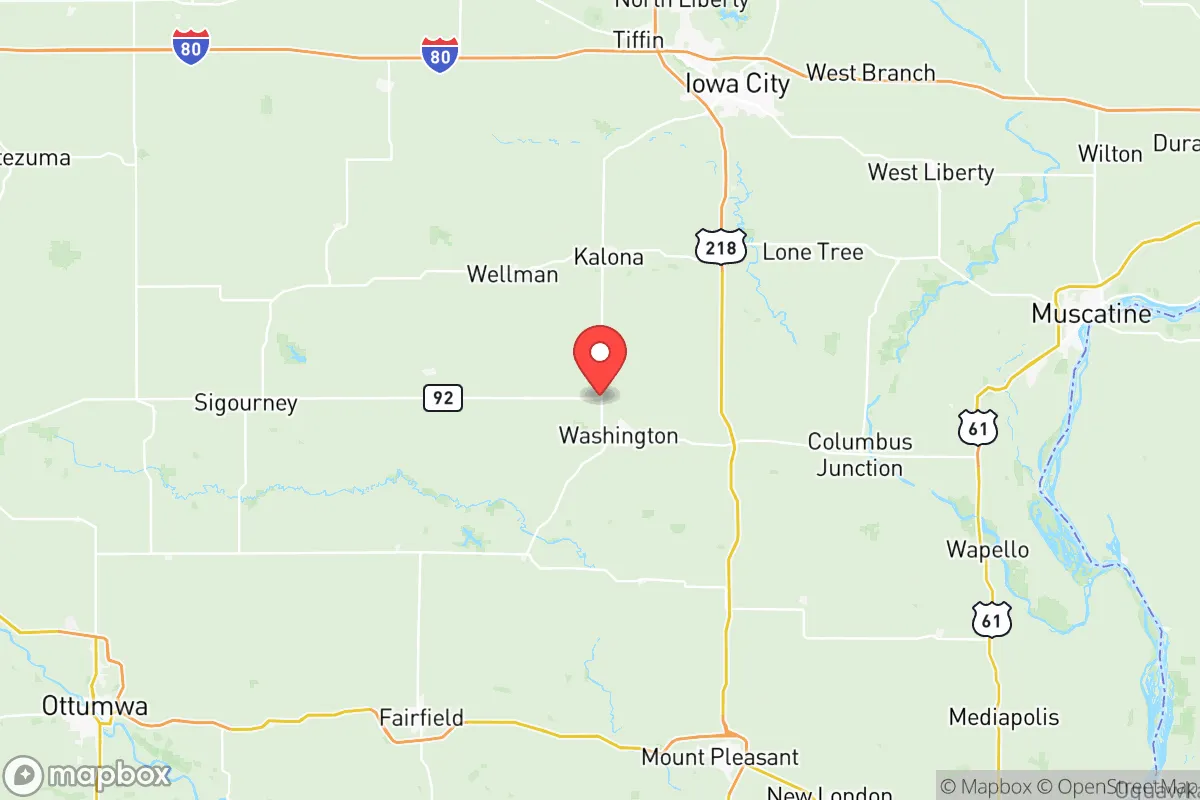
Washington County, Iowa, is a predominantly white, rural community of 22,539 residents where agricultural roots and a strong sense of local identity define daily life. With a population that is 89.2% white and a foreign-born share of just 2.4%, the county is notably less diverse than the state of Iowa as a whole, though a growing Hispanic community of 7.4% is beginning to reshape parts of the local economy and culture. The county seat, Washington, serves as the commercial and social hub, while smaller towns like Kalona, Wellman, and Brighton retain distinct historical identities. For families and individuals seeking a quiet, family-oriented environment with low crime and strong schools, Washington County offers a stable, predictable community rooted in its Midwestern heritage.
Settlement & growth (pre-1960)
The land that became Washington County was originally home to the Sauk and Meskwaki (Fox) nations, who used the region for hunting and seasonal camps along the English River and its tributaries. The first permanent white settlers arrived in the 1830s, shortly after the Black Hawk Purchase of 1832 opened the area to American settlement. These early pioneers were primarily of Scotch-Irish and English descent, moving west from Ohio, Indiana, and Illinois in search of fertile, affordable farmland. They established the county seat of Washington in 1839, naming it after the first president, and soon founded the smaller communities of Brighton (1840) and Wellman (1850s) as agricultural service centers.
The most significant demographic wave came with German immigration in the 1850s through the 1880s. German farmers and craftsmen, many from the regions of Hanover, Westphalia, and Bavaria, were drawn by the availability of land under the Homestead Act and by railroad expansion that made shipping grain to eastern markets profitable. They settled heavily in and around Kalona, which became a distinctively German community, and in the northern part of the county near Riverside. German influence remains visible today in the area's Lutheran and Catholic church steeples, family farm names, and the annual Kalona Fall Festival. A smaller wave of Czech and Swiss immigrants arrived in the 1870s, settling primarily in the Ainsworth and Crawfordsville areas, where they established dairy farms and small cheese factories.
By 1900, the county's population had peaked at roughly 20,000, a figure it would not surpass again until the 2010s. The decades that followed saw a slow, steady outmigration of young people to cities and larger towns, a pattern common across the rural Midwest. The Amish and Mennonite communities, who began arriving from Pennsylvania and Ohio in the 1910s and 1920s, provided a notable exception. They settled in the Kalona area, drawn by affordable land and isolation from urban distractions. Today, Kalona is home to one of the largest Old Order Amish settlements west of the Mississippi, with an estimated 1,500 Amish residents who maintain horse-and-buggy transportation and traditional farming practices.
Modern era (post-1965)
The 1965 Hart-Cellar Act had a limited direct impact on Washington County, as the region did not attract the large-scale immigration seen in urban Iowa centers like Des Moines or Iowa City. Instead, the county's demographic story since 1965 has been one of domestic stability and gradual Hispanic in-migration. The Hispanic population, now 7.4% of the total, began growing in the 1990s as Mexican and Central American workers were recruited by the county's large pork processing plants and agricultural operations. These workers initially settled in Washington and Kalona, where they found affordable housing and jobs at plants like the Prestage Foods facility in nearby Columbus Junction. Today, Hispanic families are dispersed across the county, with a visible presence in the school systems and local service industries.
The county's Asian population remains very small at 0.5%, consisting primarily of East and Southeast Asian families (Chinese, Vietnamese, Filipino) who are often employed in professional roles at the county's hospitals, schools, or the University of Iowa's nearby research facilities. The Indian-subcontinent population is effectively zero. The Black population, at 0.6%, is similarly tiny and largely composed of individuals working in healthcare or higher education who commute to Iowa City. Domestic migration has been minimal: the county has not experienced the suburban boom seen in counties closer to Des Moines or the Quad Cities. Instead, population growth has come from natural increase (births exceeding deaths) and the modest Hispanic influx.
Suburbanization has been limited to the edges of Washington, where a few new housing developments have attracted families from out of state seeking lower housing costs and a slower pace of life. The towns of Wellman and Riverside have seen slight growth from retirees and remote workers, but the county remains overwhelmingly rural. The Amish population in Kalona has grown steadily through high birth rates, and their presence has become a significant tourist draw, with the Kalona Quilt and Textile Museum and numerous Amish-owned shops attracting visitors from across the Midwest.
The future
Washington County is projected to see slow, steady growth over the next 10-20 years, driven primarily by the Hispanic community's higher birth rates and continued recruitment of immigrant labor for agriculture and food processing. The county's overall diversity will increase, but it will remain overwhelmingly white for the foreseeable future. The Amish population will continue to grow and may expand into new areas as land becomes more expensive in the Kalona core. The county's college-educated share, currently 24.9%, is below the state average of 28.5%, and this gap may widen if young people continue to leave for urban job markets. However, the rise of remote work could bring a modest influx of professionals seeking affordable rural living, particularly to Washington and Riverside, which have good internet access and proximity to Iowa City (30 minutes away).
Culturally, the county is likely to remain conservative and family-oriented, with a strong agricultural identity. The Hispanic community is integrating into local schools and churches, and bilingual services are becoming more common in Washington. The Amish community will likely maintain its separation, but their economic impact will grow as tourism expands. The county's political leanings, which are reliably Republican, are unlikely to shift dramatically, though the growing Hispanic population could introduce more nuanced voting patterns over time.
For someone moving in now, Washington County offers a stable, safe, and affordable environment where community ties are strong and change comes slowly. It is not a place of rapid demographic transformation or cultural upheaval, but rather a quietly evolving rural county where the old and new are learning to coexist. The key question for newcomers is whether they value the deep-rooted traditions and slow pace of life enough to accept the limited diversity and economic opportunities that come with it.

* Values derived from national, state, county, city and local statistics and may differ in a specific area. Last updated: 2026-10-17T01:17:46.000Z
Narrative content on this page is AI-generated and may contain mistakes. Verify any details that matter before acting on them.
ReloMaps may earn a commission from affiliate links at no extra cost to you.

